.webp&w=384&q=75)

Loading, please wait...
Loading, please wait...

Acute-on-chronic liver failure (ACLF) represents an extremely severe clinical syndrome characterized by sudden decompensation and organ failure. Furthermore, invasive fungal infections (IFI) frequently complicate this condition and drive high mortality rates. Consequently, clinicians face a critical choice between initiating antifungal therapy in ACLF based on clinical suspicion or waiting for diagnostic confirmation. Specifically, recent findings indicate that a suspicion-based approach significantly outshines investigation-based strategies in terms of patient survival.
Researchers conducted a pragmatic randomized trial to compare these two treatment strategies. Moreover, the results showed that suspicion-based (empirical) therapy nearly tripled the 28-day survival rate. Specifically, the survival rate reached 35% in the suspicion-based group, whereas it was only 13% in the investigation-driven group. Additionally, the empirical group experienced higher rates of infection resolution and lower IFI-attributable mortality. Therefore, clinicians should consider early initiation when host factors and clinical signs suggest infection. Notably, the study found the greatest benefit in patients aged 40 years or older with cardiovascular failure. However, practitioners must implement these strategies within a structured stewardship framework to ensure safety and cost-effectiveness.
Early identification of risk factors remains paramount for successful outcomes. Furthermore, rapid diagnostics and individualized treatment plans are essential. Therefore, shifting toward a suspicion-based model could redefine standard care for critically ill patients with liver failure. Consequently, this approach may reduce transplant de-listings and improve long-term prognosis.
Suspicion-based therapy allows for earlier treatment, which significantly improves 28-day survival and infection resolution rates compared to waiting for mycological or radiological confirmation.
The survival benefit is most pronounced in patients aged 40 or older who present with cardiovascular failure but do not have respiratory failure.
Disclaimer: This content is for informational and educational purposes only. It does not constitute medical advice, diagnosis, or treatment. Always seek the advice of a physician or other qualified health provider with any questions regarding a medical condition. Refer to the latest local and national guidelines for clinical practice.
References
Ghabril M et al. In inpatients with acute-on-chronic liver failure, suspicion- vs. investigation-based antifungal therapy increased survival at 28 d. Ann Intern Med. 2026 May 05. doi: 10.7326/ANNALS-26-01051-JC. PMID: 42081819.
Bajaj JS, O'Leary JG, Reddy KR, et al. Survival in infection-related acute-on-chronic liver failure is defined by host response and organ failure. Hepatology. 2014;60(1):250-259.

Read summarized clinical updates, watch expert medical content, and earn CME certifications right from your smartphone.
Open your smartphone camera to scan and install.





Suspicion-based antifungal therapy improves 28-day survival in ACLF patients compared to investigation-based approaches, according to a recent study....
5 months ago

Review how tailored exercise programs benefit frail older patients with heart failure. Explore pathophysiological mechanisms, individualized training prescriptions, and strategies to overcome adherence barriers in clinical practice.
Today

Leucine Rich Bio has introduced South Asia's first comprehensive vaginal microbiome test, BugSpeaks. By profiling microbial dysbiosis, pathogens, and antimicrobial resistance, this next-generation diagnostic platform provides clinicians with deeper insights into recurrent infections, fertility, and reproductive health.
Today
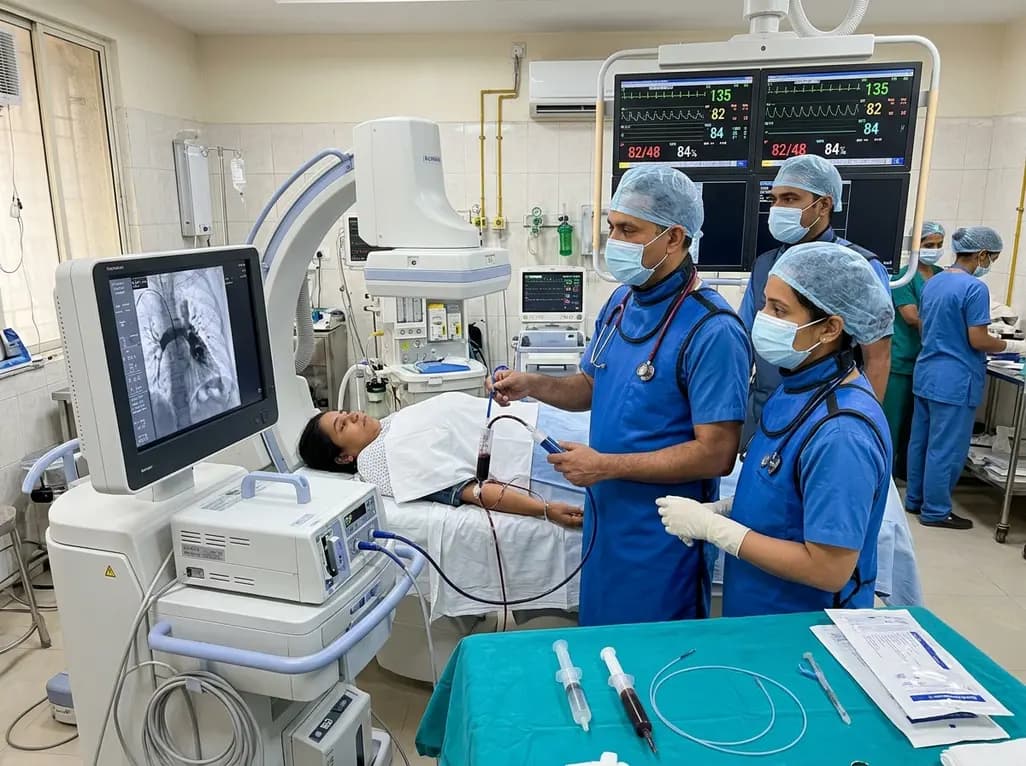
In high-risk pulmonary embolism complicated by severe anemia and active uterine bleeding, systemic thrombolysis is contraindicated. Large-bore aspiration thrombectomy provides rapid hemodynamic rescue without fibrinolysis, supported by inferior vena cava filter placement and multidisciplinary critical care.
Today

This comparative study evaluates posterior labral tears with and without glenohumeral instability, highlighting distinct demographic patterns, MRI underestimation in stable shoulders, and successful arthroscopic repair outcomes.
Today

A clinical study demonstrates that early intervention with tocilizumab, either as monotherapy or bridged with corticosteroids, achieves significant proptosis reduction and resolves active inflammation in treatment-naive thyroid eye disease.
Today
