

Loading, please wait...
Loading, please wait...
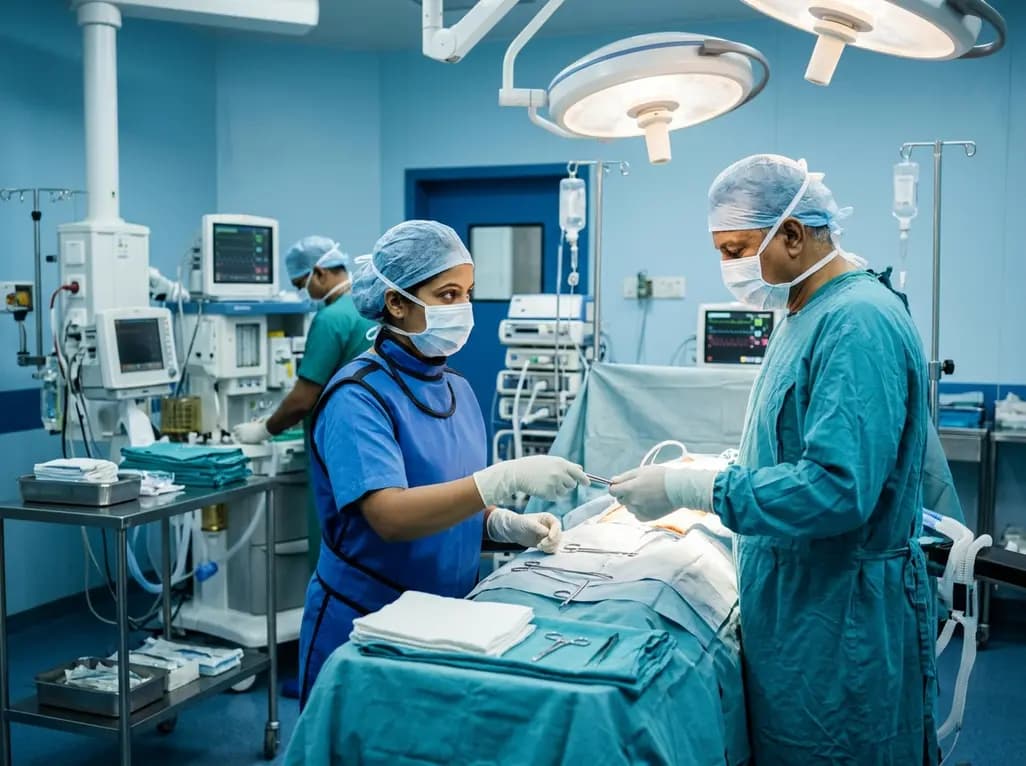
Delivering high-quality perioperative nursing care remains vital for optimizing surgical outcomes and reducing postoperative adverse events. Operating rooms function as high-stakes, fast-paced environments where multidisciplinary teams must coordinate seamlessly. While technological innovations and clinical protocols provide critical guidance, human factors deeply influence perioperative performance. Understanding how psychological and professional attributes shape practice standards is essential for surgical leaders. Recent empirical investigations evaluate how professional values, work passion, and motivation directly impact care quality in surgical suites.
Perioperative teams confront severe clinical pressures, rapid patient turnover, and complex surgical procedures daily. Therefore, surgical nurses must maintain exceptional clinical vigilance, comprehensive safety practices, and compassionate patient advocacy across pre-, intra-, and postoperative phases. Researchers conducted a predictive cross-sectional investigation to examine whether professional values, passion, and motivational factors correlate with perioperative service quality. The investigators recruited 121 surgical nurses practicing within a high-volume tertiary training and research hospital. Consequently, the study utilized validated psychometric instruments to gather reliable self-reported data. Specifically, participants completed the Nurses' Professional Values Scale, the 8-Item Passion Scale, the Adult Motivation Scale, and the Good Perioperative Nursing Care Scale. These psychometric tools allowed researchers to systematically quantify abstract professional attributes. Furthermore, the investigative team applied rigorous multiple linear regression modeling using the Enter method. This approach effectively isolated independent predictors while adjusting for confounding variables. Overall, the study offers significant empirical insights into the psychosocial foundations that govern patient safety inside modern operating theaters.
The study cohort demonstrated remarkably strong baseline scores across multiple evaluative measures. First, surgical nurses recorded a mean Nurses' Professional Values Scale score of 103.12, reflecting high ethical and professional consciousness. In addition, the participants achieved a mean Passion Scale score of 28.11, demonstrating moderate to high emotional commitment toward their nursing careers. The Adult Motivation Scale yielded an average score of 3.99, showing consistent motivational engagement. Correlation analyses initially revealed that superior perioperative nursing care shared significant positive associations with professional values, career passion, and general motivation. Consequently, nurses with higher psychological alignment reported delivering better patient care. However, bivariate correlations cannot account for mutual confounding among complex behavioral metrics. For this reason, multivariate modeling became essential to distinguish true independent drivers from passive associations. Surgical leaders must recognize that enthusiasm alone does not guarantee superior clinical performance. Instead, structured professional dedication establishes the foundation for consistent operating room compliance and safe procedural practices.
Multiple linear regression analysis clarified which specific factors independently govern perioperative nursing care quality. The full regression model proved statistically significant, explaining 41.0 percent of the total variance in perioperative care scores. This substantial explanatory power underscores the critical role of clinician psychology in procedural settings. Notably, intrinsic motivation emerged as the strongest independent predictor of care quality, showing a positive beta coefficient of 0.264. Similarly, professionalism maintained a statistically significant positive relationship with a beta coefficient of 0.198. In sharp contrast, career passion, extrinsic motivation, trust, and generalized caring failed to retain independent predictive significance in the adjusted model. Therefore, while passionate feelings and external incentives exist within the surgical suite, internal drive and professional dedication truly dictate bedside excellence. These empirical findings indicate that nurses driven by autonomous mastery and rigorous professional identity deliver superior surgical support. Consequently, health systems must foster intrinsic rewards rather than relying strictly on extrinsic pressures.
Surgeons and anesthesiologists rely heavily on surgical nurses to safeguard patient welfare during invasive interventions. When nurses exhibit strong intrinsic motivation, they execute essential safety checklists, maintain sterile fields, and monitor hemodynamic stability with meticulous care. Furthermore, a deep sense of professionalism empowers nurses to voice safety concerns promptly during critical surgical phases. Thus, high professionalism directly strengthens interprofessional communication and flattens harmful operating room hierarchies. In Indian surgical departments and global healthcare institutions alike, patient safety goals demand flawless operating theatre teamwork. Medical administrators often prioritize external incentives, such as financial bonuses or regulatory penalties, to enforce clinical compliance. However, the regression findings demonstrate that extrinsic motivators do not independently elevate perioperative nursing care. Hospital managers must therefore reorient quality improvement initiatives toward nurturing internal clinical mastery. Providing regular clinical training, autonomous decision-making opportunities, and clear career development pathways elevates intrinsic motivation. Consequently, hospitals enhance patient outcomes by strengthening surgical culture from within.
Although this study provides valuable data, clinicians must interpret the conclusions within the context of specific methodological limitations. Because the authors employed a cross-sectional design, one cannot infer definitive causal relationships between motivation and clinical performance. Furthermore, the investigation took place within a single metropolitan training hospital, which may limit generalizability across rural or community healthcare facilities. In addition, the study relied on self-reported survey instruments, introducing potential social desirability bias among respondents. Future research should implement longitudinal tracking and incorporate objective clinical endpoints, such as surgical site infection rates and checklist adherence scores. Moreover, comparative studies across diverse healthcare systems could determine how different cultural environments affect perioperative nursing care. Health researchers should also evaluate structured educational interventions designed to cultivate intrinsic motivation among perioperative staff. Ultimately, establishing robust causal evidence will help surgical departments optimize both human resource policies and patient care standards.
The primary conclusion is that intrinsic motivation and professionalism serve as the only independent predictors of high-quality perioperative nursing care in multivariate regression modeling. Although professional values, passion, and general motivation show positive correlations, they lose independent significance when fully adjusted for confounding variables. Therefore, internal drive and professional ethics govern perioperative excellence.
Extrinsic motivation often depends on external rewards, supervisory oversight, or institutional penalties, which may not sustain meticulous performance during high-pressure surgical procedures. Conversely, intrinsic motivation reflects personal dedication, intellectual satisfaction, and genuine pride in clinical competence. Consequently, surgical nurses driven by internal fulfillment consistently maintain rigorous patient safety practices without requiring external supervision.
Surgical administrators can apply these findings by designing work environments that foster professional autonomy, clinical mastery, and peer recognition. Instead of relying solely on extrinsic mandates or monetary bonuses, hospitals should provide continuous professional development, ethical leadership training, and active mentorship. Nurturing intrinsic motivation directly empowers perioperative nurses to maintain outstanding surgical safety standards.
Disclaimer: This content is for informational and educational purposes only... Refer to the latest local and national guidelines for clinical practice.
References

Read summarized clinical updates, watch expert medical content, and earn CME certifications right from your smartphone.
Open your smartphone camera to scan and install.





A cross-sectional regression analysis reveals that intrinsic motivation and professionalism among surgical nurses independently drive high perioperative nursing care quality, highlighting key strategies for operating room leadership and clinical surgical outcomes.
Today
A Swedish longitudinal cost analysis reveals that LRTI in older adults causes a massive surge in healthcare costs and hospital days, particularly within the first year post-infection. These findings underscore the critical role of adult immunization and proactive geriatric care in reducing clinical and economic burdens.
Today

A qualitative study highlights the unaddressed emotional hurdles and role uncertainty faced by men during the transition to fatherhood, calling for father-inclusive perinatal care and tailored digital health support.
Today

In a landmark public health ruling, the Supreme Court ordered the FSSAI to finalize strict front-of-pack warning rules within four months. Food companies must adopt separate red hexagonal symbols for high sugar, saturated fat, and salt within one year, advancing preventive medicine and patient dietary awareness.
Today

A multi-omic analysis reveals sporadic intramuscular myxoma comprises two molecularly distinct subtypes. GNAS-mutated lesions frequently carry TRAF7 mutations, whereas GNAS-wildtype tumors demonstrate striking genomic instability, loss of heterozygosity, and near-haploid features resembling DNHFN.
Today

At the ETHealthworld Nutriwell Conclave, leading medical researchers and nutrition experts highlighted the necessity of validating digital dietary tools scientifically. Clinicians emphasized a food-first philosophy, cautioning against single-nutrient obsessions and reinforcing the value of cultural culinary patterns.
Today
