

Loading, please wait...
Loading, please wait...

Lower respiratory tract infections represent a leading global health concern, frequently precipitating severe clinical complications among senior citizens. Managing LRTI in older adults demands considerable clinical vigilance because acute infection often initiates lingering physiological decline. Recently, real-world health economic data from Sweden revealed that these infections generate an enormous surge in subsequent healthcare utilization. Consequently, healthcare systems and treating physicians face elevated inpatient and outpatient demands. Understanding these downstream financial and clinical ramifications helps clinicians appreciate the comprehensive lifetime burden of respiratory illnesses.
The economic impact of acute respiratory episodes extends well beyond the resolution of active symptoms. Specifically, researchers evaluated older individuals aged 60 years and above from the Swedish National Study of Aging and Care in Kungsholmen. The investigators utilized a deterministic cost calculator to determine all-cause healthcare resource utilization across multiple years. They analyzed 567 adults with recorded respiratory infections alongside 1,701 matched unexposed controls.
Furthermore, the team tracked cumulative hospital admissions, inpatient bed days, and outpatient clinical visits over extended intervals. The primary analysis tracked participants over one, three, and five years, with longitudinal observations extending up to sixteen years. Notably, individuals with previous infection experienced substantial elevations in resource consumption compared to matched cohorts. Although the investigators cautioned against interpreting these descriptive differences as direct causal effects, the observed associations remain striking. Therefore, this economic assessment provides valuable context regarding the sustained resource requirements of aging patients following acute respiratory events.
The most profound financial divergence between infected individuals and controls emerged during the first twelve months following diagnosis. During this initial year, estimated mean costs linked to all-cause hospital days reached 39,112 euros among the exposed participants. In stark contrast, unexposed control participants incurred only 14,712 euros for equivalent inpatient services. Consequently, the descriptive absolute cost difference between the two cohorts was 24,400 euros per patient.
Moreover, this primary spike reflected prolonged lengths of stay rather than routine outpatient monitoring. Patients recovering from severe respiratory illness often experience acute delirium, cardiovascular instability, functional decompensation, or secondary bacterial infections. As a result, these frail individuals require prolonged multidisciplinary inpatient care and intensive rehabilitation. In addition, lingering systemic inflammation after acute infection frequently worsens pre-existing chronic conditions. Thus, the index infection acts as a clinical tipping point, precipitating recurring hospital admissions and prolonged bed days throughout the recovery phase.
The economic evaluation highlighted remarkable disparities when researchers stratified patient data across specific age and sex categories. For instance, male participants generated substantially higher descriptive cost estimates compared to their female counterparts. Previous physiological studies confirm that older men often exhibit less robust cell-mediated immunity and higher baseline rates of smoking-related lung disease. Consequently, male patients experience more severe initial infection trajectories and longer recovery periods.
Additionally, participants aged between 60 and 74 years displayed surprisingly higher descriptive costs than older cohorts. While this observation might seem unexpected initially, younger older adults frequently receive more aggressive therapeutic interventions and intensive care allocations. In contrast, very elderly individuals might receive conservative palliative pathways that incur fewer acute technical charges. However, both subgroups consistently demonstrated elevated healthcare resource use compared to their respective unexposed peers. Therefore, clinicians must recognize that chronological age and biologic sex significantly modify both clinical outcomes and healthcare expenditures.
These international findings provide compelling insights for clinicians managing geriatric populations across Indian healthcare settings. In India, acute respiratory infections remain a leading contributor to hospital admissions among seniors. Furthermore, out-of-pocket spending still accounts for a substantial proportion of medical expenses in private and public tertiary centers. A single prolonged hospitalization often exposes Indian families to catastrophic financial distress and sudden impoverishment.
Moreover, Indian seniors frequently present with complex multimorbidity, including poorly controlled type 2 diabetes, chronic obstructive pulmonary disease, and ischemic heart disease. When an acute lower respiratory infection strikes an older adult with baseline chronic disease, the inflammatory cascade accelerates organ dysfunction. As a result, post-discharge recovery is often sluggish, predisposing elderly individuals to secondary readmissions and permanent functional dependence. Indian physicians must therefore adopt holistic discharge planning, including aggressive glycemic control, nutritional optimization, and close post-infection monitoring, to prevent avoidable readmissions.
Given the substantial clinical and economic toll of respiratory infections, prevention represents the most sensible strategy for aging societies. Specifically, immunization provides an effective shield against high-impact pathogens such as Streptococcus pneumoniae, seasonal influenza, and respiratory syncytial virus. In India, geriatric vaccination rates remain disappointingly low due to limited public awareness and fragmented reimbursement mechanisms.
However, proactive vaccination programs could avert severe primary episodes, dramatically curtailing downstream inpatient hospitalizations. In addition to vaccines, physicians should emphasize early diagnostic testing, prompt initiation of targeted antimicrobials, and smoking cessation counseling. Similarly, managing underlying chronic diseases minimizes physiological vulnerability to invasive pathogens. Clinicians serving older adults must initiate routine discussions regarding adult immunizations during outpatient visits. By reducing index respiratory events, healthcare providers protect vulnerable patients from devastating clinical decline and reduce systemic healthcare expenditures.
Acute respiratory infections frequently trigger persistent systemic inflammation that accelerates underlying cardiovascular, metabolic, and renal chronic disorders. Furthermore, older adults often experience severe deconditioning, delirium, and muscle wasting during acute illness. Consequently, these physiological setbacks increase post-discharge vulnerability, requiring extended hospital stays, recurrent readmissions, specialized outpatient consultations, and continuous physical rehabilitation. Thus, the clinical and financial burden persists long after the primary infectious pathogen has been cleared.
Clinicians should strongly recommend annual influenza vaccination and pneumococcal conjugate vaccines for all individuals aged 60 and older. In addition, novel vaccines targeting respiratory syncytial virus provide essential protection for seniors with chronic cardiopulmonary disorders. Timely immunization substantially diminishes the incidence of severe pneumonia, hospital admissions, and subsequent ICU utilization. Therefore, routine preventative counseling during outpatient visits represents a cost-effective clinical strategy to safeguard elderly patients against devastating respiratory morbidity.
Male patients typically demonstrate higher post-infection healthcare costs and extended hospitalization due to biological and lifestyle disparities. Specifically, older men experience faster age-related immune senescence, leaving them more susceptible to severe tissue injury. Moreover, higher historical smoking prevalence and increased cardiovascular comorbidity among men exacerbate pulmonary complications. Consequently, male seniors face prolonged recovery periods, higher intensive care requirements, and increased post-discharge complications compared to matched female counterparts.
Disclaimer: This content is for informational and educational purposes only... Refer to the latest local and national guidelines for clinical practice.
References
Tsoumani E et al. Healthcare costs associated with lower respiratory tract infections among older adults in Sweden: a cost analysis. J Med Econ. 2026 Dec undefined. doi: 10.1080/13696998.2026.2764582. PMID: 43100236.
Abbadi A, Beridze G, Tsoumani E, et al. Impact of lower-respiratory tract infections on healthcare utilization and mortality in older adults: a Swedish population-based cohort study. Eur Geriatr Med. 2024;15(5):1245-1254.
Singh S, Kumar R, et al. Resource utilisation and cost of hospitalisation with community-acquired pneumonia among older adults in India. BMJ Open. 2025;15:e089123.

Read summarized clinical updates, watch expert medical content, and earn CME certifications right from your smartphone.
Open your smartphone camera to scan and install.





A Swedish longitudinal cost analysis reveals that LRTI in older adults causes a massive surge in healthcare costs and hospital days, particularly within the first year post-infection. These findings underscore the critical role of adult immunization and proactive geriatric care in reducing clinical and economic burdens.
Today

A qualitative study highlights the unaddressed emotional hurdles and role uncertainty faced by men during the transition to fatherhood, calling for father-inclusive perinatal care and tailored digital health support.
Today

In a landmark public health ruling, the Supreme Court ordered the FSSAI to finalize strict front-of-pack warning rules within four months. Food companies must adopt separate red hexagonal symbols for high sugar, saturated fat, and salt within one year, advancing preventive medicine and patient dietary awareness.
Today
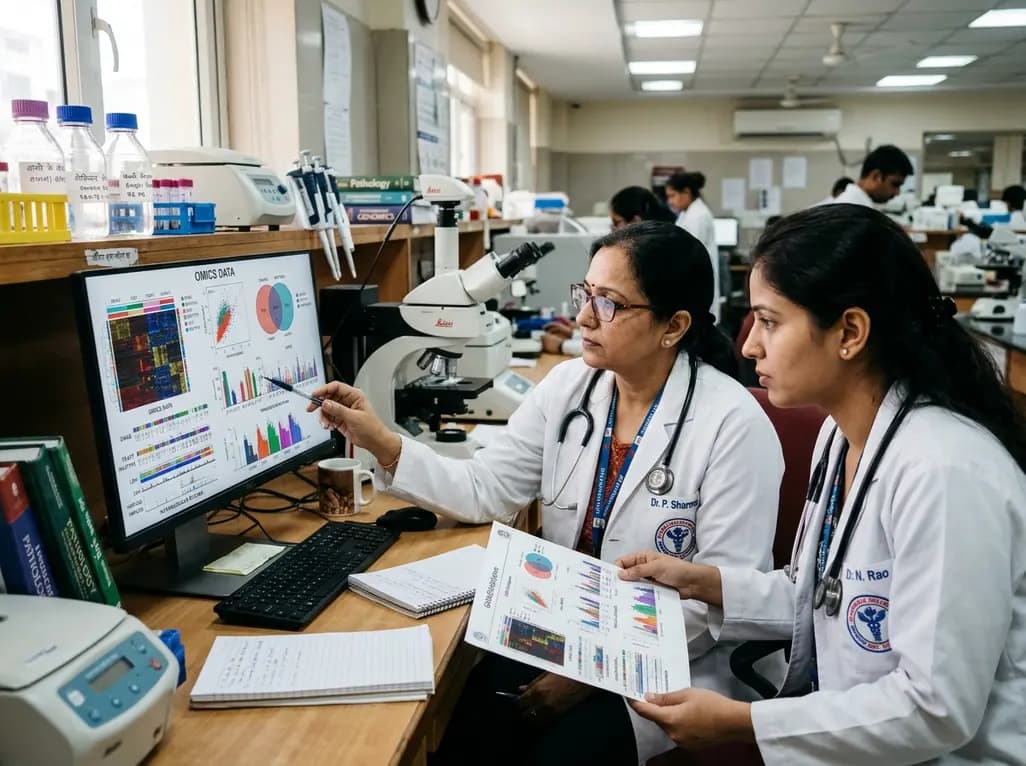
A multi-omic analysis reveals sporadic intramuscular myxoma comprises two molecularly distinct subtypes. GNAS-mutated lesions frequently carry TRAF7 mutations, whereas GNAS-wildtype tumors demonstrate striking genomic instability, loss of heterozygosity, and near-haploid features resembling DNHFN.
Today

At the ETHealthworld Nutriwell Conclave, leading medical researchers and nutrition experts highlighted the necessity of validating digital dietary tools scientifically. Clinicians emphasized a food-first philosophy, cautioning against single-nutrient obsessions and reinforcing the value of cultural culinary patterns.
Today
