

Loading, please wait...
Loading, please wait...

Pancreatic ductal adenocarcinoma remains one of the deadliest malignancies worldwide. Most patients present with locally advanced or metastatic disease. Consequently, surgical resection offers a curative option for only a small minority. Systemic chemotherapy forms the cornerstone of palliative and adjuvant care. Specifically, gemcitabine-based regimens represent standard front-line therapeutic interventions. However, intrinsic and acquired drug resistance rapidly compromises long-term survival. Pancreatic tumors establish dense stroma and activate robust anti-apoptotic pathways. Therefore, oncologists urgently need alternative cytotoxic modalities to eliminate refractory tumor cells. Inducing pancreatic cancer ferroptosis provides a promising strategy to bypass classical resistance.
Ferroptosis represents a distinct form of iron-dependent programmed cell death driven by toxic lipid peroxidation. Notably, malignant pancreatic cells display intense iron avidity and metabolic reprogramming. In contrast to healthy tissues, tumor cells maintain a delicate balance between reactive oxygen species and antioxidant defenses. Consequently, selectively triggering intracellular iron overload destabilizes this equilibrium. When membrane repair mechanisms collapse, fatal cell destruction follows. Thus, unleashing regulated iron influx presents an extraordinary opportunity to resensitize recalcitrant malignancies to standard chemotherapy.
Transferrin receptor 1, encoded by the TFRC gene, serves as the primary gateway for cellular iron uptake. Elevated receptor expression accelerates intracellular iron accumulation, thereby promoting ferroptosis. However, the transcriptional control governing TFRC expression in pancreatic cancer previously remained mysterious. Recently, researchers identified transcription factor 7-like 1, known as TCF7L1, as the first bona fide transcriptional repressor of TFRC in pancreatic ductal adenocarcinoma. This pivotal finding exposes a critical mechanistic link between transcriptional regulation and iron homeostasis.
Under baseline conditions, TCF7L1 forms a stable inhibitory complex with the corepressor TLE3. This repressive machinery binds tightly to the TFRC promoter. Consequently, the complex silences receptor transcription and restricts iron internalization. Tumor cells exploit this mechanism to evade lipid peroxidation and ferroptotic death. Furthermore, genetic knockdown of TCF7L1 directly relieves this transcriptional repression. Laboratory experiments demonstrated that knocking down TCF7L1 triggers substantial iron accumulation. Remarkably, this intervention halted tumor growth in patient-derived models without damaging healthy cells. Thus, TCF7L1 establishes a cancer-selective ferroptosis dependency.
Discovering the TCF7L1-TLE3 repressor complex highlighted an attractive pharmacological target. Nevertheless, transcription factors frequently present difficult challenges for drug developers. Investigators achieved a breakthrough by demonstrating that sulforaphane, a natural isothiocyanate, functions as a direct ligand for TCF7L1. Specifically, sulforaphane docks into a defined binding interface comprising residues Tyr148, Lys165, and His186. This precise engagement induces a conformational alteration across the protein scaffold. Consequently, the structural shift disrupts the physical interaction between TCF7L1 and its corepressor TLE3.
Following this disruption, TCF7L1 dissociates from the promoter region of TFRC. As a result, cellular machinery de-represses transferrin receptor transcription. The marked upregulation of transferrin receptor 1 floods pancreatic cancer cells with ferrous iron. Subsequently, excessive iron ions catalyze Fenton reactions, producing lethal reactive oxygen species and peroxidizing membrane lipids. Because sulforaphane directly targets this regulatory node, it bypasses upstream signaling roadblocks. Therefore, sulforaphane acts as the first direct TCF7L1 inhibitor capable of orchestrating iron-mediated cancer death.
Monotherapy often yields modest results in aggressive pancreatic tumors. Therefore, researchers evaluated whether sulforaphane synergizes with other therapeutic modalities. Glutathione peroxidase 4, or GPX4, represents the primary enzymatic defender against lipid peroxidation. When investigators combined sulforaphane with RSL3, a potent GPX4 inhibitor, they observed remarkable synergy. Sulforaphane-driven iron influx generated rampant reactive oxygen species, while RSL3 crippled antioxidant clearance. Consequently, this dual assault overwhelmed cellular defenses and nearly abolished pancreatic cancer growth in preclinical models.
Moreover, the TCF7L1-TFR1 signaling axis determines cellular responsiveness to standard cytotoxic agents. In chemoresistant pancreatic ductal adenocarcinoma models, persistent gemcitabine exposure often correlates with suppressed ferroptosis pathways. However, administering sulforaphane restored gemcitabine sensitivity in refractory cell lines. In addition, patient-derived xenografts and organoids exhibited profound tumor regression following combined therapy. Importantly, this combinatorial approach prevented the emergence of acquired drug resistance. Thus, pharmacological reactivation of iron uptake transforms recalcitrant tumors into chemotherapy-sensitive targets.
Translating novel ferroptosis strategies into clinical practice demands rigorous safety profiles. Many experimental ferroptosis inducers produce unacceptable off-target toxicities in non-malignant tissues. Fortunately, sulforaphane exhibits cancer-selective cytotoxicity that spares healthy human cells. Normal pancreatic epithelial cells display minimal baseline reliance on this repressive complex. Consequently, sulforaphane does not induce catastrophic iron overload in healthy organs. This critical selectivity addresses a major hurdle in contemporary oncology drug development.
Furthermore, sulforaphane possesses well-characterized pharmacokinetics, oral bioavailability, and established tolerability in human trials. Oncologists and gastroenterologists can readily envision clinical protocols combining purified sulforaphane with gemcitabine. Additionally, measuring baseline TCF7L1 and TFRC expression could provide valuable predictive biomarkers. Clinicians might stratify patients facing drug-resistant disease, identifying individuals most likely to achieve remission through iron-potentiated protocols. While clinicians must await confirmatory prospective clinical trials, these discoveries establish an actionable framework. Ultimately, targeting the TCF7L1-TFR1 axis offers renewed hope for improving patient survival.
In pancreatic ductal adenocarcinoma, the transcription factor TCF7L1 forms a physical inhibitory complex with the corepressor TLE3. This repressive complex binds specifically to the promoter region of the TFRC gene. Consequently, it blocks the transcriptional machinery and significantly suppresses transferrin receptor 1 synthesis. By limiting cellular iron uptake, the TCF7L1-TLE3 axis prevents intracellular iron overload, effectively safeguarding malignant cells from lethal lipid peroxidation and ferroptotic cell death.
Preclinical studies demonstrate that sulforaphane targets an oncogenic dependency that normal human cells do not possess. Malignant pancreatic cells depend heavily on aberrant TCF7L1-TLE3 signaling to repress transferrin receptor 1 and avoid oxidative catastrophe. In contrast, non-malignant epithelial tissues maintain balanced iron regulation without this transcriptional repression. Consequently, sulforaphane disrupts the repressive complex exclusively in cancer cells, triggering selective iron overload and ferroptosis while leaving healthy bystander tissues unharmed.
Chemoresistant pancreatic cancer cells frequently evade gemcitabine-induced apoptosis by suppressing cell death pathways and fortifying antioxidant defenses. Sulforaphane directly binds to TCF7L1, displacing TLE3 and inducing robust TFRC transcription. This molecular event stimulates massive intracellular iron accumulation, generating excessive reactive oxygen species. Consequently, heightened lipid peroxidation lowers the threshold for cell death. This powerful oxidative stress effectively neutralizes chemoresistance pathways, re-sensitizing refractory pancreatic tumors to gemcitabine cytotoxicity and restoring therapeutic efficacy.
Disclaimer: This content is for informational and educational purposes only... Refer to the latest local and national guidelines for clinical practice.
References

Read summarized clinical updates, watch expert medical content, and earn CME certifications right from your smartphone.
Open your smartphone camera to scan and install.





A breakthrough study reveals that sulforaphane disrupts the TCF7L1-TLE3 complex to de-repress transferrin receptor 1, driving iron overload and ferroptosis in pancreatic ductal adenocarcinoma. This novel epigenetic mechanism overcomes gemcitabine resistance in preclinical models.
Today
A cross-sectional study of 4,862 women highlights how metabolic phenotypes alter female reproductive impairment. Metabolically unhealthy overweight and obesity presented the greatest odds for infertility and impaired fecundity, underscoring the vital need for comprehensive cardiometabolic screening.
Today

Under India's nationwide immunization drive, healthcare teams have vaccinated more than one crore 14-year-old girls within nine months. This comprehensive analysis evaluates state achievements, digital tracking via the U-WIN platform, clinical safety monitoring, and practical counselling strategies for practitioners.
Today

A large network analysis of middle-aged and older adults reveals distinct sex-specific dependency pathways between lifestyle factors and cardiometabolic diseases. Physical activity, smoking, and alcohol exhibit divergent bridging roles in men and women, underscoring the need for tailored clinical prevention.
Today

A landmark study reveals that patellofemoral cartilage defects in patients with trochlear dysplasia are primarily driven by patellar maltracking and spur height rather than dislocation frequency or shape mismatch, offering crucial insights for preoperative imaging and surgical stabilization.
Today
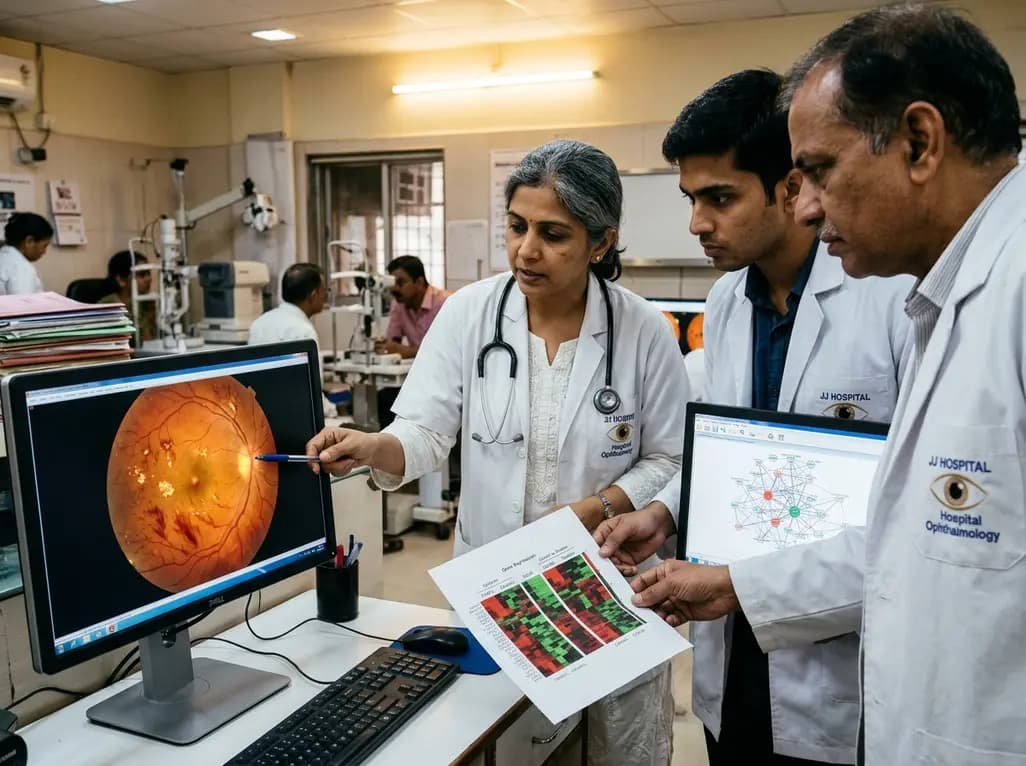
Single-cell transcriptomics reveals that STAP2 promotes retinal endothelial dysfunction in diabetic retinopathy through CXCR4 signaling. In vivo and in vitro studies show STAP2 knockdown reduces capillary drop-out and vascular leakage, uncovering a novel therapeutic target beyond anti-VEGF therapies.
Today
