

Loading, please wait...
Loading, please wait...

Cardiometabolic diseases represent one of the most pressing public health challenges worldwide, particularly among middle-aged and older individuals. These conditions include type 2 diabetes mellitus, dyslipidemia, coronary heart disease, and stroke. Together, they create substantial clinical morbidity, functional decline, and premature mortality. Historically, epidemiological research examined these clinical disorders in isolation or through standard linear regression models. However, chronic medical conditions rarely occur independently. Instead, metabolic disturbances and behavioral habits interact across complex biological and social networks. Modifiable lifestyle factors, such as physical activity, sleep hygiene, tobacco use, and alcohol intake, play central roles in driving or mitigating cardiometabolic risks. Furthermore, growing clinical evidence indicates that biological sex fundamentally shapes disease susceptibility, symptom presentation, and behavioral patterns. In regions like India and other transitioning economies, rapid demographic aging and urbanization accelerate this disease burden. Consequently, healthcare providers urgently require sophisticated analytical frameworks to comprehend how daily behaviors and chronic illnesses mutually reinforce each other. Disentangling these intricate, interconnected pathways enables primary care clinicians and specialists to identify high-yield clinical targets. Ultimately, moving beyond single-disease paradigms allows for earlier intervention and more personalized cardiometabolic care.
To understand the intricate connections between lifestyle behaviors and chronic conditions, researchers increasingly apply advanced statistical network techniques. A groundbreaking study evaluated 18,548 participants from Wave 5 of the China Health and Retirement Longitudinal Study. The investigators employed mixed graphical models alongside directed acyclic Bayesian networks. These methodologies allow clinicians to visualize conditional dependencies while controlling for all other variables simultaneously. Mixed graphical models calculate bridge expected influence, which identifies specific lifestyle factors that link distinct clusters of pathology. In addition, Bayesian network analysis deciphers probabilistic dependency structures, mapping potential directional pathways between lifestyle exposures and adverse health outcomes. Rather than viewing individual risk factors through isolated hazard ratios, network modeling conceptualizes chronic illness as a dynamic, interconnected system. Consequently, clinicians can pinpoint the precise leverage nodes where behavioral modification yields the broadest systemic benefit. Moreover, network comparison tests allow rigorous statistical evaluation of structural differences across demographic subgroups. By moving beyond traditional multivariable regression, this innovative analytical approach provides unprecedented clarity regarding how multiple risk factors cluster, interact, and propagate across aging human populations.
The study demonstrated that while global network strength remained comparable across sexes, the underlying network architectures differed remarkably. In mixed graphical models, alcohol consumption and physical activity exhibited the highest bridge expected influence among men. This finding indicates that these two specific behaviors serve as pivotal conduits connecting healthy aging to pathological cardiometabolic states. Conversely, among women, physical activity and cigarette smoking emerged as the most influential bridge nodes within the network. These distinct bridging roles emphasize that identical lifestyle habits carry disparate clinical weight depending on patient sex. For instance, alcohol abuse in aging men often triggers concurrent metabolic and vascular insults, accelerating cardiac decompensation. In contrast, tobacco use in women frequently acts in synergy with postmenopausal hormonal shifts, profoundly worsening endothelial function and atherogenesis. Therefore, clinical risk stratification cannot rely on uniform checklists. Instead, clinicians must evaluate behavioral histories through a sex-sensitive lens during routine primary care encounters. Recognizing these distinct bridge nodes allows healthcare teams to tailor counseling, targeting the specific lifestyle factors that drive multisystem cardiometabolic failure in each sex.
Beyond bridging centrality, Bayesian network analysis uncovered both shared and divergent dependency patterns between men and women. Notably, a common dependency pattern emerged across both sexes involving physical activity, dyslipidemia, and diabetes mellitus. Regular physical activity directly influenced lipid regulation, which subsequently dictated glycemic control and diabetes risk. This shared core confirms that sustained physical activity remains the non-negotiable cornerstone of metabolic stability regardless of gender. However, the study also revealed striking sex-specific pathways. Among men, the analysis mapped a prominent probabilistic sequence linking alcohol consumption, stroke, heart disease, and diabetes. In contrast, the female network demonstrated a direct dependency chain connecting tobacco smoking, coronary heart disease, and ischemic stroke. These divergence patterns reflect underlying physiological differences, including vascular reactivity, lipid clearance kinetics, and visceral adipose distribution. Furthermore, sensitivity analyses incorporating sociodemographic covariates preserved these robust lifestyle-disease connections among women, whereas male networks exhibited attenuation. This statistical variation highlights the profound confounding influence of occupational stress and socioeconomic determinants in men. Consequently, physicians must account for broader social determinants when interpreting male cardiometabolic trajectories.
These analytical insights offer critical practical value for physicians managing cardiometabolic diseases across South Asia. India currently faces an unprecedented epidemic of premature coronary artery disease, high dyslipidemia prevalence, and rampant type 2 diabetes. Clinicians frequently encounter older patients presenting with multimorbid cardiometabolic clusters rather than isolated ailments. Therefore, adopting a person-centered, network-informed perspective can dramatically transform routine outpatient consultations. In male patients, practitioners should aggressively evaluate alcohol intake and sedentary habits, because these behaviors directly bridge into cardiovascular collapse. Conversely, in female patients, clinicians must thoroughly investigate tobacco use, including smokeless tobacco forms, while actively promoting daily physical exercise. Furthermore, Indian women often deprioritize aerobic activity due to domestic caregiving demands, compounding postmenopausal metabolic decline. Prescribing structured physical activity routines must become as routine as prescribing statins or antihypertensive agents. In addition, multidisciplinary lifestyle clinics involving dietitians, physiotherapists, and nurse educators can operationalize these recommendations effectively. By directing behavioral interventions toward high-centrality bridge nodes, healthcare providers can maximize clinical efficacy, prevent cascading macrovascular complications, and achieve superior long-term patient outcomes.
In graphical network analysis, bridge nodes represent critical variables that connect two distinct diagnostic or behavioral communities. For example, in cardiometabolic research, bridge nodes link lifestyle behaviors like physical activity or alcohol use with clinical disease clusters such as diabetes and heart disease. Identifying these bridge nodes enables clinicians to target the most influential behaviors that transmit risk across multiple physiological systems, thereby preventing interconnected chronic complications more effectively.
Sex differences in cardiometabolic pathways stem from a combination of biological mechanisms and distinct behavioral exposures. Endocrine factors, particularly premenopausal and postmenopausal estrogen levels, significantly alter vascular elasticity, lipid metabolism, and visceral fat distribution. Concurrently, behavioral patterns diverge widely between sexes due to socioeconomic roles and cultural expectations. These physiological and environmental differences create distinct dependency pathways, causing smoking to impact women differently while alcohol consumption plays a more pronounced role in male disease networks.
Clinicians can apply network findings by shifting from generalized lifestyle advice to highly focused, sex-specific behavioral prescriptions. Instead of overwhelming patients with multiple simultaneous lifestyle modifications, physicians should target high-centrality bridge nodes first. For female patients, prioritizing smoking cessation and consistent aerobic physical activity interrupts critical disease pathways. For male patients, addressing alcohol consumption and physical inactivity produces the greatest systemic risk reduction. This tailored approach optimizes consultation efficiency and significantly enhances long-term therapeutic compliance.
Disclaimer: This content is for informational and educational purposes only... Refer to the latest local and national guidelines for clinical practice.
References

Read summarized clinical updates, watch expert medical content, and earn CME certifications right from your smartphone.
Open your smartphone camera to scan and install.





A large network analysis of middle-aged and older adults reveals distinct sex-specific dependency pathways between lifestyle factors and cardiometabolic diseases. Physical activity, smoking, and alcohol exhibit divergent bridging roles in men and women, underscoring the need for tailored clinical prevention.
Today

A meta-analysis of 9 randomized controlled trials evaluated health-related quality of life when adding PD-1/PD-L1 inhibitors to standard therapy for endometrial and cervical cancer. Adding immunotherapy did not detectably change global quality of life or worsen functional and symptom domains.
Today
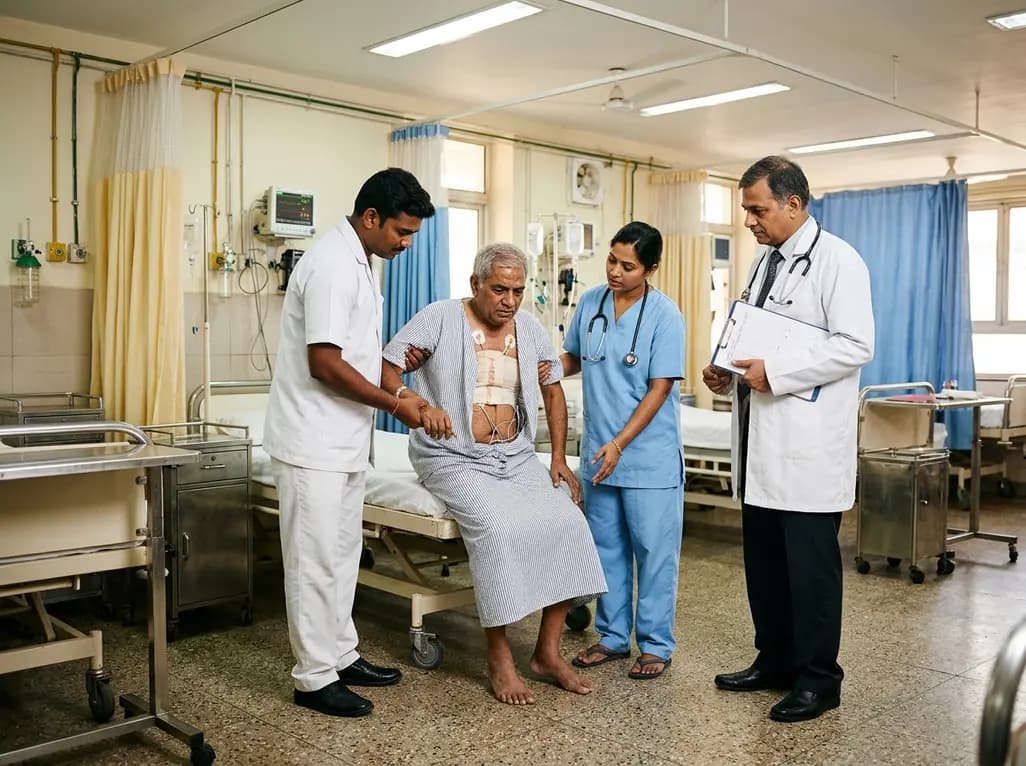
A cross-sectional study evaluates the critical intersection between acute surgical pain, kinesiophobia, and fall risks during initial mobilization after cardiac surgery, emphasizing targeted nursing strategies.
Today

A comprehensive meta-analysis reveals a decline in hip avascular necrosis following kidney transplantation to 3.45% post-2010. This decline reflects modern steroid-sparing immunosuppression, while highlighting geographic variations and the importance of early diagnosis.
Today

Single-cell transcriptomics reveals that STAP2 promotes retinal endothelial dysfunction in diabetic retinopathy through CXCR4 signaling. In vivo and in vitro studies show STAP2 knockdown reduces capillary drop-out and vascular leakage, uncovering a novel therapeutic target beyond anti-VEGF therapies.
Today
