

Loading, please wait...
Loading, please wait...

Clinicians have long recognized autonomic instability in schizophrenia, yet establishing its neurobiological origins has remained difficult. Recent research identifies sudomotor dysfunction in psychosis as an objective autonomic biomarker that mirrors symptom severity and cognitive impairment. Historically, clinicians viewed autonomic dysregulation in psychotic spectrum illnesses as a byproduct of central nervous system disturbance or psychotropic adverse effects. However, contemporary evidence demonstrates that peripheral postganglionic sympathetic fibers display intrinsic functional impairments. Consequently, evaluating sweat reflexes provides an accessible, non-invasive method to evaluate autonomic integrity, offering valuable biological insights for psychiatric practice. Moreover, this non-invasive autonomic biomarker opens new diagnostic pathways for clinicians evaluating complex psychiatric disorders.
The sympathetic nervous system regulates perspiration through postganglionic unmyelinated C-fibers that innervate eccrine sweat glands across the body. In most sympathetic pathways, postganglionic transmission depends primarily on norepinephrine. However, sudomotor innervation relies uniquely on acetylcholine acting upon muscarinic receptors. When evaluating autonomic function, psychiatrists frequently observe resting tachycardia, altered pupillary reflexes, and labile blood pressure control in patients with psychosis.
Traditionally, clinicians assumed that central neural circuits, including the prefrontal cortex and insula, generated these autonomic disturbances exclusively. However, documenting sudomotor dysfunction in psychosis proves that autonomic failure does not stem solely from descending central signals. Instead, peripheral postganglionic small-fiber axons exhibit measurable physiological failure independent of cerebral input. Furthermore, this peripheral autonomic disruption correlates directly with primary disease processes rather than secondary behavioral factors. Therefore, identifying peripheral autonomic deficits reshapes our conceptualization of psychotic illnesses, revealing that systemic neurochemical pathology extends beyond the central nervous system into peripheral neural pathways.
To separate peripheral nerve function from central brain drive, investigators employ the Quantitative Sudomotor Axon Reflex Test, also called Q-SWEAT. During this specialized neurophysiological test, technicians introduce acetylcholine into the skin using transdermal iontophoresis. This chemical challenge activates terminal postganglionic sympathetic C-fibers locally. As a result, the stimulation triggers an electrical axon reflex that travels antidromically, arborizes collaterally, and stimulates adjacent eccrine sweat glands to secrete perspiration. Highly sensitive capsules then record the sweat volume and output kinetics continuously in real time.
Because this axon reflex operates entirely within distal terminal nerve branches, it bypasses the brainstem and spinal cord completely. Consequently, diminished sweat responses indicate either small-fiber axonopathy or impaired muscarinic receptor sensitivity rather than psychological distress or voluntary motor activity. In recent clinical protocols, researchers combined quantitative sudomotor testing with the Measurement and Treatment Research to Improve Cognition in Schizophrenia consensus battery. In addition, examiners assessed psychiatric symptoms using the Positive and Negative Syndrome Scale and the Hamilton Depression Rating Scale, establishing a rigorous framework to quantify autonomic and clinical relationships.
The clinical study produced compelling statistical evidence linking autonomic reflexes with psychotic illness. Specifically, diagnostic group categorization significantly predicted sudomotor reflex function across all participants. Individuals with psychosis were 5.37 times more likely to demonstrate sudomotor dysfunction compared to healthy control subjects. Importantly, this notable statistical association remained significant even after researchers controlled for total anticholinergic medication burden, confirming that pharmacotherapy does not explain the reflex deficits.
Meanwhile, participants diagnosed with nonpsychotic affective disorders showed intermediate sudomotor measures that did not differ significantly from either healthy controls or individuals with psychosis. Across the overall sample, sudomotor dysfunction correlated significantly with poorer cognitive scores and increased psychiatric symptom severity. Consequently, these findings indicate that small-fiber cholinergic dysfunction tracks closely with overall clinical and cognitive impairment. Because peripheral axon reflexes function without active descending central signals, these findings provide definitive proof that autonomic dysregulation in psychosis possesses a distinct peripheral pathophysiological component.
Investigators have proposed several biologically plausible hypotheses to explain these peripheral autonomic abnormalities. Most notably, peripheral sudomotor transmission depends on muscarinic M3 acetylcholine receptors located on eccrine sweat glands. Interestingly, muscarinic receptors, including M1 and M4 subtypes, play essential regulatory roles within central cognitive circuits and cortical interneurons. Thus, a generalized, systemic vulnerability in cholinergic signaling could easily impair both central cognition and peripheral sudomotor reflexes in parallel.
Additionally, broader systemic processes might damage unmyelinated C-fibers throughout the peripheral nervous system. Chronic low-grade systemic inflammation, elevated circulating cytokines, and oxidative stress frequently occur in schizophrenia. These inflammatory cascades can compromise small unmyelinated axons and trigger localized microvascular endothelial dysfunction. Furthermore, microvascular perfusion deficits can cause ischemic injury to distal nerve endings that innervate eccrine sweat glands, attenuating reflex conduction. Whether driven by shared cholinergic receptor mutations or microvascular inflammatory injury, sudomotor failure reflects widespread neurobiological pathology that bridges the peripheral and central nervous systems.
The discovery of sudomotor reflex failure offers meaningful clinical explanations for abnormal thermoregulation in psychiatric cohorts. Clinicians have long observed that individuals with schizophrenia face heightened risks of severe hypothermia during winter and fatal heat stroke during heatwaves. Historically, physicians attributed these temperature vulnerabilities solely to antipsychotic-induced hypothalamic suppression or inadequate self-care behaviors. However, sudomotor dysfunction directly cripples the body's primary physiological mechanism for evaporative heat dissipation, creating profound physical susceptibility to environmental heat stress.
Furthermore, sudomotor testing shows remarkable promise as an objective clinical biomarker in psychiatric medicine. At present, psychiatric diagnosis relies primarily on subjective behavioral evaluations and patient self-reports. Quantitative autonomic testing provides reproducible, objective physiological data that track neurocognitive deficits and small-fiber cholinergic health. Moreover, identifying autonomic vulnerability helps clinicians anticipate drug adverse effects, prevent heat-related medical emergencies, and monitor response to novel muscarinic agonists currently entering clinical practice. Consequently, incorporating sudomotor reflex evaluations into routine clinical workflows enhances patient safety and optimizes pharmacological management. Ultimately, objective autonomic biomarkers could bridge the historical divide between neurology and psychiatry.
The quantitative sudomotor axon reflex test evaluates postganglionic sympathetic cholinergic C-fiber function. Technicians introduce acetylcholine into the skin via iontophoresis to activate an axon reflex that bypasses the central nervous system. Specialized capsules quantify sweat output, providing an objective measurement of small-fiber peripheral autonomic integrity in clinical and research settings.
Peripheral sudomotor dysfunction correlates significantly with poorer performance in working memory, executive function, and attention. This relationship likely reflects shared cholinergic signaling vulnerabilities. Central cognitive circuits and peripheral sweat glands both rely on muscarinic receptor signaling, meaning peripheral reflex attenuation mirrors broader neurochemical impairments affecting overall cerebral functioning.
Although psychotropic medications often possess anticholinergic properties that diminish perspiration, research shows that sudomotor dysfunction in psychosis persists after controlling for anticholinergic burden. Therefore, the observed reflex impairment represents an authentic neurobiological feature of the psychotic disorder rather than an artifact produced solely by pharmacological treatment.
Disclaimer: This content is for informational and educational purposes only and does not constitute medical advice, diagnosis, or treatment. Healthcare professionals should rely on their clinical judgment and verify details independently. Refer to the latest local and national guidelines for clinical practice.
References

Read summarized clinical updates, watch expert medical content, and earn CME certifications right from your smartphone.
Open your smartphone camera to scan and install.





A landmark study reveals that sudomotor dysfunction in psychosis is 5-fold higher than in controls, persisting independently of anticholinergic burden. Peripheral sweat reflex deficits correlate with cognitive impairment and symptom severity, pointing to systemic cholinergic and microvascular pathology.
Today

A randomized crossover trial evaluated fifth-year medical students interacting with an AI standardized patient versus a human standardized patient. The study revealed key differences in Mini-CEX scores, active engagement, and interview dynamics.
Today

A comparative evaluation of INNO-LiPA, Cobas 4800, and Amplicor highlights significant assay-dependent variation in high-risk HPV detection, emphasizing the clinical distinction between analytical sensitivity and screening specificity.
Today

A Canadian nutrition study reveals that higher diet costs predict lower dietary energy density and higher fruit intake, but also increase sodium and processed meat consumption.
Today
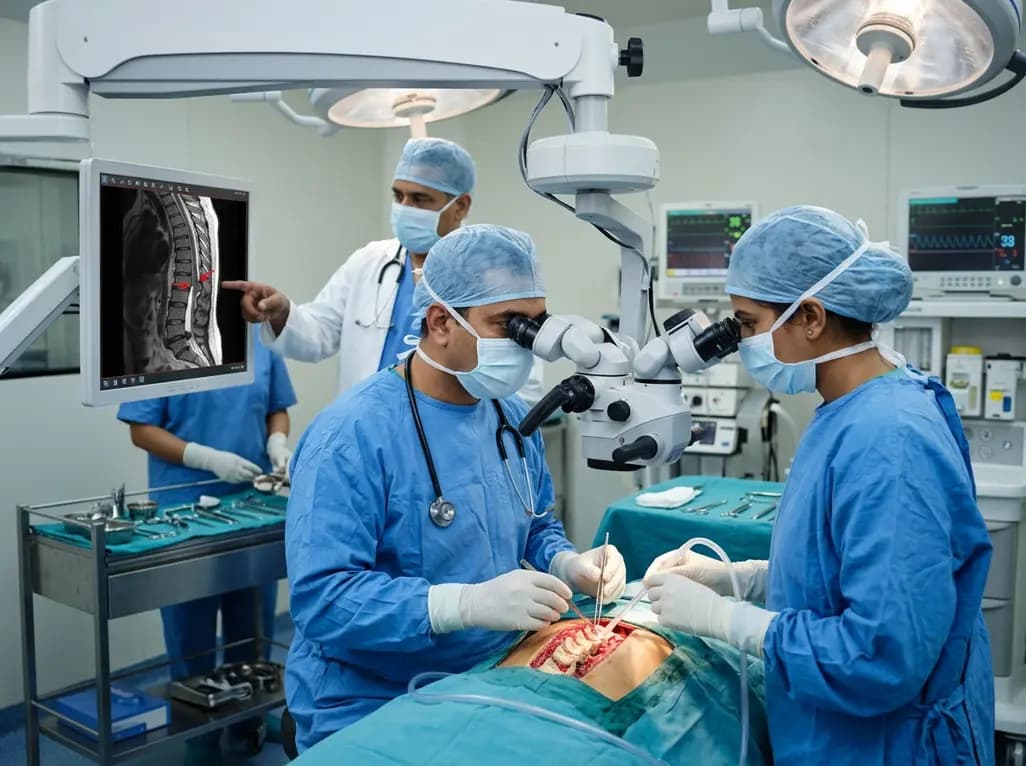
Idiopathic spinal cord herniation is a rare pathology presenting with progressive thoracic myelopathy. Early MRI identification and meticulous microsurgical reduction with dual bolstered dural defect repair prevent irreversible neurological deterioration.
Today

A novel smartphone-assisted biosensor utilizing molecularly imprinted polymers and catalytic nanozymes offers antibody-free, enzyme-free urinary microalbumin testing, enabling rapid, low-cost point-of-care screening for early chronic kidney disease.
Today
