.webp&w=384&q=75)

Loading, please wait...
Loading, please wait...

Deep brain stimulation targeting the subthalamic nucleus represents a transformative intervention for individuals experiencing severe motor fluctuations in Parkinson's disease. However, clinicians frequently observe an unintended post-surgical consequence: a marked decline in semantic verbal fluency. While high-frequency stimulation provides remarkable relief from tremor, rigidity, and bradykinesia, cognitive side effects can diminish a patient's communication and quality of life. Understanding why semantic verbal fluency deteriorates following neurosurgical modulation remains an essential priority for movement disorder teams worldwide.
Verbal fluency assessments serve as critical neuropsychological instruments that evaluate both language processing and executive function. Specifically, semantic verbal fluency requires individuals to retrieve words belonging to a specified conceptual category within a limited timeframe. This complex cognitive exercise relies heavily on dynamic frontostriatal communication, intact semantic memory stores, and efficient lexical selection.
In patients diagnosed with Parkinson's disease, progressive neurodegeneration already impairs basal ganglia circuits. Consequently, even mild perturbations within frontostriatal loops can disproportionately hinder rapid semantic categorization. When neurosurgeons apply continuous electrical pulses to the subthalamic nucleus, they often alter widespread neural dynamics beyond localized motor pacemakers. Clinical observations consistently show that category-based word generation declines more severely than phonemic generation following surgical intervention.
Furthermore, post-operative linguistic alterations create significant daily distress for patients and caregivers alike. When speech pauses increase and spontaneous conversational retrieval falters, individuals frequently withdraw from social environments. Therefore, healthcare providers must recognize that speech changes extend far beyond isolated motor articulation issues. Early identification through systematic neuropsychological monitoring enables clinical teams to identify cognitive vulnerability before functional independence deteriorates significantly.
Deep brain stimulation delivers electrical currents to regulate pathologically synchronized neural activity within basal ganglia circuits. Consequently, patients achieve major reductions in off-time and enjoy noticeable decreases in daily dopaminergic medication requirements. Nevertheless, the compact anatomy of the subthalamic nucleus creates a narrow margin between therapeutic success and off-target stimulation.
The nucleus contains distinct anatomical compartments dedicated to sensorimotor, associative, and limbic functions. Because these zones lie in close proximity to one another, current leakage into associative territories occurs quite frequently during aggressive symptom management. Moreover, neurosurgeons often seek maximum motor symptom suppression, which drives stimulation toward boundaries where executive pathways intersect motor tracts.
Recent clinical investigations demonstrate that nearly sixty percent of surgical recipients experience measurable postoperative drops in verbal retrieval efficiency. Interestingly, clinical analyses reveal that higher baseline motor impairment, measured via Hoehn and Yahr staging, directly correlates with an increased odds ratio of postoperative cognitive decline. Therefore, clinicians encounter an unavoidable dilemma during surgical programming. They must constantly balance optimal tremor control against potential executive disruption. Recognizing these physiological trade-offs helps clinicians set realistic expectations during preoperative counseling.
Recent neuroimaging advances allow detailed modeling of the volume of tissue activation surrounding implanted electrode contacts. By constructing patient-specific computational models, researchers can map electrical current distribution directly onto precise subcortical structures. These spatial evaluations reveal that local electrode coordinates strongly determine postoperative cognitive trajectories.
Specifically, standardized coordinates within the left hemisphere correlate significantly with semantic verbal fluency decline. When the volume of tissue activation extensively overlaps the dorsal motor portion of the subthalamic nucleus, verbal fluency scores drop precipitously. Intriguingly, probabilistic stimulation mapping demonstrates that stimulation configurations yielding the greatest motor improvement lie remarkably close to areas that provoke speech deterioration.
Consequently, clinicians face a challenging anatomical overlap. The precise stimulation target that resolves muscular stiffness and freezing can inadvertently suppress associative microcircuits. Furthermore, deeper ventral or medial electrode deviations alter surrounding capsular and thalamic fibers, inducing subtle cognitive sluggishness. Therefore, stereotactic precision and directional lead steering are paramount. By tailoring the shape of the electric field using directional contacts, programmers can selectively avoid associative subregions while maintaining robust motor relief.
Although the subthalamic nucleus functions as a localized subcortical node, its therapeutic and adverse manifestations propagate throughout widespread cerebral networks. Modern connectomic analyses demonstrate that subthalamic stimulation systematically influences distant neocortical operations through white matter structural pathways. Specifically, structural connectivity analyses link verbal deterioration to a significant stimulation-induced decoupling of prefrontal cortical regions.
The dorsolateral prefrontal cortex plays a central role in working memory, strategic word search, and lexical inhibition. When continuous electrical stimulation interrupts subthalamic input to thalamocortical loops, it diminishes functional coordination within this crucial executive hub. As a result, the brain struggles to coordinate the rapid semantic retrieval required during timed conversational exchanges.
Moreover, fiber-filtering studies reveal that axonal bundles interconnecting the subthalamic area with prefrontal associative hubs undergo disruptive changes during chronic stimulation. Rather than solely acting locally, electrical energy alters synchronized oscillations across long-range corticosubcortical loops. Consequently, patients exhibit slower processing speeds and reduced mental flexibility during semantic search tasks. Understanding these distributed connectomic disruptions reinforces the concept that deep brain stimulation affects an integrated neural network rather than merely an isolated cluster of cells.
A critical discovery in neurostimulation research involves the marked hemispheric asymmetry governing cognitive outcomes. Extensive clinical datasets show that semantic verbal fluency declines primarily following stimulation delivered to the left hemisphere. Conversely, right-sided subthalamic stimulation rarely produces comparable deficits in categorical language generation.
This functional asymmetry aligns directly with classical cerebral dominance models, where the left hemisphere houses primary language and semantic processing circuits. Specifically, structural fibers traversing the left subthalamic neighborhood link intimately with the inferior frontal gyrus and surrounding perisylvian language hubs. When active electrical contacts engage these left-sided tracts, language coordination suffers immediate interference.
Furthermore, multivariate modeling confirms that left-sided anatomical coordinates independently predict whether an individual will experience meaningful communicative declines. Patients receiving bilateral implants frequently display fluency deficits driven almost entirely by the left active contact. Therefore, clinical programming protocols must approach the left hemisphere with enhanced anatomical precision and conservative voltage escalation. By adjusting left-sided electrical parameters independently from right-sided settings, clinicians can preserve speech fluency without compromising overall ambulatory stability.
Managing cognitive performance in surgical Parkinson's disease candidates requires comprehensive strategies across preoperative, operative, and postoperative phases. During preoperative selection, multidisciplinary teams must assess baseline executive capabilities and counsel patients regarding possible speech fluency changes. Furthermore, identifying individuals with advanced Hoehn and Yahr staging allows teams to anticipate elevated vulnerability and tailor their surgical discussions accordingly.
Intraoperatively, neurosurgeons utilize advanced tractography and neurophysiological recording to steer lead trajectories away from language-mediating pathways. Consequently, the integration of directional lead technology represents a transformative tool in this setting. Rather than radiating current indiscriminately, directional contacts permit neurosurgeons to steer electric fields away from the left associative subthalamic boundaries.
Postoperatively, programming teams should employ personalized stimulation settings, such as shorter pulse widths or novel stimulation frequencies, to reduce off-target tissue activation. If semantic verbal fluency deteriorates after initial activation, programmers can systematically adjust the active contact configuration on the left hemisphere. Additionally, early referral to speech and language therapy reinforces compensatory cognitive strategies, helping individuals navigate word retrieval hurdles effectively. Thus, through collaborative, personalized clinical care, clinicians can successfully optimize motor outcomes while safeguarding cognitive well-being.
Semantic verbal fluency declines because electrical stimulation frequently spreads into associative subthalamic territories and disrupts connectivity to the prefrontal cortex, including the dorsolateral prefrontal cortex. This interruption impairs frontostriatal networks responsible for rapid word retrieval, lexical selection, and executive cognitive processing during structured categorical language tasks.
No, the decline in verbal fluency shows pronounced hemispheric lateralization. Active stimulation within the left subthalamic nucleus drives the majority of language deficits because the left hemisphere predominantly governs linguistic processing. Conversely, right-sided stimulation rarely elicits significant semantic fluency deterioration, highlighting the importance of asymmetrical programming.
Clinicians can mitigate fluency decline by utilizing directional leads to steer current away from associative pathways, choosing conservative left-sided programming parameters, and employing narrower pulse widths. Furthermore, comprehensive preoperative neuropsychological testing and early post-surgical speech-language rehabilitation help identify vulnerable candidates and reinforce functional communicative strategies.
Disclaimer: This content is for informational and educational purposes only. It is not intended to be a substitute for professional medical advice, diagnosis, or treatment. Always seek the advice of your physician or other qualified health provider with any questions you may have regarding a medical condition. Refer to the latest local and national guidelines for clinical practice.
References

Read summarized clinical updates, watch expert medical content, and earn CME certifications right from your smartphone.
Open your smartphone camera to scan and install.





A study in Parkinson's disease reveals that subthalamic stimulation impairs semantic verbal fluency through left-lateralized local tissue activation and decreased prefrontal cortex connectivity, highlighting the trade-off between optimal motor improvement and cognitive function.
Today

Bacteroides thetaiotaomicron utilizes an intricate multiprotein extracellular relay and outer membrane vesicles for cobamide scavenging in the human gut. This review examines its transport mechanics, riboswitch regulation, and potential clinical implications for host-microbe vitamin competition and nutrient absorption.
Today

Novel preclinical research demonstrates that antisense oligonucleotides targeting essential genes such as DARS1, DYNC1I2, and EIF2S3 selectively induce apoptosis in ovarian and lung cancer cells. Conditional biomarker activation provides a viable strategy to spare normal tissue while overcoming therapy resistance.
Today
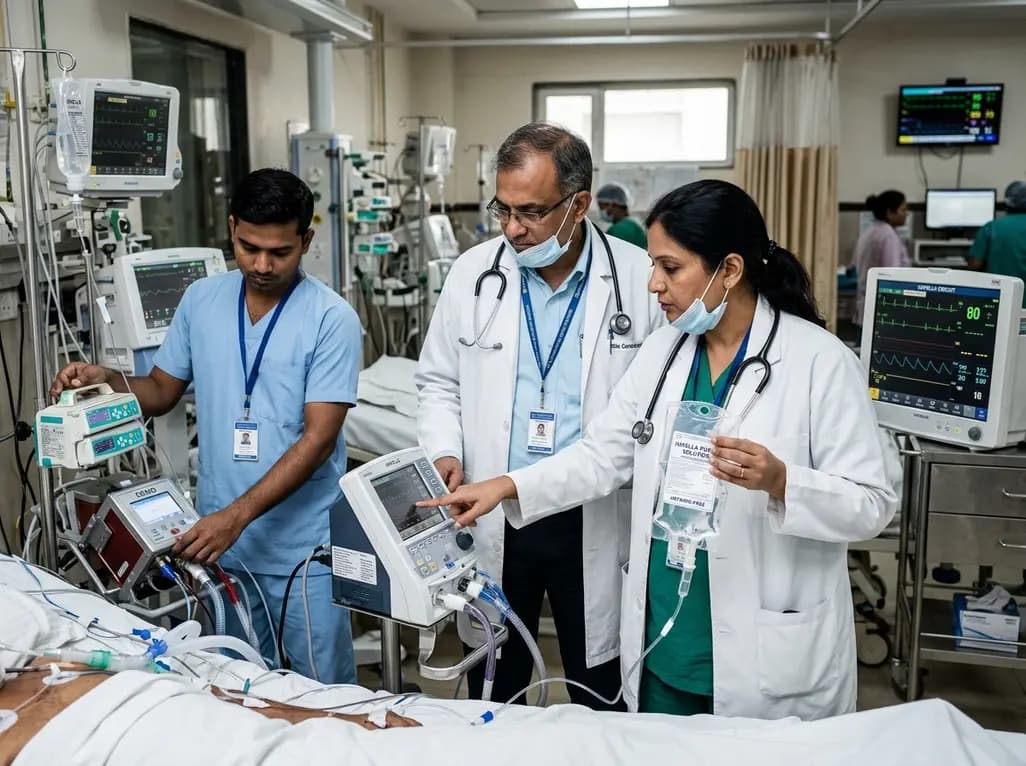
This clinical analysis examines heparin-free versus heparin-containing Impella purge solutions in patients receiving concomitant ECMO support (ECPELLA). Evidence suggests anticoagulant-free purges maintain device patency while reducing bleeding risks, offering a viable strategy alongside systemic anticoagulation.
Today

A 10-year Markov state-transition model shows minimally invasive tubular decompression dominates open laminectomy for pure lumbar spinal stenosis, yielding 5.95 vs 5.91 QALYs and saving $4,167 per patient through reduced complications and lower index costs.
Today

A preclinical study demonstrates that naringin-loaded phytosomes significantly enhance oral bioavailability and provide neuroprotective efficacy in diabetic neuropathy by dampening inflammation, reducing oxidative stress, and relieving neuropathic pain.
Today
