.webp&w=384&q=75)

Loading, please wait...
Loading, please wait...

Researchers recently investigated subcutaneous pacing excitability through a detailed preclinical study. Unlike traditional systems, extravascular devices provide therapy without direct myocardial contact. Consequently, understanding their electrical properties is vital for future innovation. The team conducted acute experiments in swine using a specialized coil-to-can configuration. Furthermore, they delivered asynchronous pulses at rates above the intrinsic heart rhythm. They confirmed successful capture using high-fidelity intra-aortic pressure monitoring.
The subjects consistently displayed a hyperbolic strength-duration profile. This pattern matches the classical expectations of Lapicque’s theory. Moreover, the study identified rheobase values ranging from 19.54 to 77.58 mA. Similarly, chronaxie varied between 0.70 and 2.94 ms. An inverse relationship exists between these two parameters in this setting. Therefore, factors like tissue impedance and electrode geometry likely dictate the stimulation profile. While biphasic waveforms showed lower thresholds than monophasic ones, the difference remained statistically insignificant.
These findings offer a clear roadmap for optimizing cardiac rhythm management devices. Specifically, the data support strategies to enhance battery life in subcutaneous systems. Because thresholds follow predictable pulse width dependencies, engineers can refine energy delivery safety margins. Furthermore, these results encourage the development of more efficient extravascular pacing solutions. Ultimately, such advancements will benefit patients who require therapy without intravascular lead placement.
The key parameters are rheobase and chronaxie. Rheobase represents the minimum current required for capture at infinite pulse duration. Chronaxie is the pulse duration required at twice the rheobase current.
Lapicque’s theory provides a mathematical model for the strength-duration relationship. It helps clinicians and engineers predict the electrical energy needed to stimulate the heart effectively across different pulse widths.
Disclaimer: This content is for informational and educational purposes only and does not constitute medical advice or a professional relationship. While we strive for accuracy, please consult a qualified healthcare professional for any health concerns or diagnostic needs. Refer to the latest local and national guidelines for clinical practice.
References
Bennett P et al. Strength-Duration Characterisation of Subcutaneous Pacing: A Preclinical Study. Pacing Clin Electrophysiol. 2026 Apr 18. doi: 10.1111/pace.70256. PMID: 42001245.
Zanon F. Energy Saving in Permanent Cardiac Pacing: Pulse Waveform and Charge Balancing Deserve Consideration. MDPI. 2025.
Mond HG. The history of cardiac pacing: a celebration of 50 years. Pacing Clin Electrophysiol. 2008.

Read summarized clinical updates, watch expert medical content, and earn CME certifications right from your smartphone.
Open your smartphone camera to scan and install.





Preclinical study defines subcutaneous pacing excitability using Lapicque's model to guide the design of future extravascular cardiac rhythm devices....
6 months ago
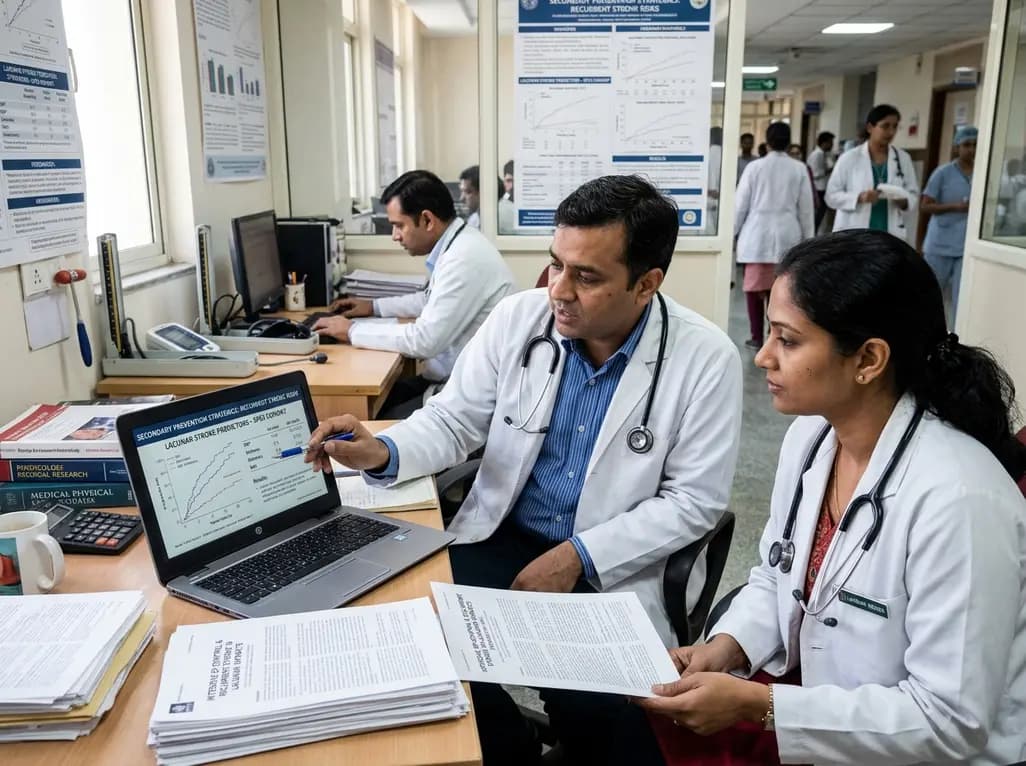
Explore vital recurrent stroke predictors in lacunar stroke patients managed with intensive blood pressure lowering. This analysis examines trial findings from SPS3 to uncover residual vascular risks, metabolic factors, and targeted secondary prevention strategies for high-risk neurological patients.
Today

A comprehensive scoping review synthesises evidence linking prenatal maternal mental health to long-term offspring neurodevelopment, evaluating neuroendocrine, inflammatory, and epigenetic pathways while highlighting clinical screening and future research priorities.
Today
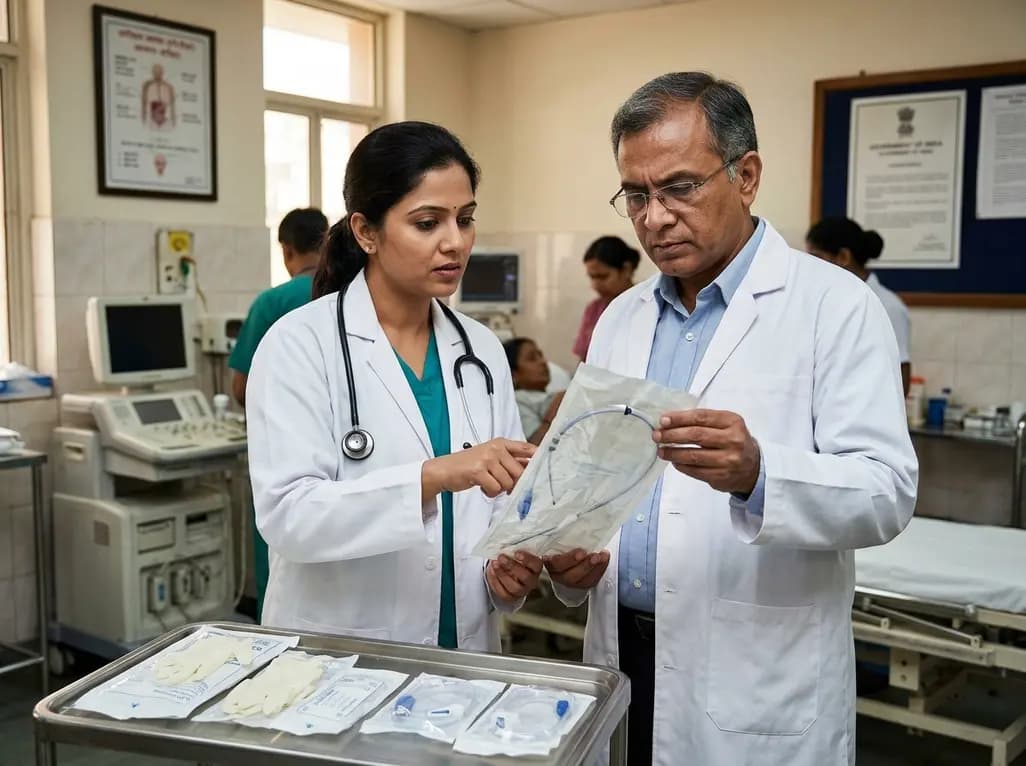
The Directorate General of Health Services directs Indian states to halt the hazardous reuse and reprocessing of single-use medical devices. Discover regulatory implications under the Drugs and Cosmetics Act, critical infection risks, legal liabilities, and operational changes required across clinical specialties.
Today
Mitochondria-targeted nanoparticles self-assembled from EGCG and L-glutamic acid effectively restore mitochondrial homeostasis, suppress synovial inflammation, and attenuate chondrocyte senescence in osteoarthritis, offering a promising disease-modifying nanotherapy.
Today

India is advancing preventive healthcare by integrating genomics, artificial intelligence, and quantum technologies. With the SANGAM programme sequencing one million Indian genomes, clinicians can unlock personalized therapies, detect cardiometabolic risks early, and curb the burden of diabetes and heart disease.
Today
