

Loading, please wait...
Loading, please wait...

When acute aneurysmal rupture strikes the cerebral vasculature, clinicians face immediate diagnostic and therapeutic hurdles. Prompt risk stratification directly guides intensive care resources and critical neurosurgical interventions. Consequently, refining subarachnoid hemorrhage prognostication remains a central objective in neurocritical care. Clinicians universally draw routine admission blood panels during the initial resuscitation phase. These standard blood investigations provide insight into systemic neuroendocrine surges and end-organ dysfunction. However, medical teams rarely understand whether admission blood tests offer measurable incremental predictive power beyond established clinical grading systems. A prospective cohort study has examined this question, evaluating the prognostic utility of routine laboratory results alongside validated clinical and radiological scales.
Aneurysmal subarachnoid hemorrhage represents an acute catastrophic event with significant global morbidity. When an intracranial aneurysm ruptures, extravasated blood elevates intracranial pressure and impairs cerebral microcirculation. Consequently, neurointensivists rely on established severity grading scales to estimate patient risk. The Hunt and Hess scale evaluates presenting neurological impairment, whereas the modified Fisher scale quantifies subarachnoid blood volume on baseline cranial computed tomography. Together, these tools provide robust benchmarks for predicting early mortality and secondary neurological deterioration.
Nevertheless, clinicians encounter considerable clinical heterogeneity within identical clinical grades. For instance, two patients presenting with equivalent Fisher grade blood burden often follow divergent clinical trajectories. Secondary complications, especially delayed cerebral ischemia, contribute substantially to lasting neurological deficits and long-term functional dependency. Because delayed cerebral ischemia arises between day four and day fourteen post-rupture, clinicians urgently seek early biomarkers to identify vulnerable individuals before irreversible infarction develops. Furthermore, the massive catecholamine surge accompanying acute aneurysm rupture triggers profound systemic physiological disturbances. Therefore, investigators hypothesized that standard blood tests might capture systemic end-organ strain and refine baseline risk stratification.
To evaluate the true additive utility of admission laboratory indices, researchers analyzed a prospective registry of consecutive adult patients with angiographically confirmed aneurysmal rupture. The analytical cohort comprised 298 patients admitted to a tertiary academic center within 24 hours of ictus. Investigators systematically gathered 28 routine admission blood parameters, encompassing hematological, metabolic, hepatic, coagulation, and renal biomarkers. The primary research question focused on whether any individual laboratory test or biologically defined biomarker cluster could improve outcome prediction.
Specifically, the investigators assessed four distinct clinical endpoints: the development of delayed cerebral ischemia, delayed cerebral ischemia-related cerebral infarction, in-hospital mortality, and unfavorable 12-month functional outcome measured by the modified Rankin Scale. The analytical team established a rigorous baseline multivariable model incorporating validated clinical and radiographic variables. This base model adjusted for patient age, sex, Hunt and Hess grade, modified Fisher score, presence of intracerebral hemorrhage, and aneurysm vascular territory. In order to avoid false discoveries across 28 separate tests, researchers implemented false discovery rate corrections alongside likelihood ratio tests and area under the receiver operating characteristic curve comparisons. Consequently, this methodological rigor established a definitive baseline for testing biomarker performance.
The baseline multivariable model demonstrated good discrimination across all four clinical endpoints, achieving area under the curve values between 0.71 and 0.83. When the researchers tested the 28 laboratory parameters individually against this robust baseline, only one single marker survived false discovery rate correction. Aspartate aminotransferase was the sole individual blood test associated with delayed cerebral ischemia. Elevated admission aspartate aminotransferase modestly enhanced predictive discrimination for delayed cerebral ischemia, yielding an area under the curve gain of 0.024.
Subsequently, the investigators examined biologically defined organ injury clusters. When grouping hepatic and cellular tissue injury markers—specifically aspartate aminotransferase, alanine aminotransferase, and lactate dehydrogenase—the predictive model showed a statistically significant improvement for delayed cerebral ischemia (p = 0.013). This cluster enhanced model discrimination with an area under the curve improvement of 0.028. Systemic catecholamine release during aneurysm rupture triggers hepatic hypoperfusion, splanchnic vasoconstriction, and skeletal muscle catabolism. Therefore, elevated transaminases and lactate dehydrogenase likely serve as surrogate markers for intense sympathetic hyperactivity. In contrast, neither transaminases nor the broader hepatic cluster improved predictions regarding secondary cerebral infarction or 12-month functional disability.
In addition to assessing hepatic variables, the investigators evaluated renal function parameters, focusing specifically on serum urea and creatinine levels. In isolation, neither baseline creatinine nor blood urea nitrogen survived multiple testing corrections. However, when researchers evaluated these renal indices as a combined biological cluster, the model achieved a statistically significant improvement in predicting in-hospital mortality (p = 0.010). The renal cluster provided an incremental area under the curve gain of 0.018 over the standard clinical baseline.
Acute kidney impairment frequently reflects critical hypoperfusion, systemic inflammatory cascade activation, or severe pre-existing cardiorenal vulnerability. When aneurysmal subarachnoid hemorrhage occurs in individuals with compromised renal reserve, acute hemodynamic instability and fluid management challenges often accelerate clinical decompensation. Furthermore, neurocritical protocols require tight fluid balance, hypertonic solutions, and contrast-enhanced imaging. Patients with impaired baseline renal function exhibit heightened vulnerability to secondary organ failure and systemic complications. Nevertheless, while admission renal parameters modestly improved in-hospital mortality forecasting, they completely failed to predict delayed cerebral ischemia or one-year functional outcomes. Consequently, clinicians must recognize renal dysfunction as an indicator of global physiological frailty rather than a neurovascular-specific predictor.
The findings of this prospective cohort study deliver valuable, pragmatic guidance for neurointensivists, neurologists, and emergency physicians. Most importantly, the investigation demonstrates that routine admission blood tests add only limited predictive value beyond established clinical grading systems. Hunt and Hess clinical severity and modified Fisher computed tomography grades remain the absolute cornerstones of acute risk stratification. Therefore, clinicians must never replace bedside neurological assessment or cranial neuroimaging with routine laboratory markers.
Nonetheless, routine laboratory results provide meaningful contextual insight during early intensive care unit admission. Detecting elevated admission transaminases or lactate dehydrogenase highlights profound autonomic dysregulation and sympathetic storming. Consequently, these findings should heighten clinical vigilance for subsequent delayed cerebral ischemia. Medical teams can prioritize intensive transcranial Doppler surveillance, optimize nimodipine therapy, and maintain strict euvolemia in such high-risk patients. Similarly, admission renal impairment identifies patients at heightened risk of in-hospital mortality who require meticulous hemodynamic monitoring and nephrotoxic drug avoidance. Ultimately, integrating laboratory trends into holistic clinical management allows teams to identify vulnerable patients early without overestimating the prognostic power of isolated blood tests.
Aspartate aminotransferase was the only individual admission laboratory parameter that significantly improved delayed cerebral ischemia prediction after multiple testing corrections. Combined with alanine aminotransferase and lactate dehydrogenase in a hepatic tissue injury cluster, it modestly increased model discrimination, reflecting sympathetic storming and systemic tissue hypoperfusion following severe aneurysm rupture.
No, admission kidney function tests do not predict 12-month functional outcomes or delayed cerebral infarction. Although admission renal markers like urea and creatinine modestly improved prediction of acute in-hospital mortality, they showed no significant predictive association with long-term neurological disability measured by the modified Rankin Scale.
Clinicians should never replace validated clinical and radiological grading systems with routine blood tests. The Hunt and Hess scale and the modified Fisher score remain superior predictors of patient outcomes. Routine admission laboratory values provide only modest, outcome-specific incremental prognostic information to complement standard neurocritical assessment.
Disclaimer: This content is for informational and educational purposes only. It is not intended to be a substitute for professional medical advice, diagnosis, or treatment. Always seek the advice of your physician or other qualified health provider with any questions you may have regarding a medical condition. Refer to the latest local and national guidelines for clinical practice.
References

Read summarized clinical updates, watch expert medical content, and earn CME certifications right from your smartphone.
Open your smartphone camera to scan and install.





A prospective study evaluates whether admission blood tests improve prognostication after aneurysmal subarachnoid hemorrhage. While hepatic and renal clusters offer modest outcome-specific predictive value, standard clinical and radiological scales remain the primary determinants of clinical recovery.
Today

A validation study evaluates the consumer-grade InBody Dial H30 bioelectrical impedance device against a 3-compartment criterion in recreationally active adults, revealing a slight overestimation in body fat percentage and underestimation in fat-free mass alongside notable individual limits of agreement.
Today

A nationwide survey reveals substantial knowledge gaps among general practitioners regarding fetal pathology and autopsy. Enhanced training and interdisciplinary communication are vital to guide stillbirth evaluation, clarify autopsy consent, and improve preconception counseling for bereaved parents.
Today
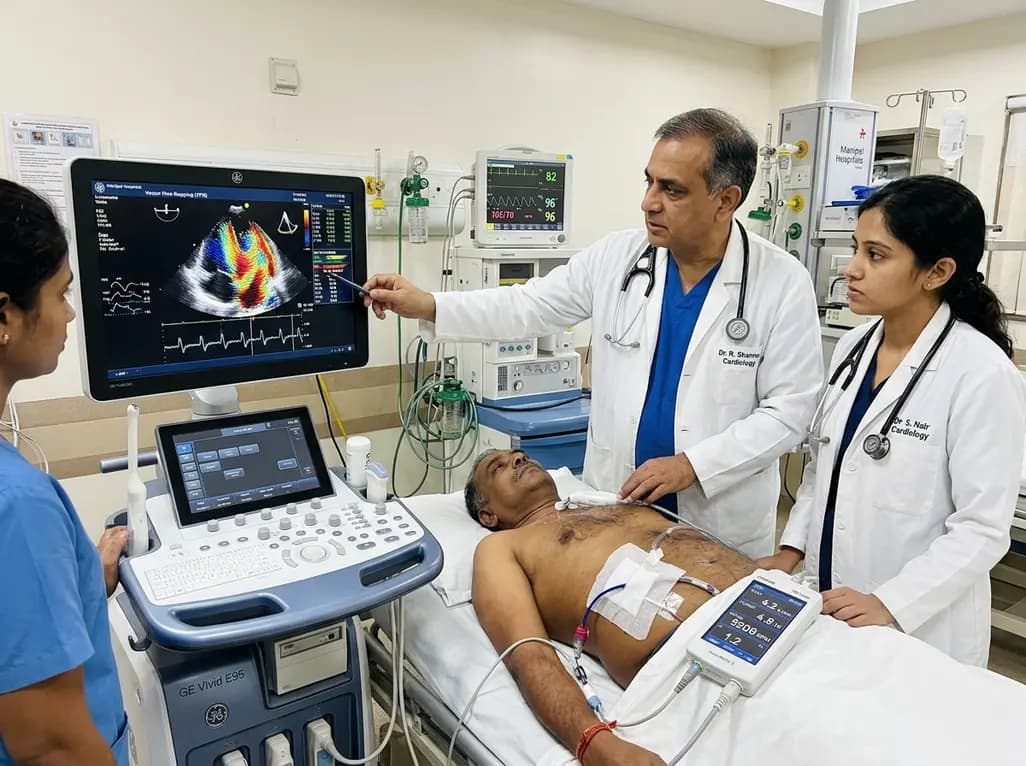
A pilot study shows that transesophageal echocardiography with vector flow mapping measures intraventricular energy loss in HeartMate 3 LVAD recipients. Energy loss significantly correlates with controller-displayed pump flow, offering clinicians deeper insights into ventricular unloading and intracardiac fluid mechanics.
Today

A comparative study demonstrates that simple and complex labral tears achieve comparable functional outcomes and low recurrence rates following arthroscopic stabilization for anterior shoulder instability, despite differing clinical presentations and dislocation histories.
Today

A nationwide analysis shows that inpatient lifestyle counseling for type 2 diabetes remains remarkably underutilized despite modest gains. Clinicians must bridge persistent demographic disparities and integrate structured dietary and exercise counseling into routine hospital discharge workflows.
Today
