.webp&w=384&q=75)

Loading, please wait...
Loading, please wait...

Modern dental practice requires clinicians to make defensible choices when facing equivocal diagnostic data or conflicting clinical guidelines. Therefore, integrating structured debate in dental education offers an innovative pedagogical framework to address this imperative. Trainees actively interrogate published evidence, confront unexamined assumptions, and refine diagnostic reasoning. Consequently, this interactive strategy prepares future dentists for the nuanced challenges of complex chairside practice.
Traditional dental curricula frequently emphasize didactic knowledge acquisition and procedural technical competence. However, contemporary restorative, periodontal, and surgical treatments often present scenarios where high-level scientific consensus remains limited. In these complex situations, dental practitioners cannot rely solely on algorithmic protocols. Instead, clinicians must evaluate conflicting literature, weigh competing therapeutic alternatives, and formulate justifiable management plans. Introducing structured debate in dental education effectively bridges the divide between foundational theory and practical decision-making. During these academic exercises, faculty assign trainees to defend specific viewpoints on controversial dental interventions. For instance, teams may debate the immediate placement of dental implants versus delayed protocols in compromised extraction sockets. To construct persuasive arguments, students must rigorously scrutinize primary literature, analyze study methodologies, and recognize potential conflicts of interest. Consequently, this active preparation dismantles passive memorization habits. Furthermore, learners discover that clinical certainty is rare, which encourages them to approach scientific assertions with analytical skepticism. Therefore, structured scientific discourse transforms abstract journal comprehension into practical, defensible clinical reasoning that directly benefits daily dental care.
Clinical practice is inherently filled with ambiguity and diagnostic variation. Nevertheless, conventional dental examinations often test memorized facts through multiple-choice questions that reinforce the illusion of a single correct answer. When young dentists enter clinical practice, they often feel unprepared for the grey areas of patient management. Structured debate directly addresses this educational deficit by exposing students to genuine professional controversies. By analyzing conflicting clinical perspectives, trainees learn to identify cognitive shortcuts and confirmation biases that cloud diagnostic thinking. For example, clinicians frequently favor familiar treatment modalities over newer, evidence-backed options simply due to procedural familiarity. During a formal debate, learners must anticipate counterarguments and dissect the weaknesses in their own assigned positions. As a result, they develop cognitive flexibility and recognize the limitations of empirical personal experience. Moreover, trainees realize that two competing therapies can both possess valid scientific justifications depending on patient risk factors. Thus, debate teaches future dentists how to navigate clinical uncertainty systematically without succumbing to emotional bias or unsubstantiated dogma.
Intellectual humility is an essential attribute for safe and ethical dental practitioners. Specifically, clinicians must acknowledge the boundaries of their knowledge and remain open to evolving scientific discoveries. Unfortunately, competitive academic environments can unintentionally foster overconfidence and dogmatic therapeutic beliefs. Structured debate acts as an effective educational counterbalance by compelling students to argue positions they might not initially support. When trainees defend an opposing viewpoint, they must suspend personal preconceptions and examine alternative clinical rationales. This demanding intellectual exercise demonstrates that scientific truth is rarely absolute in oral healthcare. Furthermore, participants learn to accept constructive criticism from peers and faculty evaluators during rebuttal rounds. Consequently, trainees begin to view professional disagreement not as personal confrontation, but as a collaborative tool for refining clinical wisdom. In addition, this rigorous process instills a profound respect for scientific nuance and methodology. Ultimately, dentists who cultivate intellectual humility during their formative training remain lifelong learners who adapt their practice as newer, superior evidence emerges.
Effective clinical judgment must never occur in isolation from the patient's individual values, financial realities, and systemic health conditions. Although scientific literature provides essential statistical probabilities, individual patients present unique clinical expectations. Structured debate helps dental students translate abstract population-level epidemiological data into empathetic chairside communication. During debates on contentious topics, such as endodontic retreatment versus extraction and implant placement, students must articulate the tangible impacts on quality of life. Therefore, trainees examine how procedural invasiveness, treatment duration, and potential complications influence real patients. Furthermore, the verbal dexterity and analytical agility gained during formal debates directly enhance doctor-patient dialogue. Dentists must routinely explain complex risk-benefit profiles to patients who feel anxious or overwhelmed. Because debate trainees practice articulating balanced, defensible arguments under time constraints, they communicate clinical rationales with enhanced clarity and empathy. As a result, shared decision-making becomes a natural clinical habit rather than a burdensome regulatory requirement, ensuring that treatment plans truly respect patient autonomy.
To maximize educational benefits, dental institutions must integrate structured debates as formative learning experiences rather than high-stakes assessments. Inter-university collaborations and inter-departmental sessions offer excellent platforms for postgraduate and undergraduate learners alike. Academic faculties should establish clear debate rubrics that prioritize critical appraisal, sound logic, and professional conduct over rhetorical theatricality. Initially, educators can select clinically contentious topics from periodontology, orthodontics, oral surgery, or cariology where definitive guidelines remain debated. Trainees should receive sufficient preparation time to conduct literature searches, appraise study designs, and synthesize systematic reviews. Moreover, faculty moderators must provide structured debriefing sessions immediately following each debate. These post-debate discussions allow mentors to highlight cognitive pitfalls, summarize consensus points, and reinforce key learning objectives. Additionally, peer evaluation components encourage active listening and reflective learning among non-debating classmates. By embedding structured scientific debates longitudinally across academic dental curricula, institutions establish a vibrant educational culture that values rigorous evidence, collegial dialogue, and defensible clinical standards.
Structured debates require dental students to search, evaluate, and synthesize peer-reviewed literature under strict academic scrutiny. Instead of passively accepting textbook recommendations, trainees must evaluate study methodologies, sample sizes, and potential biases to defend their clinical propositions. Consequently, this rigorous analytical process trains future dentists to differentiate high-quality clinical trials from flawed research, ensuring that their future clinical decisions remain firmly grounded in reliable scientific evidence.
Yes, academic faculties can readily incorporate structured debate into journal clubs, grand rounds, and clinical seminar modules. Rather than presenting static article summaries, educators can divide trainees into proposition and opposition teams centered on controversial treatment modalities. Furthermore, faculty can utilize standardized rubrics to provide immediate formative feedback on reasoning quality, professional decorum, and literature synthesis, making debate an efficient, highly engaging educational exercise within existing dental curricula.
Participating in scientific debates enhances verbal clarity, active listening, and the ability to explain complex concepts succinctly. In clinical practice, dentists must frequently discuss ambiguous prognoses, alternative therapies, and procedural risks with uncertain patients. By practicing structured argumentation, trainees learn to anticipate patient apprehensions, present balanced clinical viewpoints, and articulate transparent risk-benefit profiles. Consequently, these enhanced communicative abilities foster greater trust, shared decision-making, and patient adherence during chairside consultations.
Disclaimer: This content is for informational and educational purposes only and does not constitute formal medical advice, diagnosis, or treatment. Healthcare professionals must exercise independent clinical judgment and correlate findings with specific patient presentations. Refer to the latest local and national guidelines for clinical practice.
References

Read summarized clinical updates, watch expert medical content, and earn CME certifications right from your smartphone.
Open your smartphone camera to scan and install.





Structured scientific debate serves as a formative pedagogical tool in dental education. By challenging assumptions and navigating clinical uncertainty, trainees cultivate intellectual humility, defensible clinical judgment, and patient-centered communication skills.
Today
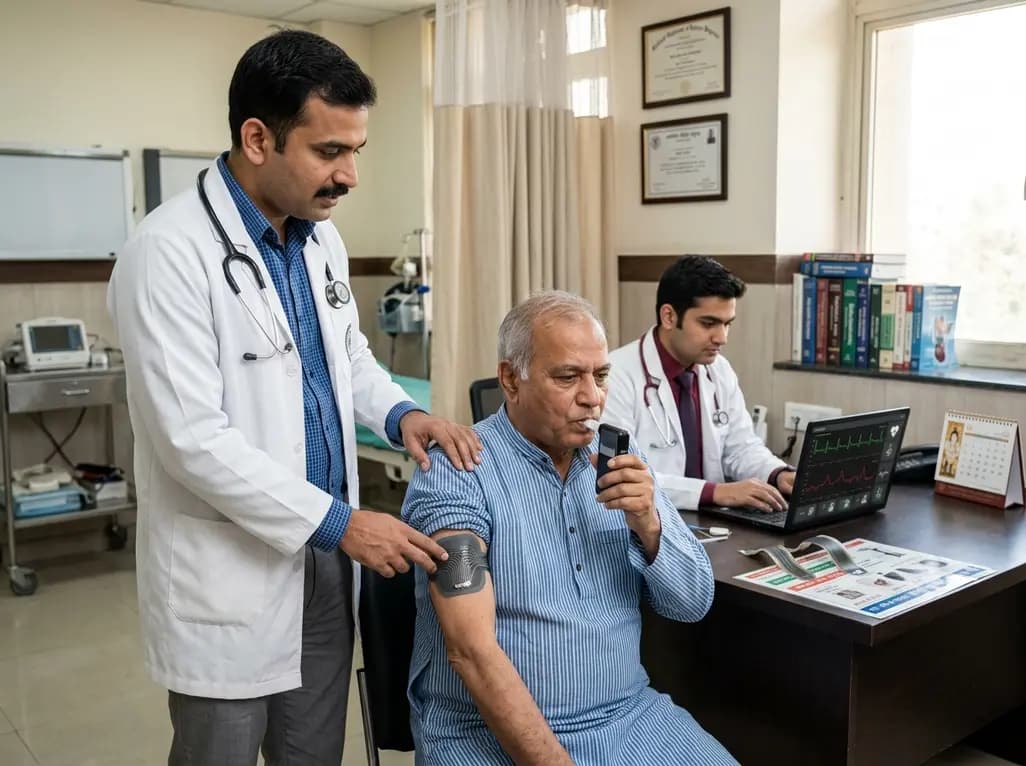
Novel biomimetic flexible polypyrrole sensors integrate mechanical hemodynamics with exhaled ammonia detection, offering noninvasive monitoring for chronic kidney disease and remote clinical care.
Today

Maharashtra has initiated the appointment of two dedicated special public prosecutors in every district alongside a joint police-health SOP to fast-track PCPNDT and MTP cases. Medical imaging centers, radiologists, and obstetricians must strengthen statutory documentation and audit preparedness.
Today
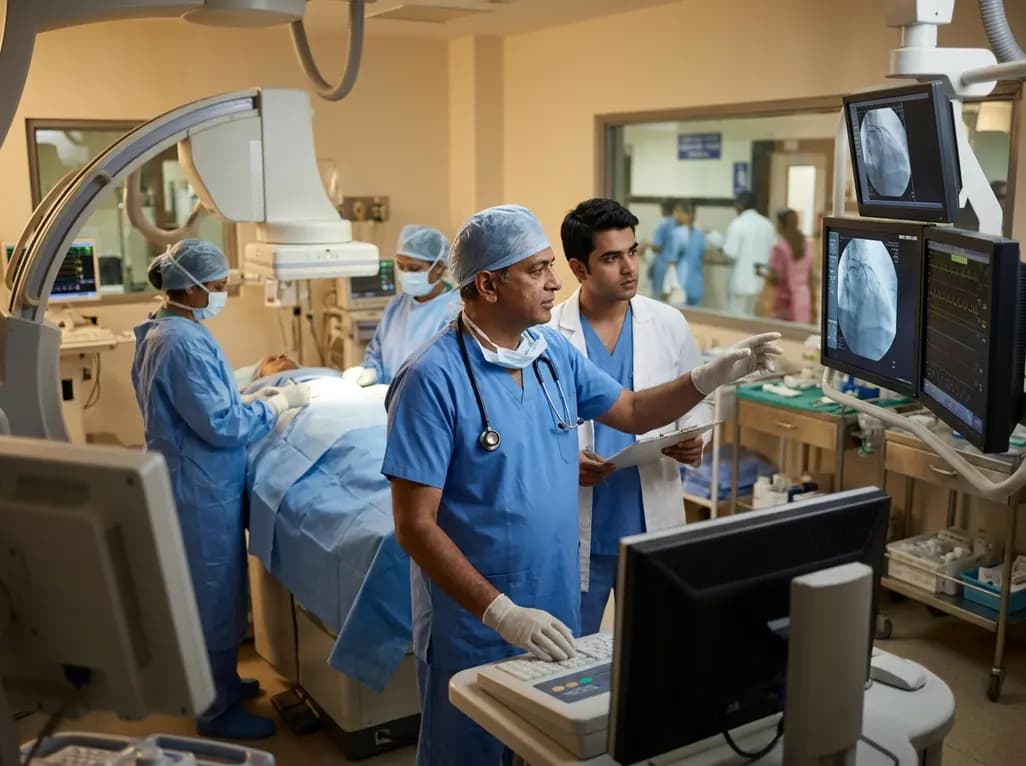
A prospective study evaluates percutaneous renal denervation in high-risk patients with resistant hypertension, demonstrating significant short-term blood pressure reduction alongside notable procedural considerations.
Today

A landmark global analysis of over six million people reveals that pain does not increase steadily with aging. Instead, pain accelerates fastest before age 55, affects women disproportionately across anatomical sites, and imposes a much heavier burden on populations in developing countries.
Today

A modified Delphi study identified crucial clinical and research priorities for older transgender adults. Key findings emphasize provider education, screening for social isolation, navigation of community resources, and long-term evaluation of gender-affirming hormone therapy safety during the aging process.
Today
