.webp&w=384&q=75)

Loading, please wait...
Loading, please wait...
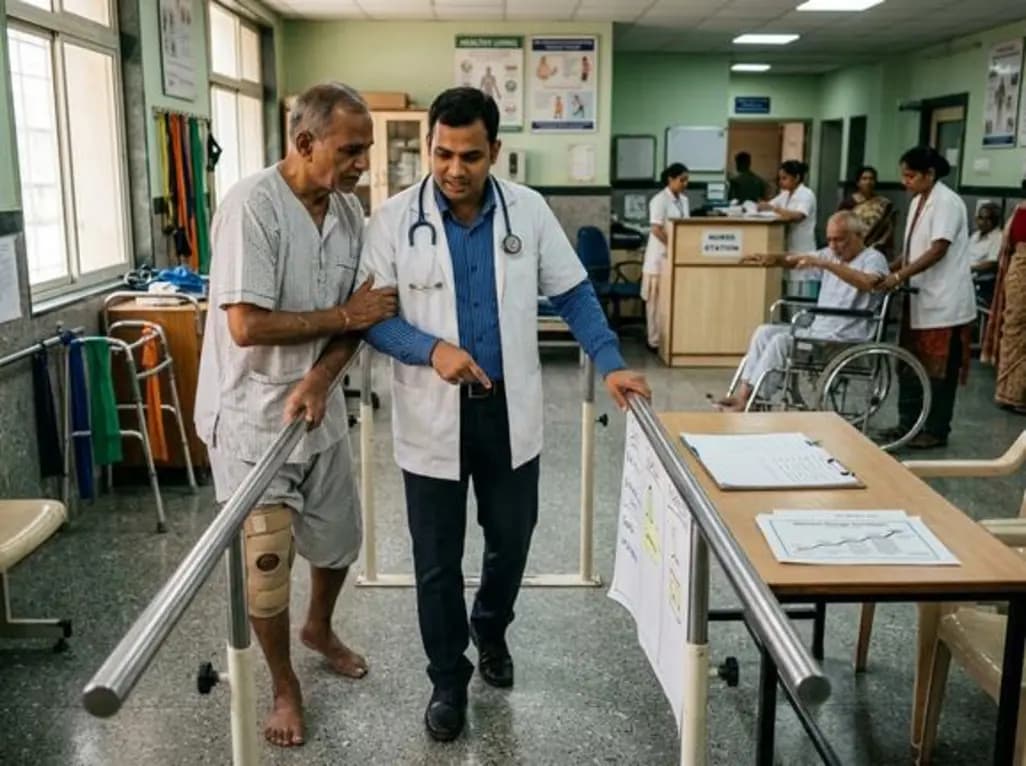
Stroke survivors often face a significant hurdle: high levels of inactivity during and after their recovery. Effectively managing stroke rehabilitation sedentary behavior is essential to improve long-term cardiovascular health and functional independence. Recent evidence suggests that despite numerous interventions, many survivors still spend a vast majority of their day sitting or lying down. Consequently, understanding the specific barriers and facilitators to movement is vital for clinicians.
A comprehensive scoping review recently analyzed dozens of studies to identify what prevents or helps survivors move more. In inpatient settings, researchers found 32 distinct barriers, whereas outpatient settings presented a staggering 109 barriers. These obstacles range from physical limitations and fatigue to environmental factors and a lack of social support. Therefore, a personalized approach is necessary to address the unique needs of each patient.
Successful interventions often incorporate specific Behavior Change Techniques (BCTs). Promising studies typically apply between 11 and 34 different techniques to support survivors. Key strategies include goal setting, action planning, and providing continuous feedback on behavior. Furthermore, social support and demonstration of exercises significantly enhance patient motivation. By tailoring these components, healthcare providers can help survivors transition from sedentary habits to active lifestyles.
In the Indian context, where rehabilitation facilities may be limited, community-based support plays a pivotal role. The Indian Council of Medical Research (ICMR) emphasizes the importance of secondary prevention through lifestyle modification. By integrating behavioral strategies into home-care routines, we can better manage stroke rehabilitation sedentary behavior and reduce the risk of secondary cardiovascular events.
Common barriers include motor impairments, extreme fatigue, cognitive challenges, and a lack of motivation. Additionally, environmental factors like inaccessible rehabilitation spaces or lack of transportation often hinder progress.
Techniques such as goal setting, action planning, and self-monitoring are highly effective. Specifically, providing social support and regular feedback helps patients stay committed to their long-term movement goals.
Disclaimer: This content is for informational and educational purposes only. It does not constitute medical advice or a professional relationship. Always seek the advice of a qualified healthcare provider regarding any medical condition. Refer to the latest local and national guidelines for clinical practice.
References
Te Lindert L et al. Barriers, facilitators and promising interventions for reducing sedentary behaviour during and after stroke rehabilitation - A scoping review. Disabil Rehabil. 2026 Jun 22. doi: 10.1080/09638288.2026.2686317. PMID: 42331341.
Kanai M et al. Study identifies distinct sedentary behavior patterns in patients with stroke undergoing inpatient rehabilitation. Asia Research News. 2026 Jun 05.
Saunders DH et al. Interventions for reducing sedentary behaviour in people with stroke. Cochrane Database of Syst Rev. 2021 Jun 29;6(6):CD012996.

Read summarized clinical updates, watch expert medical content, and earn CME certifications right from your smartphone.
Open your smartphone camera to scan and install.





A new scoping review identifies critical barriers and facilitators to reducing sedentary behavior during stroke rehabilitation. Discover how personalized approaches and Behavior Change Techniques (BCTs) like goal setting and action planning can improve outcomes for stroke survivors.
4 months ago

Discover the crucial role of glymphatic dysfunction in stroke, where perivascular clearance failure and neuroinflammation exacerbate cerebral edema and post-stroke brain injury.
Today

A prenatal case highlights severe glutaric acidemia type II presenting as bilateral hyperechoic cystic kidneys at 18 weeks. Whole-exome sequencing revealed a novel homozygous ETFDH frameshift variant, demonstrating the power of rapid genetic testing in fetal renal anomalies.
Today

Review how tailored exercise programs benefit frail older patients with heart failure. Explore pathophysiological mechanisms, individualized training prescriptions, and strategies to overcome adherence barriers in clinical practice.
Yesterday

This comparative study evaluates posterior labral tears with and without glenohumeral instability, highlighting distinct demographic patterns, MRI underestimation in stable shoulders, and successful arthroscopic repair outcomes.
Yesterday

A clinical study demonstrates that early intervention with tocilizumab, either as monotherapy or bridged with corticosteroids, achieves significant proptosis reduction and resolves active inflammation in treatment-naive thyroid eye disease.
Yesterday
