.webp&w=384&q=75)

Loading, please wait...
Loading, please wait...

Modern management of rheumatoid arthritis prioritises early intervention and stringent inflammation control. Clinicians widely apply the treat-to-target strategy to suppress disease activity and protect joint function. Consequently, early arthritis clinics achieve rapid remission or low disease activity for most newly diagnosed individuals. However, long-term maintenance requires continuous monitoring and sustained medical care. When patients achieve clinical remission, health systems frequently discharge them to general outpatient settings. Unfortunately, this care transition often introduces delays and fragmented therapy. Recent clinical findings show that direct transfer to a dedicated rheumatoid arthritis clinic preserves therapeutic gains far better than general clinics. In general care pathways, physicians often handle diverse non-inflammatory conditions simultaneously. As a result, subtle signs of recurrent synovial inflammation may escape early detection. Furthermore, appointment backlogs frequently disrupt routine monitoring schedules. Therefore, establishing seamless transitional pathways remains essential for sustaining early clinical remission and preventing irreversible joint damage.
Discharging stable patients into general rheumatology clinics presents notable clinical vulnerabilities. In a comprehensive retrospective audit from Brisbane, Australia, investigators evaluated outcomes across two distinct patient cohorts. Initially, the team examined 216 patients who transitioned from an intensive early arthritis clinic to standard general care between 2004 and 2015. Although these individuals achieved target disease scores within 12 months, their progress deteriorated after discharge. Specifically, median C-reactive protein and erythrocyte sedimentation rates rose substantially during subsequent follow-up visits. In addition, clinicians documented significant reductions in disease-modifying anti-rheumatic drug dosages during this period. These medication decreases frequently occurred without objective evidence supporting drug tapering. Consequently, under-treatment allowed subclinical inflammation to resurface and worsen joint symptoms. High patient volumes and competition with emergent general cases often compromised meticulous disease monitoring. Furthermore, lengthy intervals between clinic appointments prevented timely therapeutic adjustments. Thus, general rheumatology clinics struggle to maintain the tight monitoring standards established during early arthritis management.
To eliminate transition bottlenecks, clinicians redesigned their care pathway into a dedicated rheumatoid arthritis clinic. Between 2019 and 2023, the team discharged 122 patients directly into this specialised, streamlined service. Notably, this redesigned framework maintained disease control without therapeutic disruptions or scheduling delays. Patients in this cohort experienced uninterrupted access to targeted rheumatology care and structured assessments. Consequently, objective inflammatory biomarkers remained completely stable after transfer. Both C-reactive protein levels and erythrocyte sedimentation rates showed no adverse fluctuations during follow-up. Moreover, patients maintained optimal doses of disease-modifying anti-rheumatic drugs over time. Streamlined clinics utilise standardised protocols that prevent unjustified medication reductions. Furthermore, dedicated scheduling systems preserve follow-up intervals and foster high patient adherence. Clinicians in this focused environment rapidly recognise subtle flare warnings and intervene proactively. Therefore, direct transfer to a disease-specific clinic provides the operational stability necessary to sustain remission.
Comparing these two cohorts reveals striking contrasts between care delivery structures. Both patient groups attained similar baseline disease control within their first year in the early clinic. Specifically, median 28-joint disease activity scores reached 2.91 in cohort one and 2.80 in cohort two. Nevertheless, post-discharge pathways determined long-term clinical success. Cohort one encountered substantial appointment delays and premature drug reductions in general clinics. In contrast, cohort two transited promptly into the dedicated service without administrative roadblocks. As a result, cohort two sustained low disease activity without clinical flares or laboratory deterioration. Standardised follow-up empowered clinicians to uphold treat-to-target principles consistently. Furthermore, regular reviews reinforced patient education and medication compliance. These findings demonstrate that clinical redesign mitigates the chronic risks of disease reactivation. Hence, healthcare systems must align outpatient clinic structures with long-term biological goals.
These findings offer crucial lessons for rheumatology and internal medicine practitioners across India. Indian healthcare settings manage immense patient volumes with limited specialist rheumatology resources. Consequently, early arthritis patients who achieve remission often return to overcrowded general outpatient departments. In these high-volume settings, clinicians face extreme time constraints and limited monitoring bandwidth. Therefore, patients frequently miss regular monitoring of acute-phase reactants and toxicities. In addition, patients may unintentionally reduce their disease-modifying drugs due to inadequate counselling or fear of adverse effects. Establishing streamlined, protocol-driven arthritis clinics within tertiary hospitals could overcome these systemic challenges. Specialist nurses and trained medical officers can execute standardized follow-up evaluations efficiently. Furthermore, structured clinics ensure consistent medication adherence and timely detection of disease relapses. Adopting targeted transition protocols can substantially improve quality of life for Indian patients living with chronic inflammatory arthritis.
Healthcare institutions can implement several practical measures to optimise outpatient transitions. First, departments should establish clear discharge criteria before transferring patients from early arthritis units. Clinicians must confirm sustained remission or low disease activity using validated composite scores. Second, centres should implement dedicated booking pathways to eliminate transition delays. Scheduled follow-up appointments must occur within three to four months of transfer. Third, teams should standardise treatment algorithms to prevent inappropriate drug tapering. Physicians should not reduce disease-modifying drugs without documented, long-term disease remission. In addition, electronic health records can alert clinicians when monitoring tests become overdue. Patient education programmes should also emphasize the necessity of continuous therapy. By structuring outpatient care around dedicated pathways, clinicians protect hard-won clinical remission and prevent permanent disability.
A dedicated rheumatoid arthritis clinic maintains disease control by preventing appointment delays and applying standardised treat-to-target protocols. Unlike general clinics, these specialized units schedule frequent monitoring visits and track objective composite scores regularly. Consequently, clinicians promptly detect subclinical synovial flares and adjust medications before irreversible joint damage develops. This structured approach also reinforces patient adherence and ensures consistent maintenance of disease-modifying anti-rheumatic drug dosages over time.
In general rheumatology clinics, high patient volumes and limited consultation time hinder comprehensive disease assessments. Consequently, physicians may misinterpret stable outward appearances as resolved pathology, prompting unintentional drug tapering. In addition, patients facing long follow-up intervals often reduce medication dosages independently due to unfounded toxicity fears. Without structured monitoring of inflammatory markers, clinicians miss early signs of disease reactivation, leading to progressive loss of clinical remission.
Healthcare facilities can replicate this streamlined model by establishing protocol-driven arthritis days within existing outpatient infrastructure. Healthcare teams can train resident doctors and nursing personnel to calculate composite disease scores and evaluate routine inflammatory markers. Furthermore, adopting digital scheduling prompts reduces administrative delays between early and maintenance clinics. These low-cost operational adjustments ensure uninterrupted monitoring and promote long-term medication adherence even in high-volume public hospital settings.
Disclaimer: This content is for informational and educational purposes only... Refer to the latest local and national guidelines for clinical practice.
References

Read summarized clinical updates, watch expert medical content, and earn CME certifications right from your smartphone.
Open your smartphone camera to scan and install.





Direct transition from early arthritis clinics to a dedicated, streamlined rheumatoid arthritis clinic prevents follow-up delays, maintains DMARD doses, and halts biomarker escalation compared to general rheumatology referral.
Today
A school-based intervention using the Health Action Process Approach (HAPA) significantly enhanced adolescents' perceived benefits of consulting healthcare providers and promoted proactive menstrual health behaviors, offering key clinical insights for managing adolescent dysmenorrhea and endometriosis.
Today

A multicenter propensity-matched study evaluated DOAC plus single versus dual antiplatelet therapy after carotid artery stenting. Findings revealed comparable intracranial hemorrhage and ischemic stroke rates, supporting DOAC plus SAPT as a viable antithrombotic strategy in high-risk patients.
Today
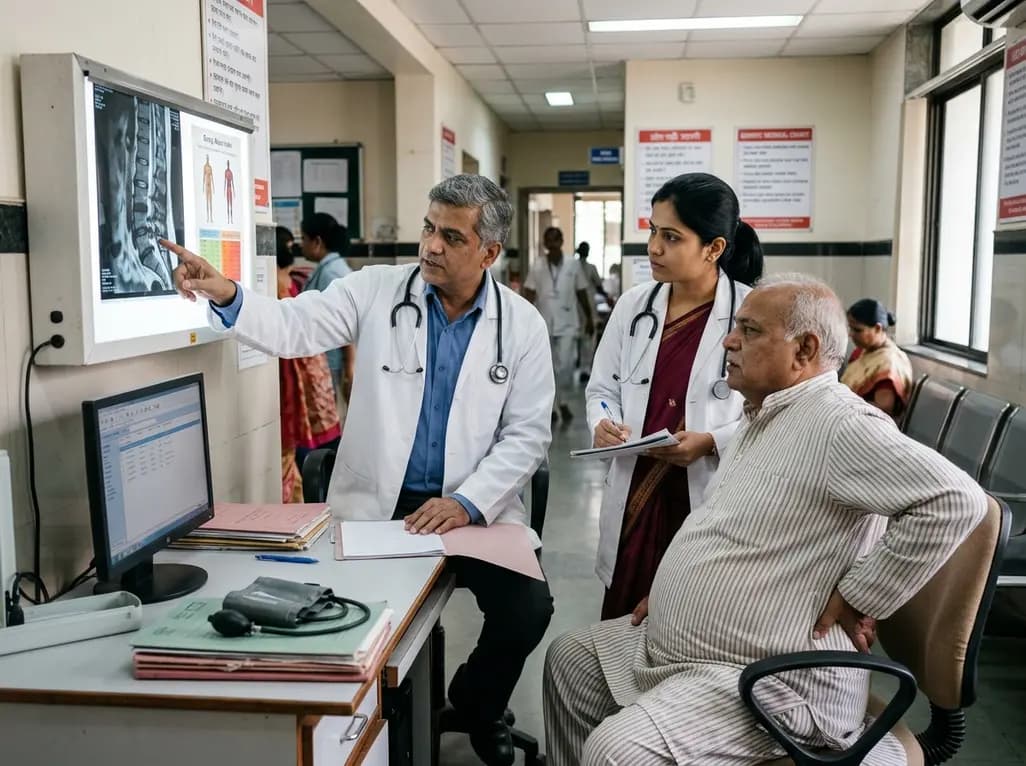
A cross-sectional study reveals that sarcopenic obesity independently increases functional impairment and severe disc degeneration in patients with degenerative lumbar spinal stenosis, highlighting the need for body composition assessment.
Today
Non-invasive biospecimen sampling offers exciting opportunities for stress medicine. This article examines a pioneering protocol comparing cortisol, inflammatory cytokines, and metabolic markers across blood plasma, whole saliva, and oral mucosal transudate during baseline and acute stress states.
Today
