.webp&w=384&q=75)

Loading, please wait...
Loading, please wait...

Advanced maternal age (AMA) significantly complicates early pregnancy outcomes. Specifically, researchers note that AMA often leads to higher rates of threatened abortion (TA). Recently, a multi-omics study revealed that the disruption of steroid hormone biosynthesis is a central molecular feature of AMA-TA. Consequently, this finding provides a new foundation for developing diagnostic biomarkers. Furthermore, it supports the creation of targeted therapies for older mothers.
Additionally, the investigators integrated serum metabolomics and placental transcriptomics to explore these mechanisms. They examined both human patients and an AMA-TA mouse model. In humans, serum metabolomics showed significant enrichment in metabolic pathways. However, the most prominent disturbance occurred in the steroid pathway. As a result, the research team focused on these hormonal changes. Similarly, the mouse model exhibited high embryo resorption and abnormal placental architecture.
Moreover, biochemical analysis revealed a significant drop in progesterone and chorionic gonadotropin levels. Specifically, transcriptomic profiling identified over 1,400 differentially expressed genes. Consequently, the integrated analysis converged on a single key pathway as the primary driver of these complications.
Furthermore, the study validated the aberrant expression of several critical genes via RT-qPCR. For instance, researchers observed the upregulation of Akr1d1 and Ugt family genes. Therefore, these genes play vital roles in metabolizing pregnancy-sustaining hormones. In addition, their dysfunction directly impacts placental health and fetal viability. Similarly, these metabolic shifts correlate strongly with the clinical presentation of threatened abortion.
Consequently, clinicians in India frequently manage AMA patients who present with vaginal bleeding. Thus, understanding these molecular alterations helps in refining management protocols for high-risk pregnancies. Currently, local guidelines from FOGSI and ISAR emphasize the importance of early hormonal support. Therefore, this multi-omics approach offers profound mechanistic insights into why some treatments succeed while others fail. Moreover, the research supports the development of precision medicine for older expectant mothers. Finally, by targeting these specific pathways, doctors may eventually improve the success rates of pregnancies at advanced maternal ages.
It maintains the hormonal environment necessary for pregnancy stability. Specifically, its disruption leads to low progesterone and placental dysfunction in older expectant mothers.
Research highlights the upregulation of Akr1d1 and the Ugt gene family as significant markers. These genes are involved in the metabolic breakdown of essential pregnancy hormones.
It identifies potential metabolic biomarkers for early risk assessment. Furthermore, this knowledge encourages more targeted hormonal interventions for AMA patients in accordance with national guidelines.
Disclaimer: This content is for informational and educational purposes only and does not constitute medical advice or a professional relationship. Refer to the latest local and national guidelines for clinical practice.
References
Liu X et al. Multi-omics analysis reveals steroid hormone biosynthesis as a key pathway in advanced maternal age threatened abortion. Biol Reprod. 2026 Feb 27. doi: undefined. PMID: 41757494.
Yu B et al. Steroidomics of Pregnant Women at Advanced Age. Front Endocrinol (Lausanne). 2022 Feb 23;13:796909. doi: 10.3389/fendo.2022.796909.
Federation of Obstetric and Gynecological Societies of India (FOGSI). Management of women with threatened miscarriage: Role of medical therapy. Practice Points. 2022.

Read summarized clinical updates, watch expert medical content, and earn CME certifications right from your smartphone.
Open your smartphone camera to scan and install.





Multi-omics analysis identifies steroid hormone biosynthesis as a central pathway in threatened abortion among women of advanced maternal age....
7 months ago

Explore vital recurrent stroke predictors in lacunar stroke patients managed with intensive blood pressure lowering. This analysis examines trial findings from SPS3 to uncover residual vascular risks, metabolic factors, and targeted secondary prevention strategies for high-risk neurological patients.
Today
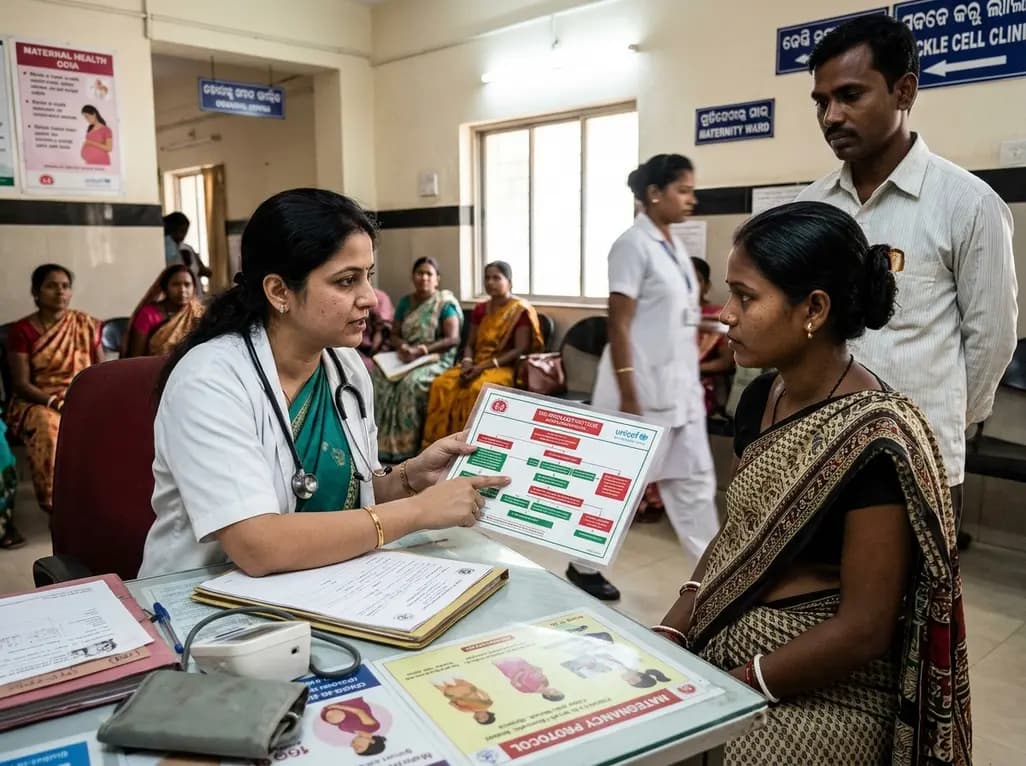
Odisha has established India's first state-level clinical protocol specifically tailored for pregnant women with sickle cell disease. Developed with NHM and UNICEF, the framework provides structured antenatal screening, crisis mitigation, standardized referral pathways, and specialized interdisciplinary care.
Today

India is advancing preventive healthcare by integrating genomics, artificial intelligence, and quantum technologies. With the SANGAM programme sequencing one million Indian genomes, clinicians can unlock personalized therapies, detect cardiometabolic risks early, and curb the burden of diabetes and heart disease.
Today

A randomized controlled trial demonstrates that an eight-week dual-task training intervention significantly improves static and dynamic postural control over standard balance exercises in individuals with chronic ankle instability, addressing critical neurocognitive deficits during athletic and daily activities.
Today

A retrospective cohort study of 7,716 ICU patients from the MIMIC-IV database demonstrates that Gradient Boosting Decision Trees significantly outperform traditional SOFA scores in predicting in-hospital mortality among patients with sepsis and diabetes, with SHAP analysis providing clinical interpretability.
Today
