.webp&w=384&q=75)

Loading, please wait...
Loading, please wait...

Rigorous scientific inquiry forms the cornerstone of modern operative care and infectious disease management. Consequently, modern surgeons must critically appraise published clinical trials before adopting new interventions in clinical workflows. Transparent statistical reporting in surgery ensures that published conclusions reflect genuine biological phenomena rather than random sampling variation. In 2016, the American Statistical Association issued clear guidance cautioning researchers against the isolated misuse of null hypothesis significance testing. Nevertheless, methodological limitations persist across surgical journals, impairing clinical interpretation.
A retrospective comparative evaluation recently examined original investigation manuscripts published across surgical infection literature between 2015 and 2023. Specifically, investigators evaluated key methodological indicators, including pre-specified alpha thresholds, formal sample size determinations, exact p-value presentation, and confidence interval utilization. Interestingly, the investigation demonstrated that overall reporting rigor changed very little over the eight-year surveillance span. While surgical technology advanced significantly, analytical transparency lagged behind contemporary standards. Therefore, surgeons who rely heavily on literature conclusions must recognize how inadequate reporting compromises trial reproducibility and clinical decision-making.
Adequate statistical power protects clinical investigations against costly false-negative errors. When surgical researchers underpower a trial, they often fail to identify genuine therapeutic benefits of novel antimicrobial strategies. Consequently, modern reporting guidelines require explicit power calculations in prospective surgical manuscripts. Despite these clear standards, recent empirical evaluations reveal that only 11.7 percent of published surgical infection investigations adequately reported pre-study statistical power calculations. Moreover, this proportion showed no meaningful statistical improvement between 2015 and 2023 cohorts.
Furthermore, many published surgical studies committed notable methodological errors when authors attempted retrospective power analyses. Specifically, calculating post-hoc power based solely on observed effect sizes provides no additional scientific value. Instead, investigators must determine required sample sizes before patient enrollment by defining clinically relevant effect margins. When clinical researchers omit prospective calculations, readers cannot differentiate whether an absence of difference represents true equivalence or inadequate sample sizes. Therefore, surgical clinicians evaluating clinical trials on infection prevention must demand transparent sample size justifications. Without rigorous prospective power determinations, small negative trials risk prematurely discarding effective operative interventions.
Historically, biomedical researchers treated a p-value threshold of 0.05 as an absolute boundary separating truth from falsehood. However, contemporary statistical theorists strongly discourage this dichotomous interpretation in surgical science. The retrospective review of surgical infection literature demonstrated that explicit alpha reporting dropped from 79.4 percent in 2015 to 67.4 percent in 2023. Additionally, manuscripts showed near-uniform convergence toward the traditional arbitrary alpha threshold of 0.05 without context-specific justification. Such rigid conventions encourage investigators to reduce nuanced surgical outcomes to binary declarations of success or failure.
Moreover, many authors continue reporting vague inequality statements, such as p less than 0.05, rather than providing exact numerical figures. Vague declarations obscure critical analytical details from clinicians who require precise probabilities to make sound decisions. For instance, a p-value of 0.049 provides vastly different evidential strength than a p-value of 0.001. Furthermore, investigators frequently misinterpret non-significant p-values as proof that no clinical difference exists between groups. In reality, a large p-value simply indicates that data remain compatible with the null hypothesis under existing study conditions. Consequently, surgeons must abandon dogmatic significance thresholds and instead inspect the full spectrum of evidence before altering clinical practices.
Modern biostatistical guidelines emphasize that clinicians must distinguish statistical significance from clinical relevance. A large observational trial might demonstrate a statistically significant reduction in minor erythema that provides minimal tangible benefit to the patient. Conversely, an underpowered randomized trial might demonstrate a clinically monumental reduction in organ-space infections that misses arbitrary significance thresholds. Therefore, surgical authors must present effect estimates accompanied by ninety-five percent confidence intervals rather than relying solely on isolated p-values. Confidence intervals transparently communicate both the magnitude of an intervention effect and the precision of the experimental measurement.
Encouragingly, recent analyses indicate that surgical infection researchers increasingly report confidence intervals in multivariable regression models. Nevertheless, bivariate comparisons in surgical literature still routinely omit confidence bounds, leaving readers blind to estimation uncertainty. When surgeons evaluate confidence intervals, they immediately perceive the entire plausible range of clinical outcomes. For example, a wide interval that spans both substantial clinical harm and substantial clinical benefit indicates profound uncertainty. Conversely, a narrow interval tightly clustered around a specific benefit confirms reliable therapeutic efficacy. As a result, surgical teams can make nuanced risk-benefit evaluations for their patients.
Improving statistical reporting in surgery requires active collaboration among journal editors, peer reviewers, and practicing academic surgeons. First, surgical journals must enforce formal methodological reporting guidelines, such as the SAMPL recommendations, during manuscript submission. When editorial teams mandate rigorous reporting guidelines, authors proactively document prospective power calculations, software versions, and exact probability values. Second, surgical societies should integrate dedicated biostatistical education into residency curricula and surgical specialty modules. When operating room teams understand biostatistics, they design higher-quality clinical studies and interpret evidence more critically.
Furthermore, peer reviewers must challenge authors who overstate statistical claims in observational cohorts. Reviewers should specifically demand that authors define primary clinical endpoints and justify all secondary subgroup analyses to prevent data dredging. Additionally, academic institutions should support surgical departments by providing accessible biostatistical consultation during trial conceptualization. Surgeons excel in anatomical technique and operative judgment, but complex multivariable modeling requires specialized analytical expertise. By pairing surgical acumen with formal statistical consultation, academic centers can generate robust, reproducible surgical infection studies. Ultimately, raising the bar of statistical reporting safeguards operative patients by ensuring clinical practice rests upon unassailable scientific foundations.
Exclusive reliance on p-values encourages binary decision-making that ignores clinical relevance and experimental effect size. A p-value merely measures data compatibility with a null hypothesis under specific assumptions; it never indicates the clinical magnitude of a surgical outcome. Furthermore, unadjusted p-values do not reflect prior probability, confounding biases, or measurement error. Therefore, surgeons must examine confidence intervals and absolute risk reductions alongside exact p-values to evaluate true operative benefit accurately.
An adequate prospective power calculation requires investigators to pre-specify the primary clinical outcome, alpha level, and desired statistical power. Additionally, researchers must define the minimally clinically important difference before patient enrollment begins. Researchers must also account for anticipated patient attrition during postoperative follow-up. Omitting prospective calculations risks underpowered investigations that miss critical antimicrobial benefits. Consequently, transparent sample size justifications ensure that negative surgical findings represent genuine clinical equivalence rather than statistical inadequacy.
Confidence intervals enhance surgical decision-making by quantifying both effect magnitude and estimation precision within a single clinical parameter. Unlike isolated p-values, a ninety-five percent confidence interval displays the entire range of plausible biological outcomes for an operative intervention. Consequently, surgeons can readily determine whether an intervention yields meaningful improvements in infection rates. Furthermore, wide intervals transparently expose experimental uncertainty, preventing clinicians from overinterpreting inconclusive data during daily surgical bedside rounds.
Disclaimer: This content is for informational and educational purposes only... Refer to the latest local and national guidelines for clinical practice.
References

Read summarized clinical updates, watch expert medical content, and earn CME certifications right from your smartphone.
Open your smartphone camera to scan and install.





Recent evaluations of surgical infection literature reveal persistent deficiencies in statistical reporting, including underuse of power calculations and overreliance on arbitrary p-values. Clinicians must prioritize confidence intervals and rigorous reporting to translate evidence into safe surgical practice.
Today

Subcutaneous infliximab provides stable steady-state pharmacokinetics and reduces immunogenicity in inflammatory bowel disease. This clinical review explores pivotal trial evidence, therapeutic drug monitoring recalibration, immunomodulator de-escalation, and real-world switching strategies.
Today
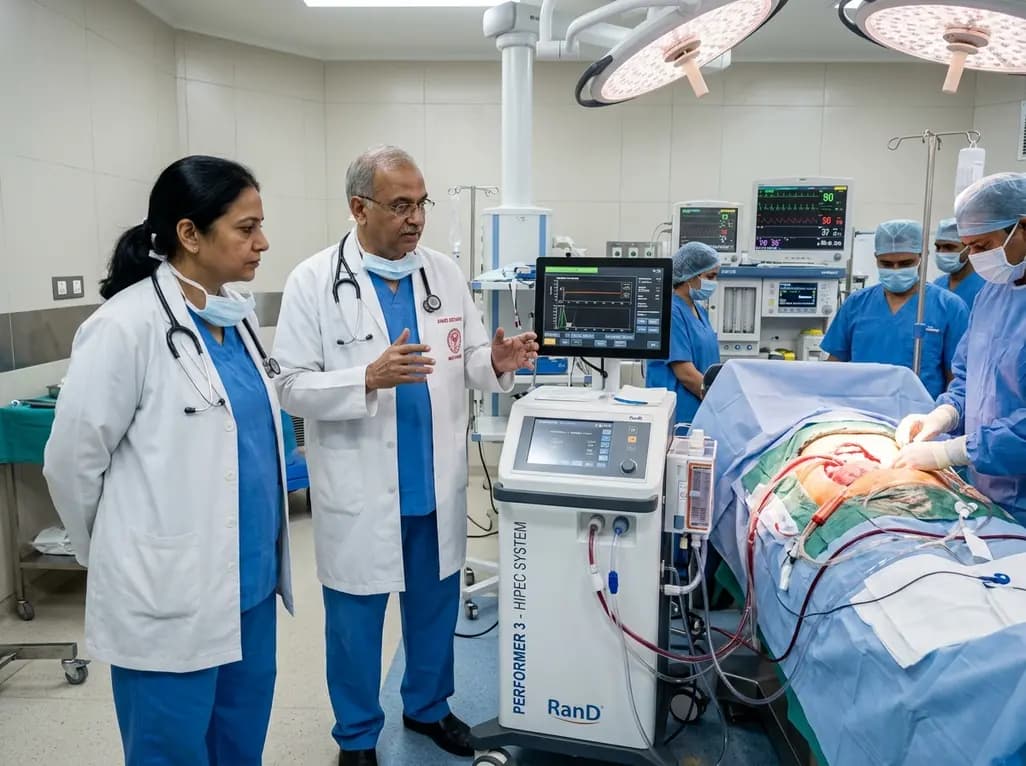
AIIMS Bathinda has inaugurated a specialized peritoneal oncology service featuring the RanD Performer 3 HIPEC platform. The facility offers cytoreductive surgery alongside hyperthermic intraperitoneal chemotherapy, transforming regional management for advanced ovarian, colorectal, and appendiceal malignancies.
Today
A cross-sectional study reveals that hypertension knowledge, illness perceptions, depression, and substance use significantly predict self-care behaviors. Addressing mental health and cognitive beliefs in primary care is crucial for optimal blood pressure control and cardiovascular disease prevention.
Today
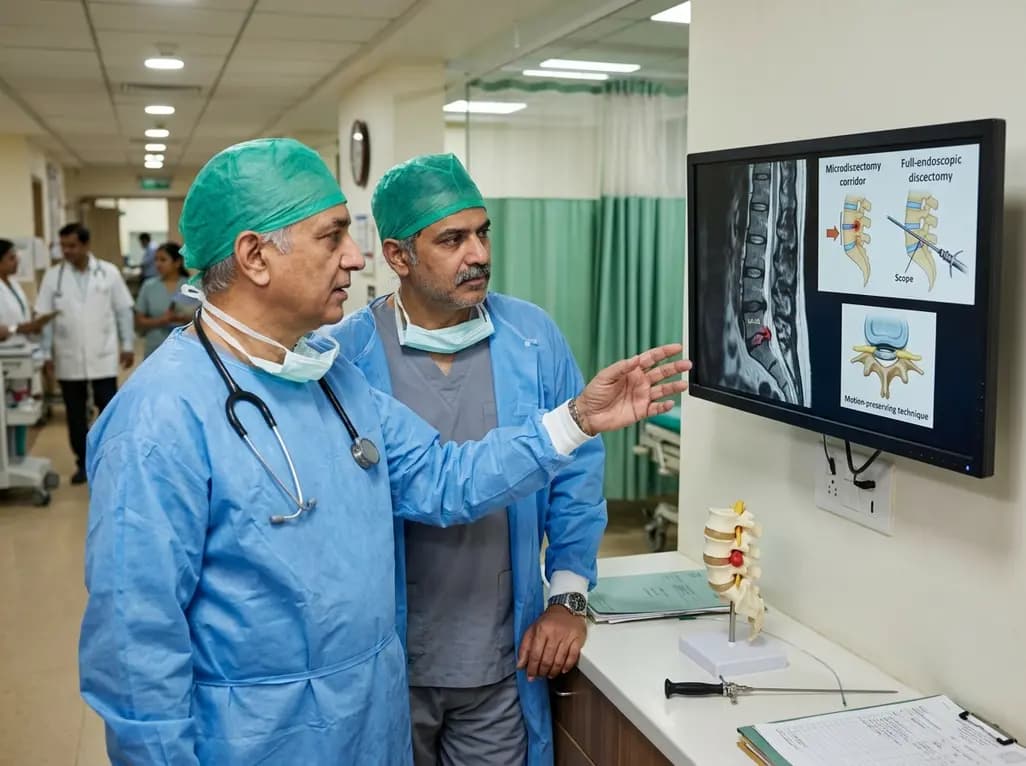
This clinical overview examines recent advancements in lumbar disc herniation surgery, comparing microscopic and full-endoscopic discectomy while highlighting biportal techniques and emerging motion-preserving innovations for spine specialists.
Today

A breakthrough study reveals that loss of SELENOT in hypothalamic POMC neurons triggers premature cellular senescence, ATF6α stress activation, and ER calcium depletion, linking neuroendocrine decay to metabolic disease.
Today
