.webp&w=384&q=75)

Loading, please wait...
Loading, please wait...

Intravenous biologic therapies transformed the management of inflammatory bowel disease over recent decades. However, traditional intravenous infusions impose substantial logistical burdens on patients and clinic staff. Moreover, intermittent intravenous infusions produce dramatic peak-to-trough concentration swings that often provoke immunogenic failure. The clinical development of subcutaneous infliximab directly addresses these pharmacokinetic limitations. Furthermore, this advanced formulation establishes steady drug concentrations and eliminates deep troughs. Consequently, gastroenterologists are actively incorporating this treatment into contemporary care protocols for Crohn's disease and ulcerative colitis.
Intravenous administration generates massive serum peaks followed by gradual drug clearance over eight weeks. Unfortunately, these pronounced troughs frequently drop below therapeutic thresholds before the subsequent infusion. When circulating drug levels fall, the immune system readily produces neutralizing anti-drug antibodies. In contrast, subcutaneous infliximab delivers a consistent dose every two weeks.
This frequent administration maintains stable serum concentrations throughout the dosing cycle. As a result, the body maintains continuous target tissue saturation without volatile fluctuations. Clinical trials indicate that bioavailability after subcutaneous injection reaches nearly eighty percent. Furthermore, steady drug exposure effectively suppresses the formation of anti-drug antibodies, which protects long-term drug persistence.
Because of this superior pharmacokinetic behavior, international consensus panels designate the formulation as a biobetter agent. Clinicians achieve dependable disease control while freeing patients from prolonged hospital infusions. Therefore, this predictable pharmacokinetic profile provides a compelling rationale for transitioning patients from intravenous maintenance regimens.
Substantial clinical evidence supports the therapeutic efficacy of this subcutaneous strategy across inflammatory bowel diseases. In the pivotal LIBERTY registration trials, subcutaneous maintenance achieved remarkable clinical remission rates in Crohn's disease and ulcerative colitis. Specifically, patients who achieved response during intravenous induction experienced significant endoscopic healing after transitioning to subcutaneous therapy.
Additionally, multicenter real-world cohorts provide reassuring data regarding elective switches. The prospective REMSWITCH study evaluated patients with stable inflammatory bowel disease who transitioned from intravenous maintenance to subcutaneous therapy. Notably, more than ninety percent of switched patients maintained prolonged clinical remission without disease flare. Routine biomarkers, such as fecal calprotectin and serum C-reactive protein, remained stable throughout long-term follow-up.
Furthermore, patients reported high treatment satisfaction due to the convenience of home self-injection. Adverse events remained infrequent and consisted primarily of mild, localized injection site reactions. Discontinuations due to adverse events occurred rarely across observed cohorts. Consequently, real-world findings mirror prospective trial results, confirming that switching preserves clinical and biochemical remission reliably.
Adopting subcutaneous administration necessitates a significant update to therapeutic drug monitoring interpretation. Traditionally, clinicians target intravenous trough levels between three and seven micrograms per milliliter. In sharp contrast, subcutaneous infliximab produces steady-state concentrations between fifteen and twenty-five micrograms per milliliter.
Clinicians must understand that these higher numbers reflect stable kinetics rather than excessive total exposure. The cumulative area under the concentration-time curve remains virtually identical to standard intravenous dosing. Therefore, elevated trough values should never prompt clinicians to reduce doses prematurely. In fact, clinical analyses demonstrate that higher steady-state concentrations correlate directly with superior rates of transmural and endoscopic healing.
Moreover, therapeutic drug monitoring remains vital for identifying individuals with rapid drug clearance. Patients who exhibit accelerated clearance or active systemic inflammation may require dose optimization. Proactive concentration monitoring ensures that circulating drug levels never dip below critical therapeutic thresholds. Thus, modern therapeutic drug monitoring provides a personalized framework for maximizing clinical outcomes.
Gastroenterologists historically prescribe immunomodulators alongside infliximab to prevent anti-drug antibody formation. Concomitant thiopurines or methotrexate effectively improve drug persistence during intermittent intravenous therapy. However, long-term immunomodulator therapy carries meaningful risks, including bone marrow suppression, serious infections, and hematologic malignancies.
Fortunately, the pharmacokinetic stability of subcutaneous infliximab fundamentally alters this clinical balance. Because constant steady-state concentrations prevent the emergence of neutralizing antibodies, concomitant antimetabolite therapy becomes far less necessary. Emerging evidence suggests that clinicians can safely withdraw immunomodulators once patients achieve stable subcutaneous maintenance.
Nevertheless, clinicians should manage drug withdrawal through careful objective evaluation. Practitioners must confirm deep clinical remission and check adequate steady-state serum levels before tapering thiopurines or methotrexate. Furthermore, routine monitoring of fecal calprotectin after withdrawal ensures early detection of subclinical relapse. As a result, this deliberate de-escalation strategy spares patients unnecessary drug exposure while preserving long-term biologic effectiveness.
Tailoring subcutaneous anti-TNF therapy requires attention to unique clinical characteristics in special patient populations. For example, high body weight accelerates monoclonal antibody clearance through increased catabolism. Patients with severe obesity may exhibit lower drug exposure on standard fixed dosing and require personalized dose escalation.
Similarly, patients with complex fistulizing Crohn's disease require elevated systemic drug concentrations to achieve tissue healing. Subcutaneous maintenance provides the robust, uninterrupted drug levels necessary to close refractory perianal fistulas. In pediatric inflammatory bowel disease, home self-administration prevents disruption of school attendance and avoids difficult intravenous access. In addition, pregnant patients benefit from predictable steady-state kinetics, allowing smooth coordination of dosing before planned delivery.
Looking ahead, inflammatory bowel disease care is transitioning steadily toward decentralized, patient-centered models. Fully subcutaneous induction protocols and pharmacokinetic dashboard dosing tools will soon enter routine practice. Therefore, subcutaneous administration stands ready to establish itself as the preferred maintenance foundation for modern inflammatory bowel disease management.
Target trough levels differ substantially due to altered pharmacokinetics. Standard intravenous maintenance targets trough concentrations between three and seven micrograms per milliliter. In contrast, bi-weekly subcutaneous infliximab provides continuous drug release, yielding higher steady-state trough concentrations between fifteen and twenty-five micrograms per milliliter. Clinicians should not interpret these higher values as overdosing, because overall area-under-the-curve exposure remains equivalent to conventional intravenous dosing.
Clinicians can frequently de-escalate immunomodulators after transitioning patients to subcutaneous infliximab. Intravenous therapy requires concomitant thiopurines primarily to suppress antidrug antibodies driven by subtherapeutic troughs. Because subcutaneous dosing provides steady, elevated drug concentrations, the risk of immunogenicity decreases substantially. However, gastroenterologists must ensure objective endoscopic remission and verify robust steady-state drug levels before safely discontinuing immunomodulators, followed by regular biomarker monitoring.
Currently, regulatory approvals mandate intravenous induction before initiating subcutaneous maintenance. High-burden inflammatory disease requires the rapid serum loading that intravenous infusions achieve to promptly bind excess tissue tumor necrosis factor. After clinical response is confirmed at week six or ten, clinicians transition patients to bi-weekly subcutaneous injections. Ongoing clinical trials are evaluating fully subcutaneous induction regimens, but intravenous loading remains the standard evidence-based pathway today.
Disclaimer: This content is for informational and educational purposes only and is not intended as medical advice. It should not be used to diagnose, treat, prevent, or cure any condition. Healthcare professionals must exercise independent clinical judgment. Refer to the latest local and national guidelines for clinical practice.
References

Read summarized clinical updates, watch expert medical content, and earn CME certifications right from your smartphone.
Open your smartphone camera to scan and install.





Subcutaneous infliximab provides stable steady-state pharmacokinetics and reduces immunogenicity in inflammatory bowel disease. This clinical review explores pivotal trial evidence, therapeutic drug monitoring recalibration, immunomodulator de-escalation, and real-world switching strategies.
Today
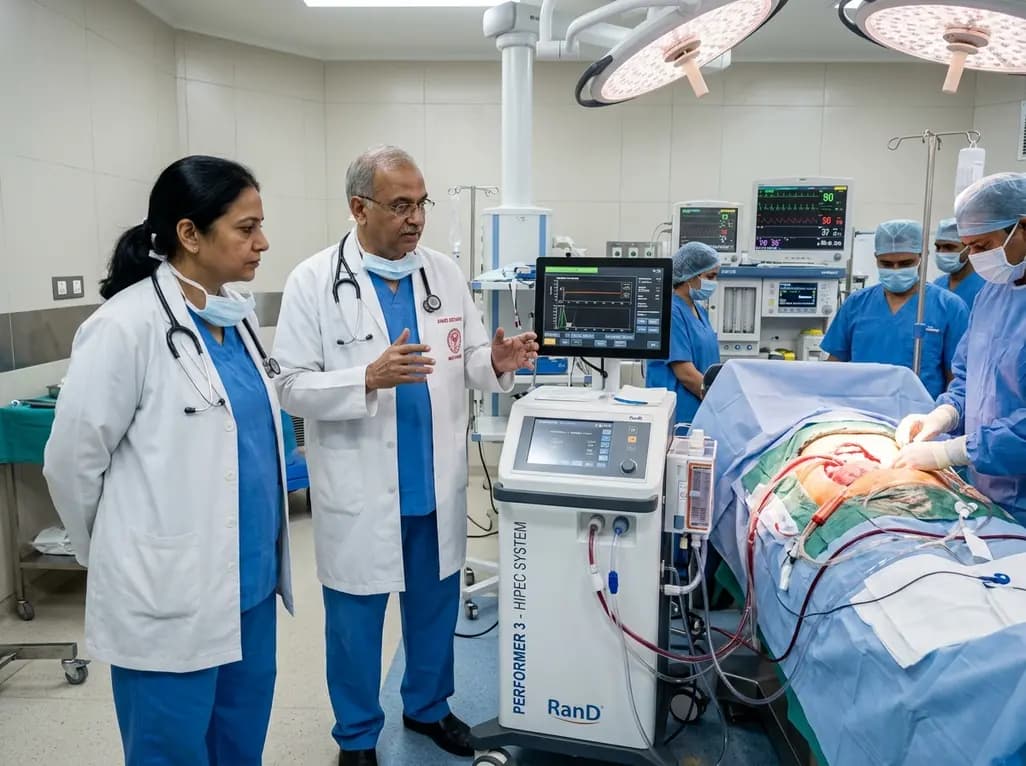
AIIMS Bathinda has inaugurated a specialized peritoneal oncology service featuring the RanD Performer 3 HIPEC platform. The facility offers cytoreductive surgery alongside hyperthermic intraperitoneal chemotherapy, transforming regional management for advanced ovarian, colorectal, and appendiceal malignancies.
Today
A cross-sectional study reveals that hypertension knowledge, illness perceptions, depression, and substance use significantly predict self-care behaviors. Addressing mental health and cognitive beliefs in primary care is crucial for optimal blood pressure control and cardiovascular disease prevention.
Today
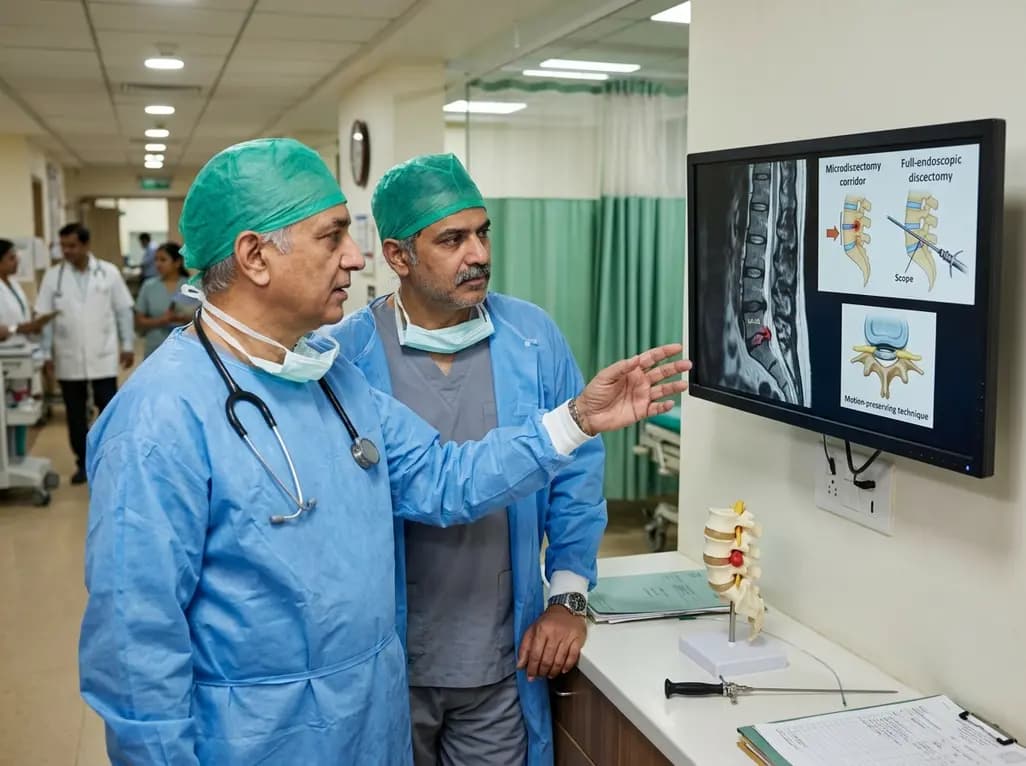
This clinical overview examines recent advancements in lumbar disc herniation surgery, comparing microscopic and full-endoscopic discectomy while highlighting biportal techniques and emerging motion-preserving innovations for spine specialists.
Today
A breakthrough study reveals that loss of SELENOT in hypothalamic POMC neurons triggers premature cellular senescence, ATF6α stress activation, and ER calcium depletion, linking neuroendocrine decay to metabolic disease.
Today
