.webp&w=384&q=75)

Loading, please wait...
Loading, please wait...

Managing bone and joint infections represents one of the most formidable clinical challenges in modern orthopedic practice. Despite prompt surgical debridement and prolonged systemic antibiotic administration, clinicians frequently encounter debilitating disease recurrence. Staphylococcus aureus remains the primary pathogen driving these treatment failures. In fact, staphylococcal isolates demonstrate an uncanny ability to withstand host immune defenses and potent bactericidal regimens. Recent clinical investigations highlight how bacterial populations adapt within the host during initial hospitalization. Rather than remaining static, the pathogen undergoes continuous microevolution inside infected musculoskeletal tissue. Consequently, surviving bacteria emerge with altered phenotypic traits that foster long-term recalcitrance.
Orthopedic surgeons and infectious disease specialists must understand these microevolutionary dynamics to optimize therapeutic strategies. Traditional paradigms often assume that relapses stem from poor patient compliance or inadequate surgical margins alone. However, emergent scientific evidence reveals that pathogen-driven survival mechanisms operate at deep molecular levels. Therefore, unravelling bacterial adaptation during in-patient therapy is vital for preventing disease recrudescence.
To investigate how staphylococci persist, researchers analyzed paired isolates collected during initial presentation and subsequent relapse from the same patients. Whole-genome sequencing revealed that isolates accumulated substantial genetic variations during the host in-patient stay. Surprisingly, the mutation count ranged broadly from zero to nearly four hundred mutations across different patient strains. This wide genomic divergence demonstrates that within-host selective pressure drives rapid bacterial diversification. Furthermore, these acquired mutations localized primarily within genes governing bacterial virulence regulation and central metabolic pathways. As a result, the pathogen systematically reprograms its physiological processes to survive harsh host microenvironments.
Interestingly, researchers found no single universal mutation shared across all relapsing pairs. Instead, each bacterial strain followed an individualized evolutionary trajectory within its specific host. Clinicians must recognize that antimicrobial therapy and inflammatory host mediators exert intense selective pressure. Subsequently, these pressures enrich diverse sub-populations with variable survival advantages. Thus, in-patient bacterial evolution presents a highly heterogeneous landscape rather than a predictable, uniform genetic shift.
Biofilm architecture shields staphylococci from both circulating immune effectors and systemic antimicrobial agents. In bone tissue and implant surfaces, sessile communities form complex matrices composed of polysaccharides, extracellular DNA, and proteins. However, comparative functional assays between initial and relapse strains revealed striking phenotypic heterogeneity in biofilm-forming capacity. Some relapse isolates demonstrated markedly increased biomass production, which severely impeded antibiotic penetration. Conversely, other relapse strains exhibited attenuated biofilm production while prioritizing alternative survival strategies. Therefore, clinicians cannot presume that every relapsing isolate will overexpress biofilm matrix components.
In addition, bacterial growth kinetics fluctuated widely among the analyzed clinical pairs. Certain evolved strains displayed slower replication rates, resembling small colony variants that exhibit reduced metabolic activity. Consequently, these slow-growing phenotypes tolerate cell-wall-active antimicrobials like beta-lactams and vancomycin. Thus, variable biofilm dynamics and growth alterations collectively allow the pathogen to withstand aggressive antimicrobial therapy during prolonged inpatient admissions.
Beyond extracellular biofilm matrices, staphylococci exploit cellular sanctuaries within the musculoskeletal system to escape eradication. Osteoblasts actively internalize Staphylococcus aureus through integrin-mediated endocytic mechanisms. Once inside the intracellular compartment, the pathogen modulates its cytotoxic profile to prevent host cell lysis. Recent experimental evaluations showed notable heterogeneity in osteoblast internalization and persistence between paired clinical isolates. Specifically, certain relapse strains reduced their cytotoxicity, enabling peaceful coexistence within osteoblasts without triggering immediate cell death.
This stealth intracellular residence protects bacteria from high extracellular concentrations of hydrophilic antibiotics. Furthermore, intracellular persistence shields dormant staphylococci from circulating neutrophils and specialized tissue macrophages. When environmental conditions become favorable, these dormant bacteria can escape, replicate, and re-establish acute tissue destruction. As a result, intracellular reservoirs act as continuous seeds for late clinical relapse. Clinicians must therefore address both extracellular biofilms and intracellular reservoirs when formulating treatment regimens for bone infections.
The management of complex orthopedic infections in India presents unique challenges due to diverse patient demographics and high antimicrobial resistance rates. Staphylococcal infections frequently complicate compound fractures, joint arthroplasties, and trauma surgeries across Indian healthcare centers. Given the demonstrated genomic adaptability of staphylococci during hospitalization, clinicians must adopt multifaceted antimicrobial stewardship protocols. Standard systemic therapy often relies on beta-lactams or glycopeptides, which display poor intracellular penetration. Consequently, clinicians should consider incorporating agents with proven intracellular bioavailability and antibiofilm efficacy, such as rifampicin, clindamycin, or fluoroquinolones, whenever susceptibility permits.
Moreover, radical surgical debridement remains the cornerstone of successful therapy because it physically removes biofilm-laden hardware and devitalized bone. Local antibiotic delivery systems, including antibiotic-impregnated polymethylmethacrylate spacers, provide high local drug concentrations without systemic toxicity. Finally, multidisciplinary collaboration between orthopedic surgeons, clinical microbiologists, and infectious disease specialists is essential. Such proactive team-based management ensures prompt diagnostic identification, appropriate therapeutic duration, and reduced risk of devastating recurrence.
Staphylococcus aureus employs diverse persistence mechanisms that circumvent standard bactericidal therapies. Specifically, bacteria form dense extracellular biofilms on hardware and necrotic bone, preventing optimal antibiotic penetration. Furthermore, pathogens invade host osteoblasts, establishing protected intracellular reservoirs that evade circulating immune cells. During hospital therapy, bacteria also accumulate adaptive metabolic mutations, slowing their growth kinetics. Consequently, conventional antimicrobial agents fail to eradicate these dormant subpopulations, precipitating clinical relapse once therapy ceases.
During prolonged hospitalization, bacterial isolates face constant selective pressure from host immune responses and antibiotic regimens. As a result, staphylococci acquire diverse mutations across virulence-regulating networks and core metabolic genes. Whole-genome sequencing reveals that mutation counts vary widely among strains, demonstrating distinct individual evolutionary paths. These acquired genetic changes alter bacterial growth rates, cytotoxicity, and biofilm production. Ultimately, this intra-host evolutionary process allows heterogeneous bacterial subpopulations to survive without requiring a single common mutation.
Overcoming persistent staphylococcal bone infections requires combining aggressive surgical debridement with targeted antimicrobial regimens. Because standard beta-lactams exhibit limited intracellular penetration, clinicians frequently prescribe combination regimens containing rifampicin, fluoroquinolones, or clindamycin. In addition, surgeons place high-dose antibiotic-loaded acrylic cement or bioabsorbable spacers to achieve elevated local bactericidal concentrations. Moreover, multidisciplinary coordination between orthopedic surgeons and infectious disease specialists ensures tailored therapeutic durations, effectively suppressing bacterial reservoirs and reducing the likelihood of infection relapse.
Disclaimer: This content is for informational and educational purposes only. It is not intended to provide medical advice, diagnosis, or treatment recommendations. Clinical decisions should be guided by qualified healthcare professionals based on individual patient assessments and diagnostic testing. Refer to the latest local and national guidelines for clinical practice.
References
Collet Q et al. In-patient evolution can heterogeneously impact biofilm formation and intraosteoblastic behavior of Staphylococcus aureus in relapsing bone and joint infections. J Infect Dis. 2026 Oct 14. doi: undefined. PMID: 42874063.
Alder KD et al. Intracellular Staphylococcus aureus in bone and joint infections: A mechanism of disease recurrence, inflammation, and bone and cartilage destruction. Bone. 2020;141:115568.
Lamret F et al. Staphylococcus aureus strain-dependent biofilm formation in bone-like environment. Front Microbiol. 2021;12:714994.

Read summarized clinical updates, watch expert medical content, and earn CME certifications right from your smartphone.
Open your smartphone camera to scan and install.





Staphylococcus aureus undergoes significant in-patient microevolution during bone and joint infections. Genetic mutations alter biofilm formation, growth kinetics, and intracellular persistence in osteoblasts, driving unpredictable clinical relapses and complicating orthopedic management.
Today

A 34-year-old postpartum woman suffered a pheochromocytoma crisis resulting in cardiac arrest and respiratory failure. Intensivists successfully deployed veno-arteriovenous ECMO to stabilize refractory arrhythmias and differential hypoxemia, bridging her safely to complete tumor resection and full clinical recovery.
Today
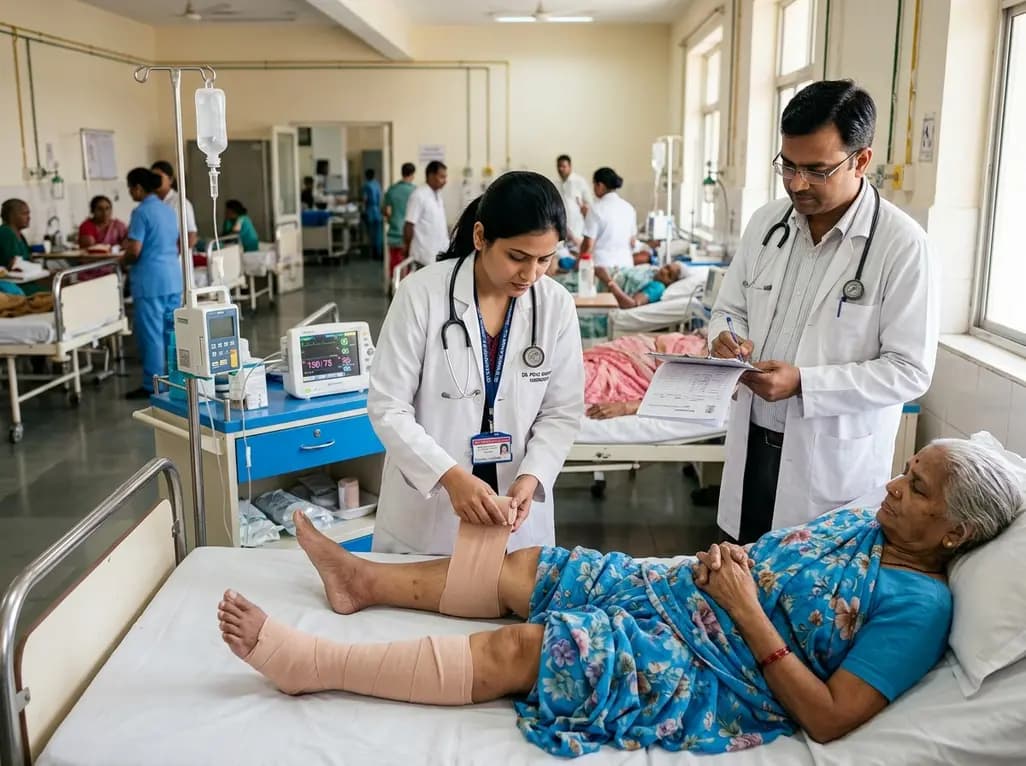
A Mayo Clinic study reveals that applying lower extremity elastic bandages in acute decompensated heart failure significantly improves diuretic efficiency by 340 mL per 40-mg furosemide equivalent. This mechanical therapy reduces required diuretic doses while safely maintaining necessary overall daily fluid clearance.
Today
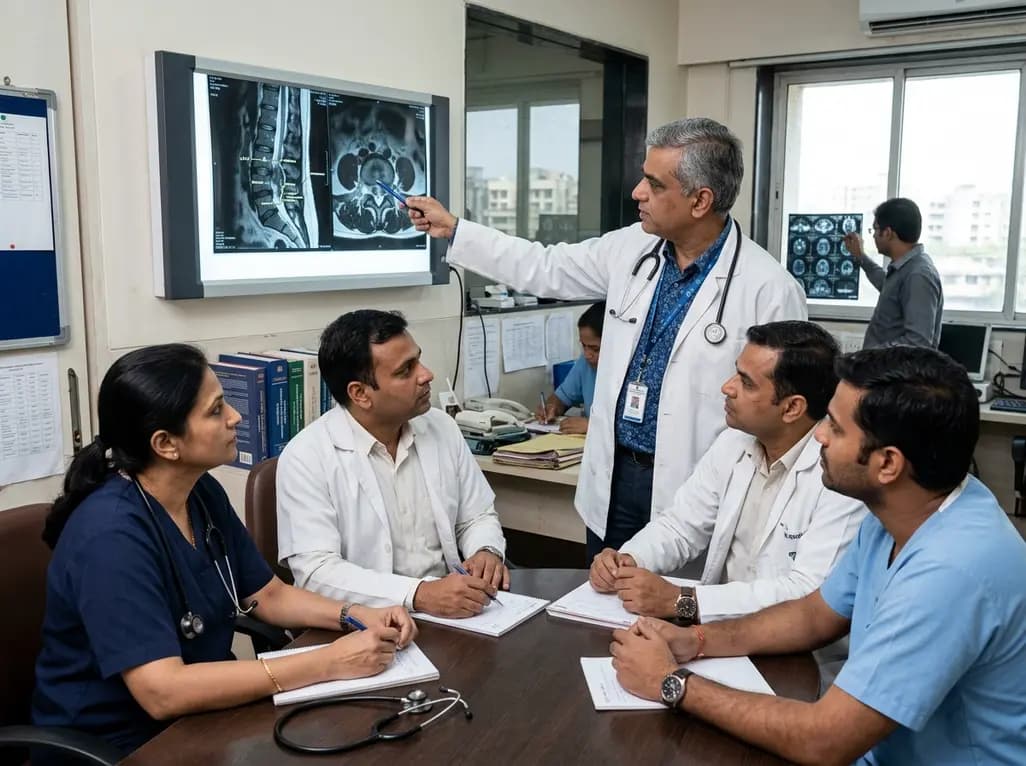
A narrative review clarifies key nuances of the AO Spine Primary Infection Classification, including canal boundaries dorsal to the PLL, Type 1 versus Type 2 criteria, neural compression thresholds, and modifier application in primary spinal infections.
Today

Calcimimetic therapy for primary hyperparathyroidism can induce profound tumor fibrosis, necrosis, and reduced vascularity. These changes alter ultrasound and 4D-CT imaging and cause dense recurrent laryngeal nerve adhesions, requiring heightened surgical vigilance during definitive parathyroidectomy.
Today
