.webp&w=384&q=75)

Loading, please wait...
Loading, please wait...

Pediatric spinal deformity surgery represents one of the most complex interventions in modern pediatric orthopedics. Surgeons routinely manage severe anatomical curvatures while striving to minimize perioperative risks. Consequently, surgical centers have sought systematic interventions to optimize technical precision and clinical safety. For decades, many institutions relied primarily on consistent, dedicated surgical teams to drive efficiency. However, maintaining identical personnel for every procedure creates severe administrative hurdles. Staff turnover, unpredictable scheduling, and personnel shortages regularly disrupt dedicated teams. Therefore, healthcare leaders are investigating whether standardized clinical pathways can replace or surpass individual team familiarity. A pioneering retrospective review evaluated this exact question across consecutive patient cohorts. Specifically, investigators evaluated whether a structured workflow could deliver superior outcomes compared to a dedicated spine team. The findings offer compelling evidence for clinical leadership. Standardizing each procedural phase simplifies complex interventions. Moreover, structured methodologies eliminate technical ambiguity across circulating staff and surgical trainees. Thus, hospitals can maintain superior surgical excellence without relying exclusively on staff permanence.
Historically, surgical units prioritized consistent team staffing to elevate technical proficiency during scoliosis interventions. A familiar operative group inherently understands surgeon preferences and instrument handling. However, maintaining this rigid personnel model often proves impractical in modern tertiary centers. In response, investigators established a structured protocol that divides the procedure into three distinct operational phases. Specifically, the team segmented surgery into exposure, screw insertion, and deformity correction. Furthermore, the protocol substantially streamlined instrument inventory by eliminating redundant surgical trays. As a result, operating room teams handled far fewer instruments during critical stages. From 2018 to 2022, a dedicated team followed these standardized surgical steps. Subsequently, in 2023, the institution relocated surgeries to operating suites staffed by rotating personnel. Consequently, these non-dedicated teams executed the identical tripartite standardized process without long-term team familiarity. This natural transition enabled a direct comparative analysis between team consistency and process adherence. Ultimately, the comparative data demonstrated that standardized protocols exert a stronger influence on clinical outcomes than team continuity alone.
Operative duration serves as a vital surrogate marker for procedural complexity, infection risk, and tissue trauma. In this comparative review, surgical duration favored the standardized process cohort by a substantial margin. Specifically, the standardized process group completed surgeries in a mean of 224 minutes. In contrast, the dedicated team cohort averaged 260 minutes of surgical time. This represented a significant reduction of thirty-six minutes. Therefore, procedural standardization directly accelerated operative pacing despite the absence of consistent personnel. Moreover, reducing instrument clutter substantially decreased the time scrub nurses spent searching for specialized tools. Because each surgical phase utilized only designated trays, scrub nurses anticipated instrumentation needs with greater accuracy. In addition, surgeons experienced fewer interruptions during pedicle screw placement and rod contouring. Hence, cognitive load decreased noticeably across the entire surgical theater. Consequently, operative tempo remained consistent from incision to wound closure. These metrics confirm that clear procedural structuring outweighs team familiarity. Streamlining workflow variables generates reproducible efficiency across diverse operating environments.
Prolonged operative times frequently correlate with increased postoperative discomfort, extensive soft tissue edema, and protracted hospitalizations. Consequently, researchers evaluated whether procedural acceleration translated into measurable clinical benefits for pediatric patients. The analysis confirmed substantial improvements across recovery parameters. First, patients in the standardized process group achieved an average hospital length of stay of three days. In comparison, patients managed by the dedicated team remained hospitalized for an average of four days. This single-day reduction demonstrated high statistical significance. Furthermore, patients in the process group required significantly less total morphine equivalents following surgery. Specifically, mean morphine consumption dropped from 132.2 milligrams in the team cohort to 123.0 milligrams in the process cohort. As a result, children experienced fewer opioid-related adverse effects, including nausea and hypoventilation. Accelerated rehabilitation pathways allow patients to achieve early physical therapy milestones and resume oral nutrition. Therefore, refining surgical mechanics directly enhances systemic recovery during the acute postoperative period.
Pediatric spinal reconstructions impose substantial financial burdens on healthcare facilities and patient families. Consequently, institutional administrators continuously seek proven interventions that curb operative expenses without sacrificing safety. In this investigation, process standardization achieved significant fiscal advantages across multiple domains. Operating room costs averaged 10,819 dollars for the process group versus 12,558 dollars for the dedicated team. Thus, procedural standardization saved more than 1,700 dollars per surgical procedure. Furthermore, eliminating excess instrument trays yielded substantial secondary cost reductions. Sterile processing departments processed, wrapped, and sterilized fewer heavy trays before and after each case. As a result, staff workload and instrument turnover intervals dropped considerably. In addition, shorter operative durations directly reduced utility expenses and operating theater occupancy fees. Discharging patients twenty-four hours earlier liberated valuable inpatient beds for emergent admissions. Therefore, structured surgical protocols provide immense economic sustainability for overburdened pediatric centers.
Implementing reliable operating room protocols offers an accessible pathway for elevating surgical care across global health systems. Many healthcare facilities struggle to maintain dedicated surgical staff due to high attrition rates and shifting duty rosters. However, an institutionalized protocol remains robust despite frequent personnel changes. Surgical leaders can readily transcribe the three-phase methodology into standard operating procedures and nursing checklists. Furthermore, structured phases enable rapid onboarding for rotating scrub technologists and junior surgical residents. Consequently, new team members understand anticipated instrument progressions before complex maneuvers begin. In addition, multidisciplinary coordination between orthopedics, anesthesiology, and nursing solidifies operative predictability. Surgical programs in resource-limited settings can particularly benefit from tray rationalization. Eliminating superfluous tools lowers sterilization expenditures and minimizes tray clutter. Ultimately, institutionalizing disciplined procedural standards empowers surgical teams to achieve reproducible excellence, reduce complications, and protect institutional resources.
A dedicated team relies on identical personnel working together consistently across all procedures. In contrast, a standardized process establishes a fixed, reproducible workflow dividing surgery into distinct phases with streamlined instrument sets. This protocol enables rotating staff members to achieve exceptional efficiency without requiring permanent team member assignments.
The standardized process divided spinal fusion into exposure, screw insertion, and correction phases while consolidating surgical trays. This arrangement eliminated procedural clutter and accelerated tool selection for scrub technicians. Consequently, shorter operating times reduced tissue trauma and blood loss, enabling earlier ambulation, reduced narcotic requirements, and accelerated hospital discharge.
Yes, surgical departments can readily implement these pathways without significant capital expenditures. Hospital leaders achieve standardization by auditing existing instrument sets, eliminating redundant trays, and documenting clear procedural phases. Because the model relies on structured communication rather than proprietary technology or dedicated staffing, institutions can rapidly scale this approach.
Disclaimer: This content is for informational and educational purposes only. It is not intended to be a substitute for professional medical advice, diagnosis, or treatment. Always seek the advice of your physician or other qualified health provider with any questions you may have regarding a medical condition. Refer to the latest local and national guidelines for clinical practice.
References

Read summarized clinical updates, watch expert medical content, and earn CME certifications right from your smartphone.
Open your smartphone camera to scan and install.





A landmark study reveals that a standardized operating room process outperforms a dedicated surgical team in pediatric spinal deformity surgery. Standardization significantly reduced operative time, length of stay, opioid use, and overall hospital costs, offering a scalable model for hospitals.
Today

Hantaviruses are emerging zoonotic pathogens causing hemorrhagic fever with renal syndrome and hantavirus pulmonary syndrome. Characterized by severe capillary leakage and thrombocytopenia, these infections require prompt diagnosis, vigilant hemodynamic monitoring, and specialized critical care support.
Today
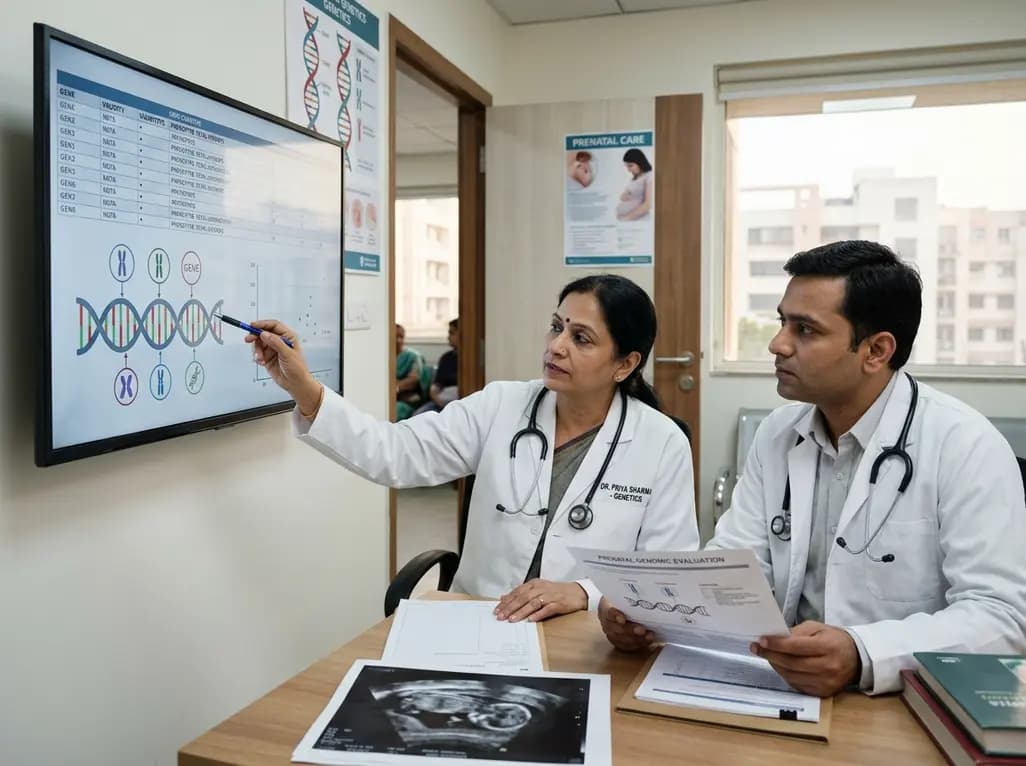
The ClinGen Prenatal Gene Curation Expert Panel evaluated 63 disease relationships across 61 genes, establishing clinical validity for severe fetal phenotypes like hydrops and stillbirth to enhance prenatal genomic interpretation and clinical care.
Yesterday

Managing refractory hypoxemia after cardiothoracic surgery becomes perilous when prolonged air leak limits positive-pressure ventilation. This case-based review details how high-flow nasal cannula, paired with awake rehabilitation, enabled successful extubation and avoided invasive re-intubation.
Today
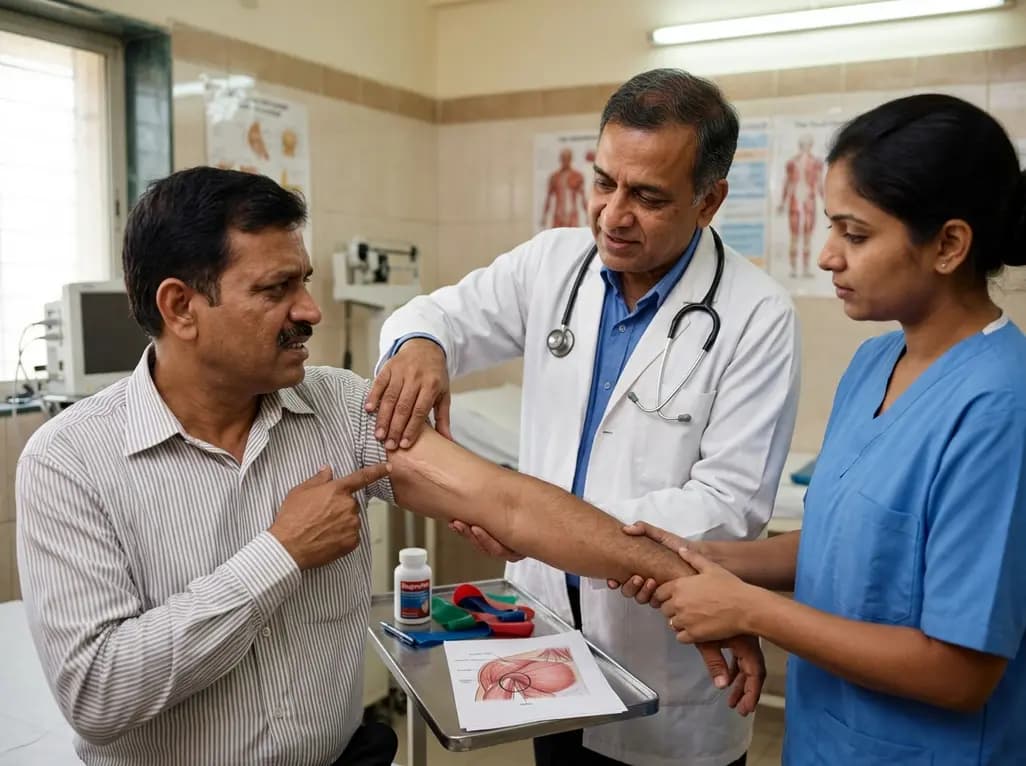
Idiopathic axillary web syndrome (IAWS) is a rare cause of shoulder pain and mobility restriction characterized by palpable axillary cording without prior surgery or trauma. Early diagnosis, nonsteroidal anti-inflammatory therapy, and physical rehabilitation lead to complete resolution of symptoms.
Today
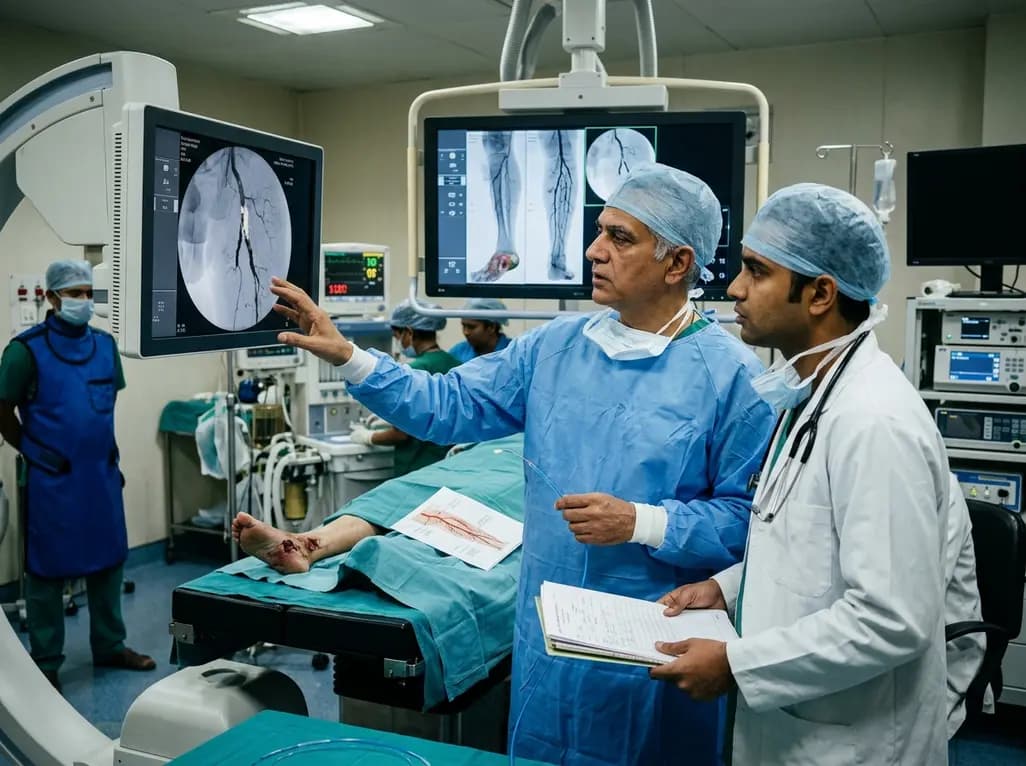
SWEDEPAD-1 trial insights show paclitaxel-coated devices do not improve long-term limb salvage in patients with chronic limb-threatening ischemia and tissue loss. While one-year reinterventions decreased, the devices were linked to a higher risk of major amputation at three months.
Today
