.webp&w=384&q=75)

Loading, please wait...
Loading, please wait...

Management of pediatric sporadic optic pathway glioma presents complex clinical challenges. These low-grade neoplasms arise within the anterior visual pathways, including optic nerves, chiasm, and tracts. Unlike neurofibromatosis type 1 tumors, sporadic lesions often show aggressive visual decline and require individualized interventions. Historically, surgical intervention caused controversy due to unpredictable functional consequences. Nevertheless, surgical debulking remains essential when severe mass effect threatens neural structures or causes hydrocephalus. Consequently, clinicians must balance decompression benefits against mechanical or vascular trauma to functioning optic fibers.
Recent surgical series demonstrate that radical resection does not enhance visual recovery. Instead, functional visual acuity preservation depends upon anatomical sparing during cytoreduction. Therefore, pediatric neurosurgeons favor limited yet precise debulking over radical excision. In addition, prompt surgical timing prevents permanent axonal injury. Modern neuroimaging and micro-neurosurgical techniques now enable safer tumor reduction. However, multidisciplinary teams must define strict clinical indicators before operating.
Clinical investigations identify baseline visual function as the foremost predictor of visual preservation. Specifically, children with intact preoperative visual acuity demonstrate superior long-term functional outcomes. Conversely, severe baseline vision loss heralds limited postoperative recovery. This finding indicates that preexisting axonal damage represents an irreversible threshold that surgery cannot restore. Therefore, early detection through standardized ophthalmological screening remains vital for improving visual prognosis.
Furthermore, tumor topography significantly influences functional preservation. Neoplasms confined to the prechiasmatic optic nerve carry distinct prognostic implications compared to diffuse chiasmatic-hypothalamic lesions. In chiasmatic involvement, compression of decussating fibers produces bitemporal visual deficits requiring gentle decompression. Moreover, younger children face higher risks of amblyopia and functional deterioration. Consequently, clinicians must consider baseline acuity, tumor location, and developmental age when defining surgical goals.
The extent of surgical cytoreduction requires careful calibration in sporadic optic pathway glioma. Although resections exceeding fifty percent may reduce tumor volume, aggressive surgery heightens vascular and mechanical risks. Specifically, extensive manipulation near the optic chiasm jeopardizes perforating vessels arising from the anterior communicating artery complex. Ischemic injury to these microvessels causes acute visual deterioration that cannot be reversed. Therefore, conservative debulking focused strictly on relieving optic compression provides the safest balance.
Additionally, modern neurosurgeons utilize ultrasonic aspirators and intraoperative neurophysiological monitoring to prevent collateral injury. Experienced teams focus on internal tumor decompression without applying traction to adherent optic structures. Consequently, this conservative paradigm stabilizes neurological function while avoiding catastrophic functional deficits. Postoperative management also requires vigilant monitoring for hypothalamic disturbance and cerebrospinal fluid leaks. Thus, debulking aims to halt functional decline rather than achieve oncological cure.
Accurate visual assessment in pediatric patients presents notable diagnostic hurdles. Young infants and toddlers cannot cooperate with standard Snellen visual charts. Therefore, pediatric ophthalmologists deploy age-appropriate tools like preferential looking tests, Cardiff cards, and sweep visual evoked potentials. In addition, optical coherence tomography provides objective quantification of the retinal nerve fiber layer. Serial measurement of retinal nerve fiber layer thickness helps detect axonal loss before overt clinical deterioration occurs.
Moreover, visual field assessments in young children demand high clinical patience and specialized perimetry protocols. Because pediatric sporadic optic pathway glioma can progress silently, routine longitudinal testing remains mandatory. Clinical teams must conduct structured visual evaluations every three to six months during surveillance. Furthermore, sudden drops in acuity necessitate urgent magnetic resonance imaging to assess tumor expansion or cystic growth. Hence, quantitative visual monitoring serves as the foundation for evaluating surgical efficacy.
Optimal care for children with optic pathway tumors demands seamless multidisciplinary coordination. Pediatric neurosurgeons, neuro-oncologists, pediatric ophthalmologists, and radiation oncologists must collaborate at every clinical stage. Although debulking relieves acute compressive neuropathy, systemic chemotherapy remains the primary frontline therapy for progressive lesions. Regimens such as carboplatin and vincristine provide effective disease stabilization while sparing young brains from radiation-induced neurocognitive injury.
Furthermore, targeted molecular therapies offer promising alternatives for low-grade gliomas harboring BRAF alterations. MEK inhibitors and BRAF inhibitors demonstrate substantial radiological response rates and vision stabilization in clinical trials. Nevertheless, surgical decompression retains an indispensable salvage role when rapid visual deterioration occurs despite medical therapy. Radiation therapy remains reserved for older children with refractory disease due to late endocrine and cognitive sequelae. Therefore, interdisciplinary alignment ensures that surgical debulking fits coherently into comprehensive management.
Translating these surgical principles into the Indian healthcare context requires addressing several logistical barriers. In many Indian centers, pediatric patients present at advanced stages with severe bilateral visual impairment and increased intracranial pressure. Delayed diagnosis occurs because subtle visual loss in young children frequently goes unnoticed by caregivers until strabismus develops. Therefore, primary care physicians and general pediatricians must maintain high vigilance and refer promptly for neuroimaging.
Additionally, establishing specialized pediatric neuro-ophthalmology clinics across tertiary centers in India is essential for standardized longitudinal tracking. Advanced optical coherence tomography and dedicated electrophysiology equipment should be accessible in regional apex hospitals. Multidisciplinary tumor boards must rigorously evaluate surgical indications to prevent overzealous resections that endanger functional sight. Furthermore, patient education programs help families recognize red-flag symptoms early. By integrating prompt diagnostics, conservative debulking, and longitudinal visual surveillance, clinicians in India can substantially optimize long-term visual preservation.
Baseline visual acuity serves as the strongest predictor of long-term visual outcomes following surgery. Children with preserved preoperative visual acuity experience substantially better functional preservation postoperatively. Conversely, severe preexisting vision loss indicates profound axonal injury that surgical decompression rarely reverses, highlighting the necessity of early diagnosis and intervention.
Radical resection carries severe risks of ischemic injury to the anterior visual pathways and hypothalamic damage. Aggressive tumor clearance fails to improve visual preservation compared to conservative cytoreduction. Therefore, surgeons utilize limited debulking to relieve compressive mass effect while protecting vital microvascular supplies and residual functioning optic fibers.
Clinicians recommend comprehensive visual evaluations every three to six months during the first two postoperative years. Specialized testing should include age-appropriate visual acuity testing, perimetry, and optical coherence tomography. Regular monitoring enables early detection of functional decline, ensuring prompt medical, surgical, or oncological intervention when tumor regrowth occurs.
Disclaimer: This content is for informational and educational purposes only... Refer to the latest local and national guidelines for clinical practice.
References

Read summarized clinical updates, watch expert medical content, and earn CME certifications right from your smartphone.
Open your smartphone camera to scan and install.





A clinical retrospective study identifies key predictors of long-term visual preservation in pediatric sporadic optic pathway glioma, demonstrating that baseline visual acuity and conservative debulking are essential for protecting sight.
Today

Bacteroides thetaiotaomicron utilizes an intricate multiprotein extracellular relay and outer membrane vesicles for cobamide scavenging in the human gut. This review examines its transport mechanics, riboswitch regulation, and potential clinical implications for host-microbe vitamin competition and nutrient absorption.
Today

Novel preclinical research demonstrates that antisense oligonucleotides targeting essential genes such as DARS1, DYNC1I2, and EIF2S3 selectively induce apoptosis in ovarian and lung cancer cells. Conditional biomarker activation provides a viable strategy to spare normal tissue while overcoming therapy resistance.
Today
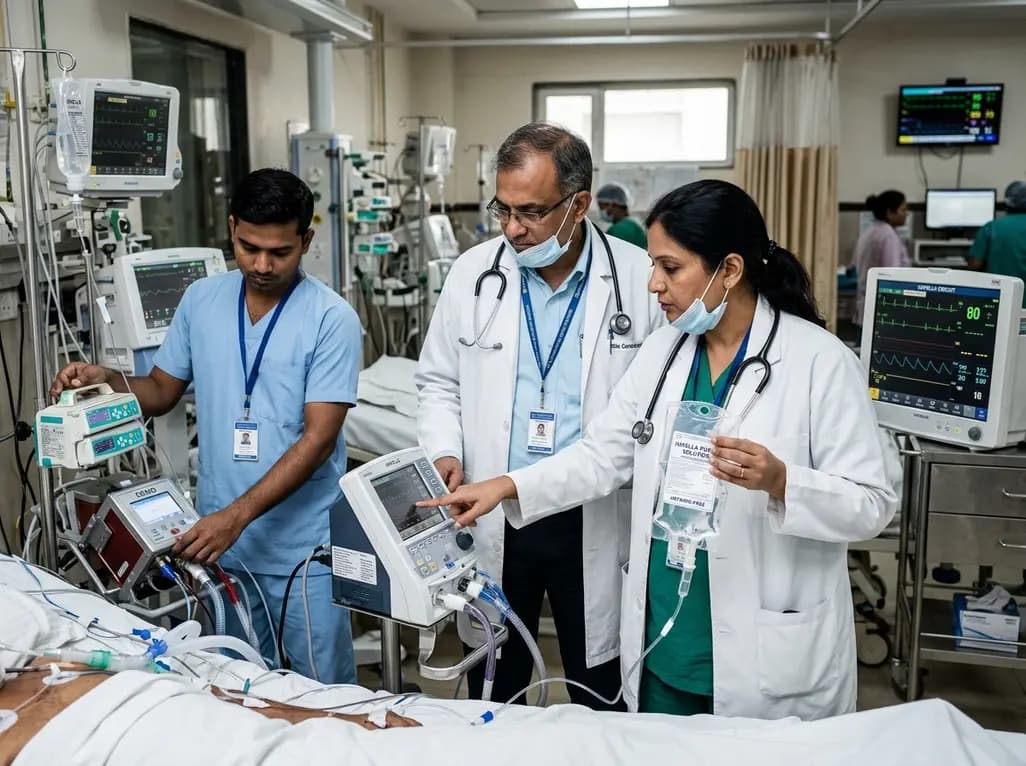
This clinical analysis examines heparin-free versus heparin-containing Impella purge solutions in patients receiving concomitant ECMO support (ECPELLA). Evidence suggests anticoagulant-free purges maintain device patency while reducing bleeding risks, offering a viable strategy alongside systemic anticoagulation.
Today

A 10-year Markov state-transition model shows minimally invasive tubular decompression dominates open laminectomy for pure lumbar spinal stenosis, yielding 5.95 vs 5.91 QALYs and saving $4,167 per patient through reduced complications and lower index costs.
Today

A preclinical study demonstrates that naringin-loaded phytosomes significantly enhance oral bioavailability and provide neuroprotective efficacy in diabetic neuropathy by dampening inflammation, reducing oxidative stress, and relieving neuropathic pain.
Today
