.webp&w=384&q=75)

Loading, please wait...
Loading, please wait...

Predicting long-term clinical recovery in substance use disorders remains a formidable challenge in computational psychiatry. Clinicians have traditionally relied on self-report questionnaires, clinical interviews, and baseline severity scales to gauge relapse vulnerability. However, these conventional instruments frequently fail to capture the complex neurocognitive shifts that dictate long-term recovery trajectories. Recent advances demonstrate that speech biomarkers in addiction offer an objective, scalable, and non-invasive alternative for prognostic stratification. By capturing rich linguistic patterns, natural language processing models can illuminate latent psychological states that standard rating scales overlook. Consequently, vocal and semantic features generated during early withdrawal provide clinicians with unprecedented predictive insight into patient trajectories.
Researchers investigated whether spontaneous speech recorded during initial cocaine abstinence could forecast drug use outcomes across a full year. The study enrolled 88 individuals with cocaine use disorder entering supervised abstinence. Each participant provided a brief five-minute speech sample detailing both the perceived benefits of quitting and the negative consequences of drug consumption. Investigators analyzed these recordings using advanced natural language processing tools, specifically utilizing high-dimensional sentence embeddings. The team tracked participants longitudinally at three-month intervals for up to twelve months. They systematically measured key clinical endpoints, including subjective craving intensity, withdrawal severity, total days of sustained abstinence, and laboratory-verified recent drug consumption.
The study yielded striking contrasts between short-term and long-term prognostic windows. Over immediate three-month intervals, traditional non-linguistic models utilizing baseline psychometric scores and initial consumption rates demonstrated superior predictive value. This initial accuracy likely reflects the relatively slow, linear decay of acute withdrawal symptoms. However, as the follow-up extended to twelve months, standard psychometric variables lost their prognostic capability. In sharp contrast, models based exclusively on initial speech embeddings accurately forecasted long-term outcomes. The speech model achieved a Spearman correlation of r ≥ 0.46 and demonstrated 80% accuracy in classifying sustained abstinence versus relapse, proving that early vocal markers retain persistent predictive utility over time.
Why do natural language metrics outperform standard clinical inventories over extended timeframes? Substance use disorders involve dynamic, non-linear neuroadaptations across prefrontal executive networks and reward-processing limbic circuits. Standard inventories only take a static snapshot of conscious self-perception, which rapidly degrades in predictive relevance. Conversely, spontaneous language production requires intricate coordination across distributed neural networks that govern executive function, emotional regulation, and motivational salience. Consequently, the semantic structure of a patient's narrative subtly reveals their underlying cognitive flexibility, ambivalence, and subconscious craving. By modeling these latent dimensions through sentence embeddings, computational algorithms capture the complex nonlinear dynamics that govern longitudinal behavior.
These findings present transformative opportunities for addiction medicine and clinical psychiatry. Integrating automated speech analysis into routine triage allows clinicians to identify vulnerable individuals before overt relapse occurs. Because speech acquisition requires only a simple microphone and five minutes of unstructured narration, this approach eliminates the burden of lengthy psychometric batteries. Furthermore, digital health platforms can deploy these language models through telehealth applications or smartphone interfaces. Psychiatrists can therefore deliver timely, personalized interventions, such as adjusting behavioral therapy intensity or pharmacotherapy regimens, based on objective linguistic risk scores generated at the beginning of treatment.
While these prospective results are exceptionally promising, broader implementation demands validation across larger, sociodemographically diverse patient cohorts. Future research must determine whether speech-based prognostic markers generalize to other substance dependencies, including opioid, alcohol, and cannabis use disorders. Moreover, combining linguistic analysis with acoustic voice characteristics, digital phenotyping, and functional neuroimaging may further sharpen predictive precision. As machine learning algorithms continue to evolve, speech-derived digital biomarkers could soon become a routine diagnostic component, empowering clinicians to deliver precision psychiatric care and significantly reducing relapse rates in addiction rehabilitation programs worldwide.
Spontaneous speech reflects complex neural coordination across executive and emotional circuits. Natural language processing captures subtle linguistic choices, semantic coherence, and cognitive flexibility, revealing subconscious relapse risk and motivational states that brief clinical questionnaires often miss entirely.
Psychometric scores provide static measurements of conscious symptoms that change linearly over short periods. However, long-term addiction recovery follows complex, nonlinear neurocognitive trajectories that standard baseline surveys cannot accurately project over twelve months.
No, speech-based tools cannot replace clinical evaluation. Instead, they serve as objective decision-support aids that augment clinician judgment, improve longitudinal risk stratification, and guide personalized therapeutic interventions during rehabilitation programs.
Disclaimer: This content is for informational and educational purposes only. It is not intended to be a substitute for professional medical advice, diagnosis, or treatment. Always seek the advice of your physician or other qualified health provider with any questions you may have regarding a medical condition. Never disregard professional medical advice or delay in seeking it because of something you have read here. Refer to the latest local and national guidelines for clinical practice.
References

Read summarized clinical updates, watch expert medical content, and earn CME certifications right from your smartphone.
Open your smartphone camera to scan and install.





A landmark study demonstrates that spontaneous speech collected during early cocaine abstinence serves as a powerful biomarker to predict long-term drug use behavior, outperforming traditional psychometric measures over extended 12-month clinical follow-up periods.
last month

Emerging neuroenergetic research reveals that cognitive fatigue stems from local metabolic constraints and regional aerobic glycolysis rather than global resource depletion. This paradigm shift offers valuable clinical insights for managing chronic mental exhaustion, post-viral syndromes, and neurodegenerative fatigue.
Today

A scoping review reveals how pregnancy affects phonation through laryngeal edema and reduced phonation time rather than major acoustic pitch alterations. Learn how to identify, evaluate, and manage vocal symptoms in expectant mothers.
Today

According to WHO data, average lifespan reached 73.3 years in 2023, recovering from pandemic lows. However, healthy life expectancy lags at 62.8 years due to surging noncommunicable conditions like cardiovascular disease and dementia, demanding proactive primary screening and sustained chronic care.
Today
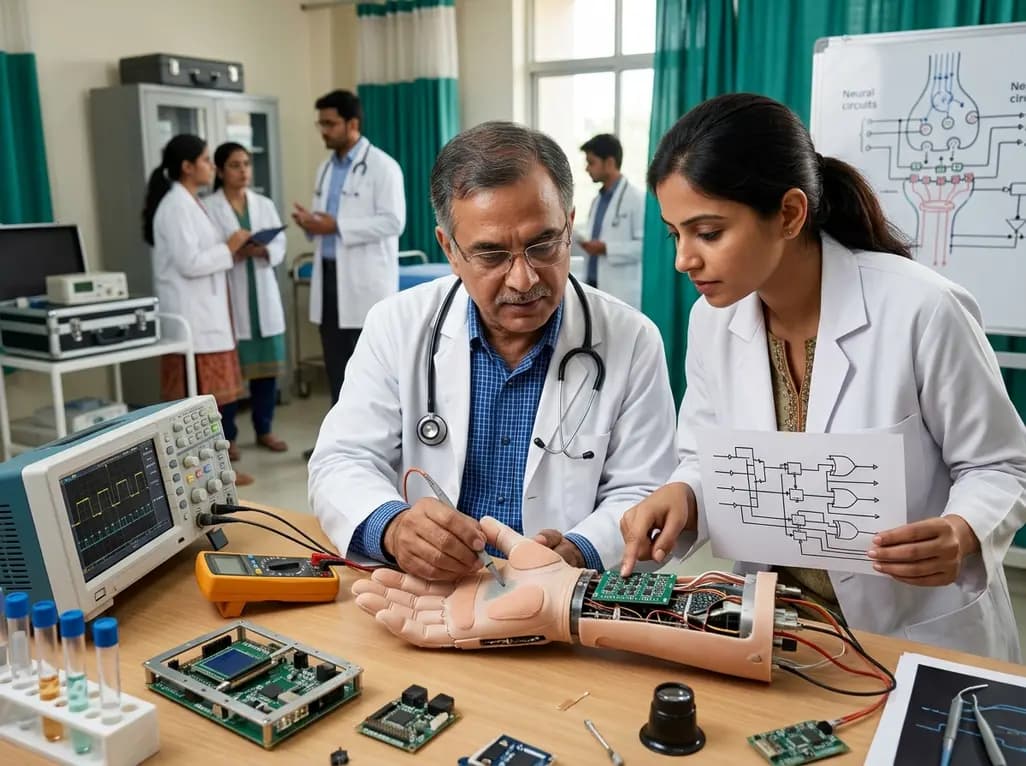
Researchers have engineered an artificial sensory-pain integrated receptor using a multi-threshold organic synaptic transistor. The system distinguishes benign touch from noxious stimuli, enabling safer, more responsive prosthetic limbs with built-in memory and simplified hardware architecture.
Today
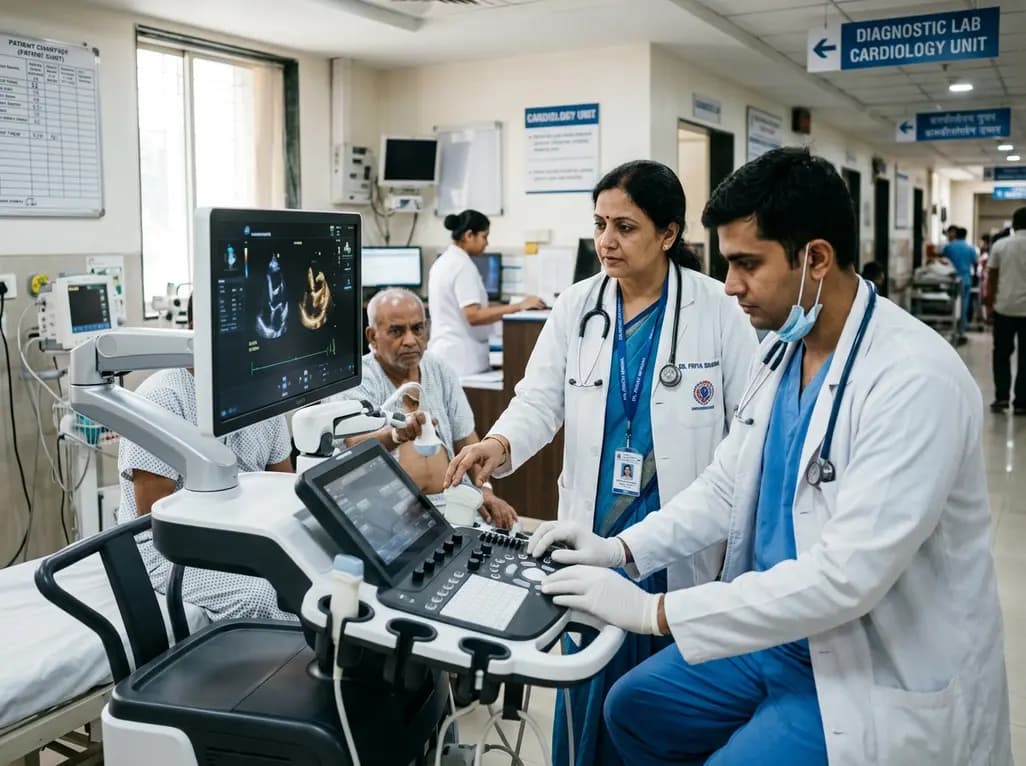
Medical robotics is transitioning beyond operative suites into diagnostics, cardiology, and endocrinology. Explore how innovations in tele-robotics, AI integration, and nanomedicine are overcoming geographical barriers and transforming precision healthcare delivery across India's evolving disease landscape.
Today
