

Loading, please wait...
Loading, please wait...

Administering general anesthesia to young children requires precise titration to prevent accidental awareness and drug overdosing. Consequently, measuring hypnotic depth remains an essential objective for pediatric anesthesiologists. Electroencephalography provides real-time functional insights into the drug-induced state of the pediatric central nervous system. In particular, spectral edge frequency 95 serves as an accessible, nonproprietary neurophysiological biomarker. This metric designates the specific frequency below which 95% of total cerebral electrical power concentrates.
Propofol acts primarily through gamma-aminobutyric acid type A receptors in the cerebral cortex and thalamus. As clinicians infuse propofol, cortical activity shifts from high-frequency, low-amplitude patterns to slow-wave, high-amplitude oscillations. Therefore, spectral edge frequency 95 progressively decreases as anesthesia deepens. While adult brains generate robust alpha and delta rhythms during surgical planes, young children display distinctly immature neuronal connectivity. Because synaptogenesis and myelination evolve rapidly during early development, processed electroencephalography indices often behave unpredictably in toddlers.
Recently, clinical investigators established threshold targets for toddlers aged 13 to 24 months receiving propofol infusions. Consequently, this objective index offers clinicians a reliable method to quantify anesthetic depth without relying on unvalidated algorithmic scoring systems.
Commercial depth of anesthesia monitors rely heavily on proprietary mathematical algorithms developed from adult volunteer cohorts. Consequently, indices such as the Bispectral Index and the Patient State Index frequently fail when applied to infants and toddlers. Young pediatric brains exhibit distinct neurodevelopmental characteristics that alter baseline electroencephalographic power spectra. For example, infants younger than one year rarely manifest the coherent frontal alpha oscillations that characterize adult propofol anesthesia.
Furthermore, proprietary monitors process raw signals through black-box formulas that average temporal windows over prolonged intervals. As a result, sudden transitions in anesthetic depth often escape rapid detection in clinical practice. Toddlers undergo rapid hemodynamic and metabolic changes during surgical procedures. Thus, relying on adult-derived dimensionless numbers creates a substantial risk of inadvertent drug overdosing. High concentrations of propofol can lead to profound hypotension and delayed emergence.
In contrast, spectral edge frequency 95 provides an open, transparent measure derived directly from spectral power analysis. Clinicians can interpret this nonproprietary frequency threshold alongside real-time spectrogram displays. Consequently, practitioners gain immediate insight into cerebral suppression without confounding proprietary adjustments.
Different clinical maneuvers demand widely disparate depths of propofol anesthesia during surgical care. To determine objective neurophysiological benchmarks, researchers utilized Dixon’s up-and-down sequential allocation method combined with centered isotonic regression in toddlers. Specifically, the study evaluated fifty-one children aged 13 to 24 months exposed to three progressive clinical stimuli: pacifier placement, electrical nerve stimulation, and direct laryngoscopy.
For pacifier placement, which accurately assesses unconsciousness, the effective SEF95 targets for 50% and 90% nonresponse were 21.8 Hz and 20.3 Hz, respectively. Toddlers readily accept oral stimulation when cortical arousal drops below these beta-frequency thresholds. In contrast, noxious electrical nerve stimulation required substantially deeper cortical suppression. The corresponding targets for nociceptive blockade were 12.0 Hz for the median threshold and 10.4 Hz for the ninetieth percentile.
Finally, blunting airway reactivity during direct laryngoscopy demanded the deepest state of central nervous system suppression. The median target registered at 10.3 Hz, whereas securing a 90% probability of smooth intubation required an impressive suppression target of 4.4 Hz. Therefore, clinicians must achieve profound delta-range power concentration to suppress vigorous airway reflexes without muscle relaxants.
Pharmacokinetic variability remains notoriously wide in pediatric populations due to differences in body composition, volume of distribution, and metabolic clearance. Consequently, fixed weight-based propofol dosing schedules frequently produce erratic clinical responses in toddlers. Measuring plasma propofol concentrations alongside electroencephalography recordings clarifies this critical concentration-effect relationship.
Linear mixed-effects regression analysis demonstrated a clear inverse association between plasma propofol concentration and spectral edge frequency 95. Specifically, each 1 Hz decrease in this neurophysiological metric corresponded to an increase of 0.21 micrograms per milliliter in circulating propofol plasma levels. This statistically significant correlation confirms that spectral edge frequency 95 directly mirrors effector-site drug concentrations within the toddler brain.
Moreover, volatile anesthetic administration depends upon real-time end-tidal gas monitoring to assess minimum alveolar concentration. In contrast, total intravenous anesthesia historically lacked an immediate effector-site surrogate. By tracking spectral edge frequency 95, anesthesiologists acquire an accurate biological substitute for propofol activity. Clinicians can therefore titrate propofol infusions with confidence, maintaining hemodynamic stability while ensuring adequate surgical depth.
Integrating spectral edge frequency 95 into routine pediatric practice represents a significant advancement for total intravenous anesthesia. Currently, many anesthesiologists hesitate to administer propofol infusions to toddlers because monitoring hypnotic depth remains challenging. However, using defined neurophysiological targets eliminates guesswork during critical anesthetic transitions.
During induction, titrating propofol until spectral edge frequency 95 drops near 4 Hz allows safe airway instrumentation without coughing or laryngospasm. Subsequently, during surgical maintenance, clinicians can safely allow the index to rise toward 10 to 12 Hz. This intermediate range prevents nociceptive movement while shielding the child from unnecessary burst suppression. In addition, avoiding burst suppression accelerates cognitive recovery in daycare surgery units.
Nevertheless, successful implementation requires familiarity with raw electroencephalographic waveforms and spectrogram interpretation. External artifacts, including surgical diathermy and electromyography, can artificially alter calculated frequency values. Therefore, practitioners must continuously verify signal quality against the underlying density spectral array. Standardized frequency metrics will ultimately optimize drug delivery and elevate pediatric perioperative outcomes.
Spectral edge frequency 95 represents a quantitative electroencephalography parameter calculated from power spectral analysis. It marks the exact frequency threshold below which 95% of total cerebral electrical power resides. During wakefulness, high-frequency beta and gamma waves dominate the electroencephalogram. However, as propofol depresses cortical and subcortical neurons, brain activity shifts into slower alpha and delta frequencies. Consequently, declining frequency values reflect deepening levels of general anesthesia and cerebral depression.
Commercial anesthetic depth indices rely heavily on proprietary mathematical algorithms developed from adult neurological data. However, the infant and toddler brain undergoes rapid synaptogenesis and progressive myelination, producing fundamentally different baseline electrical patterns. Young children often lack coherent frontal alpha oscillations during surgical anesthesia. Consequently, proprietary algorithms frequently miscalculate pediatric hypnotic depth, creating misleading scores that can lead to unintended drug underdosing or excessive anesthetic administration in clinical practice.
Airway instrumentation requires profound central nervous system depression, particularly when clinicians avoid muscle relaxants. Research demonstrates that achieving a 90% probability of successful, cough-free laryngoscopy in toddlers requires reducing spectral edge frequency 95 to approximately 4.4 Hz. Therefore, anesthesiologists can titrate intravenous propofol until real-time electroencephalography displays predominant delta-range activity. Once intubation is complete, clinicians can safely allow values to rise toward 10 to 12 Hz for surgical maintenance.
Disclaimer: This content is for informational and educational purposes only... Refer to the latest local and national guidelines for clinical practice.
References

Read summarized clinical updates, watch expert medical content, and earn CME certifications right from your smartphone.
Open your smartphone camera to scan and install.





A prospective study defines electroencephalography-derived spectral edge frequency 95 (SEF95) target thresholds for conscious nonresponse, nociception, and laryngoscopy in toddlers under propofol anaesthesia, offering an objective alternative to proprietary indices.
Today

Postoperative atrial fibrillation occurs in over 40% of cardiac surgery patients but often resolves before discharge. However, a recent study reveals 89% of treated patients remain on oral anticoagulants at one year despite minimal recurrence, underscoring the urgent need for structured de-escalation protocols.
Today

A recent investigation by the ICMR-National Institute of Nutrition highlights widespread vitamin B1 insufficiency across vulnerable maternal populations. Unbalanced rice-heavy diets and specific culinary habits drive this hidden deficiency, demanding targeted screening and renewed micronutrient supplementation.
Today

A Canadian nutrition study reveals that higher diet costs predict lower dietary energy density and higher fruit intake, but also increase sodium and processed meat consumption.
Today
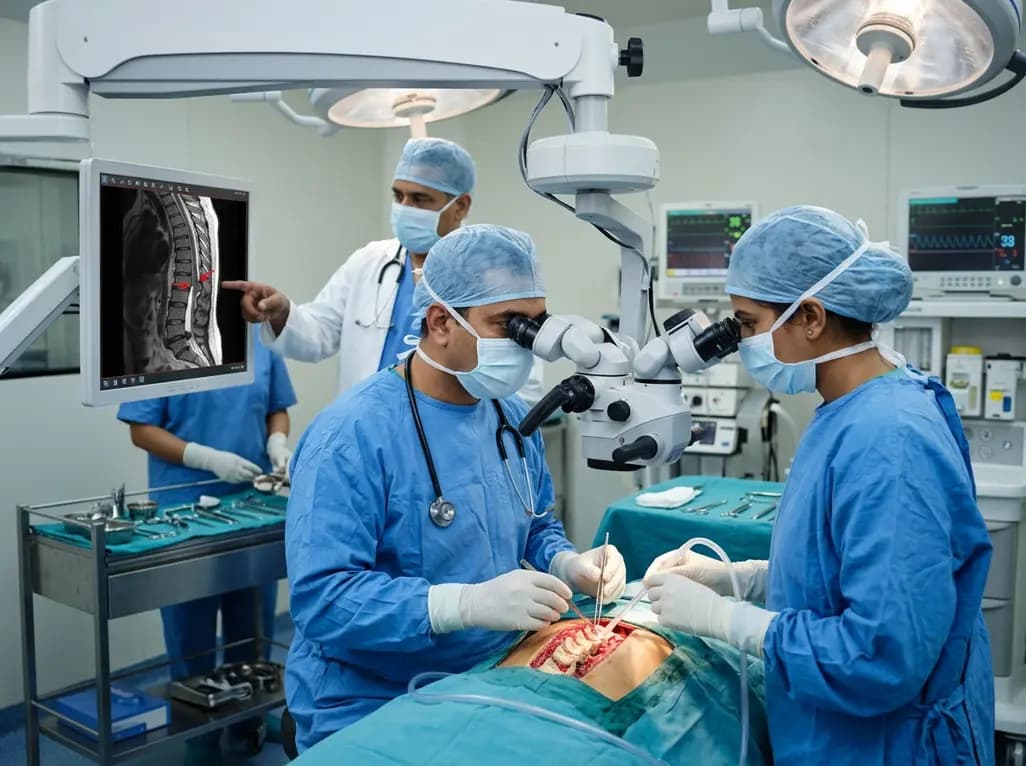
Idiopathic spinal cord herniation is a rare pathology presenting with progressive thoracic myelopathy. Early MRI identification and meticulous microsurgical reduction with dual bolstered dural defect repair prevent irreversible neurological deterioration.
Today
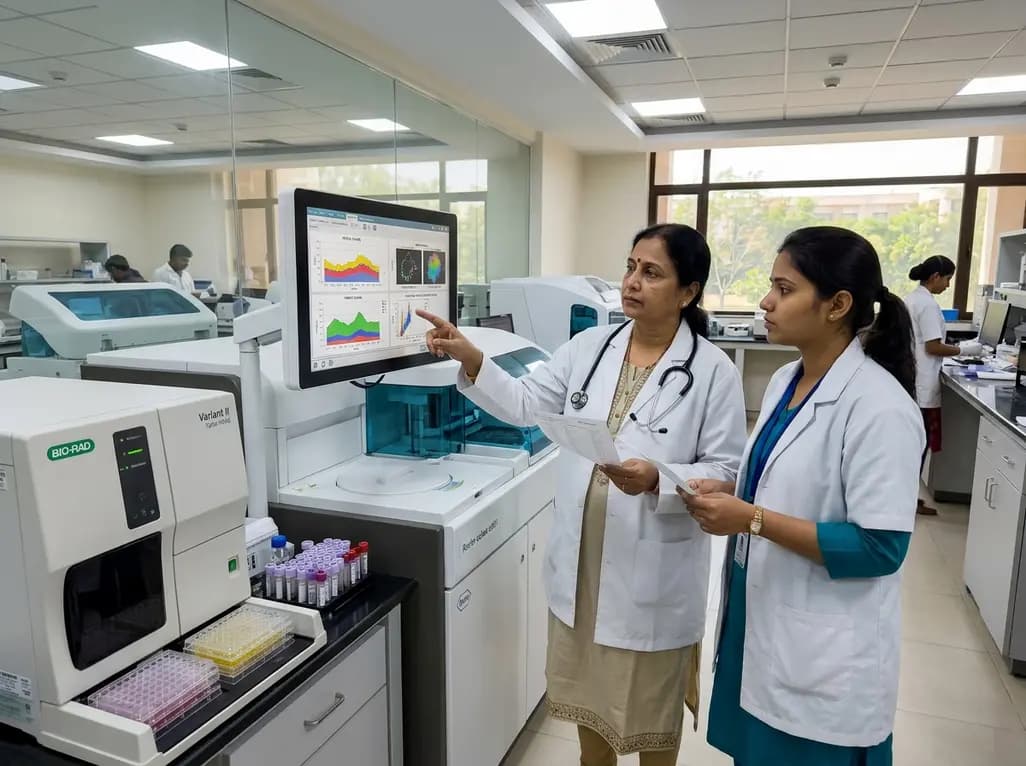
AIIMS Bhubaneswar has established three upgraded laboratories under its biochemistry department. These facilities introduce specialized antenatal panels, newborn screening for rare metabolic disorders, automated immunology platforms, and high-throughput HPLC HbA1c testing to enhance healthcare delivery across Odisha.
Today
