

Loading, please wait...
Loading, please wait...

Digital media platforms profoundly alter how adolescents and adults communicate, form relationships, and express emotional distress. Over the past decade, mental health professionals worldwide have documented an alarming surge in self-harm and psychological vulnerability. In Japan, recent public health surveillance highlights a sharp rise in youth suicide, particularly among young women. Consequently, researchers have focused on social networking channels to determine their exact role in precipitating distress. Although earlier investigations treated digital engagement as a uniform activity, modern platforms possess distinct features and algorithmic mechanisms. A massive nationwide survey in Japan evaluated over 19,000 individuals to clarify how specific platforms influence suicidal ideation. The primary investigation examined current usage patterns alongside past-year psychiatric symptoms to differentiate harmful digital habits from benign interactions. Furthermore, the researchers observed significant demographic differences across distinct age brackets and genders. As digital technologies expand across Asian populations, these epidemiological insights provide essential diagnostic clarity for clinicians. Therefore, evaluating platform-specific exposures enables medical professionals to recognize hidden emotional crises and initiate targeted therapeutic support.
To assess digital exposure rigorously, investigators linked two major nationwide internet surveys conducted across Japan between December 2024 and March 2025. The cross-sectional analysis evaluated 19,542 individuals aged between 15 and 84 years. Researchers utilized multivariable logistic regression models to examine five major platforms: Facebook, X, Instagram, YouTube, and TikTok. Furthermore, the statistical models controlled for multiple confounding variables, including demographic background, depressive symptoms, and socioeconomic status. Overall, 10.8 percent of participants, representing 2,118 individuals, reported experiencing suicidal thoughts during the preceding year. After multivariable adjustment, the findings demonstrated substantial variance among specific platforms. Users of X showed a 44 percent higher likelihood of suicidal thoughts, with an adjusted odds ratio of 1.44. Similarly, participants using Facebook and TikTok displayed elevated vulnerability, each recording an adjusted odds ratio of 1.33. In contrast, neither Instagram nor YouTube demonstrated a statistically significant association with self-harm ideation after adjusting for covariates. In addition, stratified analyses indicated that the increased risk linked to X remained consistent across all participants younger than 45 years. These robust epidemiological outcomes highlight significant risk differentials among widely used digital channels.
Specific architectural features explain why certain digital networks exacerbate depressive thoughts while others remain neutral. Microblogging services like X emphasize rapid text dissemination and viral commentary. Consequently, vulnerable individuals frequently encounter sensationalist discussions, hostility, and unmoderated accounts of emotional suffering. Because users often post anonymously, online discussions lack interpersonal accountability and foster distress. Similarly, short-form video platforms like TikTok employ hyper-personalized recommendation algorithms. Once a struggling adolescent views sorrowful clips, the feed rapidly delivers an endless stream of melancholic videos. This relentless feedback loop reinforces cognitive distortions and traps users in negative emotional states. Furthermore, social networking hubs like Facebook frequently trigger toxic social comparison. Users constantly measure their private difficulties against the polished accomplishments of peers, generating chronic inadequacy and alienation. Conversely, platforms like YouTube predominantly host long-form video archives, music, and tutorials. These educational materials rarely provoke acute interpersonal hostility or hyper-focused negative comparison. Therefore, platform structure directly dictates psychological safety, determining whether digital engagement supports personal growth or accelerates mental distress.
These Japanese findings offer valuable warnings for healthcare practitioners operating across India. India represents one of the largest smartphone and digital consumer markets worldwide, with young people comprising a vast demographic segment. Concurrently, suicide remains a leading cause of mortality among Indian adolescents and young adults aged 15 to 29 years. In many Indian families, widespread digital adoption occurs alongside limited awareness regarding mental hygiene. Consequently, youths facing academic pressure or social conflict spend excessive hours on interactive digital channels. Furthermore, cultural stigma often prevents young individuals from discussing emotional distress with parents or local doctors. Distressed adolescents frequently seek validation online, where uncurated feeds expose them to cyberbullying and self-harm content. In addition, late-night screen time disrupts circadian rhythms, impairing emotional regulation and exacerbating depressive symptoms. Therefore, Indian physicians, pediatricians, and psychiatrists must recognize digital behavior as a critical determinant of adolescent health. Proactively evaluating social media engagement during routine clinical consultations helps clinicians uncover hidden vulnerabilities before acute self-harm emergencies arise.
Medical professionals can implement practical screening strategies to safeguard vulnerable patients from online psychological harm. During clinical assessments, physicians should routinely ask patients about their daily screen time, preferred applications, and online social interactions. Asking focused questions helps clinicians identify whether patients frequent high-risk interactive spaces or consume content passively. Furthermore, doctors should counsel adolescents and parents regarding sleep hygiene and digital boundaries. Establishing device-free bedrooms at night significantly improves sleep architecture and curtails destructive late-night scrolling. Clinicians should also encourage patients to curate their digital feeds intentionally. Unfollowing negative accounts and resetting recommendation algorithms can break distressing content loops. Moreover, primary care doctors should establish collaborative referral networks with clinical psychologists and psychiatrists. When clinicians identify patients reporting persistent despair, they should provide immediate crisis helpline contacts and initiate formal safety planning. In addition, doctors must foster open communication so young patients feel comfortable discussing digital distress without fearing punishment. Through structured digital assessments, clinicians can mitigate psychological risks and promote healthy media habits.
Different social platforms utilize distinct algorithmic architectures and communication formats that shape emotional well-being. Text-based microblogging networks like X and short-form video feeds like TikTok frequently expose users to unfiltered emotional distress and repetitive melancholy loops. Furthermore, networks emphasizing social updates can intensify toxic comparison and social alienation. Consequently, specific platforms carry higher odds of suicidal thoughts compared to passive video streaming channels that lack interactive algorithmic peer pressure.
The study observed that after adjusting for confounding factors, neither Instagram nor YouTube demonstrated statistically elevated associations with suicidal ideation. YouTube primarily serves as an entertainment and educational repository where users consume long-form content passively rather than engaging in contentious debates. Similarly, although Instagram involves visual presentation, its recent communication features and content moderation may buffer certain acute stressors differently than the real-time, text-heavy viral controversy frequently encountered on microblogging platforms.
Clinicians should routinely ask patients about their total screen duration, preferred social applications, and nighttime device usage. In addition, providers should explore whether online interactions provoke feelings of inadequacy, distress, or cyberbullying victimization. When assessing adolescents or young adults presenting with persistent anxiety or mood changes, inquiring specifically about content encountered on interactive platforms helps clinicians identify hidden suicidal ideation and implement timely behavioral safeguards.
Disclaimer: This content is for informational and educational purposes only. It is not intended to provide medical advice, diagnosis, or treatment. Refer to the latest local and national guidelines for clinical practice.
References

Read summarized clinical updates, watch expert medical content, and earn CME certifications right from your smartphone.
Open your smartphone camera to scan and install.





A nationwide study of 19,542 individuals reveals that using X, Facebook, and TikTok significantly correlates with suicidal ideation, while Instagram and YouTube do not. We explore the psychological mechanisms, demographic impacts, and actionable screening strategies for clinicians in India.
Today
A randomized crossover trial evaluated fifth-year medical students interacting with an AI standardized patient versus a human standardized patient. The study revealed key differences in Mini-CEX scores, active engagement, and interview dynamics.
Today

A comparative evaluation of INNO-LiPA, Cobas 4800, and Amplicor highlights significant assay-dependent variation in high-risk HPV detection, emphasizing the clinical distinction between analytical sensitivity and screening specificity.
Today

A Canadian nutrition study reveals that higher diet costs predict lower dietary energy density and higher fruit intake, but also increase sodium and processed meat consumption.
Today
Idiopathic spinal cord herniation is a rare pathology presenting with progressive thoracic myelopathy. Early MRI identification and meticulous microsurgical reduction with dual bolstered dural defect repair prevent irreversible neurological deterioration.
Today
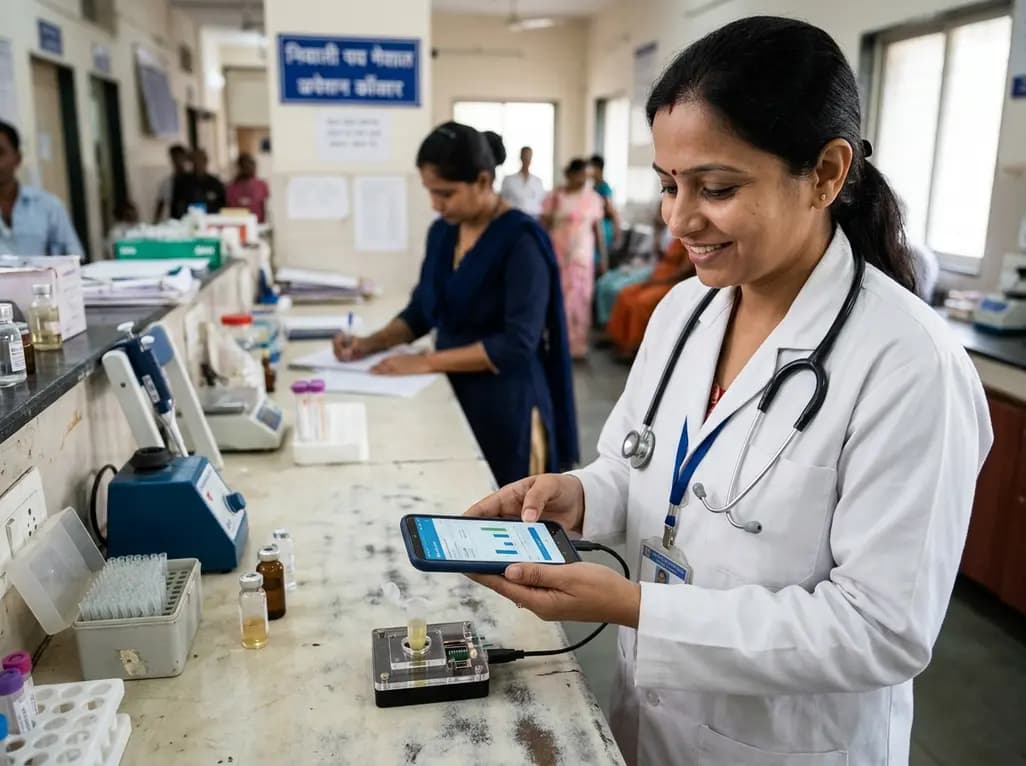
A novel smartphone-assisted biosensor utilizing molecularly imprinted polymers and catalytic nanozymes offers antibody-free, enzyme-free urinary microalbumin testing, enabling rapid, low-cost point-of-care screening for early chronic kidney disease.
Today
