

Loading, please wait...
Loading, please wait...

Smartphone sensing mental health technologies have emerged as an intriguing frontier in modern psychiatric research. Investigators frequently utilize built-in smartphone sensors to capture daily behavioral patterns without requiring active patient effort. Consequently, clinicians hoped these digital footprints would provide continuous, real-time insights into mood fluctuations. Passive sensing tracks parameters such as physical mobility, ambient light, screen interactions, and local connectivity. In theory, shifts in these passive metrics might signal early depressive episodes or symptom relapses. However, real-world deployment faces significant technical hurdles that undermine clinical validity. A recent secondary analysis published in JMIR Mhealth Uhealth evaluated the popular GLOBEM dataset across four college cohorts. The authors discovered substantial measurement discrepancies driven entirely by smartphone operating systems rather than true human behavior. Therefore, psychiatrists must exercise caution before accepting these metrics as valid diagnostic surrogates.
Operating system architectures handle background data collection through fundamentally divergent protocols. Apple enforces strict privacy and power-management rules that restrict background scanning on iOS devices. In contrast, Android systems permit more frequent background sensor execution. The GLOBEM analysis revealed that Bluetooth scan counts were drastically lower on iOS devices across every cohort. Specifically, Cliff delta values ranged from negative 1.00 to negative 0.85, demonstrating enormous systemic variation. Furthermore, connectivity counts showed wider inter-platform differences than core device behavioral measures. Platform classification algorithms easily identified the operating system using raw constructs alone, achieving area under the curve values up to 0.997. In addition, missing data patterns diverged sharply between platforms. For example, in 2020, forty-one of 103 iOS records lacked home-time data completely, compared with zero Android records. Thus, operating system policies skew baseline data collection.
Clinicians require diagnostic screening tools that reliably discriminate between healthy and symptomatic individuals. However, the study demonstrated that passive behavioral models failed to deliver clinically meaningful depression screening. Researchers examined 661 eligible fourteen-day observation windows preceding depressive symptom assessments. Across these windows, the behavioral models achieved area under the receiver operating characteristic curve values between only 0.41 and 0.56. Notably, an area under the curve near 0.50 indicates predictive performance no better than random chance. Furthermore, every model incorporating behavioral features, connectivity metrics, or platform indicators yielded worse Brier scores than an intercept-only benchmark. Adding Bluetooth connectivity variables altered predictive performance by a negligible margin, with all confidence intervals encompassing zero. Therefore, mobile connectivity metrics provided no incremental diagnostic utility for detecting depression. Consequently, healthcare providers cannot depend on current mobile sensing algorithms to identify vulnerable patients.
Handling missing information represents one of the most troublesome obstacles in mobile sensor analytics. Investigators frequently apply normalization, imputation, or discretization techniques to harmonize fragmented datasets. Nevertheless, the recent investigation revealed that preprocessing techniques cannot completely erase platform-specific recording biases. Raw sensor constructs separated iOS and Android devices almost perfectly before adjustment. Although mathematical transformations reduced this separation, operating system signatures remained detectable within the feature distributions. Moreover, Bluetooth scan discrepancies persisted even after researchers controlled for underlying psychological variations among participants. When operating systems withhold location or connectivity data, analytic pipelines often misclassify absent records as behavioral changes. For instance, an absence of location pings might mimic severe psychomotor retardation or agoraphobia in automated models. Accordingly, data scientists must decouple hardware execution policies from actual patient activity before constructing predictive machine learning pipelines.
The enthusiasm surrounding digital psychiatry often leads clinicians to overestimate the reliability of commercial mobile apps. Mental health practitioners must recognize that consumer hardware was never engineered as calibrated medical instrumentation. When patients present self-tracking data from mental health applications, physicians should evaluate these metrics critically. For example, apparent social withdrawal indicated by diminished Bluetooth contacts may merely reflect a recent operating system security update. Similarly, erratic location tracking might indicate software battery optimization rather than real depressive confinement. Furthermore, relying on unvalidated digital markers carries real clinical risks, including false reassurance or unnecessary clinical alarm. Clinicians must prioritize established diagnostic instruments, such as the Patient Health Questionnaire, over unverified passive sensing scores. Therefore, healthcare providers should view smartphone sensing as an evolving investigative paradigm rather than a dependable clinical screening instrument.
Establishing robust digital phenotyping tools requires close collaboration between software engineers, data scientists, and clinical researchers. First, technical standards must account for proprietary differences between operating system architectures. Developers need to create uniform sensing frameworks that report data collection integrity alongside raw behavioral measurements. Second, researchers must conduct rigorous prospective studies in diverse clinical populations rather than relying solely on convenience cohorts. Furthermore, future validation protocols must report comprehensive calibration metrics, such as Brier scores, alongside standard classification accuracy. In addition, multimodal approaches that integrate wearable biometric sensors with validated ecological momentary assessments may yield greater predictive power than passive phone tracking alone. Ultimately, transparent reporting and rigorous cross-platform calibration are essential prerequisites for translating mobile sensing into safe psychiatric care. Until then, passive digital biomarkers remain strictly exploratory tools.
Apple iOS and Google Android manage background processes differently to protect user privacy and battery life. Apple restricts passive background Bluetooth scans far more aggressively than Android does. Consequently, iOS devices log significantly fewer ambient connectivity events even when user behaviors are identical. When algorithms interpret these raw counts without adjusting for system architecture, they mistake software restrictions for social withdrawal, creating false behavioral signals that distort clinical assessments.
No, current evidence indicates that clinicians should not use passive smartphone sensing tools for depressive symptom screening. In rigorous evaluations across multi-year cohorts, behavioral sensing models performed near chance levels, achieving receiver operating characteristic curve values between 0.41 and 0.56. Furthermore, these predictive models performed worse than simple statistical benchmarks. Clinicians must continue relying on validated clinical interviews and standardized self-report scales like the PHQ-9 for accurate diagnostic screening.
Software developers and data researchers must implement standardized logging protocols that explicitly account for background execution limitations across platforms. Analytics pipelines should evaluate feature completeness, audit sensor uptime, and calibrate output probabilities rather than solely measuring classification accuracy. In addition, machine learning models require cross-platform training and external prospective validation across diverse patient cohorts. Researchers must separate technical artifacts from genuine human behavioral changes before claiming clinical utility for digital biomarkers.
Disclaimer: This content is for informational and educational purposes only. It is not intended to be a substitute for professional medical advice, diagnosis, or treatment. Always seek the advice of your physician or other qualified health provider with any questions you may have regarding a medical condition. Never disregard professional medical advice or delay in seeking it because of something you have read on this website. The views expressed in this article are those of the author and do not necessarily reflect the official policy or position of any other agency, organization, employer or company. Refer to the latest local and national guidelines for clinical practice.
References

Read summarized clinical updates, watch expert medical content, and earn CME certifications right from your smartphone.
Open your smartphone camera to scan and install.





A recent secondary analysis in JMIR Mhealth Uhealth shows that operating system differences between iOS and Android significantly alter smartphone sensing mental health features. These measurement disparities, combined with weak predictive performance, challenge their immediate use as psychiatric screening tools.
Today
A randomized crossover trial evaluated fifth-year medical students interacting with an AI standardized patient versus a human standardized patient. The study revealed key differences in Mini-CEX scores, active engagement, and interview dynamics.
Today
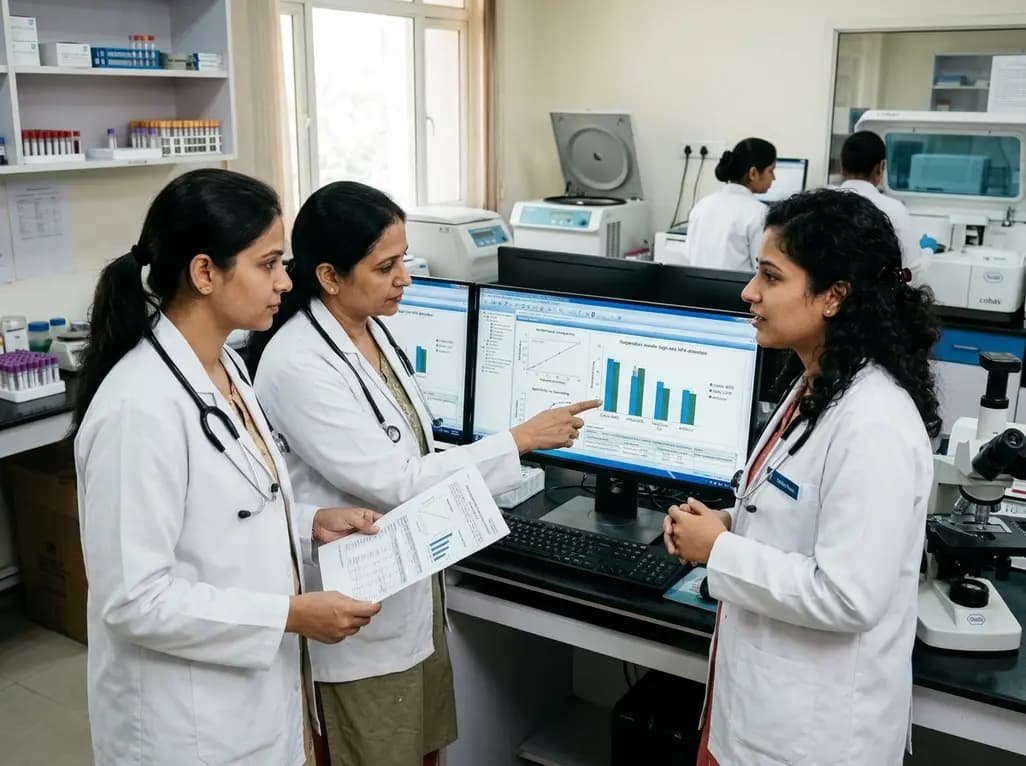
A comparative evaluation of INNO-LiPA, Cobas 4800, and Amplicor highlights significant assay-dependent variation in high-risk HPV detection, emphasizing the clinical distinction between analytical sensitivity and screening specificity.
Today

A Canadian nutrition study reveals that higher diet costs predict lower dietary energy density and higher fruit intake, but also increase sodium and processed meat consumption.
Today
Idiopathic spinal cord herniation is a rare pathology presenting with progressive thoracic myelopathy. Early MRI identification and meticulous microsurgical reduction with dual bolstered dural defect repair prevent irreversible neurological deterioration.
Today
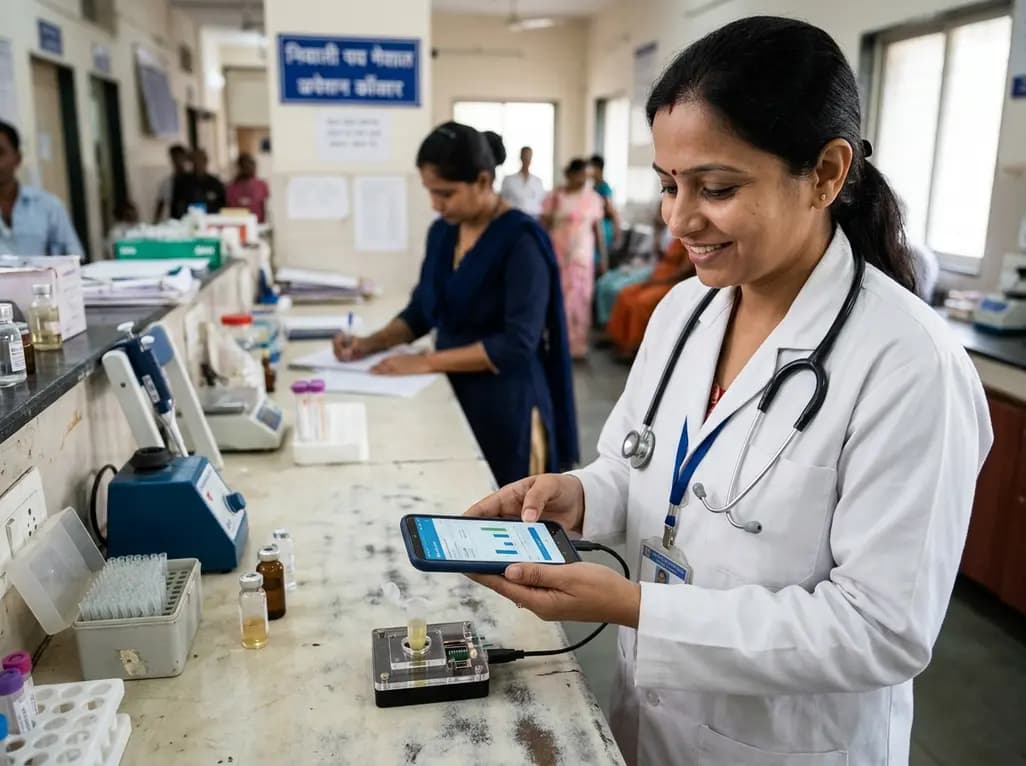
A novel smartphone-assisted biosensor utilizing molecularly imprinted polymers and catalytic nanozymes offers antibody-free, enzyme-free urinary microalbumin testing, enabling rapid, low-cost point-of-care screening for early chronic kidney disease.
Today
