

Loading, please wait...
Loading, please wait...

Modern manufacturing assembly lines frequently expose industrial personnel to repetitive biomechanical stressors and sustained static postures. Consequently, work-related musculoskeletal disorders represent a major clinical and economic concern across global industrial sectors, particularly in automotive manufacturing. Performing a standardized ergonomic risk assessment allows occupational health specialists and orthopedic clinicians to identify harmful biomechanical strain before irreversible chronic pathology develops. Assembly line operators routinely execute high-frequency tasks involving awkward wrist flexion, forceful forearm pronation, and sustained shoulder abduction. Over extended periods, these repetitive microtraumas culminate in debilitating conditions, such as carpal tunnel syndrome, lateral epicondylitis, and rotator cuff tendinopathy. In developing manufacturing powerhouses like India, factory medical officers often struggle to detect subclinical cumulative strain early. As a result, many industrial workers present to outpatient clinics only after significant functional impairment has already taken place. Therefore, proactive surveillance mechanisms are essential to safeguard worker health, maintain manufacturing efficiency, and curb lost-workday injuries. Medical professionals must actively champion objective ergonomic analysis to eliminate the underlying physical hazards driving these repetitive occupational syndromes.
For several decades, occupational safety teams have primarily depended on visual, observational methodologies to gauge ergonomic risk. Among these traditional scoring frameworks, the Rapid Upper Limb Assessment remains one of the most widely implemented instruments. However, conventional observational assessments present notable practical drawbacks that limit their overall clinical utility. First, manual observational scoring inherently suffers from observer subjectivity and inter-rater variability. Different evaluators frequently assign conflicting postural scores to identical operator tasks, creating inconsistent workplace safety records. Furthermore, human observers cannot accurately calculate dynamic movement durations or brief peak accelerations during rapid operational cycles. Traditional video-based assessments also require labor-intensive manual frame extraction and retrospective angle measurement. In addition, video cameras often encounter physical visual occlusions in crowded automotive plant environments where industrial machinery conceals worker limbs. Consequently, episodic video audits provide only intermittent snapshots rather than continuous, representative pictures of a worker's cumulative daily mechanical exposure. These critical diagnostic gaps demonstrate why modern occupational medicine requires continuous, objective kinematic recording instruments to quantify actual mechanical strain reliably.
Recent advancements in wearable biosensors offer a transformative alternative to visual monitoring by capturing real-time kinematic measurements directly from the human body. Specifically, smart compression sleeves embed stretchable conductive pathways and miniature inertial measurement units seamlessly within flexible fabric garments. This wearable design allows operators to complete high-speed assembly tasks without restricting natural joint range of motion. Furthermore, the embedded sensors continuously track joint angles, angular velocities, and repetitive movement cycles across entire operational shifts. Unlike stationary cameras, a wearable sleeve stays aligned with the operator's limb, completely eliminating optical occlusion errors. In addition, integrated onboard algorithms convert dynamic limb measurements directly into standardized postural scores, approximating established scoring criteria automatically. As a result, industrial hygienists and corporate health teams receive continuous streams of objective biomechanical data. Therefore, wearable sensing bridges the long-standing gap between laboratory-grade biomechanics and real-world industrial environments. This continuous monitoring capability empowers healthcare providers to analyze authentic physical stressors that occur during prolonged occupational tasks, providing unprecedented clarity regarding musculoskeletal risk factors.
A recent pilot evaluation examined the feasibility of smart compression sleeves on an active automotive manufacturing assembly line. In this comparative trial, investigators simultaneously captured operator kinematics using both a smart compression sleeve and a standard video-based assessment system. The video-based system recorded a constant Rapid Upper Limb Assessment score of 3 across successive evaluation trials. In contrast, the smart compression sleeve generated mean postural scores of 2.62 in the first trial and 2.93 in the second trial. These findings demonstrate remarkable concordance between the wearable fabric sensor and traditional observational benchmarks. Furthermore, the nuanced variation in wearable scores captured subtle cycle-to-cycle kinematic adjustments that static video observations completely overlooked. Because human operators naturally adapt their movement trajectories during repetitive shifts, continuous sensor scoring reflects true temporal biomechanical variability. Consequently, the smart sleeve successfully proved that flexible sensorized textiles can quantify industrial ergonomics without disrupting production workflows. Although researchers must still optimize real-time data processing speeds, this pilot study verifies that wearable textiles can deliver reliable, continuous upper-limb assessment in high-demand industrial settings.
For orthopedic surgeons, occupational physicians, and physical medicine specialists, objective ergonomic data transforms daily clinical practice and preventive care. When treating industrial workers with chronic repetitive strain injuries, clinicians frequently rely on subjective patient recall regarding physical workplace duties. However, wearable biomechanical logs offer precise quantitative data detailing joint angle exposures, repetitive cycle counts, and peak operational velocities. Therefore, physicians can deliver highly targeted clinical advice regarding specific motion modifications, wrist splinting, and progressive physical rehabilitation. Furthermore, occupational health officers can utilize this continuous telemetry to guide administrative controls, such as implementing structured job-rotation schedules. When sensor data flags high-risk postures at a particular assembly station, plant engineers can immediately redesign workstation heights or reorient component bins. In addition, factory medical teams can track rehabilitating workers returning to light-duty roles, ensuring that physical workload limits prevent symptom recrudescence. By translating wearable sensor analytics into proactive clinical and engineering interventions, healthcare practitioners can effectively halt the progression of occupational musculoskeletal disorders before surgical management becomes inevitable.
A smart compression sleeve improves workplace evaluations by continuously recording joint kinematics directly from the worker's limb. Unlike human observers who conduct intermittent audits, the sensorized garment captures continuous angular positions, velocities, and task repetitions across an entire shift. Furthermore, it operates effectively without camera occlusion barriers in congested factory lines. Consequently, safety teams obtain objective, reproducible biomechanical metrics that eliminate evaluator subjectivity and highlight dangerous repetitive movements immediately.
Traditional observational RULA assessments rely on an evaluator visually scoring static freeze-frame postures, which often introduces subjective bias and overlooks dynamic duration. In contrast, wearable sensors provide continuous, high-frequency temporal data throughout repetitive duty cycles. As demonstrated in automotive manufacturing trials, sensor systems reflect natural cycle-to-cycle kinematic variations that fixed observational scoring fails to detect. Therefore, wearable devices provide a far more nuanced and granular assessment of real-world musculoskeletal risks.
Clinicians can utilize objective wearable sensor data to design highly tailored rehabilitation programs and accurate return-to-work protocols. Instead of depending entirely on subjective patient recall, physicians can analyze precise joint angle exposures and repetitive physical strain metrics. Furthermore, this empirical kinematic information allows medical professionals to prescribe specific ergonomic modifications, recommend targeted physical therapy regimens, and collaborate effectively with industrial plant managers to prevent secondary injury recurrence.
Disclaimer: This content is for informational and educational purposes only and should not be taken as medical advice. Always consult a licensed healthcare professional for clinical decisions. Refer to the latest local and national guidelines for clinical practice.
References

Read summarized clinical updates, watch expert medical content, and earn CME certifications right from your smartphone.
Open your smartphone camera to scan and install.





A comparative pilot study reveals that wearable smart compression sleeves provide continuous, objective kinematic data, matching video-based RULA scores in automotive assembly lines. This innovation enables clinicians and ergonomists to identify repetitive strain risks early and prevent occupational injuries.
Today
Depemokimab offers twice-yearly dosing for severe eosinophilic asthma and chronic rhinosinusitis with nasal polyps, significantly cutting exacerbations and hospital admissions.
Today
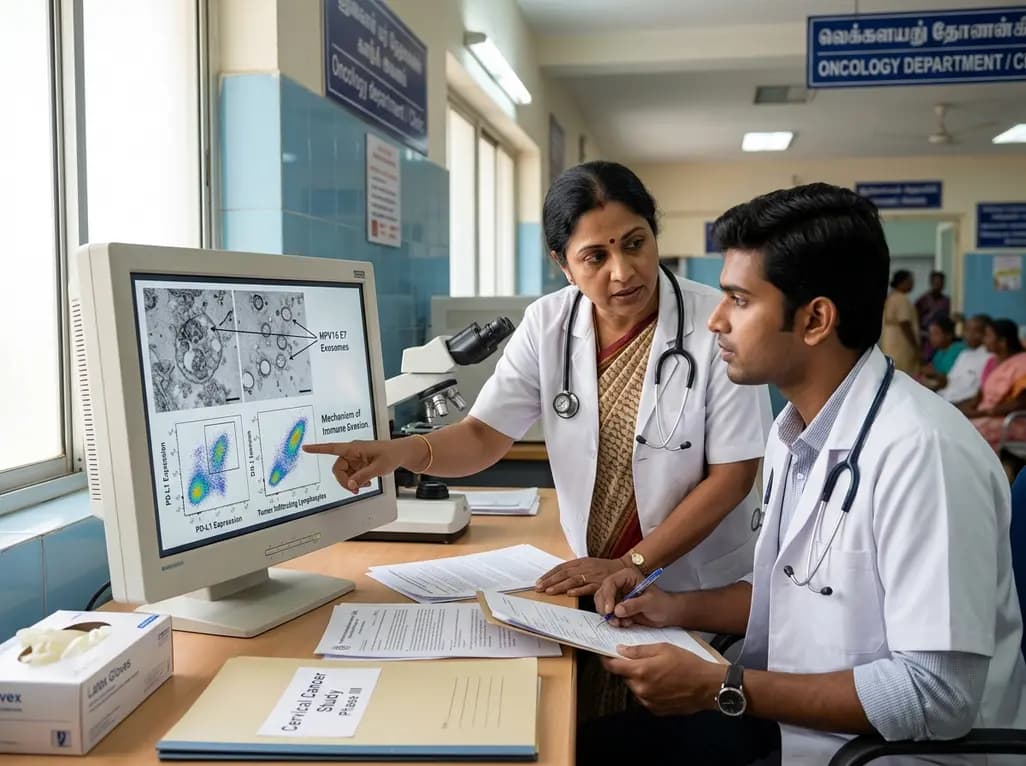
New research reveals that HPV16 E7 exosomes significantly upregulate PD-L1 on tumor-infiltrating lymphocytes in cervical cancer, driving local immune suppression and correlating with poorer patient survival. These findings expose key mechanisms of immune evasion with direct relevance to checkpoint blockade therapies.
Today
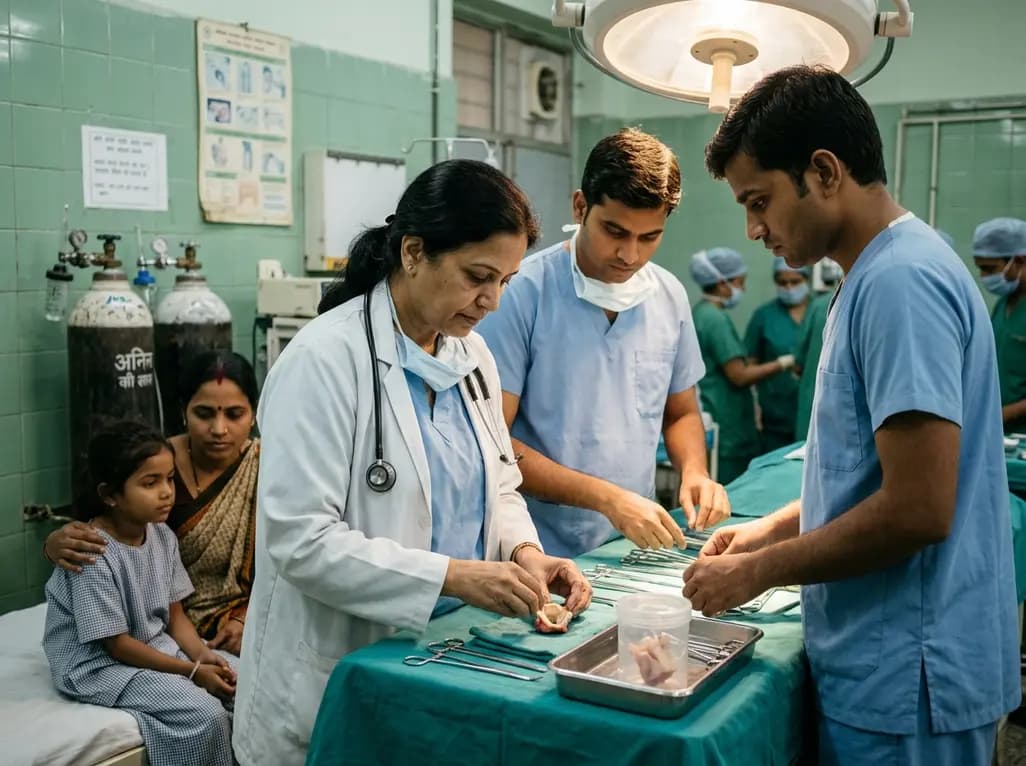
Partial heart transplantation offers living, growth-capable cardiac valve replacements for children. While orthotopic heart transplantation faces severe logistical barriers in low-resource settings, partial transplantation presents lower graft ischemia sensitivity and simplified immunosuppression protocols.
Today
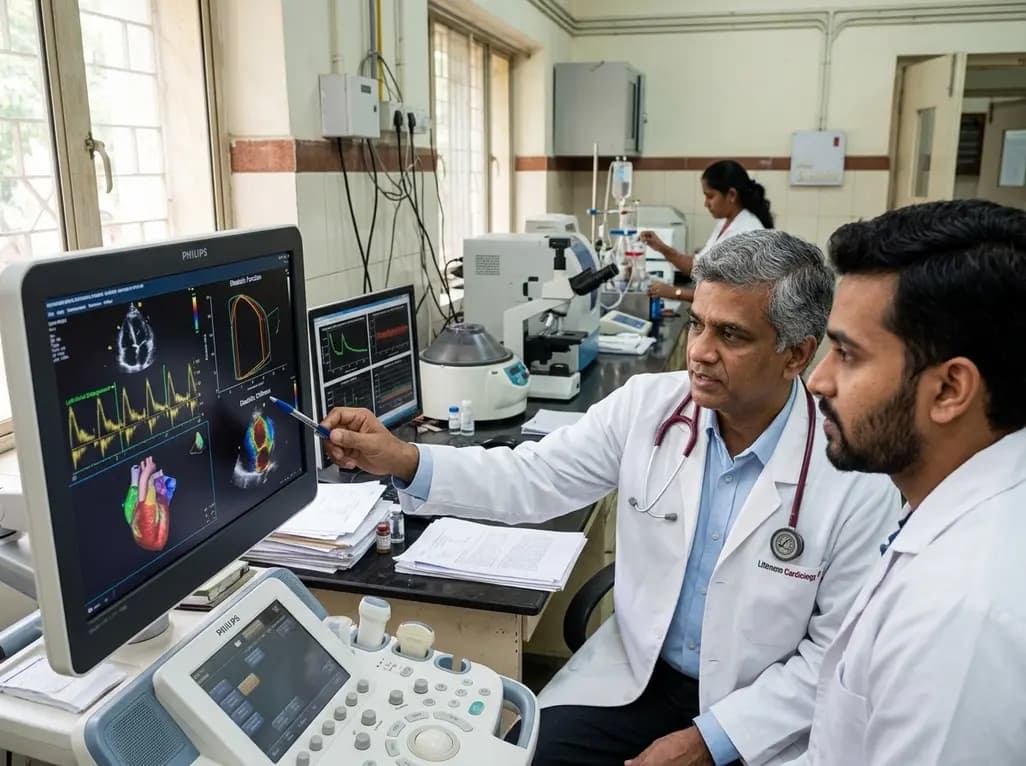
A study evaluates a cardiometabolic HFpEF model combining metabolic stress with chronic mineralocorticoid excess. The findings reveal profound diastolic stiffness, endothelial dysfunction, and pulmonary hypertension, illuminating key pathophysiological mechanisms for targeted cardiopulmonary therapies.
Today
