.webp&w=384&q=75)

Loading, please wait...
Loading, please wait...
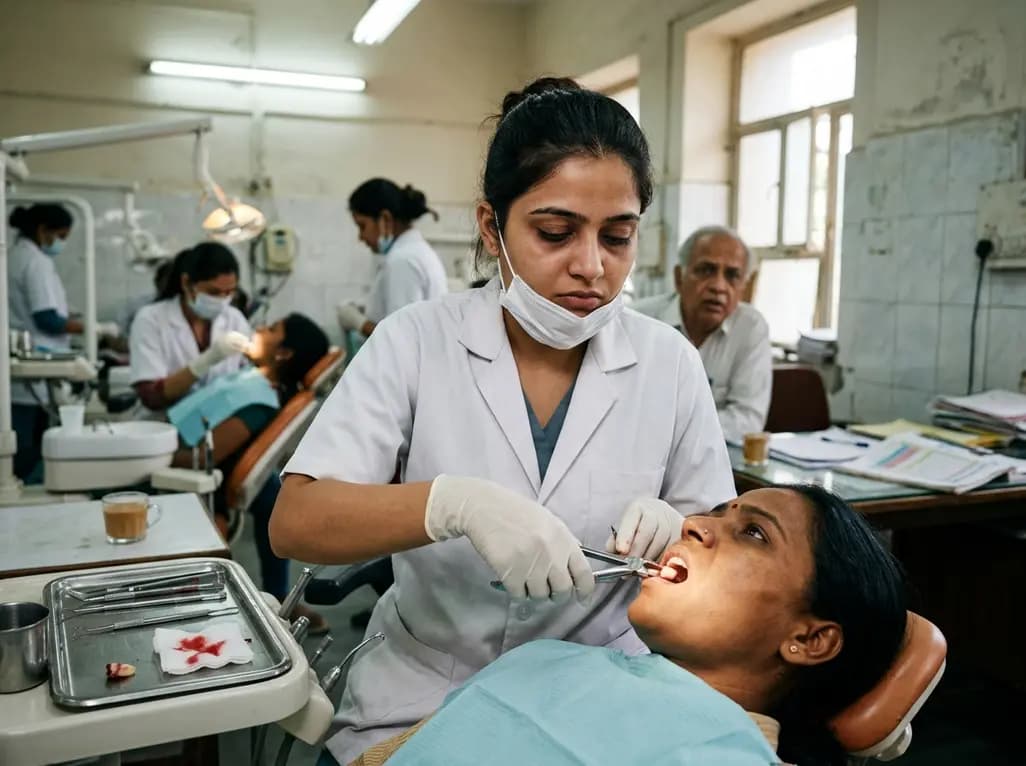
Dentistry students often face high levels of stress and insomnia during their clinical education. Specifically, the transition to clinical practice poses significant challenges to their mental and physical well-being. A recent study investigated the specific effects of sleep quality dental interns experience on complication rates during oral and maxillofacial surgery (OMFS) internships. The researchers found that restorative rest is vital for surgical precision and patient safety.
In this cross-sectional observational study, 92 senior dental interns performed a total of 1,320 tooth extractions. Consequently, the data revealed 211 clinical complications during the study period. Results from generalized linear mixed modelling showed that poorer sleep quality dental interns reported significantly predicted higher complication incidence rates. Interestingly, while anxiety scores correlated with poor sleep, anxiety did not independently predict surgical errors. Therefore, sleep quality serves as a more reliable indicator of potential clinical performance issues than psychological stress alone.
Furthermore, the research showed no significant differences in complications or anxiety between genders. This suggests that the physiological impact of sleep deprivation affects all students equally. Because dental surgery requires intense focus and fine motor skills, even minor sleep deficits can impair outcomes. Educators should prioritize sleep hygiene as part of the clinical curriculum to mitigate these risks. By improving the sleep quality dental interns receive, institutions can enhance both student health and the quality of patient care. Moreover, monitoring fatigue levels could help prevent avoidable surgical mishaps in teaching clinics.
Many students suffer from anxiety and insomnia throughout their education. However, the study indicates that managing sleep is more critical for reducing surgical risks than managing anxiety alone. Dental programs might benefit from implementing duty-hour limits or providing resources for better sleep hygiene. In addition to technical training, wellness initiatives are essential for developing competent and safe dental surgeons.
The study found that while anxiety levels are negatively correlated with sleep, they do not independently predict surgical complication rates. Poor sleep quality remains the primary driver of increased errors.
Poor sleep quality significantly increases the incidence rate of clinical complications. Fatigue likely impairs the cognitive focus and motor precision required for successful oral surgery.
No, the researchers observed no significant differences in sleep quality, anxiety scores, or complication rates between male and female interns.
Disclaimer: This content is for informational and educational purposes only. It does not constitute professional medical or dental advice. Refer to the latest local and national guidelines for clinical practice.
References
Kara T et al. Impact of Sleep Quality on Oral Surgical Complications in Dental Interns. Eur J Dent Educ. 2026 Jun 06. doi: 10.1111/eje.70199. PMID: 42249732.
Sabu S et al. Influence of Altered Sleep Patterns on Health-Related Quality of Life and Academic Performance Among Dental Students: A Cross-Sectional Study. Cureus. 2025 Jun 23;17(6):e62900. doi: 10.7759/cureus.62900.
Alsubaie N et al. Sleep Quality and Its Relationship with Temporomandibular Disorders and Oral Health-Related Quality of Life Among Dental Students and Interns. Patient Prefer Adherence. 2026 Mar 27;20:575-584. doi: 10.2147/PPA.S575424.
"
Read summarized clinical updates, watch expert medical content, and earn CME certifications right from your smartphone.
Open your smartphone camera to scan and install.





A cross-sectional study finds that poor sleep quality significantly increases surgical complication rates during tooth extractions performed by dental inter...
4 months ago

Discover the crucial role of glymphatic dysfunction in stroke, where perivascular clearance failure and neuroinflammation exacerbate cerebral edema and post-stroke brain injury.
Today

A prenatal case highlights severe glutaric acidemia type II presenting as bilateral hyperechoic cystic kidneys at 18 weeks. Whole-exome sequencing revealed a novel homozygous ETFDH frameshift variant, demonstrating the power of rapid genetic testing in fetal renal anomalies.
Today

Review how tailored exercise programs benefit frail older patients with heart failure. Explore pathophysiological mechanisms, individualized training prescriptions, and strategies to overcome adherence barriers in clinical practice.
Yesterday

This comparative study evaluates posterior labral tears with and without glenohumeral instability, highlighting distinct demographic patterns, MRI underestimation in stable shoulders, and successful arthroscopic repair outcomes.
Yesterday

A clinical study demonstrates that early intervention with tocilizumab, either as monotherapy or bridged with corticosteroids, achieves significant proptosis reduction and resolves active inflammation in treatment-naive thyroid eye disease.
Yesterday
