.webp&w=384&q=75)

Loading, please wait...
Loading, please wait...

Long peripheral catheters (LPCs) are essential tools for clinicians managing patients with difficult venous access. These devices facilitate the administration of fluids and medications over extended periods. However, inconsistent terminology and varying insertion techniques often lead to unpredictable clinical outcomes. To address these challenges, the Italian Group of Long-Term Venous Access Devices (GAVeCeLT) and the Italian Vascular Access Society (IVAS) developed the SILPeC protocol. This evidence-based bundle ensures the Safe Insertion of Long Peripheral Catheters by providing a standardized, reproducible roadmap for healthcare professionals.
The SILPeC protocol organizes the insertion process into six distinct phases. First, clinicians perform a thorough pre-insertion assessment of the veins in the upper limbs. This evaluation ensures the vessel can accommodate the device without compromising blood flow. Second, the practitioner selects the optimal insertion site, typically favoring the deep veins of the arm. Third, the team implements rigorous asepsis measures to minimize the risk of catheter-related infections. Consequently, these initial steps lay the foundation for a successful procedure.
The core of the bundle involves ultrasound-guided puncture, which significantly increases success rates on the first attempt. Following successful placement, the fifth step focuses on ensuring a safe connection to infusion lines to prevent accidental dislodgement or contamination. Finally, proper device stabilization and protection of the exit site ensure the longevity of the catheter. By following these specific steps, medical teams can reduce complications and improve the overall patient experience.
Standardizing vascular access is crucial in both hospital and outpatient settings. Many institutions currently face high rates of catheter failure due to inadequate stabilization or poor site selection. Therefore, the SILPeC bundle serves as a vital resource for nursing and medical staff. It complements existing recommendations for other vascular access devices while emphasizing the unique requirements of LPCs. Moreover, integrating ultrasound guidance into routine practice represents a significant shift toward precision medicine in vascular access.
The primary goal is to standardize the insertion of long peripheral catheters through an evidence-based, six-step process that enhances patient safety and reduces procedural variability.
Ultrasound guidance allows for precise visualization of deep veins. This reduces the number of needle passes, minimizes vessel trauma, and ensures that the catheter is placed in a vein of appropriate size.
Any healthcare professional involved in vascular access, including anesthesiologists, emergency physicians, intensivists, and specialized vascular access nurses, should adopt these guidelines.
Disclaimer: This content is for informational and educational purposes only. It does not constitute professional medical advice, diagnosis, or treatment. Always seek the advice of a qualified healthcare provider regarding a medical condition. Refer to the latest local and national guidelines for clinical practice.
References
Giustivi D et al. A GAVeCeLT-IVAS bundle for Safe Insertion of Long Peripheral Catheters: The SILPeC protocol. J Vasc Access. 2026 May 05. doi: 10.1177/11297298261444199. PMID: 42083923.
Pittiruti M, Scoppettuolo G. GAVeCeLT Recommendations 2024 for the Indication, Insertion, and Management of Venous Access Devices. J Vasc Access. 2024.
Reynolds H, et al. Care bundles and peripheral arterial catheters: A scoping review. Br J Nurs. 2024 Jan 25;33(2):S34-S41. doi: 10.12968/bjon.2024.33.2.S34.
"
Read summarized clinical updates, watch expert medical content, and earn CME certifications right from your smartphone.
Open your smartphone camera to scan and install.





The SILPeC protocol is a 6-step bundle for safe long peripheral catheter insertion, developed by GAVeCeLT and IVAS to standardize vascular access practices....
5 months ago

Explore vital recurrent stroke predictors in lacunar stroke patients managed with intensive blood pressure lowering. This analysis examines trial findings from SPS3 to uncover residual vascular risks, metabolic factors, and targeted secondary prevention strategies for high-risk neurological patients.
Today
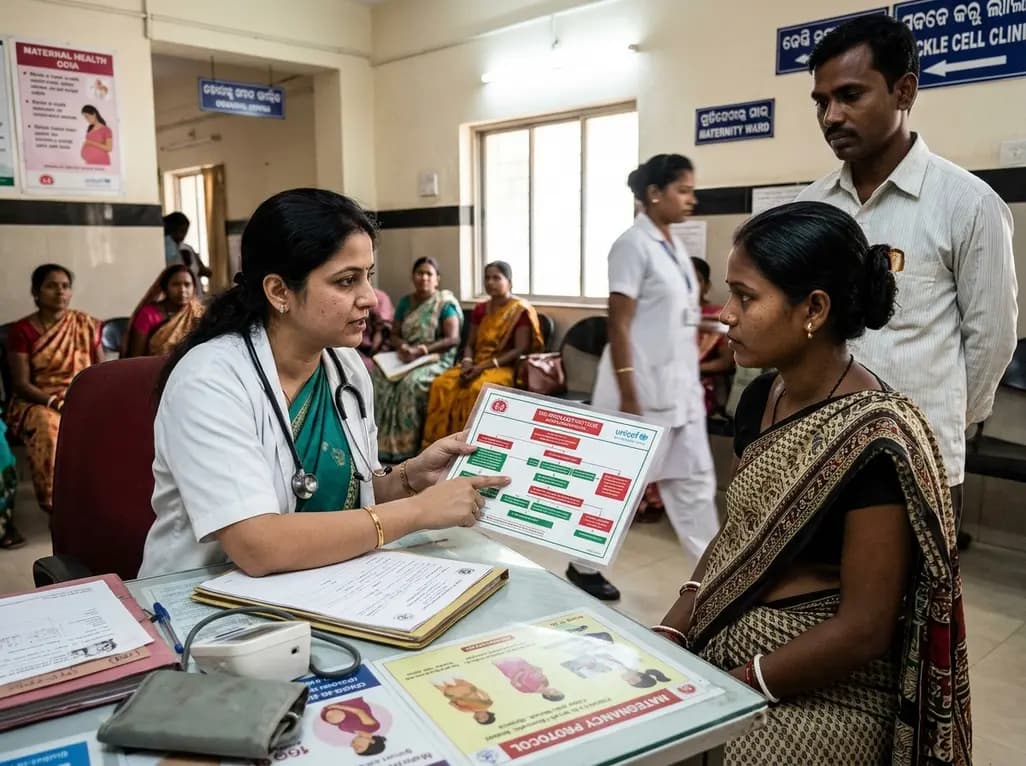
Odisha has established India's first state-level clinical protocol specifically tailored for pregnant women with sickle cell disease. Developed with NHM and UNICEF, the framework provides structured antenatal screening, crisis mitigation, standardized referral pathways, and specialized interdisciplinary care.
Today

The Directorate General of Health Services directs Indian states to halt the hazardous reuse and reprocessing of single-use medical devices. Discover regulatory implications under the Drugs and Cosmetics Act, critical infection risks, legal liabilities, and operational changes required across clinical specialties.
Today

Mitochondria-targeted nanoparticles self-assembled from EGCG and L-glutamic acid effectively restore mitochondrial homeostasis, suppress synovial inflammation, and attenuate chondrocyte senescence in osteoarthritis, offering a promising disease-modifying nanotherapy.
Today

India is advancing preventive healthcare by integrating genomics, artificial intelligence, and quantum technologies. With the SANGAM programme sequencing one million Indian genomes, clinicians can unlock personalized therapies, detect cardiometabolic risks early, and curb the burden of diabetes and heart disease.
Today
