.webp&w=384&q=75)

Loading, please wait...
Loading, please wait...

Managing severe cerebral trauma remains one of the most challenging frontiers in modern medicine. In modern traumatic brain injury neurointensive care, clinicians routinely monitor continuous vital metrics such as intracranial pressure, mean arterial pressure, and cerebral perfusion pressure. However, standard physiological tracking often focuses on static numerical thresholds rather than dynamic biological control mechanisms. Emerging research indicates that analyzing nonlinear signal complexity can offer vital diagnostic foresight. The human autonomic nervous system naturally adapts to acute stress by maintaining subtle physiological fluctuations across systemic and intracranial parameters. When a severe cerebral insult disrupts these adaptive networks, physiological signals lose their natural variation and display reduced signal complexity. Consequently, loss of non-linear signal variability signals systemic collapse and persistent secondary injury. Understanding these dynamic physiological patterns enables critical care specialists to identify deteriorating neurological trends long before irreversible ischemic damage occurs in vulnerable neurointensive patients.
Biological systems rely on non-linear feedback loops to adjust blood flow and tissue oxygenation dynamically. In moderate-to-severe cerebral trauma, autonomic nervous system dysfunction frequently impairs these regulatory pathways. Researchers analyze heart rate variability, baroreflex sensitivity, and multiscale entropy to quantify signal complexity across systemic and cerebral parameters. High signal complexity reflects robust physiological adaptability, whereas reduced complexity signifies blunted autonomic resilience. Furthermore, secondary cerebral insults such as elevated intracranial pressure, reduced cerebral perfusion pressure, and impaired cerebrovascular reactivity frequently coincide with diminished signal entropy. When intracranial pressure rises or vascular autoregulation fails, continuous physiological signals transform into monotonic, highly predictable waveforms. Therefore, tracking multiscale entropy offers clinicians a sophisticated window into patient neurovascular health. Recognizing reduced complexity early empowers intensive care teams to optimize perfusion strategies before functional neural loss occurs.
A recent comprehensive study examined continuous neuromonitoring data from 649 patients treated in specialized intensive care units. Researchers analyzed heart rate variability, baroreflex sensitivity, and multiscale entropy complexity indices across systemic and cerebral signals over the first ten days of monitoring. The findings demonstrated that higher signal complexity in heart rate, intracranial pressure, pulse amplitude, and cerebral perfusion pressure independently predicted significantly better functional recovery at six months. Furthermore, researchers used multivariable ordinal logistic regression models to adjust for traditional prognostic markers, including patient age, motor response scores, pupillary reactivity, and mean intracranial pressure. Even after controlling for these classical risk metrics, multiscale signal entropy remained an independent predictor of long-term recovery. These clinical results validate signal entropy tracking as a key prognostic marker in traumatic brain injury neurointensive care.
Secondary brain injury develops dynamically over hours and days following the initial mechanical trauma. Hypoxia, systemic hypotension, intracranial hypertension, and loss of pressure reactivity worsen primary structural damage. Comprehensive outcome heatmaps clearly illustrate that patients exhibiting both reduced signal complexity and high intracranial pressure or low cerebral perfusion pressure face substantially higher risk of poor neurological recovery. In addition, aggressive interventions such as high-dose barbiturate therapy or decompressive craniectomy frequently co-occurred with blunted physiological variability, reflecting extreme baseline injury severity. When cerebrovascular reactivity index values elevate, indicating impaired autoregulation, cerebral signal entropy drops noticeably. Consequently, continuous entropy monitoring highlights critical windows of vascular vulnerability. By identifying loss of signal complexity early, neurointensive teams can target specific interventions to prevent secondary ischemic insults and optimize cerebral oxygen delivery.
Incorporating non-linear signal analytics into real-time bedside clinical care represents a paradigm shift for neurointensive monitoring. Traditional alarm thresholds rely on static numerical limits that often trigger after significant physiological harm has already occurred. Advanced neurointensive software now integrates automated multiscale entropy algorithms to continuous telemetry feeds. Consequently, monitoring real-time variations in systemic and cerebral signals allows critical care physicians to anticipate physiological decompensation early. Combining signal complexity metrics with established clinical severity scores significantly refines risk stratification. Modern protocol-driven neurointensive units increasingly utilize multimodality monitoring to tailor target blood pressures and perfusion pressures according to individualized autoregulatory capacity. Ultimately, personalized physiological targets driven by advanced signal complexity analysis offer a promising pathway toward reducing long-term mortality and improving functional recovery in traumatic brain injury neurointensive care.
As computational power advances, artificial intelligence algorithms will seamlessly integrate real-time multiscale entropy analysis directly into bedside monitoring platforms. Modern neurocritical care units are evolving toward automated diagnostic systems that alert clinicians to subtle autonomic failure before clinical deterioration manifests visually. Future research aims to prospective validate entropy-guided therapeutic protocols, evaluating whether dynamic signal-targeted interventions directly enhance long-term patient autonomy. Additionally, combining signal complexity measurements with emerging serum biomarkers and advanced neuroimaging modalities will yield holistic neurovascular profiles. As clinical teams adopt these sophisticated computational methodologies, individualizing neurointensive protocols based on real-time signal dynamics will transform acute neurotrauma management globally.
Signal complexity measures non-linear variability in continuous physiological signals like heart rate, blood pressure, and intracranial pressure using algorithms such as multiscale entropy. High signal complexity reflects healthy autonomic adaptability, whereas reduced complexity indicates blunted physiological regulation, autonomic dysfunction, and increased risk of clinical deterioration in critically ill patients.
Reduced signal complexity frequently co-occurs with secondary insults such as intracranial hypertension, decreased cerebral perfusion pressure, and impaired cerebrovascular reactivity. When autonomic and autoregulatory mechanisms fail, continuous physiological signals lose dynamic variation. Consequently, reduced signal variability highlights vulnerable physiological states where secondary ischemic brain injury is highly likely to occur.
Yes, clinical studies demonstrate that higher signal complexity across both systemic and cerebral parameters independently correlates with better functional outcomes at six months. Multivariable analysis confirms that multiscale entropy predicts recovery independently of traditional clinical risk factors such as age, baseline motor scores, pupillary responsiveness, and mean intracranial pressure levels.
Disclaimer: This content is for informational and educational purposes only. It does not constitute medical advice or establish a doctor-patient relationship. Refer to the latest local and national guidelines for clinical practice.
References
Alhamdan M et al. Individualising Neurointensive Care of Traumatic Brain Injury: Reduced Signal Complexity Relates to Secondary Insults and Predicts Worse Outcome. Neurocrit Care. 2026 Aug 10. doi: 10.1007/s12028-026-02631-y. PMID: 42576140.
Czosnyka M et al. Monitoring of cerebrovascular autoregulation: facts, myths, and missing links. Neurocrit Care. 2017;27(3):391-402.
Hawryluk GWJ et al. Guidelines for the Management of Severe Traumatic Brain Injury: 2020 Update. Neurosurgery. 2020;87(3):427-434.

Read summarized clinical updates, watch expert medical content, and earn CME certifications right from your smartphone.
Open your smartphone camera to scan and install.





A landmark study highlights how reduced physiological signal complexity and autonomic nervous system dysfunction correlate with secondary insults and worse functional outcomes in patients undergoing neurointensive care for moderate-to-severe traumatic brain injury.
last month

Groundbreaking research from Mount Sinai reveals that vascular injury driven by the APOE4 gene is an active, potentially reversible driver of dementia. By inhibiting TGF-beta signaling, researchers restored microvascular integrity and cleared amyloid, opening novel therapeutic avenues for neurodegenerative care.
Today

A nationwide study covering 3.7 million Swedish births reveals that prenatal exposure to TORCH pathogens significantly elevates long-term risks of intellectual disability and autism. Healthcare providers must recognize clinical indicators, promote prenatal prevention, and track early pediatric neurodevelopment.
Today
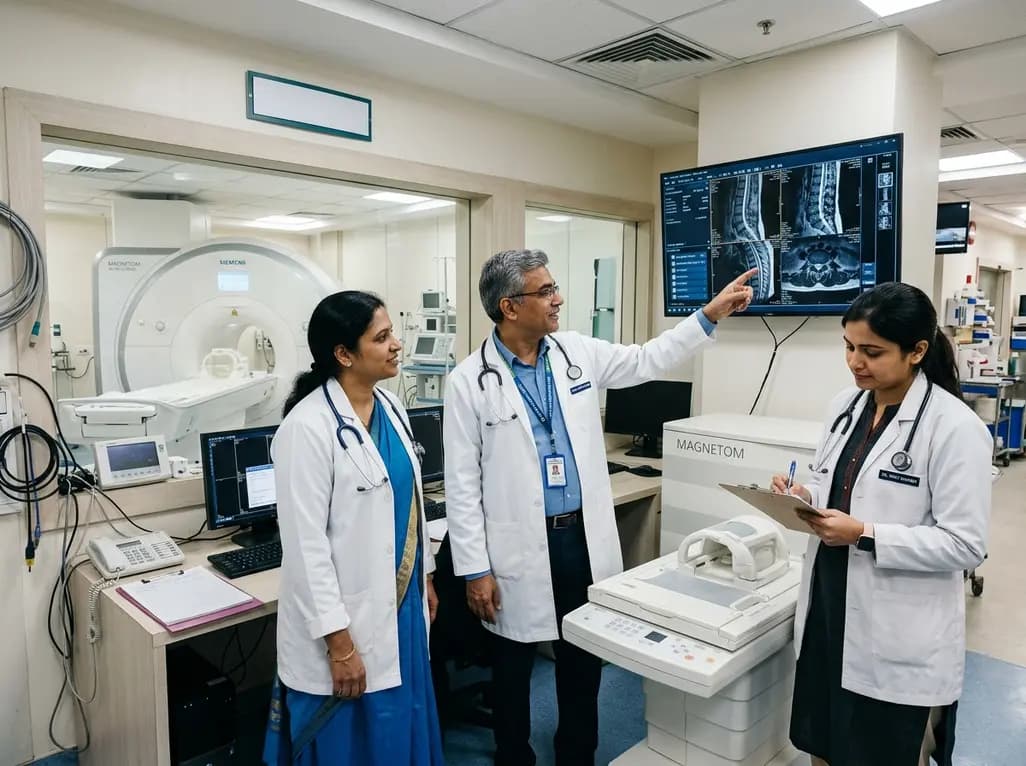
Under India's PLI initiative, domestic production of 57 critical medical devices has commenced, including MRI and CT scanners, cath labs, and heart valves. Global partnerships and local investments are expanding high-end technology, curbing import reliance, and strengthening clinical accessibility nationwide.
Today

A longitudinal study reveals that patients undergoing staged bilateral hip arthroscopy experience progressive contralateral labral deterioration during surgical intervals. However, structural degradation does not compromise 2-year postoperative clinical outcomes or patient-reported satisfaction scores.
Today

SWEDEPAD-1 trial insights show paclitaxel-coated devices do not improve long-term limb salvage in patients with chronic limb-threatening ischemia and tissue loss. While one-year reinterventions decreased, the devices were linked to a higher risk of major amputation at three months.
Yesterday
