.webp&w=384&q=75)

Loading, please wait...
Loading, please wait...

Advances in pediatric hematology have enabled unprecedented numbers of children with hemoglobinopathies to reach adulthood safely. However, managing the vulnerable sickle cell care transition remains one of modern hematology's most pressing challenges. Although survival into adulthood has expanded significantly across high-resource regions, a glaring twenty-year life expectancy gap persists compared with the general population. Consequently, this critical bridge from pediatric clinics to adult medical providers frequently falters, leaving young individuals at heightened risk of treatment discontinuation, organ deterioration, and premature mortality.
Recent surveillance data from the Centers for Disease Control and Prevention's Sickle Cell Data Collection program evaluated 205 adolescents and young adults across Alabama, Colorado, and Indiana [1]. Specifically, researchers analyzed patients aged 15 to 20 years who maintained continuous health insurance coverage for twelve full months following their final pediatric encounter [1]. The investigators defined successful transfer as completing two or more outpatient visits with an adult provider within twelve months [1].
Remarkably, only 42.4% of these young individuals achieved successful transfer to adult care [1]. Moreover, a mere 18.6% established clinical continuity with an adult hematologist or medical oncologist [1]. Furthermore, only 5.8% accessed an adult physician specializing specifically in sickle cell disease [1]. These alarming figures demonstrate that continuous health insurance coverage alone cannot guarantee specialty access. Consequently, most young adults enter adulthood without the specialized hematologic oversight necessary to manage complex vaso-occlusive pathology and ongoing multiorgan damage [1].
The investigation revealed unexpected healthcare utilization patterns among patients who completed transfer [1]. Specifically, successfully transferred individuals demonstrated substantially higher acute care utilization than their counterparts who failed to establish adult outpatient care [1]. Post-transfer emergency department visits increased from a median of 3.02 visits to 3.97 visits per person-year among the successfully transferred group [1]. In contrast, emergency visits remained steady at 1.25 to 1.12 visits per person-year in the unsuccessful cohort [1].
Moreover, patients who achieved successful outpatient linkage exhibited significantly higher baseline disease severity [1]. Chronic transfusion therapy was notably more prevalent among those who transferred successfully, standing at 16.1% compared to 13.6% among non-transferred peers [1]. Meanwhile, the social vulnerability index remained comparable across both cohorts, indicating that clinical severity, rather than socioeconomic disparity, drove healthcare engagement [1]. Therefore, clinicians must recognize that patients entering adult clinics often experience severe organ complications that necessitate immediate acute interventions [1].
Why do so few young individuals successfully establish adult specialty care? First, a severe worldwide shortage of adult hematologists trained in non-malignant hematology hinders access. In pediatric centers, patients benefit from comprehensive multidisciplinary teams featuring dedicated social workers, psychologists, and nurse navigators. However, adult healthcare delivery typically functions in fragmented, highly specialized clinical silos.
Consequently, young adults abruptly lose their trusted childhood support network. In addition, adult emergency clinicians often lack specialized sickle cell training, which leads to skepticism regarding acute pain episodes and tragic delays in analgesia. Because adult primary care physicians frequently feel unprepared to manage hydroxyurea titration or severe vaso-occlusive crises, patients face immense clinical barriers. Furthermore, the psychosocial transition into early adulthood coincides with employment changes, housing instability, and complex personal responsibilities. Thus, systemic healthcare deficits intersect with vulnerable life stages, driving severe care fragmentation.
These international findings provide urgent lessons for healthcare providers in India. Under the National Sickle Cell Anaemia Elimination Mission, India actively screens millions of individuals across high-prevalence tribal belts in states such as Madhya Pradesh, Gujarat, Odisha, and Maharashtra. As early diagnostic interventions and childhood survival steadily improve, an unprecedented adolescent cohort will soon require adult medical care.
However, India's secondary and tertiary healthcare centers encounter comparable bottlenecks regarding adult hematology expertise. District hospitals frequently rely on general physicians who possess limited training in adult sickle cell management. In addition, rural patients confront geographic distance, financial distress, and fragmented health documentation. Therefore, Indian clinicians must establish robust shared-care networks connecting district medical officers with tertiary academic hematologists. By expanding point-of-care diagnostics, standardizing hydroxyurea protocols, and training primary physicians, India can bridge pediatric care into sustainable adult healthcare models.
To overcome these pervasive transfer gaps, medical institutions must adopt structured transition protocols well before pediatric discharge occurs. Clinical guidelines recommend introducing formal transition readiness assessments as early as age twelve to fourteen. Furthermore, pediatric teams should gradually empower adolescents to manage medication schedules, recognize acute sickle symptoms, and navigate health systems independently.
Additionally, establishing joint transition clinics provides exceptional clinical benefits. In these shared clinics, pediatric hematologists and adult physicians conduct joint consultations, fostering continuity and mutual trust. Implementing designated patient navigators also ensures that young individuals attend adult intake appointments consistently. Moreover, hospital administrators must incentivize adult hematology programs and integrate standardized electronic registry tracking. By systematically supporting young patients during this critical developmental window, health systems can mitigate life-threatening complications, reduce preventable emergency admissions, and close the life expectancy divide.
Emergency visits frequently rise after transfer because patients who successfully connect with adult providers typically possess more severe baseline disease [1]. Furthermore, these patients receive closer medical monitoring, prompting timely emergency evaluation when acute vaso-occlusive crises or fever arise [1]. Additionally, adjusting to unfamiliar adult acute care protocols often creates transient instability, which drives higher acute hospital utilization during the initial transition period.
Major hematology guidelines recommend initiating formal transition education early, ideally between twelve and fourteen years of age. Beginning early allows pediatric clinicians to assess developmental maturity and incrementally foster self-advocacy. Consequently, adolescents learn to understand their specific genotype, master daily medication adherence, schedule medical appointments, and recognize emergent red-flag symptoms well before legally transitioning into the complex adult care system.
General physicians in India frequently encounter diagnostic limitations, restricted access to specialized adult hematologists, and limited familiarity with hydroxyurea dose titration. Moreover, managing acute vaso-occlusive episodes in rural settings requires prompt analgesia, which strict narcotic regulations often hinder. Developing standardized national guidelines and tele-consultation networks with academic medical centers helps rural doctors deliver safe, evidence-based care for adult patients.
Disclaimer: This content is for informational and educational purposes only. It is not intended to be a substitute for professional medical advice, diagnosis, or treatment. Always seek the advice of your physician or other qualified health provider with any questions you may have regarding a medical condition. Refer to the latest local and national guidelines for clinical practice.
References

Read summarized clinical updates, watch expert medical content, and earn CME certifications right from your smartphone.
Open your smartphone camera to scan and install.





A multistate analysis reveals that only 42.4% of youth with sickle cell disease achieve successful transition to adult care, and fewer than 20% see an adult hematologist. Addressing transition barriers and expanding trained workforce capacity are vital for reducing acute crises and improving long-term outcomes.
Today
A novel non-invasive approach uses mesoporous PdPt bimetallic alloy-assisted mass spectrometry and machine learning to classify spinocerebellar ataxia type 3 from plasma metabolic fingerprints with high diagnostic accuracy, advancing neurodegenerative biomarker discovery.
Today

Scandinavian register evidence reveals that neonatal birth length strongly predicts adult health and mortality, whereas birth weight dictates cognitive capacity. Symmetric growth restriction causes far more severe long-term deficits than asymmetric restriction, underscoring the need for comprehensive anthropometry.
Today

Discover how rescue cutting balloon angioplasty successfully modifies heavily calcified carotid stenosis, enabling stent delivery without baroreceptor instability and ensuring favorable long-term neurologic outcomes.
Today

A comparative cohort study evaluates clinical outcomes between isotension and low-tension fixation in arthroscopic biceps tenodesis. Discover how resting tension, shear wave elastography measurements, and functional scoring systems guide optimal surgical restoration of the long head of the biceps tendon.
Today
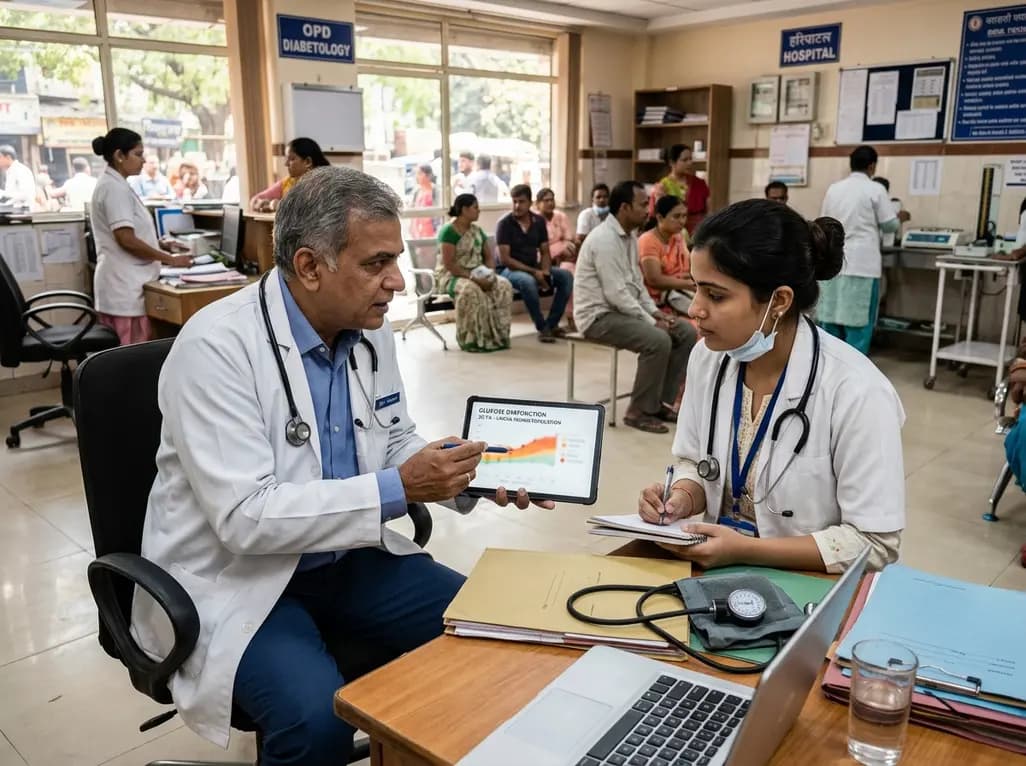
Data from the 2026 Workforce Health Index reveals that 38.7% of urban employees and dependents exhibit abnormal glycemic control. Emerging at increasingly younger ages, this metabolic shift intersects with severe vitamin deficiencies, highlighting the urgent need for early workplace screenings and targeted clinical care.
Today
