.webp&w=384&q=75)

Loading, please wait...
Loading, please wait...

Spinocerebellar ataxia type 3 represents the most prevalent autosomal dominant inherited cerebellar ataxia across the globe. Clinicians face notable challenges when screening and monitoring individuals affected by this debilitating neurodegenerative condition. Fortunately, emerging bioengineering strategies offer rapid diagnostic classification through peripheral biofluids. A breakthrough investigation has demonstrated that plasma metabolic fingerprints enhanced by bimetallic alloys deliver robust diagnostic discrimination. This innovative diagnostic framework significantly improves precision while eliminating invasive spinal procedures.
Spinocerebellar ataxia type 3, also known as Machado-Joseph disease, arises from an abnormal cytosine-adenine-guanine trinucleotide repeat expansion within the ATXN3 gene. Consequently, this genetic defect causes abnormal ataxin-3 protein aggregation, cerebellar degeneration, progressive ataxia, and severe motor dysfunction. Neurologists routinely diagnose patients through targeted genetic sequencing. However, standard molecular genotyping fails to capture dynamic cellular states, functional disease activity, or immediate therapeutic responses. Moreover, conventional monitoring relies on subjective rating scales and serial neuroimaging, which show alterations only after substantial neuronal loss occurs. Lumbar punctures provide access to cerebrospinal fluid biomarkers, yet patients often reject repeated invasive testing due to post-dural headaches and procedural discomfort. Therefore, clinical teams urgently require accessible, minimally invasive blood-based tests that accurately classify disease stages. Peripheral blood carries diverse biomolecules that reflect real-time systemic and central neuropathology. In particular, circulating metabolic profiles reveal perturbations in mitochondrial function, oxidative stress, and lipid catabolism. Thus, establishing robust blood-based metabolomic pipelines will accelerate clinical diagnosis, streamline longitudinal surveillance, and improve patient stratification during multinational clinical drug trials.
To overcome the physical detection barriers of conventional mass spectrometry, researchers engineered mesoporous palladium-platinum bimetallic nanoparticles. Laser desorption/ionization mass spectrometry typically suffers from poor ionization efficiency, high chemical background interference, and matrix signal suppression when analyzing low-molecular-weight metabolites. In contrast, the engineered mesoporous PdPt nanoparticles act as an advanced inorganic matrix that optimizes thermal conductivity and electrical charge transfer. Consequently, the nanostructured alloy dramatically enhances energy absorption from laser pulses and facilitates rapid analyte desorption. Furthermore, the uniform mesoporous architecture selectively traps small plasma metabolites while excluding bulky plasma proteins that typically obscure spectral data. As a result, this clean extraction protocol generates high-resolution metabolic fingerprints from minuscule plasma volumes within seconds. The bimetallic alloy matrix displays exceptional stability across variable laboratory conditions, thereby guaranteeing reproducibility across separate analytical batches. Additionally, the rapid automated workflow dramatically reduces sample preparation time and eliminates toxic chemical matrices common in legacy matrix-assisted systems. By harnessing these nanotechnological properties, the research platform unlocks deep metabolic signatures that conventional laboratory assays consistently miss.
High-dimensional spectral data presents formidable analytical hurdles that traditional statistical regression models cannot easily resolve. Therefore, the investigators coupled the nanoparticle spectrometry platform with the Tabular Prior-data Fitted Network classifier. Unlike traditional artificial intelligence algorithms that demand extensive hyperparameter tuning, TabPFN operates as an efficient transformer pretrained on synthetic tabular datasets. Consequently, the network performs rapid Bayesian inference on complex biological data matrices without overfitting sparse clinical cohorts. The researchers trained and evaluated the diagnostic model on 202 human plasma samples divided into distinct discovery and validation groups. Remarkably, the classifier achieved an area under the receiver operating characteristic curve of 0.952 within the discovery cohort. Furthermore, the model retained outstanding discriminative power during internal temporal validation, securing an area under the curve of 0.963. These statistical metrics underscore the platform's exceptional sensitivity and specificity when distinguishing patients with ataxia from healthy counterparts. Hence, combining advanced nanostructured mass spectrometry with sophisticated foundation machine learning models establishes a powerful paradigm for non-invasive neurodegenerative disease classification.
Clinical translation demands streamlined diagnostic tools that remain cost-effective and interpretable for frontline healthcare providers. Accordingly, the research team isolated a condensed panel of twenty-one key metabolites that preserved robust classification performance. This refined biomarker subset delivered area under the curve values of 0.901 in the primary cohort and 0.932 in temporal validation testing. Moreover, exploratory pathway analyses provided profound insights into the underlying pathophysiological cascade of polyglutamine neurotoxicity. The identified plasma metabolites mapped predominantly to perturbed amino acid metabolism, dysfunctional fatty acid oxidation, and defective purine turnover. In addition, dysregulated energy pathways corroborated known cerebellar mitochondrial deficits and elevated systemic oxidative damage. These biochemical alterations reflect ongoing neuromuscular strain, progressive axonal loss, and accelerated peripheral catabolism in affected individuals. Consequently, monitoring these specific metabolic shifts enables clinicians to track disease activity objectively beyond subjective physical examinations. Understanding these dysregulated metabolic networks may also reveal novel actionable targets for future neuroprotective therapies and metabolic interventions.
The introduction of bimetallic alloy-assisted metabolomic screening marks a vital transition toward scalable molecular neurodiagnostics. Currently, patients enduring rare genetic ataxia often navigate prolonged diagnostic odysseys before receiving definitive genetic verification. Although genetic sequencing remains the diagnostic gold standard for identifying repeat expansions, metabolomic classification provides critical complementary data regarding real-time cellular health. Furthermore, this minimally invasive platform requires only standard peripheral venipuncture, which drastically minimizes procedural risks and patient discomfort. In community hospitals and resource-limited clinics, high-throughput plasma testing could quickly flag suspect cases for prioritized genetic counseling and confirmatory testing. Similarly, academic neurology centers can utilize this quantitative metabolic profiling system to enrich clinical trial cohorts with actively progressing patients. Most importantly, objective chemical biomarkers facilitate sensitive pharmacodynamic monitoring, enabling clinical investigators to determine whether novel gene-silencing therapies successfully restore metabolic equilibrium. Thus, merging nanotechnology with plasma metabolomics delivers tangible improvements across routine outpatient care, prognostic estimation, and experimental neurotherapeutics.
Mesoporous palladium-platinum bimetallic nanoparticles function as an inorganic matrix that significantly enhances laser energy absorption and thermal conductivity during mass spectrometry. Furthermore, their structured porous framework selectively captures small metabolites while excluding high-abundance plasma proteins. Consequently, this technology eliminates background chemical noise and matrix suppression, enabling ultra-fast, highly reproducible detection of low-abundance neurodegenerative biomarkers from minimal plasma volumes without extensive sample pre-fractionation.
Metabolic fingerprinting cannot replace genetic testing because definitive diagnosis still requires identifying the expanded CAG repeat mutation within the ATXN3 gene. However, genetic sequencing only provides static hereditary information and cannot reflect real-time disease progression or therapeutic efficacy. Metabolic profiling acts as a dynamic companion diagnostic that quantifies immediate biochemical dysfunction. Therefore, clinicians can use metabolic signatures alongside genetic testing to track disease activity and monitor treatment responses over time.
Exploratory metabolomic analyses demonstrate marked alterations across mitochondrial energy metabolism, branched-chain amino acid processing, and purine nucleotide breakdown. In addition, dysregulated lipid oxidation highlights chronic cellular stress and structural membrane degeneration within neuromuscular tissues. These disrupted biochemical cascades align directly with known neurodegenerative mechanisms, particularly systemic oxidative stress and impaired ATP synthesis. Consequently, monitoring these specific metabolic pathways provides clinicians with objective molecular insight into systemic pathology and cellular degradation.
Disclaimer: This content is for informational and educational purposes only and does not constitute medical advice, diagnosis, or treatment. Healthcare professionals should exercise independent clinical judgment. Refer to the latest local and national guidelines for clinical practice.
References

Read summarized clinical updates, watch expert medical content, and earn CME certifications right from your smartphone.
Open your smartphone camera to scan and install.





A novel non-invasive approach uses mesoporous PdPt bimetallic alloy-assisted mass spectrometry and machine learning to classify spinocerebellar ataxia type 3 from plasma metabolic fingerprints with high diagnostic accuracy, advancing neurodegenerative biomarker discovery.
Today

Scandinavian register evidence reveals that neonatal birth length strongly predicts adult health and mortality, whereas birth weight dictates cognitive capacity. Symmetric growth restriction causes far more severe long-term deficits than asymmetric restriction, underscoring the need for comprehensive anthropometry.
Today
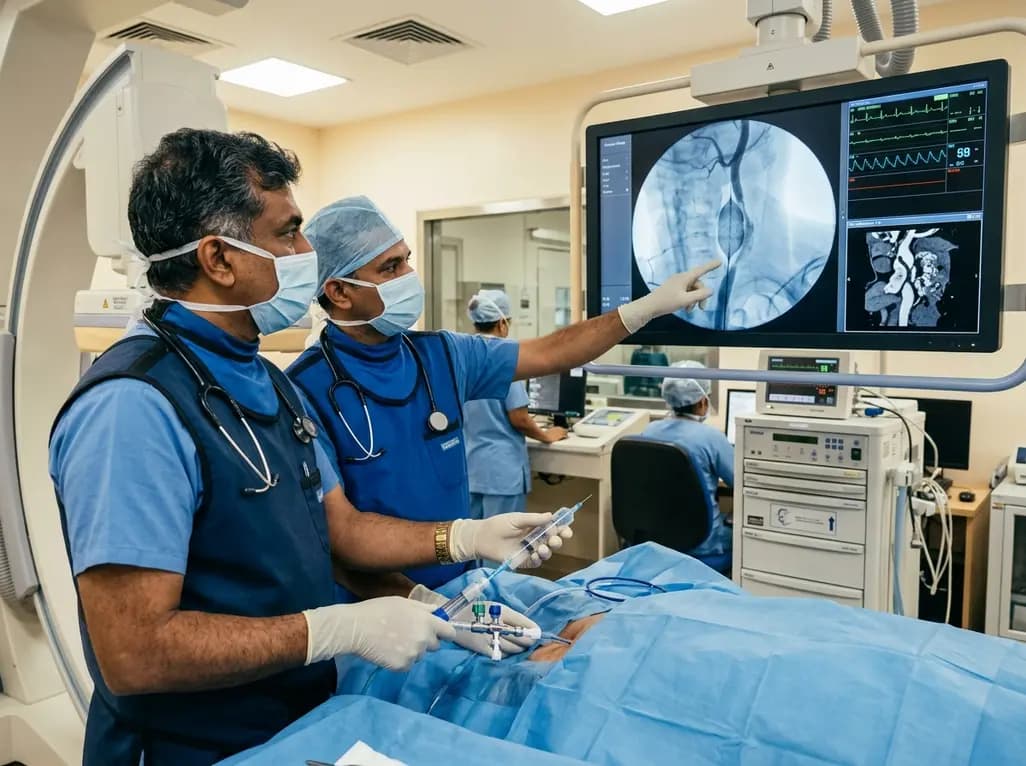
Discover how rescue cutting balloon angioplasty successfully modifies heavily calcified carotid stenosis, enabling stent delivery without baroreceptor instability and ensuring favorable long-term neurologic outcomes.
Today

A comparative cohort study evaluates clinical outcomes between isotension and low-tension fixation in arthroscopic biceps tenodesis. Discover how resting tension, shear wave elastography measurements, and functional scoring systems guide optimal surgical restoration of the long head of the biceps tendon.
Today

Data from the 2026 Workforce Health Index reveals that 38.7% of urban employees and dependents exhibit abnormal glycemic control. Emerging at increasingly younger ages, this metabolic shift intersects with severe vitamin deficiencies, highlighting the urgent need for early workplace screenings and targeted clinical care.
Today
