.webp&w=384&q=75)

Loading, please wait...
Loading, please wait...
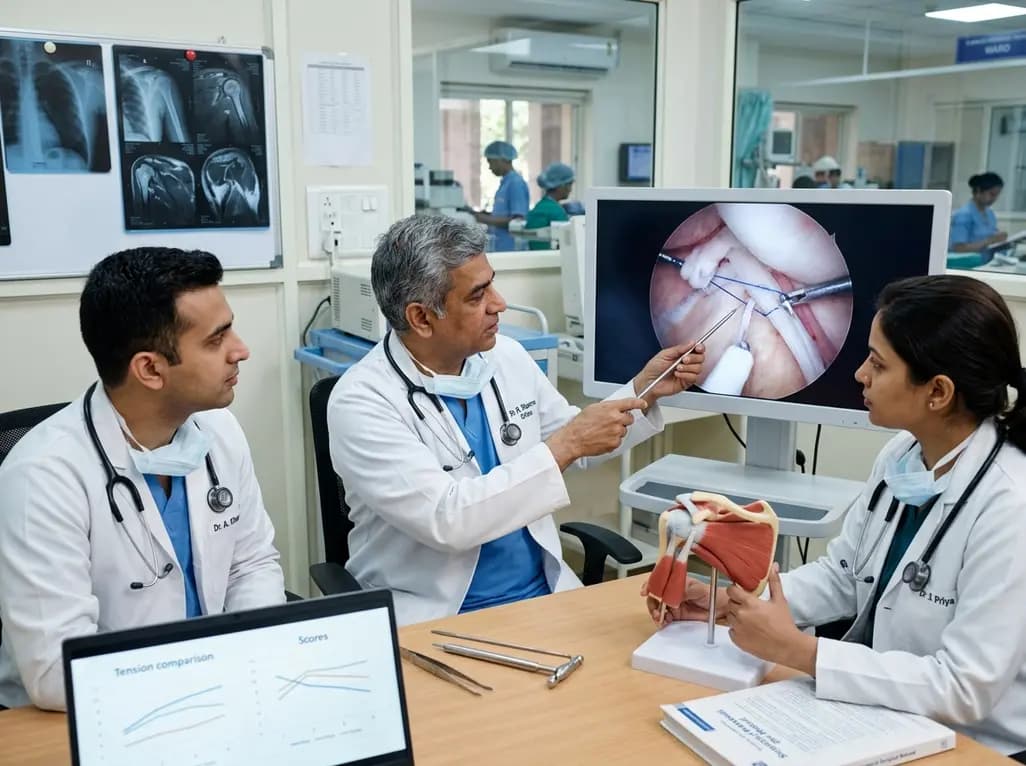
Pathology involving the long head of the biceps tendon represents a frequent cause of anterior shoulder pain and functional disability. Orthopedic surgeons routinely perform arthroscopic biceps tenodesis to alleviate persistent symptoms while preserving upper extremity strength and muscular contours. However, clinical consensus regarding optimal tendon tensioning during anchor or screw fixation has remained elusive across sports medicine practice.
Surgeons frequently debate the physiological necessity of anatomic tensioning during tendon-to-bone fixation. The long head of the biceps tendon functions within a complex length-tension continuum. Therefore, overtensioning the construct risks anchor pull-out, tendon cut-through, and persistent anterior groove pain. Conversely, undertensioning may provoke distal muscle retraction, noticeable aesthetic deformity, and debilitating muscle cramping during active elbow flexion. In standard surgical workflows, preserving resting native tension requires tenodesis in situ before proximal transection. Alternatively, low-tension fixation involves releasing the intra-articular anchor first, followed by fixing the retracted tendon stump directly into the bicipital groove. Consequently, understanding how structural tension translates into meaningful functional recovery helps clinicians optimize surgical choices for diverse active patient cohorts.
To evaluate these tensioning paradigms, investigators conducted a retrospective cohort analysis examining patients who underwent surgery between May 2019 and June 2024. The study enrolled individuals presenting with isolated tendon lesions or concomitant rotator cuff pathology who achieved at least one year of postoperative follow-up. Patients were stratified into two distinct cohorts based on fixation mechanics. Specifically, the isotension cohort underwent anatomical fixation in situ at the bicipital groove prior to proximal resection. In contrast, the low-tension cohort underwent primary proximal release followed by tenodesis of the residual stump. Additionally, investigators employed shear wave elastography preoperatively and at one week postoperatively. This quantitative ultrasound modality reliably determined tendon elastic modulus, providing an objective biomechanical surrogate of active tissue tension in vivo.
Quantitative shear wave elastography revealed noticeable differences in tissue mechanics between the two techniques. In the isotension group, tendon stiffness remained preserved from preoperative baseline to the immediate postoperative period without significant variation. Consequently, this observation confirms that in situ fixation effectively maintains native tissue tension throughout structural healing. Conversely, the low-tension group exhibited a statistically significant decrease in elastic modulus at one week postoperatively. This marked reduction confirmed that transecting the tendon prior to fixation inherently reduces structural tension along the muscle-tendon unit. Furthermore, these imaging metrics provide objective validation that surgical technique directly governs the mechanical resting state of the reconstructed biceps complex.
Despite distinct biomechanical differences, clinical outcomes demonstrated impressive functional improvements across both cohorts after more than two years of follow-up. Both surgical groups achieved statistically significant gains in American Shoulder and Elbow Surgeons scores, Constant-Murley scores, and visual analog scale pain ratings. Furthermore, patients in each arm consistently exceeded established minimal clinically important difference thresholds across all validated patient-reported metrics. Long Head of the Biceps scores also revealed excellent recovery regarding muscular cramping, cosmetic Popeye deformities, and elbow flexion strength. Therefore, structural tension reduction does not appear to compromise overall clinical success or patient satisfaction when solid tendon-to-bone healing occurs.
These findings provide valuable reassurances for arthroscopic practitioners navigating difficult intraoperative scenarios. Achieving strict anatomic tension can prove technically demanding during challenging revisions or complex concomitant rotator cuff repairs. Consequently, evidence showing equivalent functional recovery with low-tension fixation provides significant surgical latitude. Surgeons can safely tailor fixation tension based on intraoperative tissue mobility, visual tendon excursion, and bone quality without fearing inferior functional outcomes. Moreover, preserving stable anchor purchase and preventing tendon slippage remain far more critical than achieving precise millimeter-level anatomic restoration. Ultimately, thorough debridement of inflamed synovium and durable anchor seating drive successful rehabilitation.
Isotension fixation secures the tendon in situ within the bicipital groove before proximal transection, thereby preserving resting anatomical length and tension. Conversely, low-tension fixation releases the tendon first from the superior labrum. Consequently, the retracted tendon stump is subsequently anchored into the groove under decreased resting tension.
Shear wave elastography provides a non-invasive, objective measurement of tissue stiffness by assessing acoustic shear wave velocity through the tendon. Consequently, higher shear velocities correlate directly with increased tissue tension and stiffness. In this study, elastography reliably confirmed preserved stiffness in isotension repairs and decreased stiffness in low-tension repairs.
Clinical data demonstrate that low-tension fixation does not significantly increase symptomatic cramping or cosmetic deformities compared to isotension techniques. When surgeons achieve stable bony fixation, patients in both groups experience comparable strength restoration and similarly high scores on validated biceps outcome instruments.
Disclaimer: This content is for informational and educational purposes only and does not constitute formal medical advice, diagnosis, or treatment. Healthcare providers must exercise their independent clinical judgment. Refer to the latest local and national guidelines for clinical practice.
References
Zhang JM et al. Isotension Versus Low-Tension Fixation in Arthroscopic Biceps Tenodesis: A Comparative Study of Clinical Outcomes. Am J Sports Med. 2026 Sep 30. doi: 10.1177/03635465261486095. PMID: 42812042.
Scheibel M, Schröder RJ, Chen J, Bartsch M. Arthroscopic soft-tissue tenodesis vs bony fixation anchor tenodesis of the long head of the biceps tendon. Am J Sports Med. 2011;39(5):1046-1052.
Kelly AM, Drakos MC, Fealy S, Taylor SA, O'Brien SJ. Arthroscopic release of the long head of the biceps tendon: functional outcome and clinical results. Am J Sports Med. 2005;33(2):208-213.

Read summarized clinical updates, watch expert medical content, and earn CME certifications right from your smartphone.
Open your smartphone camera to scan and install.





A comparative cohort study evaluates clinical outcomes between isotension and low-tension fixation in arthroscopic biceps tenodesis. Discover how resting tension, shear wave elastography measurements, and functional scoring systems guide optimal surgical restoration of the long head of the biceps tendon.
Today

Artificial intelligence is transitioning healthcare from reactive diagnosis to proactive forecasting. By evaluating plasma proteomic profiles and longitudinal health trajectories, clinicians can identify early systemic decline, stratify multimorbidity risk, and personalize preventive interventions effectively.
Today

Scandinavian register evidence reveals that neonatal birth length strongly predicts adult health and mortality, whereas birth weight dictates cognitive capacity. Symmetric growth restriction causes far more severe long-term deficits than asymmetric restriction, underscoring the need for comprehensive anthropometry.
Today
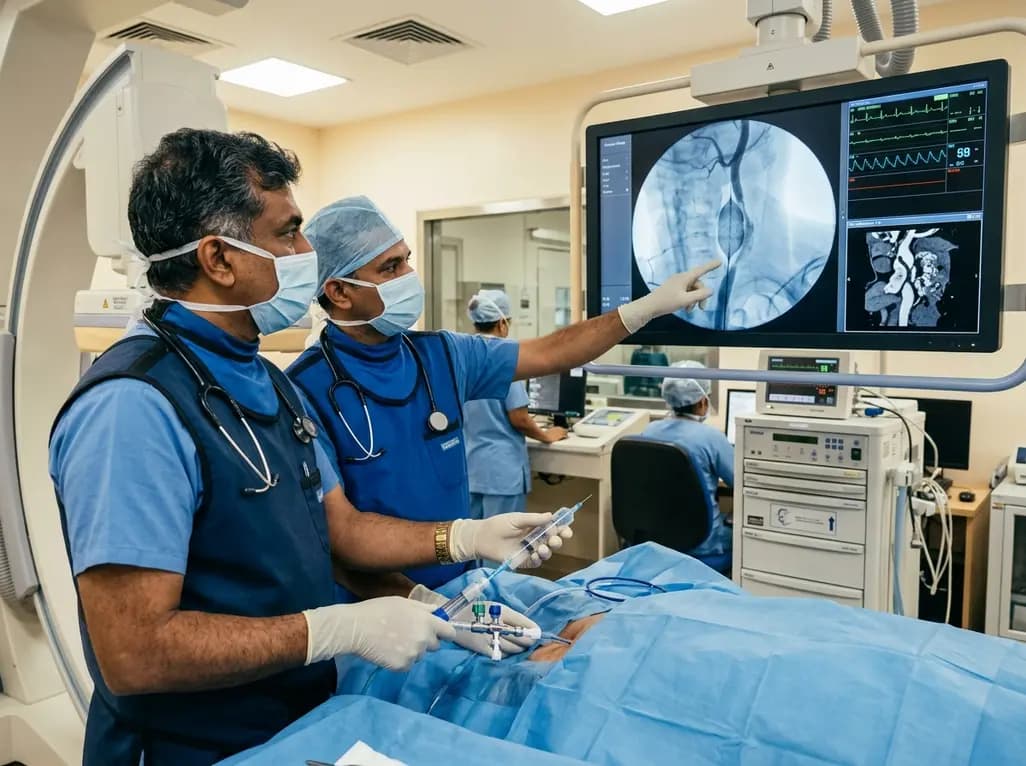
Discover how rescue cutting balloon angioplasty successfully modifies heavily calcified carotid stenosis, enabling stent delivery without baroreceptor instability and ensuring favorable long-term neurologic outcomes.
Today

Data from the 2026 Workforce Health Index reveals that 38.7% of urban employees and dependents exhibit abnormal glycemic control. Emerging at increasingly younger ages, this metabolic shift intersects with severe vitamin deficiencies, highlighting the urgent need for early workplace screenings and targeted clinical care.
Today
