.webp&w=384&q=75)

Loading, please wait...
Loading, please wait...
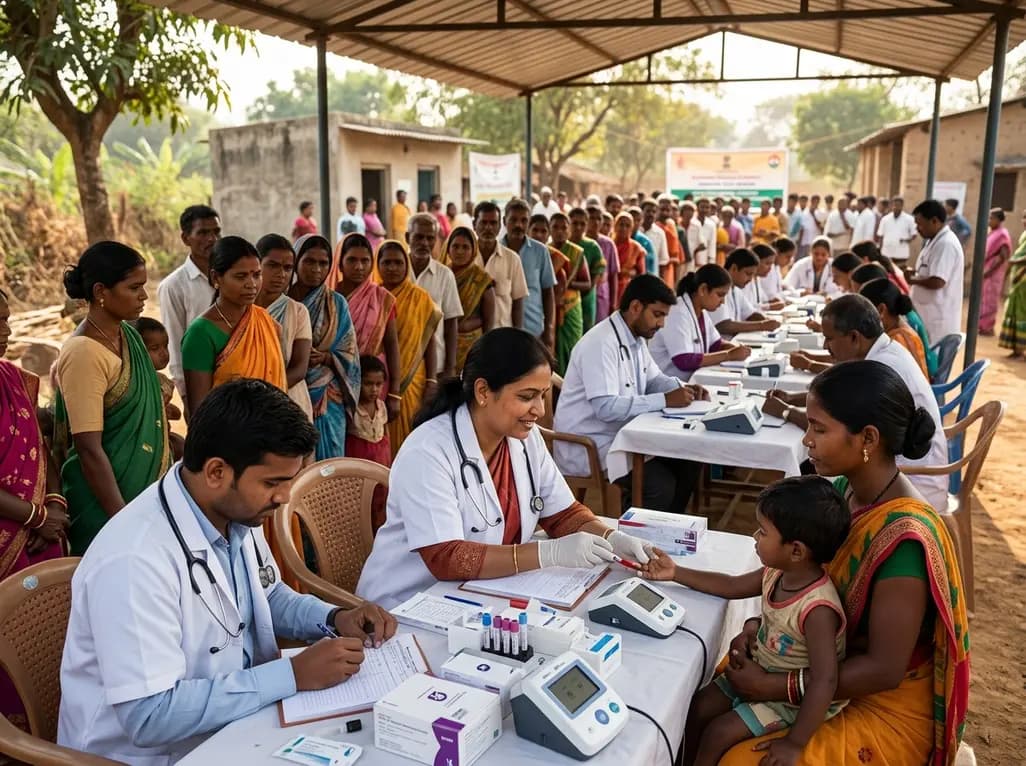
India has achieved a historic milestone in public health through expansive diagnostic drives in high-prevalence areas. Specifically, Union Health Minister J P Nadda recently announced in the Lok Sabha that national health teams completed over 7.25 crore sickle cell anaemia screening tests across tribal-dominated districts. This major initiative operates under the National Sickle Cell Anaemia Elimination Mission. Consequently, healthcare providers can now identify affected individuals earlier and deliver timely therapeutic interventions.
The National Sickle Cell Anaemia Elimination Mission targets individuals between 0 and 40 years of age to curb genetic transmission. Consequently, screening activities occur across 17 states with significant tribal populations. These field operations run at all healthcare delivery levels, spanning from local Ayushman Arogya Mandirs to major district hospitals. For instance, Maharashtra alone accounts for more than 1.11 crore screenings within this national figure.
Moreover, systematically testing younger demographics allows clinicians to detect both asymptomatic carriers and active disease states before severe vaso-occlusive crises develop. Early identification enables prompt registration on the central portal, which tracks patient progress continuously. Furthermore, the government aims to cover vulnerable populations fully by strengthening field-level diagnostic point-of-care testing kits.
Additionally, local primary care teams conduct door-to-door awareness drives alongside blood sampling to ensure high community participation. Therefore, these combined efforts help reduce disease burden across remote geographical regions. Ultimately, public health authorities rely on robust screening data to allocate essential clinical resources efficiently.
Public health and hospital administration fall under the constitutional purview of individual state governments in India. However, the Union Ministry of Health and Family Welfare provides substantial financial and technical resources to strengthen local health systems. Specifically, states receive funds based on proposals submitted through Program Implementation Plans under the National Health Mission.
Consequently, these allocated funds directly support point-of-care diagnostic testing, blood bank infrastructure expansion, and essential medication procurement. Moreover, establishing functional blood banks in remote tribal regions ensures rapid access to safe blood transfusions during severe hemolytic crises. In addition, central technical guidelines assist regional health authorities in standardizing diagnostic protocols across rural clinics.
Furthermore, state health departments utilize centralized web portals to monitor screening numbers, diagnostic accuracy, and follow-up clinical visits. Therefore, central oversight ensures equitable distribution of medical resources across all 17 target states. Additionally, state authorities regularly upgrade local laboratories to perform solubility tests and high-performance liquid chromatography. Consequently, this multi-tiered framework connects rural health posts with specialized secondary facilities seamlessly.
To deliver specialized medical care, the Ministry of Health established formal cost norms for creating dedicated Centres of Excellence. Consequently, the Ministry of Tribal Affairs has approved 17 landmark Centres of Excellence across 15 states. Notably, prominent tertiary institutes like AIIMS Nagpur serve as nodal hubs for advanced diagnostic workups and complex clinical management.
Furthermore, these specialized hubs offer tertiary-level interventions for severe disease complications, including acute chest syndrome and persistent stroke risks. In addition, research institutions provide critical academic and operational guidance to national screening programs. For example, the Indian Council of Medical Research supports these endeavors through specialized regional centers. Specifically, the ICMR National Institute for Research in Tribal Health in Jabalpur leads epidemiological studies in tribal cohorts.
Additionally, the Centre for Research Management and Control of Hemoglobinopathies in Chandrapur develops evidence-based clinical protocols for severe cases. Therefore, these research institutions bridge basic laboratory science and community health implementation directly. Moreover, these centers train medical officers in modern diagnostic techniques and advanced crisis management.
Pharmacological management remains a cornerstone of long-term therapy for patients diagnosed with sickle cell disease. Specifically, hydroxyurea acts as a potent disease-modifying agent that raises fetal hemoglobin levels and reduces vaso-occlusive painful crises. Consequently, the Union Health Ministry included hydroxyurea in the National Health Mission Essential Drugs List. This inclusion guarantees availability at sub-health centers, primary health centers, community health centers, and district hospitals.
Moreover, consistent access to hydroxyurea significantly decreases hospital admission rates and organ damage among chronic patients. However, managing steady drug supplies across remote tribal regions requires robust logistical oversight. Therefore, the government launched the digital Drugs and Vaccine Distribution Management System. This platform tracks drug inventory, procurement schedules, and stock levels across public health facilities in real time.
Additionally, automated inventory monitoring prevents stock-outs of vital medicines at peripheral health centers. As a result, patients living in distant villages can collect their monthly prescribed dosages without disruption. Furthermore, regular clinical monitoring ensures proper dosage adjustment while minimizing bone marrow suppression risks.
Effective management of hereditary blood disorders requires holistic patient support alongside medical interventions. Therefore, healthcare teams provide structured counselling regarding daily lifestyle management, nutrition, and hydration. Specifically, patients receive daily folic acid supplementation to support ongoing red blood cell production. Furthermore, clinicians offer crucial guidance regarding pre-marriage and pre-natal genetic risk factors.
Consequently, prospective parents learn about inheritance patterns, enabling informed family planning decisions. In addition, the Ministry of Tribal Affairs collaborated with health agencies to create culturally sensitive educational materials. These informative pamphlets and digital modules spread awareness about screening, symptom recognition, and disease management in local dialects.
Moreover, health workers organize regular wellness sessions, incorporating gentle physical exercise and stress management strategies. Additionally, establishing comprehensive care pathways allows prompt identification and referral of acute vaso-occlusive crises to higher medical centers. Consequently, integrated counselling lowers social stigma while encouraging early clinical reporting among affected families. Ultimately, combining community education and genetic counselling transforms long-term clinical outcomes for vulnerable tribal populations.
Q1: What is the primary target demographic for sickle cell screening under the national mission?
The National Sickle Cell Anaemia Elimination Mission targets individuals between 0 and 40 years of age across 17 identified tribal-dominated states. Consequently, screening focuses on infants, children, adolescents, and adults of reproductive age. This targeted approach enables early therapeutic intervention and effective pre-marital genetic counselling. Ultimately, early detection prevents severe complications and lowers disease transmission across future generations.
Q2: How does hydroxyurea help manage patients diagnosed with sickle cell disease?
Hydroxyurea is an essential disease-modifying medication that increases fetal hemoglobin levels in red blood cells. Consequently, higher fetal hemoglobin prevents cell sickling, reduces blood vessel blockage, and lowers the frequency of painful vaso-occlusive crises. Moreover, hydroxyurea decreases the risk of acute chest syndrome and minimizes long-term organ damage. Therefore, national guidelines recommend making hydroxyurea readily available across all primary health facilities.
Q3: What role do Centres of Excellence play in managing sickle cell anaemia?
Centres of Excellence, such as AIIMS Nagpur, serve as specialized referral hubs for severe or complex sickle cell cases. Consequently, these institutions provide advanced diagnostic testing, tertiary clinical care, and specialized treatment protocols for high-risk patients. Furthermore, Centres of Excellence conduct clinical research and train healthcare professionals. Therefore, they strengthen overall healthcare capacity while supporting local primary and secondary medical facilities.
Disclaimer: This content is for informational and educational purposes only. It does not constitute medical advice or replace professional judgment. Refer to the latest local and national guidelines for clinical practice.
References

Read summarized clinical updates, watch expert medical content, and earn CME certifications right from your smartphone.
Open your smartphone camera to scan and install.





Union Health Minister J P Nadda reported that India completed over 7.25 crore sickle cell anaemia screenings in tribal regions under the National Sickle Cell Anaemia Elimination Mission. Discover details regarding disease management, drug access, Centres of Excellence, and comprehensive counselling strategies.
last month

Researchers at the Indian Institute of Science and Denmark have synthesized a recombinant antivenom cocktail that neutralizes venom across multiple Indian cobra and king cobra species. This lab-grown biologic provides cross-species protection and promises to replace century-old horse-derived serums.
Today

At the 79th Regional Committee session, the World Health Organization commended India's public health advancements. Key achievements include the operationalization of 160,000 Ayushman Arogya Mandirs, higher institutional delivery rates, strong ASHA networks, and persistent efforts to eliminate tuberculosis nationwide.
Today

The Supreme Court questioned FSSAI's phased warning approach, urging single-phase implementation for foods exceeding limits in any nutrient of concern. Backed by ICMR-NIN recommendations, the proposed red hexagonal warnings target added sugar, salt, and fat to combat India's escalating chronic disease epidemic.
Today
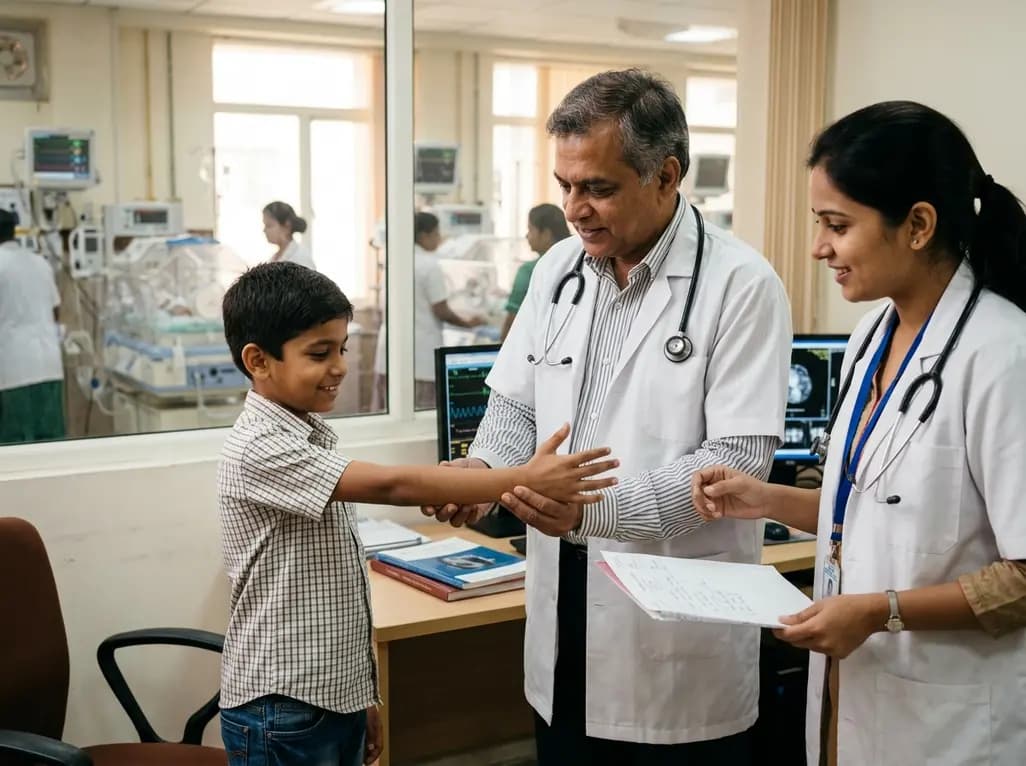
A premature neonate developed upper limb compartment syndrome after uterine rupture extruded the arm through a scar defect. Conservative management with continuous monitoring yielded complete functional recovery and normal limb growth at 10-year follow-up, highlighting non-operative safety in selected cases.
Today
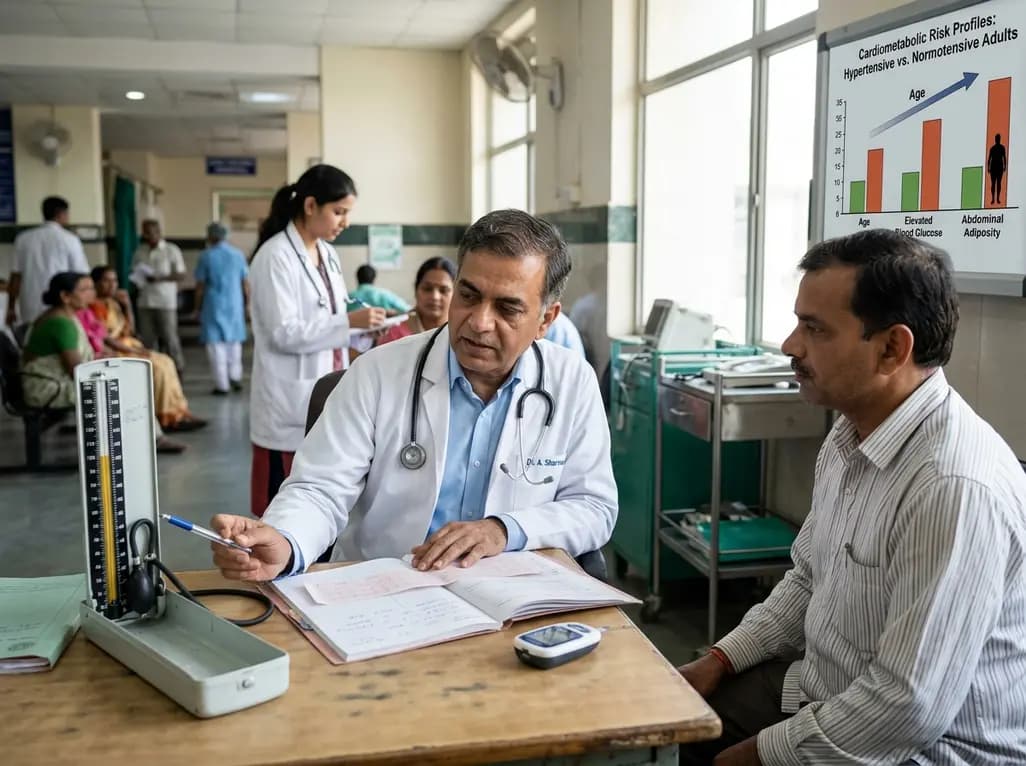
A comparative analysis shows that older age, elevated blood glucose, and abdominal adiposity are primary drivers of hypertension. Comprehensive evaluation of cardiometabolic risk profiles enables clinicians to detect overlapping metabolic dysfunctions early and optimize targeted prevention strategies.
Today
