.webp&w=384&q=75)

Loading, please wait...
Loading, please wait...

Asthma represents a heterogeneous respiratory disorder characterized by chronic airway hyperresponsiveness, reversible airflow obstruction, and persistent inflammation. In recent years, clinicians have actively investigated novel circulating biomarkers to refine disease phenotyping and predict therapeutic outcomes. Among these prospective candidates, researchers have focused significant attention on the biological behavior of serum RBP4 in asthma. Retinol-binding protein 4 serves as the primary lipocalin carrier delivering retinol to peripheral tissues. However, expanding experimental evidence indicates that this protein also functions as a bioactive adipokine that stimulates systemic and vascular inflammatory cascades. Consequently, elevated concentrations promote endothelial activation and induce chemokine expression across vascular beds. In chronic airway disorders, systemic metabolic disturbances frequently worsen pulmonary pathophysiology and accelerate lung function decline. Therefore, clarifying how metabolic mediators interact with specific inflammatory pathways remains essential for modern respiratory medicine. Recent clinical investigations indicate that retinol-binding protein 4 participates in local cellular recruitment, which directly impacts bronchial tissue integrity. Furthermore, understanding these subtle biochemical interactions assists healthcare providers in distinguishing overlapping asthma endotypes. As a result, identifying precise biomarkers offers valuable insights into individualized patient management and targeted respiratory therapies.
Genetic factors exert a substantial influence on individual immune responsiveness and respiratory disease vulnerability. In particular, the human ABO blood group system modulates diverse processes beyond basic transfusion compatibility. Emerging evidence suggests that histo-blood group carbohydrate antigens influence cell adhesion, vascular barrier integrity, and circulating cytokine clearance rates. Moreover, epidemiological studies consistently demonstrate distinct patterns of pulmonary disease susceptibility among different ABO blood phenotypes. For instance, non-O individuals often express distinct adhesion molecule profiles compared to blood group O patients. Consequently, these antigenic variations may alter how circulating inflammatory cells migrate into bronchial tissues during acute exacerbations. Furthermore, cell-surface oligosaccharides directly regulate receptor-ligand interactions that govern lymphocyte homing and granulocyte activation. Because pulmonary immunity involves tight crosstalk between vascular endothelial cells and circulating leukocytes, blood group antigens could modify inflammatory responses. Therefore, stratifying clinical cohorts by blood group provides critical clarity when evaluating complex biomarker associations. In addition, recognizing these genetic differences allows investigators to discover nuanced biochemical relationships that standard analyses might otherwise obscure. Thus, integrating blood group genetics into biomarker discovery represents a compelling strategy for unravelling systemic inflammation in bronchial asthma.
A recent cross-sectional clinical study explored how ABO blood group stratification alters the inflammatory relationships of circulating RBP4. Specifically, researchers enrolled adults with physician-diagnosed asthma attending an outpatient respiratory clinic to measure circulating protein concentrations, inflammatory cell counts, and pulmonary function parameters. Initially, general cohort associations remained modest and statistically indistinct. However, blood group stratification revealed striking differences between patients with blood group O and those with non-O blood groups. In the blood group O cohort, serum RBP4 correlated positively and significantly with absolute peripheral eosinophil counts. Furthermore, this cohort exhibited a marked positive correlation between RBP4 levels and the eosinophil-to-neutrophil ratio. In sharp contrast, patients with non-O blood groups displayed no statistically meaningful relationship between RBP4 and eosinophilic markers. These observations indicate that host genetics significantly modify how metabolic markers reflect cellular inflammation. In addition, eosinophils drive allergic tissue damage by releasing cytotoxic granule proteins and inflammatory mediators into the airway mucosa. Consequently, high RBP4 concentrations in blood group O patients could signal heightened eosinophilic airway stress. Therefore, these findings highlight the necessity of accounting for genetic diversity when interpreting respiratory inflammation.
Beyond inflammatory cell dynamics, investigators also evaluated objective measures of airflow limitation using standardized spirometric testing. Standard spirometry provides essential quantitative data regarding forced expiratory volume and vital capacity. Interestingly, the study uncovered distinct physiological correlations when analyzing patients according to their specific ABO blood group phenotype. Among individuals with blood group O, higher serum RBP4 levels demonstrated notable relationships with reduced spirometric indices. Furthermore, this physiological pattern aligns with the heightened eosinophilic inflammation observed in the same cohort. Because eosinophil recruitment promotes airway remodeling, persistent inflammation compromises bronchial patency. Consequently, elevated RBP4 in this vulnerable subgroup may mirror both ongoing cellular inflammation and functional airflow impairment. Conversely, the non-O cohort did not show parallel spirometric correlations, emphasizing the divergent pathophysiological interplay between these subgroups. Thus, serum RBP4 appears to track functional respiratory decline selectively in individuals with blood group O. Moreover, combining objective lung function measurements with biochemical testing allows clinicians to assess airway pathology more comprehensively. Ultimately, these physiological insights underline the intricate connection between circulating adipokines and pulmonary mechanics.
These compelling findings carry meaningful implications for the evolving field of precision medicine in chronic airway disease. Clinicians increasingly classify asthma into distinct endotypes, distinguishing type-2 eosinophilic from non-eosinophilic presentations. Because targeted biologic therapies selectively block eosinophil activation pathways, accurate patient stratification remains pivotal for optimizing therapeutic success. Therefore, identifying host genetic modifiers such as ABO blood group helps clinicians interpret biomarker panels with greater diagnostic precision. In addition, understanding that serum RBP4 correlates with eosinophilic inflammation specifically in blood group O individuals prevents premature diagnostic misclassification. Practicing pulmonologists can leverage this knowledge to interpret blood counts and spirometry more effectively. Furthermore, future translational research should explore whether metabolic interventions that lower circulating RBP4 might also reduce eosinophil activation. Similarly, longitudinal multicenter trials must validate whether RBP4 serves as a reliable prognostic marker for asthma exacerbation risk. As therapeutic approaches become increasingly personalized, combining genetic markers with novel metabolic indicators will significantly enhance clinical decision-making. Consequently, this integrative strategy promises to improve symptom control and long-term pulmonary outcomes for diverse patient populations.
Retinol-binding protein 4 functions as an active adipokine that modulates systemic and vascular inflammatory pathways. Specifically, elevated RBP4 levels can stimulate endothelial cells, induce pro-inflammatory cytokine secretion, and promote leukocyte recruitment into peripheral tissues. In patients with susceptible genetic backgrounds, these signaling events may enhance bone marrow eosinophil production and airway homing. Consequently, circulating RBP4 closely reflects the underlying eosinophilic burden, driving greater mucosal stress and bronchial hyperresponsiveness.
ABO blood group antigens consist of complex carbohydrate structures expressed on erythrocytes, vascular endothelium, and circulating glycoproteins. Therefore, these surface antigens influence plasma protein clearance, endothelial cell adhesion, and systemic vascular permeability. In blood group O individuals, the lack of A and B transferase enzymes creates a distinct immunological milieu. Consequently, circulating adipokines like RBP4 interact differently with vascular receptors, producing stronger correlations with eosinophilic indices and measurable airflow obstruction.
Clinicians should view serum RBP4 as an emerging investigational biomarker rather than an isolated diagnostic tool. In daily practice, physicians must interpret circulating biomarkers alongside patient history, spirometry, and complete blood counts. However, recognizing that genetic traits like ABO blood groups modify inflammatory correlations helps clinicians avoid diagnostic confusion. In the future, combining blood group stratification with adipokine profiling could guide targeted biologic selection for severe eosinophilic asthma phenotypes.
Disclaimer: This content is for informational and educational purposes only... Refer to the latest local and national guidelines for clinical practice.
References

Read summarized clinical updates, watch expert medical content, and earn CME certifications right from your smartphone.
Open your smartphone camera to scan and install.





A recent clinical study demonstrates an ABO blood group-dependent link between serum RBP4, eosinophilic inflammation, and spirometric impairment in adult asthma. Elevated RBP4 significantly associates with higher eosinophil counts and reduced lung function in blood group O patients, refining asthma phenotyping.
Today

A recent cohort study reveals that reproductive-age women with cerebral venous thrombosis have nearly double the odds of developing intracranial hypertension compared to older women. Superior sagittal and lateral sinus occlusions heighten this risk, predisposing patients to persistent visual impairment.
Today
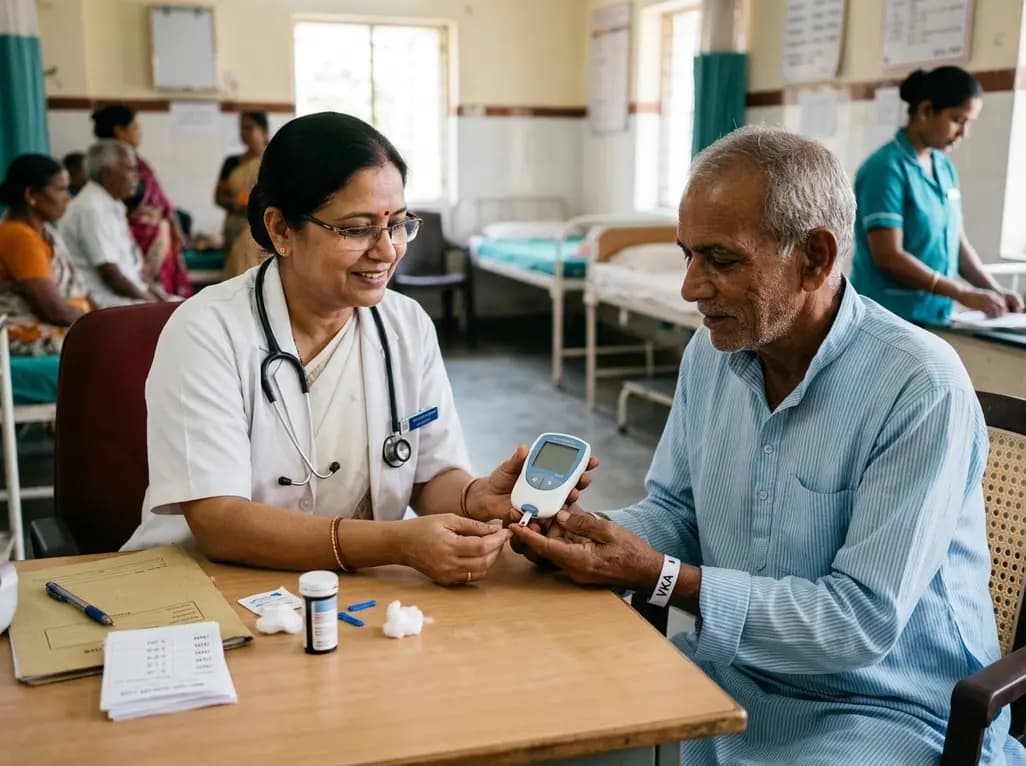
A new implementation study demonstrates that an integrated home INR monitoring network for vitamin K antagonist therapy cuts test turnaround times from three hours to 20 minutes, enhancing clinical oversight, diagnostic accuracy, and patient quality of life.
Today

Diagnostic data shows that nearly one in four spine investigations now involve patients younger than 40 years. This comprehensive overview explores the drivers behind this demographic trend, evaluates ergonomic hazards, clarifies red-flag signs, and highlights clinical indications for judicious diagnostic imaging.
Today

A multicenter cross-sectional study of 1,315 adults with type 1 diabetes reveals that the GMI/HbA1c ratio does not independently predict microvascular complications. Clinicians should prioritize sustained time in range and blood pressure management over glycation discordance metrics.
Today
