

Loading, please wait...
Loading, please wait...

Accurate neuroprognostication remains one of the greatest challenges in neurocritical care units. When severe neurological trauma or vascular events occur, clinical bedside examinations frequently fail to capture preserved cognitive abilities. Emerging research shows that measuring semantic processing in ABI via event-related potentials can uncover latent cognitive capacity in patients who appear entirely comatose. Consequently, identifying these covert electrophysiological responses offers clinicians objective biological insights that surpass routine behavioral evaluations.
Clinicians caring for comatose or unresponsive individuals after severe brain trauma face profound diagnostic uncertainty. Traditional neurological examinations rely heavily on motor and verbal responses to sensory stimuli. However, motor pathway disruptions, sedative infusions, and metabolic derangements frequently mask intact cerebral processing. Therefore, an absence of overt physical responsiveness does not reliably indicate an irreversible absence of awareness. This diagnostic gap frequently leads to therapeutic nihilism. In many intensive care units, surrogate decision-makers make premature decisions regarding the withdrawal of life-sustaining therapy because they lack reliable prognostic markers. Cognitive motor dissociation, wherein patients exhibit purposeful cortical activity without motor output, represents a crucial paradigm shift. Clinicians urgently require accessible diagnostic tools that evaluate higher-order cortical function directly at the bedside. Electrophysiological markers, particularly event-related potentials that capture complex language discrimination, provide an objective window into cortical integrity. Demonstrating that an injured brain can distinguish subtle linguistic nuances provides invaluable physiological evidence for long-term recovery potential.
In a prospective, two-center cohort study published in Neurology, researchers investigated whether bedside electroencephalography could detect semantic processing in unresponsive patients with acute brain injury. The investigation enrolled 105 adult patients admitted to neurologic intensive care units between 2022 and 2025. The cohort presented with severe neurological etiologies, including intracerebral hemorrhage in 45 percent, traumatic brain injury in 43 percent, and subarachnoid hemorrhage in 10 percent of participants. Investigators implemented a rigorous auditory language paradigm presenting congruent sentence endings alongside anomalous endings, such as contrasting the phrase "my favorite color is green" against "my favorite color is soon." The research team defined semantic processing by recording differential event-related responses across centroparietal recording channels between 300 and 500 milliseconds after stimulus presentation. Furthermore, the analysts utilized cluster-based permutation testing combined with false discovery rate correction to eliminate spurious noise. By utilizing non-invasive bedside recording techniques, the protocol bypassed the logistical dangers of transporting critically unstable patients to advanced neuroimaging suites.
The investigators identified neurophysiological evidence of semantic comprehension in 12 percent of the evaluated patients. More importantly, the presence of these electrophysiological signals correlated strongly with favorable patient trajectories at 12 months. Specifically, 77 percent of patients with preserved semantic discrimination achieved recovery of consciousness, compared to 49 percent of patients lacking such responses. Furthermore, 42 percent of patients demonstrating semantic processing attained functional independence, defined as a Glasgow Outcome Scale-Extended score of four or greater. In contrast, only 14 percent of non-responsive patients achieved comparable functional independence, representing an odds ratio of 4.5. Statistically, the paradigm demonstrated a sensitivity of 29 percent and a remarkable specificity of 92 percent for functional recovery. Similarly, for consciousness recovery, the test exhibited 18 percent sensitivity alongside 94 percent specificity. These findings confirm that while the absence of an event-related potential cannot rule out recovery, its active presence serves as a powerful rule-in biomarker indicating robust cortical network preservation.
A critical consideration in neuroprognostic research involves confounding introduced by the withdrawal of life-sustaining therapy. In this study cohort, clinicians withdrew life-sustaining interventions in 31 percent of patients, reflecting standard critical care realities. When the investigators performed a sensitivity analysis excluding patients who underwent treatment withdrawal or died from non-neurological complications, the diagnostic specificity rose dramatically. Specifically, the test attained 100 percent specificity for the recovery of consciousness and 95 percent specificity for long-term functional recovery. Consequently, no patient who demonstrated semantic discrimination failed to awaken if aggressive medical care continued. This finding underscores the devastating phenomenon of self-fulfilling prophecies in neurointensive care. When clinicians assume a poor outcome without objective evidence, therapy withdrawal directly precipitates mortality. Therefore, establishing robust, objective neurophysiological markers prevents premature care limitations. Identifying preserved semantic networks provides critical reassurance to both medical teams and families, encouraging them to maintain supportive therapy during acute healing phases.
Translating these neurophysiological discoveries into standard intensive care practice requires structured protocols and interdisciplinary collaboration. Bedside electroencephalography is widely available across tertiary referral centers, making event-related potential testing clinically viable. However, standard clinical encephalography interpretation typically focuses on background slowing, epileptiform discharges, and burst suppression patterns. Integrating automated auditory paradigms allows neurointensivists to assess cognitive reserve systematically without subjective observer bias. In addition, serial evaluations can monitor cortical recovery over time as intracranial pressure normalizes and edema resolves. Clinicians should not interpret a negative language test as a definitive sign of irreversible damage, given the low sensitivity of the technique. Instead, teams must treat positive findings as decisive evidence of latent connectivity. Integrating electrophysiological assessments alongside multimodal intracranial monitoring, targeted neuroimaging, and standardized clinical scales optimizes clinical decision-making. Ultimately, these advanced bedside tests offer objective guidance during delicate end-of-life consultations.
Although these findings provide compelling prognostic insights, significant questions warrant continued investigation. The original authors emphasize that these results remain hypothesis-generating until validated across broader multicenter clinical networks. Future clinical trials must standardize auditory stimulus delivery, ambient sound dampening, and electrode montage placements to ensure reproducibility. Furthermore, machine learning algorithms and advanced automated signal processing could enhance response detection, potentially increasing sensitivity without eroding high specificity. Researchers must also explore how concurrent administration of specific sedatives and osmotic agents modulates event-related potential latencies. Expanding clinical protocols to evaluate diverse linguistic structures, native dialects, and tonal variations will broaden international clinical utility. As neurocritical care embraces precision medicine, electrophysiological biomarkers of covert consciousness will redefine coma management. By illuminating preserved mental activity beneath behavioral unresponsiveness, clinicians can deliver tailored therapies that maximize long-term neurological recovery.
Semantic processing indicates preserved linguistic comprehension and cortical network connectivity in behaviorally unresponsive patients. Its detection via bedside electroencephalography demonstrates that higher-order cognitive processing remains intact despite absent motor output, providing strong neurophysiological evidence that supports long-term recovery of consciousness and functional independence.
High specificity means patients displaying semantic responses almost universally achieve favorable recovery if life-sustaining care continues. Conversely, low sensitivity occurs because severe brain edema, therapeutic sedation, physiological fluctuations, or sensory pathway damage can suppress electrophysiological responses even in patients who retain substantial latent recovery potential.
Clinicians should utilize positive semantic responses as a reliable rule-in biomarker for recovery to avoid premature withdrawal of life-sustaining treatment. However, clinicians must never use a negative test result to justify care limitation, because many patients lacking detectable event-related potentials still achieve functional recovery.
Disclaimer: This content is for informational and educational purposes only and should not be considered medical advice. Always consult a qualified healthcare provider for diagnosis and treatment decisions. Refer to the latest local and national guidelines for clinical practice.
References
Alkhachroum A et al. Semantic Processing in Unresponsive Patients With Acute Brain Injury. Neurology. 2026 Dec 08. doi: 10.1212/WNL.0000000000218680. PMID: 43013794.
Claassen J, Doyle K, Matory A, et al. Detection of Brain Activation in Unresponsive Patients with Acute Brain Injury. N Engl J Med. 2019;380(26):2497-2505. doi:10.1056/NEJMoa1812757.
Claassen J, Kondziella D, Alkhachroum A, et al. Cognitive motor dissociation: gap analysis and future directions. Neurocrit Care. 2024;40(1):81-98. doi:10.1007/s12028-023-01769-3.

Read summarized clinical updates, watch expert medical content, and earn CME certifications right from your smartphone.
Open your smartphone camera to scan and install.





Bedside EEG can detect semantic processing in unresponsive acute brain injury patients, offering critical prognostic insight. While insensitive, this neurophysiological response is highly specific for 12-month functional recovery and consciousness, helping guide neurocritical care decisions.
Today

A new study demonstrates how explainable AI guides transparent fall risk prediction models in older adults. By pairing random survival forests and SHAP with Cox regression, researchers achieved superior accuracy and eliminated unneeded variables, enhancing clinical decision-making and patient safety.
Today
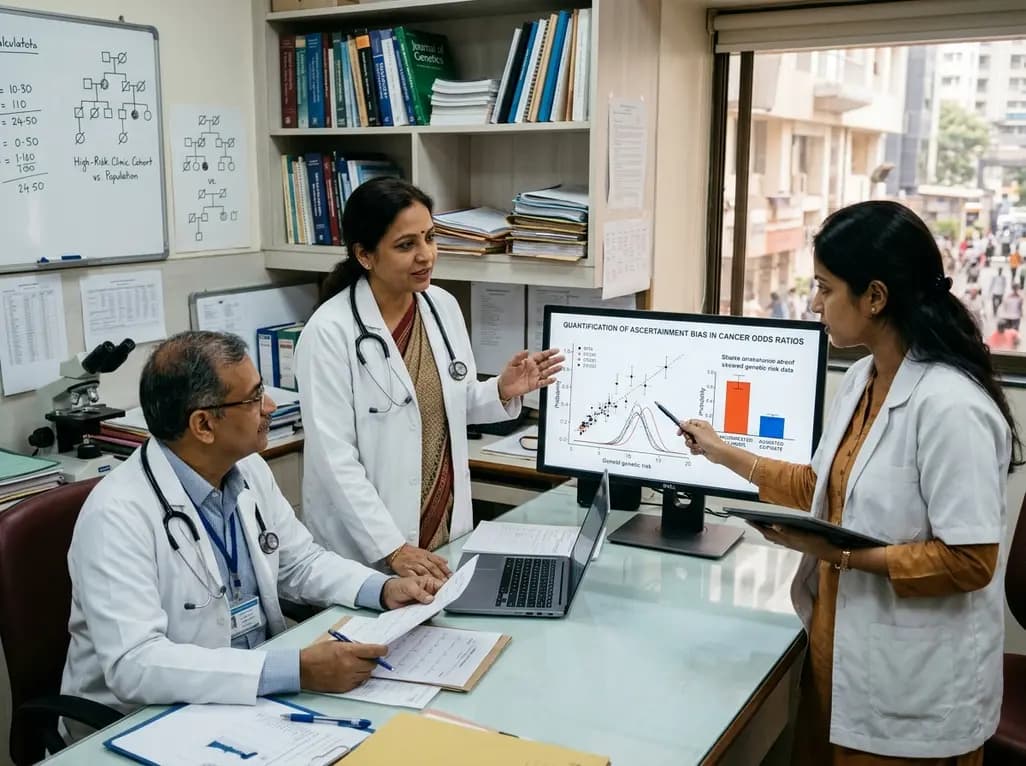
Ascertainment bias in cancer case-control studies inflates odds ratios and penetrance estimates when cases are drawn from high-risk clinics. A landmark modeling study demonstrates substantial bias ranging up to 23.72, highlighting the critical need for ascertainment adjustment in genetic risk counseling.
Today
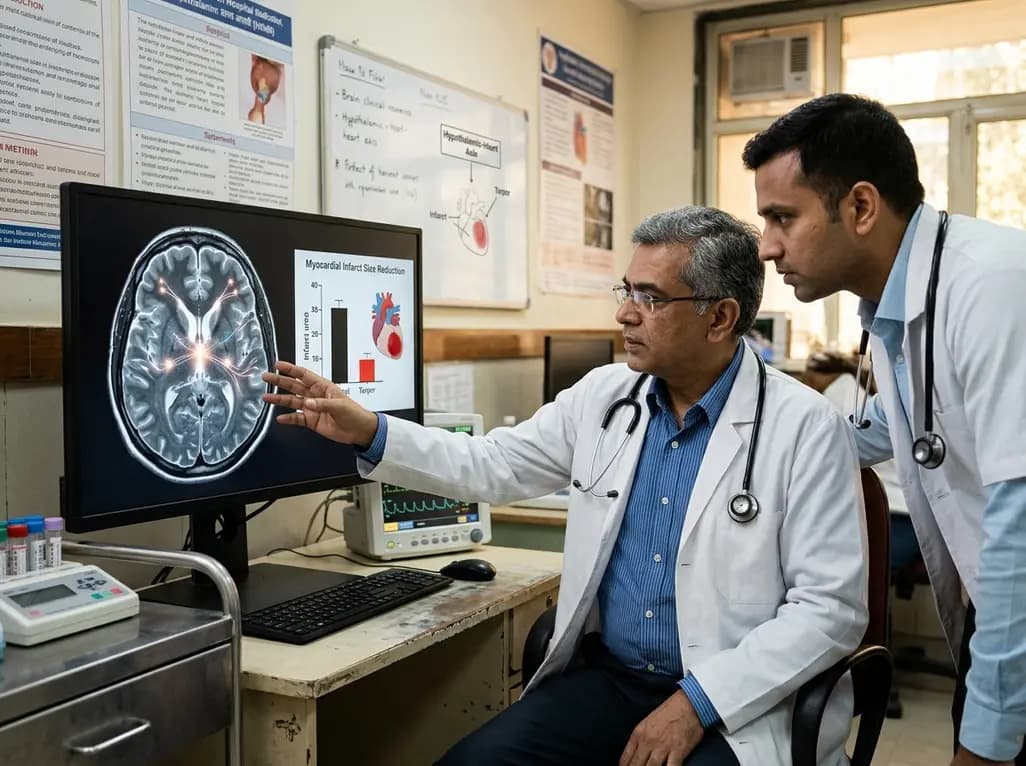
Researchers demonstrate that central induction of synthetic torpor in non-hibernating rats provides striking cardioprotection, reducing myocardial infarct size by ~40% during ischaemia-reperfusion injury through endogenous survival signaling, independent of hypothermia.
Today
A prospective study evaluates DeepSeek for knee osteoarthritis outcomes. While the model excels at baseline diagnosis and clinical scoring, its six-month prognostic predictions fall short of clinicians and simple persistence models, demonstrating high run-to-run variability.
Today
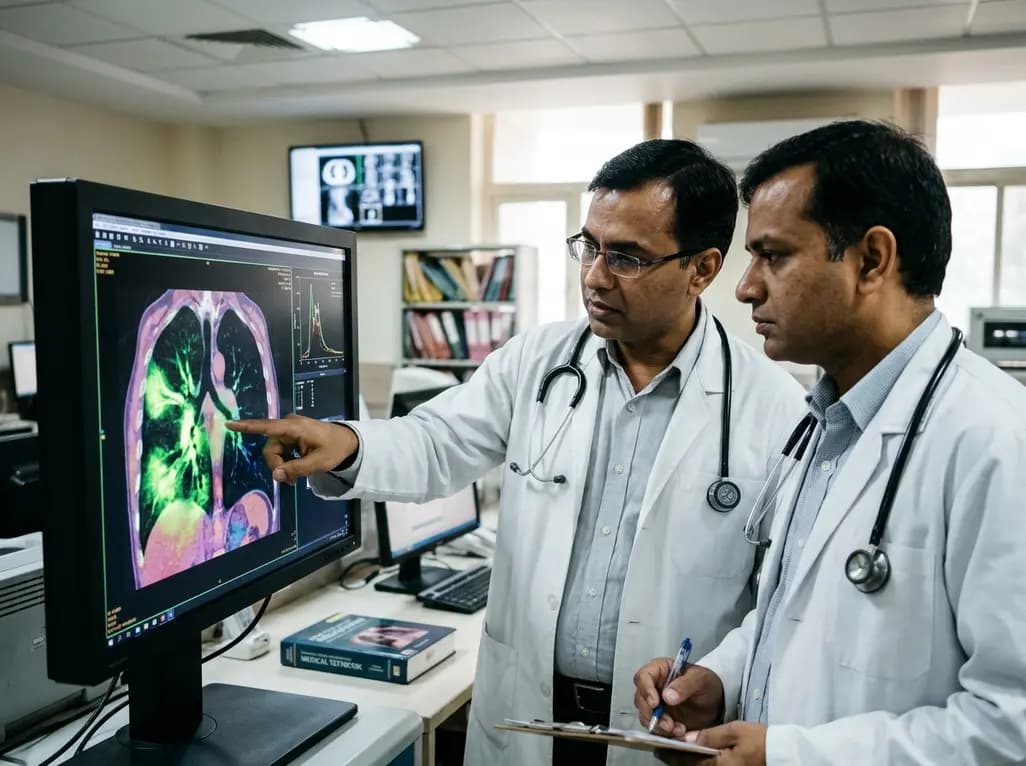
A novel fluorine-functionalized near-infrared copper fluorescent probe selectively illuminates lung tissue, revealing critical links between hyperglycemia, ER stress, and pulmonary malignancy for improved early diagnosis.
Today
