

Loading, please wait...
Loading, please wait...

Glucagon-like peptide-1 receptor agonists have rapidly transformed modern obesity management and metabolic therapeutics. Consequently, spine surgeons increasingly encounter elective fusion candidates using these medications for preoperative weight reduction. Severe obesity elevates the technical complexity of spinal arthrodesis while increasing infection rates and mechanical failures. Therefore, preoperative weight optimization appears to offer obvious clinical benefits. However, emerging evidence raises unexpected concerns regarding semaglutide in spine surgery. A recent matched cohort study evaluated whether pharmacologic weight loss improves or impairs lumbar arthrodesis outcomes.
Spine specialists routinely advise patients with severe obesity to lose weight before undergoing elective lumbar arthrodesis. High body mass index increases mechanical load on spinal implants, prolongs operative duration, and elevates surgical site infection risk. Consequently, clinicians welcomed semaglutide as an effective non-surgical tool for achieving substantial preoperative weight loss. Patients often experience significant weight reduction within months of initiating weekly injections. However, surgeons must evaluate the quality of this weight loss rather than celebrating total pounds lost alone. Rapid medical weight loss often causes substantial lean muscle loss alongside fat reduction. In addition, spinal fusion requires robust bone turnover dynamics to facilitate successful interbody bridging. When patients experience rapid caloric restriction, skeletal homeostasis shifts toward bone resorption. Furthermore, gastrointestinal adverse effects may impair systemic absorption of vital micronutrients, including calcium and protein. Thus, while reduced body weight decreases mechanical load on spinal hardware, underlying nutritional deficits can compromise the biological environment required for fusion. Surgeons must carefully weigh the mechanical advantages of weight loss against these potential biological hazards.
To evaluate these concerns objectively, investigators conducted a retrospective cohort study using real-world data from 2018 to 2022. The study cohort specifically examined obese, non-diabetic adult patients undergoing one- to three-level transforaminal lumbar interbody fusion. By intentionally excluding diabetic patients, the researchers eliminated glycemic variability as a confounding determinant of surgical complications. Furthermore, investigators utilized a rigorous one-to-one exact matching method to pair semaglutide users with non-users. The matching criteria included patient age, sex, exact fusion levels, and concurrent medical comorbidities. Consequently, the researchers successfully matched 471 semaglutide users with 471 non-users displaying identical baseline characteristics. The primary study endpoint focused on 30-day medical and surgical complications following the index spinal procedure. Additionally, researchers stratified patients based on total medication duration, comparing exposures greater than nine months against shorter durations. Finally, Kaplan-Meier survival analysis evaluated the cumulative probability of revision lumbar fusion. To minimize false-positive findings from multiple comparisons, the authors applied a Bonferroni correction, setting the threshold for statistical significance at 0.0045.
The statistical analysis revealed notable disparities in clinical outcomes between semaglutide users and control patients. Semaglutide users experienced significantly higher rates of postoperative pneumonia at 2.97 percent, compared to only 0.85 percent in non-users. Delayed gastric emptying may increase perioperative regurgitation risk, potentially explaining this elevated pulmonary morbidity. Moreover, duration of medication exposure substantially influenced postoperative medical complications. Patients taking semaglutide for longer than nine months developed urinary tract infections at a rate of 4.03 percent versus 1.27 percent in controls. Similarly, acute kidney injury occurred in 3.18 percent of long-term users compared to 0.85 percent of matched controls. Most importantly, semaglutide exposure correlated with a dramatic increase in revision lumbar fusion surgery. Specifically, 17.0 percent of semaglutide users required secondary fusion, compared to just 6.4 percent of non-users. When stratified by prescription duration, patients using the medication for more than nine months faced a striking 28.3 percent revision rate, compared to 4.8 percent in short-duration users. Therefore, extended semaglutide use strongly associated with structural construct failure and revision surgery.
Understanding the physiological mechanisms behind these adverse outcomes is essential for surgical decision-making. Rapid pharmacologic weight loss often precipitates substantial lean muscle mass loss alongside visceral fat depletion. Consequently, paraspinal muscular atrophy destabilizes the mechanical environment surrounding the surgical construct, increasing biomechanical stress on instrumentation. Furthermore, profound caloric deficit states alter systemic bone turnover dynamics. Clinical studies demonstrate that rapid weight loss suppresses osteoblast differentiation while promoting osteoclast-mediated trabecular resorption. As a result, vertebral endplates exhibit lower bone mineral density precisely when robust bone architecture is vital for cage incorporation. In addition, reduced caloric intake and common gastrointestinal symptoms diminish protein consumption and micronutrient absorption. Essential substrates such as vitamin D and dietary amino acids play crucial roles in osteoid matrix synthesis and mineralization. Therefore, inadequate systemic substrate delivery severely impairs the biological cascade required for solid osseointegration. When mechanical instability combines with impaired cellular osteogenesis, construct loosening and pseudarthrosis develop. Consequently, patients present with persistent axial back pain and eventual construct failure, necessitating revision surgical procedures.
These findings provide actionable insights for surgical teams optimizing obese candidates for spinal arthrodesis. Clinicians must recognize that pharmacologic weight reduction does not automatically indicate biological readiness for surgery. Instead, multidisciplinary teams should evaluate both body composition and skeletal quality before proceeding with fusion. Specifically, surgeons should screen candidates for sarcopenia and vertebral bone mineral density using opportunistic computed tomography Hounsfield units. Furthermore, surgical teams should engage clinical dietitians to ensure adequate daily protein intake and micronutrient supplementation throughout active medical weight management. In addition, surgeons must carefully assess the timing and overall duration of semaglutide exposure. Because extended exposure beyond nine months produces the highest revision rates, elective procedures may warrant strategic scheduling adjustments. Pausing semaglutide therapy several weeks prior to surgery may also reduce delayed gastric emptying and perioperative aspiration risks. In contrast to unsupervised weight reduction, structured prehabilitation programs maintain core muscular strength while preserving skeletal integrity. By adopting comprehensive optimization protocols, surgical teams can harness metabolic benefits while protecting patients from catastrophic construct failure.
Semaglutide use correlates with higher rates of surgical revision and nonunion following transforaminal lumbar interbody fusion. Rapid medication-induced weight loss causes concurrent lean muscle wasting and alters bone remodeling dynamics. Consequently, patients develop weaker bone density and impaired osteointegration, which increases the likelihood of hardware loosening and pseudarthrosis requiring secondary surgical intervention.
Patients taking semaglutide for over nine months face significantly higher revision risks than short-term users. Prolonged caloric restriction and chronic suppression of nutrient absorption lead to progressive sarcopenia and diminished bone trabecular quality. Therefore, extended preoperative drug exposure undermines structural spinal stability and hampers biological arthrodesis, resulting in failure of the interbody construct.
Semaglutide users face increased rates of postoperative pneumonia, largely due to delayed gastric emptying and aspiration risk during anesthesia. Furthermore, patients with prolonged exposure have significantly elevated incidences of acute kidney injury and urinary tract infections. Clinicians must maintain heightened surveillance and adjust perioperative hydration and pulmonary hygiene accordingly.
Disclaimer: This content is for informational and educational purposes only... Refer to the latest local and national guidelines for clinical practice.
References

Read summarized clinical updates, watch expert medical content, and earn CME certifications right from your smartphone.
Open your smartphone camera to scan and install.





A matched cohort study reveals that semaglutide use for preoperative weight loss in non-diabetic obese patients is associated with increased postoperative pneumonia, acute kidney injury, and significantly higher rates of revision lumbar fusion surgery.
Today

A landmark study reveals that congenital DLK1 deficiency in women with a history of central precocious puberty causes visceral adiposity, mitochondrial dysfunction, oxidative stress, and neutrophil activation, highlighting the critical need for lifelong cardiometabolic surveillance.
Today

Estetrol (E4), a native fetal estrogen, offers a unique tissue-selective profile with minimal hepatic impact and lower thrombotic risk. This review highlights its clinical use in oral contraception, menopausal symptom management, and emerging applications across oncology and neurology.
Today

Explore revascularisation strategies in dialysis-dependent chronic limb-threatening ischaemia. This review examines surgical bypass vs endovascular therapy, BEST-CLI trial findings, procedural morbidity, conduit availability, and multidisciplinary decision-making for optimal limb salvage.
Today

A recent cross-sectional analysis reveals that over a quarter of randomized controlled trials for non-specific low back pain face discontinuation or unknown status, while more than 36% of completed trials remain unpublished, exposing notable reporting gaps in spine and musculoskeletal clinical research.
Today
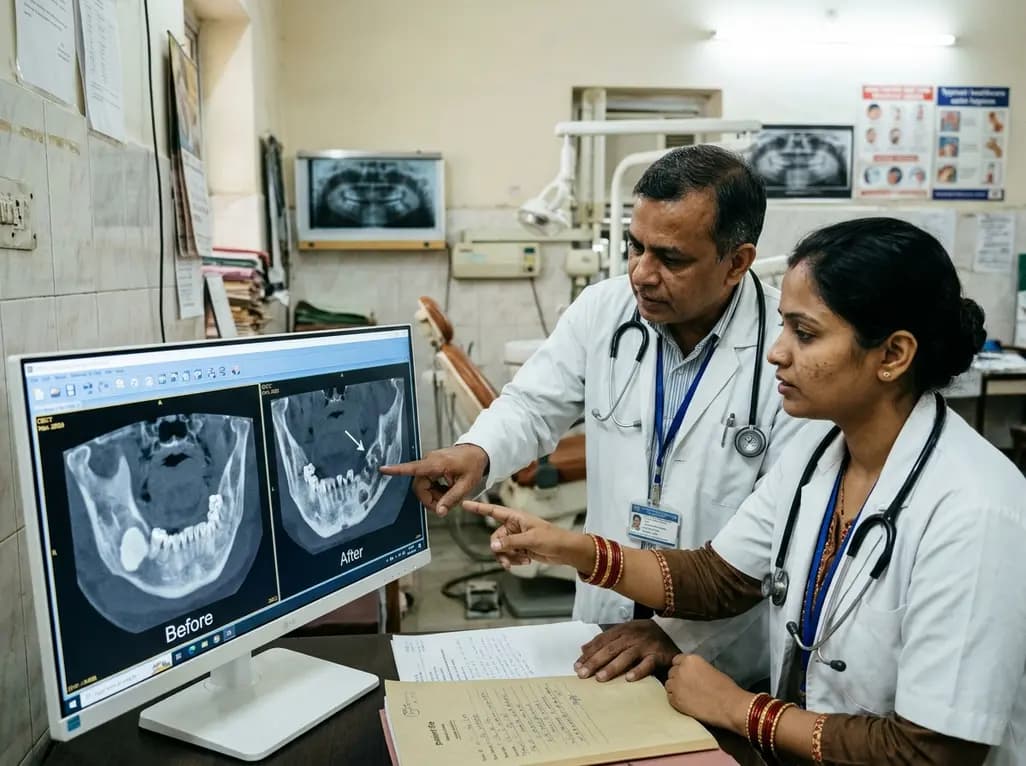
This case report examines the longitudinal CBCT evolution of Stage 2 MRONJ in a 70-year-old woman on denosumab at the site of a pre-existing mandibular dense bone island. It emphasizes the radiographic features, differential diagnosis, and multidisciplinary strategies required for high-risk bone lesions.
Today
