

Loading, please wait...
Loading, please wait...

Managing patients who present with end-stage renal disease and advanced peripheral artery disease remains a major clinical challenge. Clinicians frequently encounter severe calcification, extensive tissue loss, and high perioperative morbidity when evaluating dialysis CLTI revascularisation. Deciding between surgical bypass and endovascular therapy requires a balanced appreciation of procedural durability, patient survival, and systemic risks. Recent clinical syntheses highlight why clinicians cannot apply standard revascularisation algorithms uniformly to dialysis patients.
Historically, randomized clinical trials evaluating peripheral vascular disease enrolled very few patients undergoing maintenance hemodialysis. Therefore, vascular specialists have relied heavily on retrospective observational cohorts to guide critical revascularisation choices. However, these observational comparisons often suffer from substantial selection bias. For instance, healthier patients with favorable anatomy typically receive surgical bypass, whereas frail patients with severe comorbidities undergo balloon angioplasty.
A comprehensive systematic review examined sixteen reports across thirteen study families to clarify these disparities. The researchers applied nested restrictions by systematically excluding mixed open cohorts and unadjusted data sets. Furthermore, they excluded abstract-only publications and success-selected patient cohorts. After these rigorous methodologic filters, the remaining evidence failed to establish a definitive advantage for an initial revascularisation strategy. Consequently, clinicians must recognize that non-equivalent baseline risks heavily confound previously reported surgical superiority. Apparent advantages in wound healing often reflect patient selection rather than procedural superiority alone. Thus, physicians must interpret retrospective registries with caution.
The Best Endovascular versus Best Surgical Therapy in Patients with Critical Limb Ischemia trial provides crucial prospective randomized insights. In the as-treated analysis of dialysis-dependent participants, single-segment great saphenous vein bypass demonstrated distinct procedural trade-offs. Specifically, autologous vein bypass reduced the hazard of major limb reinterventions by fifty-two percent compared with endovascular intervention. However, surgical bypass carried a sixty-nine percent increase in overall mortality hazard. Furthermore, the composite outcome of amputation or death yielded an imprecise estimate showing no statistical divergence.
Crucially, the handling of death as a competing risk for reintervention remained uncertain in the dialysis cohort. In addition, patients undergoing open surgical revascularisation experienced higher rates of bleeding, wound infections, and prolonged hospital stays. These contrasting findings illustrate that local anatomical durability does not automatically translate into improved patient survival. Therefore, selecting open surgery solely to prevent secondary reinterventions may expose frail dialysis patients to unacceptable perioperative hazards. Vascular specialists must balance patency against systemic vulnerability.
End-stage renal disease uniquely alters lower extremity arterial architecture and venous conduit quality. Medial arterial calcification, commonly termed Mönckeberg arteriosclerosis, severely affects infrapopliteal vessels in long-term dialysis patients. Consequently, non-compressible arteries render standard pressure measurements unreliable and impair endovascular balloon expansion. Moreover, long-standing systemic inflammation and repeated vascular access procedures compromise superficial veins. If surgeons identify an adequate saphenous vein, autologous bypass remains technically viable. Conversely, prosthetic bypass conduits perform exceptionally poorly in dialysis patients, yielding excessive thrombosis and graft infection rates.
In contrast, advanced endovascular techniques offer targeted revascularisation without requiring extensive surgical incisions. Balloon angioplasty and specialized atherectomy can restore straight-line pulsatile flow to the angiosome corresponding to the tissue defect. Nonetheless, heavy circumferential vessel wall calcification increases the frequency of early elastic recoil and arterial dissection. As a result, interventionalists often require specialized calcification-modifying tools, including intravascular lithotripsy or scoring balloons. Thus, detailed pre-procedural vascular imaging determines whether an endovascular or surgical reconstruction is physically achievable.
Dialysis dependence confers a profound annual mortality rate exceeding twenty percent in individuals with advanced peripheral arterial disease. Therefore, life expectancy fundamentally dictates the choice of initial revascularisation in this vulnerable population. Open surgical bypass demands anesthesia, protracted operative times, and hemodynamic stress. In addition, incisions in edematous, uremic tissues carry high risks of wound breakdown, infection, and delayed healing. Although bypass provides excellent long-term patency, many dialysis patients do not survive long enough to realize that benefit.
Conversely, catheter-based endovascular interventions cause minimal physiologic disruption and allow rapid post-procedure recovery. Furthermore, endovascular therapy avoids extensive wound incisions, which lowers early systemic complications and hospital readmissions. However, endovascular therapy exhibits higher rates of late restenosis, necessitating repetitive surveillance and reinterventions. Clinicians must determine whether the patient can tolerate repeated minor outpatient procedures or one high-risk definitive open operation. Consequently, multidisciplinary teams must assess physiological frailty and functional status before committing to an initial invasive strategy.
Modern vascular guidelines emphasize that no single treatment modality suits all patients facing limb loss. Because dialysis patients present with diverse anatomical patterns and comorbid burdens, individualized decision-making is indispensable. Multidisciplinary limb salvage teams should unite vascular surgeons, nephrologists, interventional cardiologists, podiatrists, and wound care specialists. In clinical practice, the Global Vascular Guidelines recommend classifying limb threat severity using the WIfI staging framework. Additionally, clinicians must thoroughly assess the patient's baseline ambulatory status, cognitive capacity, and personal goals of care.
For an ambulatory patient with excellent reserve and an adequate saphenous vein, bypass offers durable salvage despite perioperative risks. Conversely, for a non-ambulatory or highly frail individual, endovascular revascularisation or primary wound debridement represents a safer therapeutic pathway. In certain palliative situations, primary major amputation or conservative comfort care may provide superior quality of life. Ultimately, patient-centered care requires honest discussions regarding operative mortality, procedure durability, and expected functional outcomes.
The latest evidence clarifies that neither open bypass nor catheter-based therapy holds an unambiguous initial superiority for dialysis-dependent limb salvage. Instead, surgeons and interventionists must synthesize several patient-specific parameters before initiating revascularisation. Firstly, clinicians must evaluate the severity of the tissue defect and the urgency of restoring in-line pulsatile perfusion. Secondly, duplex ultrasonography should confirm an uninterrupted autologous saphenous vein conduit. If a suitable vein is absent, clinicians should avoid prosthetic bypass due to dismal outcomes.
Thirdly, teams must gauge 2-year survival probability and functional trajectory. Endovascular therapy remains an attractive, low-morbidity option that achieves rapid initial perfusion with minimal systemic stress. Meanwhile, autologous bypass serves patients who prioritize durability and can withstand the recognized perioperative mortality hazard. Furthermore, nephrologists must optimize fluid balance, electrolyte stability, and mineral bone disease management across the perioperative journey. Through collaborative multidisciplinary evaluation, clinicians can select the safest revascularisation pathway to preserve both limb and life.
Dialysis patients have extensive systemic arteriosclerosis, severe cardiovascular calcification, and diminished physiologic reserve. Open surgical bypass imposes substantial hemodynamic stress, prolonged operative time, and general anesthesia exposure. In addition, uremic platelet dysfunction and impaired tissue repair elevate postoperative bleeding, fluid shifts, and deep wound infections. Consequently, these combined physiological insults trigger heightened perioperative cardiac events and severe systemic complications, significantly increasing overall mortality compared to less invasive catheter-based revascularisation.
Endovascular revascularisation is typically preferred in dialysis patients who exhibit high surgical risk, advanced frailty, or limited life expectancy. Furthermore, interventionalists favor endovascular procedures when patients lack an adequate autologous great saphenous vein conduit, because prosthetic bypass yields poor patency. Catheter-based angioplasty provides immediate inline perfusion to resolve ischemic rest pain and initiate wound healing. Although endovascular interventions carry higher late reintervention rates, their low procedural morbidity makes them ideal for vulnerable patients.
Prosthetic grafts perform very poorly in dialysis patients presenting with chronic limb-threatening ischaemia. Synthetic conduits, such as polytetrafluoroethylene, suffer from unacceptably high early thrombosis rates due to impaired distal runoff and hypercoagulability. Moreover, end-stage renal disease causes chronic immune suppression, predisposing prosthetic grafts to deep surgical infections that often necessitate graft excision and major limb amputation. Therefore, international guidelines strongly discourage prosthetic infrainguinal bypass in dialysis patients, recommending endovascular alternatives instead.
Disclaimer: This content is for informational and educational purposes only... Refer to the latest local and national guidelines for clinical practice.
References

Read summarized clinical updates, watch expert medical content, and earn CME certifications right from your smartphone.
Open your smartphone camera to scan and install.





Explore revascularisation strategies in dialysis-dependent chronic limb-threatening ischaemia. This review examines surgical bypass vs endovascular therapy, BEST-CLI trial findings, procedural morbidity, conduit availability, and multidisciplinary decision-making for optimal limb salvage.
Today

A landmark study reveals that congenital DLK1 deficiency in women with a history of central precocious puberty causes visceral adiposity, mitochondrial dysfunction, oxidative stress, and neutrophil activation, highlighting the critical need for lifelong cardiometabolic surveillance.
Today

Estetrol (E4), a native fetal estrogen, offers a unique tissue-selective profile with minimal hepatic impact and lower thrombotic risk. This review highlights its clinical use in oral contraception, menopausal symptom management, and emerging applications across oncology and neurology.
Today

A recent cross-sectional analysis reveals that over a quarter of randomized controlled trials for non-specific low back pain face discontinuation or unknown status, while more than 36% of completed trials remain unpublished, exposing notable reporting gaps in spine and musculoskeletal clinical research.
Today
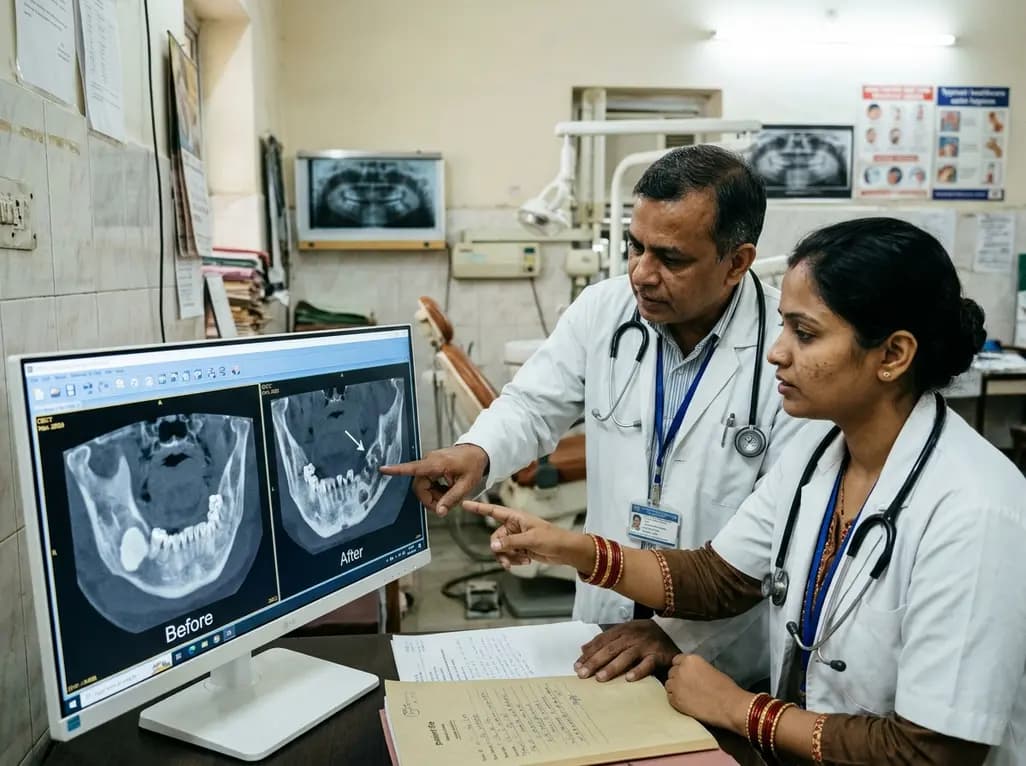
This case report examines the longitudinal CBCT evolution of Stage 2 MRONJ in a 70-year-old woman on denosumab at the site of a pre-existing mandibular dense bone island. It emphasizes the radiographic features, differential diagnosis, and multidisciplinary strategies required for high-risk bone lesions.
Today
