

Loading, please wait...
Loading, please wait...

Non-specific low back pain represents the leading global contributor to physical disability, driving millions of clinical consultations annually. Consequently, physicians depend heavily on randomized clinical trials to guide pharmacological, interventional, and physical rehabilitation regimens. However, when research teams discontinue studies prematurely or withhold trial findings, systematic reviews suffer substantial distortion. A recent cross-sectional investigation critically examined the reporting landscape of low back pain trials, exposing notable dissemination failures across clinical trial registries. Specifically, investigators evaluated randomized controlled trials registered between 2000 and 2021 to assess overall completion and peer-reviewed publication rates. Transparent research dissemination ensures that clinical guidelines reflect genuine therapeutic efficacy rather than filtered outcomes. When negative or equivocal results remain unpublished in private archives, healthcare providers unknowingly prescribe treatments based on incomplete evidence. Therefore, evaluating trial transparency is essential to protect clinical integrity and avoid research waste. As spine care transitions toward value-based frameworks, healthcare practitioners must understand the systemic factors causing trial discontinuation and publication silence.
Public clinical trial registries theoretically offer full transparency for medical research, yet administrative neglect often clouds actual progress. In this analysis of 433 registered studies, researchers found that 112 trials, representing 25.9 percent, met registry criteria for discontinuation. Crucially, 72 of these 112 discontinued projects remained under an unknown status, indicating that primary investigators never updated their registries after scheduled completion. Thus, unattended records heavily inflate discontinuation estimates without clarifying study outcomes. Furthermore, after excluding unknown-status records, 40 of 361 trials were confirmed as terminated or withdrawn, establishing an 11.1 percent confirmed discontinuation rate. This figure aligns with broader musculoskeletal trials, where premature termination often stems from recruitment difficulties, financial constraints, or logistical barriers. Nevertheless, failing to report formal termination prevents subsequent researchers from learning why specific interventions encountered operational difficulties. Consequently, investigators waste critical resources repeating designs that previous teams quietly abandoned. Maintaining updated registry profiles remains essential for clinical credibility.
Even after trials achieve successful completion, significant proportions of medical data never reach accessible academic journals. Among 321 completed trials analyzed in this investigation, 116 studies, or 36.1 percent, lacked journal publication. Consequently, more than one in three completed randomized trials remained inaccessible to clinicians, educators, and systematic reviewers. This omission creates profound ethical challenges because clinical participants accept experimental interventions expecting their contribution to inform medical care. Furthermore, withholding trial data introduces significant publication bias into clinical guidelines. Peer-reviewed journals and researchers preferentially publish trials reporting statistically significant results, whereas neutral or unfavorable findings face publication barriers. In spinal medicine, where clinicians balance physical modalities, medications, and surgical procedures, missing negative trials artificially inflates intervention success rates. Therefore, meta-analyses may inadvertently advocate ineffective or costly therapies based on an incomplete evidence pool. Addressing this widespread non-publication requires coordinated action between research sponsors, institutional ethics committees, and medical journals to guarantee universal results dissemination.
To identify variables driving trial visibility, investigators performed an exploratory multivariable logistic regression across completed studies. Interestingly, sample size substantially predicted publication success; trials with at least 200 participants demonstrated an adjusted odds ratio of 3.86. Similarly, industry-funded trials showed higher publication likelihood, yielding an adjusted odds ratio of 2.77 compared to non-industry studies. Geographic leadership was another influential factor, as trials led by principal investigators from North America or Europe achieved an adjusted odds ratio of 3.22. Conversely, multicenter designs correlated with reduced publication rates, exhibiting an adjusted odds ratio of 0.42. Multicenter initiatives often face complicated administrative hurdles, authorship disagreements, and complex institutional data-sharing procedures that delay manuscript completion. Notably, registration era showed no significant association with publication, proving that modern registration requirements alone have not eliminated delays. Although these associations are exploratory and cannot establish causality, they expose critical structural disparities. Well-resourced, commercially sponsored studies dominate published spine literature, whereas smaller non-commercial projects encounter higher hurdles to publication.
These findings hold direct relevance for healthcare practitioners managing back pain within hospital departments and outpatient clinics. Because low back pain represents a common complaint, clinicians must choose between pharmaceuticals, spinal interventions, and physical therapies based on trustworthy literature. When one-third of completed trials remain unpublished, published evidence tends to overestimate interventional benefits while understating potential adverse events. Consequently, practitioners might adopt high-cost interventions without appreciating unshared negative findings. To counter these systemic distortions, medical practitioners should independently cross-reference published articles with prospective trial registries before modifying patient management pathways. In addition, regulatory platforms like the Clinical Trials Registry - India and international registries must establish stricter enforcement mechanisms. Specifically, registries should mandate annual status confirmations and compel investigators to post summary results within twelve months of completion. Institutional review boards should also track completed projects and withhold subsequent study approvals until researchers disseminate previous findings. By enforcing research transparency, the spine community can reduce research waste and protect evidence-based practice.
Non-publication often occurs because trials produce statistically non-significant, equivocal, or negative outcomes that discourage investigators and journal editors from pursuing formal peer-reviewed publication. Additionally, academic researchers frequently encounter severe resource limitations, career transitions, and competing institutional priorities after completing clinical fieldwork. Consequently, manuscript preparation stalls indefinitely without commercial backing. These systemic dissemination barriers create substantial publication bias across spinal medicine, leaving healthcare practitioners with an incomplete and overly optimistic understanding of therapeutic interventions.
Registry entries marked with unknown status severely distort research tracking because observers cannot determine whether a study reached completion, was terminated prematurely, or remains actively enrolling participants. When investigators fail to submit status updates, cross-sectional analyses must categorize them cautiously, which inflates discontinuation estimates. Furthermore, systematic reviewers cannot accurately quantify unpublished patient data or identify potential trial safety concerns. Routine maintenance of public trial registries is therefore indispensable for maintaining transparency and methodological rigor in healthcare research.
Clinicians must maintain active skepticism toward published clinical literature by routinely cross-referencing major trials against public registry databases like ClinicalTrials.gov or regional registries. Checking initial protocol registrations allows practitioners to verify whether published manuscripts report all primary outcomes without selective reporting. In addition, practitioners should prioritize high-quality meta-analyses that rigorously evaluate publication bias using funnel plots and trial registry searches, rather than relying exclusively on isolated, industry-funded randomized trials for clinical decision-making.
Disclaimer: This content is for informational and educational purposes only. It is not intended to replace professional medical advice, diagnosis, or treatment. Refer to the latest local and national guidelines for clinical practice.
References

Read summarized clinical updates, watch expert medical content, and earn CME certifications right from your smartphone.
Open your smartphone camera to scan and install.





A recent cross-sectional analysis reveals that over a quarter of randomized controlled trials for non-specific low back pain face discontinuation or unknown status, while more than 36% of completed trials remain unpublished, exposing notable reporting gaps in spine and musculoskeletal clinical research.
Today

A landmark study reveals that congenital DLK1 deficiency in women with a history of central precocious puberty causes visceral adiposity, mitochondrial dysfunction, oxidative stress, and neutrophil activation, highlighting the critical need for lifelong cardiometabolic surveillance.
Today

Estetrol (E4), a native fetal estrogen, offers a unique tissue-selective profile with minimal hepatic impact and lower thrombotic risk. This review highlights its clinical use in oral contraception, menopausal symptom management, and emerging applications across oncology and neurology.
Today

A systematic review and component network meta-analysis evaluated the incremental benefits of drug classes in HFmrEF and HFpEF. SGLT-2 inhibitors and MRAs provided the most robust reductions in heart failure hospitalizations, while mortality benefits remained elusive across all investigated drug classes.
Today
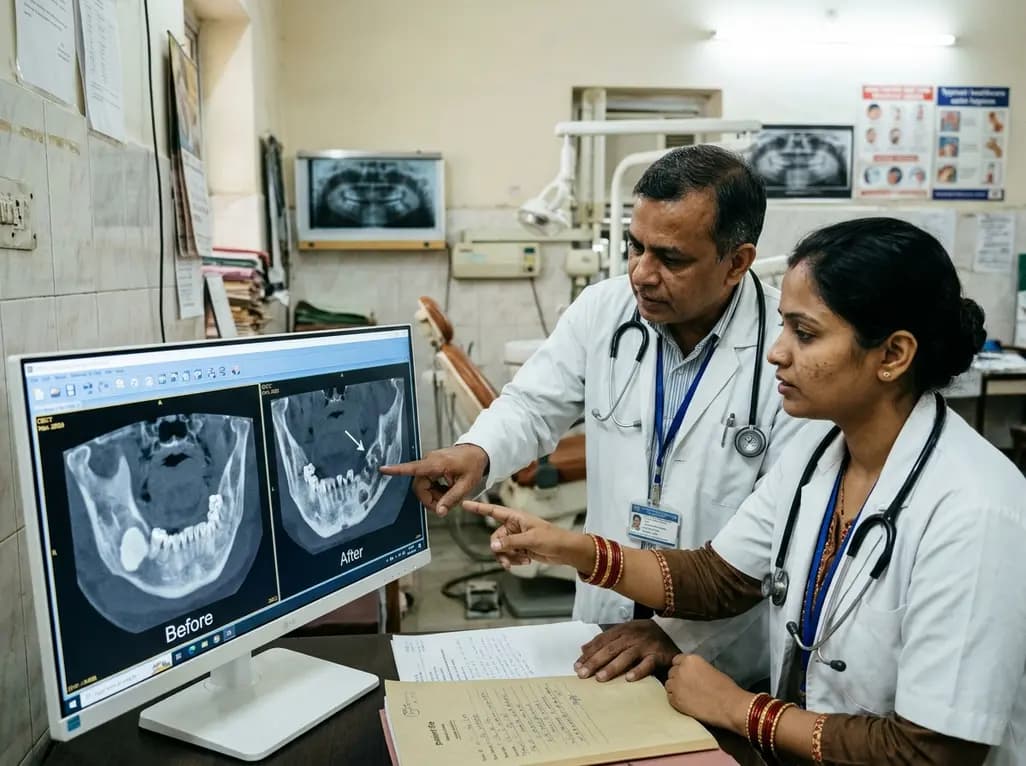
This case report examines the longitudinal CBCT evolution of Stage 2 MRONJ in a 70-year-old woman on denosumab at the site of a pre-existing mandibular dense bone island. It emphasizes the radiographic features, differential diagnosis, and multidisciplinary strategies required for high-risk bone lesions.
Today
