.webp&w=384&q=75)

Loading, please wait...
Loading, please wait...
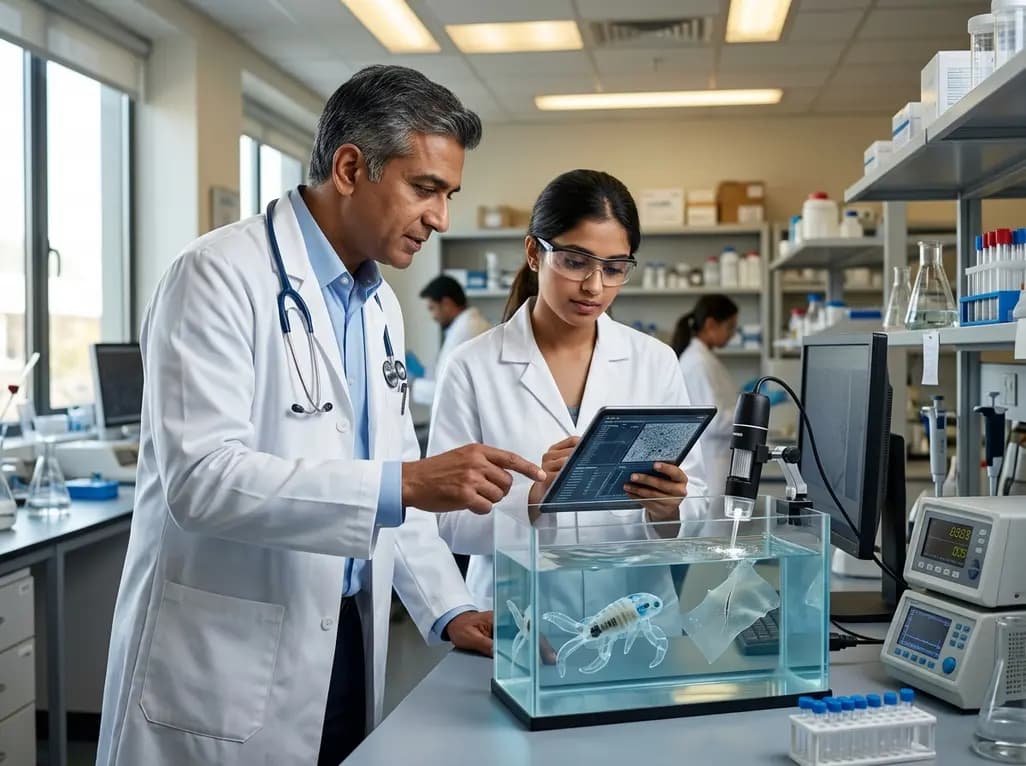
The field of robotics is currently undergoing a paradigm shift, transitioning from rigid metallic structures to flexible, biomimetic materials. One of the most promising frontiers in this evolution is the development of self-healing polymers in nanorobotics. These materials aim to replicate the autonomous repair capabilities found in biological organisms, such as mussels and starfish. Researchers are particularly focused on soft nanorobots that can function in harsh, aqueous environments. Traditionally, water has posed a significant challenge for polymer integrity because it often interferes with dynamic chemical interactions. However, recent advancements in materials nanoarchitectonics have introduced intrinsic self-healing capabilities that thrive specifically in salty, fluid conditions. By integrating these resilient materials, engineers can create nanorobots that survive mechanical damage during operation. This durability is essential for long-term applications where manual repair is impossible. Consequently, the ability to heal autonomously under liquid pressure represents a major milestone for both environmental and biomedical engineering.
To achieve high-efficiency repair, scientists have turned to the chemical structures used by marine life. Specifically, catechol-functionalized polymers serve as the foundation for these new underwater materials. Catechol groups are highly versatile, allowing for multiple types of bonding including hydrogen bonds and metal-ligand coordination. In the reported research, the specific arrangement of these functional groups within microphase nanostructures allows the polymer to maintain its mechanical strength even when submerged. Furthermore, the presence of catechol allows the material to engage in unique seawater-adaptive network reconstruction. When the polymer undergoes damage, the water surrounding it acts as a plasticizer. This process increases the mobility of the polymer chains, which subsequently promotes the reorganization of the hydrogen-bonding network. Unlike older materials that weaken in water, these networks use the fluid environment to facilitate their own restoration. Therefore, the architectural design of the polymer matrix ensures that the material remains robust and functional despite structural fractures.
Integrating self-healing polymers in nanorobotics requires a deep understanding of how ions interact with synthetic materials. In a marine or physiological environment, ions such as Calcium (Ca) and Magnesium (Mg) are abundant. The latest research demonstrates that catechol groups can actively sequester these ions from the surrounding seawater. Once captured, these ions act as natural cross-linking agents at the fractured interfaces of the polymer. This reaction happens autonomously and rapidly, bridging the gap between damaged surfaces without the need for external catalysts. Moreover, this ion-mediated cross-linking significantly enhances the mechanical properties of the healed material. By utilizing the chemical components of the environment itself, the soft nanorobotics can perform repairs that were previously thought to require sophisticated lab conditions. This autonomous behavior is a critical step toward creating truly independent robotic systems. Thus, the synergy between environmental ions and polymer chemistry defines the next generation of smart materials.
One of the most impressive results of this nanoarchitectonic approach is the exceptional tensile strength achieved after healing. In artificial seawater trials, the soft polymer nanomaterial reached a tensile strength of 23.7 MPa. This figure is significantly higher than most existing self-healing hydrogels or soft elastomers. Additionally, the polymers exhibit intrinsic homogeneity, which provides consistent mechanical performance across the entire robotic structure. Because the self-healing process is intrinsic to the material's molecular design, it does not rely on embedded healing agents that might eventually run out. Instead, the polymer can heal repeatedly in the same location. Furthermore, the strong covalent and non-covalent interactions within the seawater-adaptive network ensure that the material does not swell excessively or lose its shape in high-salinity environments. Consequently, these mechanical benchmarks suggest that soft nanorobots can now be designed for high-stress tasks in the deep sea or within the pressurized systems of the human body.
While the initial focus of this research centers on marine environments, the implications for clinical medicine are profound. Indian healthcare is increasingly adopting minimally invasive technologies, and soft nanorobotics could revolutionize procedures in saline-rich bodily fluids. For instance, robots designed from these polymers could navigate the urinary tract, the gastrointestinal system, or the bloodstream. If these devices sustain damage during a complex surgery, their ability to self-heal using the ions present in physiological saline would prevent mechanical failure. Moreover, the biocompatibility associated with catechol-based chemistry makes these materials ideal candidates for long-term implants. Such devices could potentially repair themselves after minor tissue abrasions, thereby extending their operational lifespan. Additionally, the high tensile strength ensures that the robots can manipulate tissues or deliver drugs effectively without breaking. Therefore, transitioning this technology from the ocean to the clinic could solve many current challenges in surgical durability and patient safety.
The success of seawater-adaptive polymers marks only the beginning of what materials nanoarchitectonics can achieve. Future research will likely explore how to fine-tune these polymers for specific environmental stimuli, such as pH changes or localized heat. Researchers are also investigating the possibility of incorporating sensory capabilities directly into the self-healing matrix. This would allow a nanorobot to not only repair itself but also report the extent of the damage to a central controller. Furthermore, scaling the production of these catechol-functionalized materials will be crucial for widespread adoption in the robotics industry. As the cost of nano-manufacturing decreases, we may see these resilient polymers used in a variety of consumer and industrial applications. In conclusion, the integration of seawater-adaptive network reconstruction into soft materials provides a robust solution for operating in harsh conditions. This advancement ensures that the future of nanorobotics is not just flexible, but remarkably resilient and enduring.
The self-healing process relies on a mechanism called seawater-adaptive network reconstruction. When damage occurs, the surrounding water plasticizes the polymer, which increases molecular mobility. Catechol groups then sequester Calcium and Magnesium ions from the water, which facilitates a cross-linking reaction at the interface. This autonomous chemical reaction effectively re-bonds the fractured surfaces, restoring the material's structural integrity and mechanical strength without requiring any external intervention or catalysts.
Catechol-functionalized materials provide several advantages, including high adhesion and versatile bonding capabilities. These materials are inspired by the proteins mussels use to stick to wet surfaces. In robotics, this chemistry allows for intrinsic self-healing, meaning the material itself can repair damage repeatedly. Additionally, it provides exceptional mechanical strength, reaching up to 23.7 MPa in tensile strength, which is vital for the durability and reliability of soft nanorobotic systems in high-pressure environments.
Yes, this technology has significant potential for medical applications. Since the human body contains saline-rich fluids similar to seawater, these polymers can utilize physiological ions for self-repair. This makes them ideal for soft nanorobots used in minimally invasive surgeries, targeted drug delivery, or as components of smart implants. Their high tensile strength and autonomous healing ensure that medical devices remain functional and safe even if they sustain minor damage during a procedure inside the body.
Disclaimer: This content is for informational and educational purposes only and does not constitute medical advice or professional consultation. The technology discussed is in the research phase and may not yet be approved for clinical use. Refer to the latest local and national guidelines for clinical practice.
References
Song Y et al. Materials Nanoarchitectonics from Intrinsic Underwater Self-Healing Polymers for Soft Nanorobotics. Langmuir. 2026 Jul 12. doi: 10.1021/acs.langmuir.6c01956. PMID: 42437529.
Sitti M. Nature Reviews Materials. 2018;3(6):74-87.
Waite JH. Muscle-inspired chemistry in medicine. Chemical Reviews. 2017;117(20):12831-12863.
"
Read summarized clinical updates, watch expert medical content, and earn CME certifications right from your smartphone.
Open your smartphone camera to scan and install.





Breakthrough research reveals new catechol-functionalized polymers that autonomously heal in seawater by sequestering ions, achieving 23.7 MPa strength. This innovation in materials nanoarchitectonics paves the way for resilient soft nanorobots in both marine and medical environments.
3 months ago

Novel diimide and hydrazone scaffolds, particularly compound #C4, synergistically reactivate latent HIV-1 when combined with JQ1 or PKC activators. Demonstrating donor-matched proviral transcription ex vivo and non-canonical signaling, these findings advance shock and kill strategies toward reservoir eradication.
Today

A cross-sectional study reveals that maternal RSV vaccination coverage reached only 43.7% in Argentina, with maternal vaccine knowledge being the sole independent predictor of uptake. Clinicians play a crucial role in eliminating informational and structural barriers to optimize infant health.
Today

Review how tailored exercise programs benefit frail older patients with heart failure. Explore pathophysiological mechanisms, individualized training prescriptions, and strategies to overcome adherence barriers in clinical practice.
Yesterday

This comparative study evaluates posterior labral tears with and without glenohumeral instability, highlighting distinct demographic patterns, MRI underestimation in stable shoulders, and successful arthroscopic repair outcomes.
Yesterday

A clinical study demonstrates that early intervention with tocilizumab, either as monotherapy or bridged with corticosteroids, achieves significant proptosis reduction and resolves active inflammation in treatment-naive thyroid eye disease.
Today
