

Loading, please wait...
Loading, please wait...

Modern healthcare facilities increasingly rely on mobile digital tools to coordinate inpatient care and streamline communication. However, the rapid expansion of secure messaging in hospitals presents both substantial clinical benefits and unforeseen operational hurdles. While instant messaging improves accessibility among care teams, it simultaneously increases cognitive burden and digital task switching. Understanding multidisciplinary perspectives remains crucial as institutions attempt to refine these platforms for safer inpatient care.
Modern inpatient wards depend on rapid communication among diverse healthcare professionals to deliver prompt clinical care. Consequently, hospital leadership has widely adopted digital communication platforms to replace legacy alphanumeric pagers and phone calls. Proponents emphasized that mobile chat platforms would accelerate decision-making, optimize discharge planning, and enhance overall interprofessional accessibility. Indeed, clinical teams readily acknowledge that instant digital chat facilitates rapid updates on diagnostic studies, vital signs, and discharge preparations. However, this effortless accessibility creates unintended operational burdens across acute hospital wards. The shift from scheduled phone calls to constant text exchanges has triggered an unprecedented surge in message volume. Clinicians now receive hundreds of digital notifications during a single shift. Because these alerts arrive continuously, healthcare workers must constantly divert their focus from patient assessments to check incoming texts. Furthermore, the sheer volume of low-priority administrative notes dilutes critical clinical communications, creating substantial friction among team members. As a result, the initial promise of seamless collaboration often transforms into a chronic source of digital distraction. Health systems must therefore evaluate how constant connectivity impacts daily clinical workflows and mental fatigue.
Although all hospital clinicians experience digital communication pressures, their daily workflows shape contrasting viewpoints regarding messaging utility. Specifically, bedside nurses must address immediate patient needs, administer time-sensitive medications, and communicate deteriorating conditions promptly. When nurses send messages, they frequently require rapid confirmations to advance immediate bedside care. However, hospitalists and advanced practice clinicians often supervise dozens of patients across multiple hospital units simultaneously. While rounding or performing invasive procedures, physicians cannot immediately review or answer incoming non-urgent messages. Consequently, prolonged delays generate frustration for nurses awaiting clinical orders, while physicians feel overwhelmed by constant notification chimes. Furthermore, advanced practice clinicians often occupy an intermediate position, balancing complex documentation with direct bedside coordination. In addition, varying clinical hierarchies complicate communication etiquette, making some clinicians reluctant to follow up through alternative channels like phone calls. Therefore, these divergent multidisciplinary demands foster interpersonal tension rather than seamless collaboration. To resolve this friction, hospital administrators must recognize these structural differences and design communication protocols that respect the daily operational realities of every clinical role.
The cognitive consequences of fragmented digital communication represent a major latent threat to inpatient safety. Clinicians frequently switch tasks when an alert interrupts a complex cognitive process, such as calculating medication dosages. Studies demonstrate that frequent task interruptions significantly increase medical errors, including wrong-patient electronic orders. Moreover, returning to a primary task after reading an incoming message requires substantial mental energy and deliberate recall. When cognitive load exceeds manageable thresholds, clinicians experience diagnostic blind spots and documentation fatigue. In addition, constant digital interruptions erode the quality of face-to-face interactions between clinicians and their hospitalized patients. Patients frequently perceive clinician device use as a lack of attention, which impairs physician-patient trust during bedside visits. Similarly, team handoffs suffer when message notifications disrupt critical verbal sign-outs between day and night shifts. To mitigate these safety hazards, hospitals must implement structural barriers against unnecessary digital interruptions during high-risk care episodes. For example, systems can mute non-critical alerts during order entry or bedside procedures. Ultimately, prioritizing focused clinical thinking over instant responsiveness protects both healthcare workers and vulnerable patients.
A prominent finding from multidisciplinary research is the widespread confusion regarding clinical messaging standards and etiquette. Currently, many healthcare systems deploy digital messaging platforms without providing comprehensive guidelines on appropriate usage. Consequently, clinicians remain uncertain about which clinical situations warrant an instant message versus a phone call or in-person consultation. Furthermore, users often misuse urgency tags, marking routine updates as urgent or failing to flag genuine patient deterioration. This ambiguity creates communication gaps where critical clinical notifications remain unread in crowded notification feeds. Additionally, clinicians frequently report ambiguity regarding message acknowledgement expectations, leaving senders unsure if an order will be executed. In contrast, clear institutional protocols eliminate guesswork by defining explicit parameters for clinical communication. For instance, protocols should stipulate that life-threatening emergencies demand immediate verbal phone calls rather than text chats. Moreover, hospitals should establish acceptable response windows based on message urgency tiers to set realistic expectations. By providing standardized communication training during staff onboarding, institutions can cultivate a unified, professional messaging culture across all inpatient departments.
Transforming hospital messaging into an effective, sustainable tool requires targeted workflow redesign and technical innovation. First, healthcare organizations should leverage intelligent alert routing to direct inquiries to specific role functions rather than individual names. When a patient requires routine nursing care or pharmacy verification, the system should automatically message the assigned clinician. Second, incorporating scheduled asynchronous communication windows allows physicians to batch non-urgent messages between clinical rounds. In addition, electronic health record vendors must develop intelligent context-aware delivery mechanisms. For example, algorithms can hold non-emergent messages until a provider finishes entering complex medication orders or closes a chart. Furthermore, healthcare teams should establish protected quiet zones during handoffs, medication preparation, and invasive bedside procedures. Regular communication audits and interprofessional debriefs can also help identify recurring messaging bottlenecks and prevent digital burnout. Most importantly, multidisciplinary committees comprising nurses, advanced practice clinicians, and physicians must lead these system modifications together. Through collaborative governance and smart technology, hospitals can preserve rapid coordination while shielding their workforce from chronic communication fatigue.
Secure clinical messaging improves real-time coordination, but frequent interruptions can compromise patient safety. When clinicians constantly switch tasks between digital messages and clinical duties, cognitive burden surges. Consequently, focus wanes during critical tasks such as medication ordering and clinical handoffs. Studies indicate that message overload correlates directly with wrong-patient medical order errors. Therefore, healthcare systems must implement structured protocols and triage tools to protect patient safety during complex clinical interventions.
Nurses and physicians experience digital communication differently because their operational responsibilities diverge across shifts. Nurses work continuously at the bedside, requiring rapid answers to deliver direct patient care. In contrast, physicians and advanced practice clinicians manage larger patient cohorts and perform procedural rounds. Because asynchronous messaging lacks standardized response timelines, nurses often experience frustrating delays, while physicians face overwhelming message volumes. Establishing clear operational standards bridges these differing multidisciplinary expectations.
Healthcare organizations can effectively mitigate communication fatigue by standardizing messaging protocols and priority tagging. First, institutions should define clear boundaries between non-urgent inquiries and critical clinical updates. Second, leadership must establish protected times during high-risk activities like morning rounds and bedside procedures. Additionally, optimizing role-based routing directs inquiries to designated team members rather than entire cohorts. Ultimately, comprehensive digital training and scheduled communication audits ensure sustainable, team-oriented hospital communication.
Disclaimer: This content is for informational and educational purposes only... Refer to the latest local and national guidelines for clinical practice.
References
Clawson J et al. Multidisciplinary perspectives on secure messaging in the hospital: Physicians, advanced practice clinicians, and nurses. J Hosp Med. 2026 Nov 06. doi: 10.1002/jhm.70524. PMID: 42990061.
Knees M et al. Evaluating secure messaging use and disruptive interruptions among hospitalists. J Hosp Med. 2024;19(11):980-988.
Lew D et al. Secure messaging use and wrong-patient ordering errors among inpatient clinicians. JAMA Netw Open. 2024;7(12):e2448325.

Read summarized clinical updates, watch expert medical content, and earn CME certifications right from your smartphone.
Open your smartphone camera to scan and install.





A qualitative study in the Journal of Hospital Medicine explores how secure messaging in hospitals impacts physicians, advanced practice clinicians, and nurses. While digital messaging improves coordination, high volume and interruptions cause cognitive load and interprofessional tensions, requiring standardized rules.
Today

Preclinical evidence demonstrates that flavopiridol inhibits proliferation and induces mitochondrial apoptosis in airway smooth muscle cells, highlighting its prospective role as a disease-modifying therapeutic agent against asthmatic airway remodeling.
Today

Ovarian cancer remains a lethal malignancy marked by chemoresistance and recurrence. Metabolic remodelling within the peritoneal niche suppresses immune responses through nutrient deprivation and hypoxia-driven signaling. Targeting immunometabolic pathways offers novel strategies to break immune tolerance.
Today

A recent cross-sectional study reveals that life satisfaction among children with congenital heart disease is preserved and not significantly linked to parental burnout, highlighting the need for independent caregiver support.
Today

Arthrogryposis multiplex congenita affects fetal joint mobility, yet fewer than half of cases are detected prenatally. This review highlights dynamic fetal motor assessment, phenotypic subtyping, rapid exome sequencing, and multidisciplinary perinatal care to optimize diagnosis and parental counseling.
Today
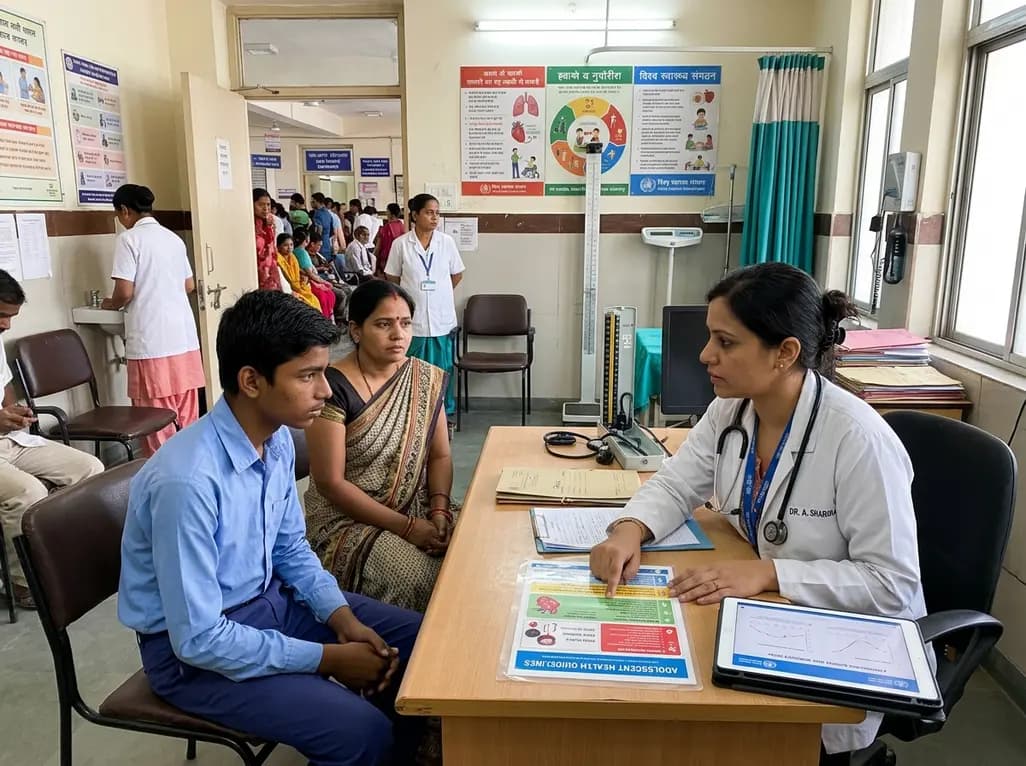
A major World Health Organization study reveals that one in four teenagers globally records zero active days per week. Discover the epidemiological data, cardiometabolic consequences of adolescent sedentary behavior, and practical guidance for clinicians to promote healthy lifestyle habits among youth.
Today
