.webp&w=384&q=75)

Loading, please wait...
Loading, please wait...

The PRALIMAP-INÈS trial provides compelling evidence that a school-based obesity intervention can significantly reduce social health disparities among adolescents. Researchers focused on teenagers with overweight or obesity, evaluating how tailored care impacts both weight status and nutritional behaviors. Consequently, the findings suggest that targeted school programs are vital for achieving equitable health outcomes in diverse populations. Since nutritional changes often precede measurable weight loss, these interventions offer a critical window for early prevention.
The study implemented a \"proportionate universalism\" approach to address socio-economic gaps. Specifically, while all students received standard care, socially less advantaged adolescents received strengthened support adapted to their needs. As a result, this less advantaged group was 12.5% more likely to experience favorable changes in weight and lifestyle compared to their more advantaged peers. Furthermore, significant net benefits occurred in vigorous physical activity and fruit and vegetable consumption. Such results indicate that a structured school-based obesity intervention can neutralize the negative impact of lower socio-economic status on health.
In India, adolescent obesity is rising sharply across all socio-economic strata, with urban populations facing the highest risks. Therefore, implementing a structured school-based obesity intervention could address the unique challenges faced by students in both government and private schools. By focusing on behavioral changes like reducing sedentary behavior and curbing the consumption of sweetened beverages, clinicians can foster long-term health improvements. These interventions are particularly effective because school settings provide a consistent environment for monitoring and encouraging healthy habits. Consequently, bridging the social gradient in nutrition today can prevent chronic metabolic diseases tomorrow.
The trial aimed to evaluate the effectiveness of school-based programs in reducing social inequalities related to weight status and nutritional behaviors among adolescents with overweight or obesity.
Research suggests that standard programs may inadvertently widen gaps if they are not tailored. The PRALIMAP-INÈS trial used strengthened care for less advantaged groups to ensure they achieved even greater relative improvements than advantaged groups.
The most significant improvements were seen in fruit and vegetable consumption and vigorous physical activity, both of which are key drivers for long-term weight management.
Disclaimer: This content is for informational and educational purposes only... Refer to the latest local and national guidelines for clinical practice.
References
1. Dosda A et al. Overall effectiveness of a school-based intervention in reducing adolescents' weight status and nutritional behaviours social inequalities. Br J Nutr. 2026 Apr 24. doi: 10.1017/S0007114526107211. PMID: 42028695.
2. World Health Organization. WHO guidelines on physical activity and sedentary behaviour. Geneva: World Health Organization; 2020.
3. Misra A, et al. Consensus dietary guidelines for Indians. J Assoc Physicians India. 2011;59:626-635.
"
Read summarized clinical updates, watch expert medical content, and earn CME certifications right from your smartphone.
Open your smartphone camera to scan and install.





The PRALIMAP-INÈS trial demonstrates that targeted school-based interventions effectively reduce social inequalities in adolescent weight and nutrition....
5 months ago
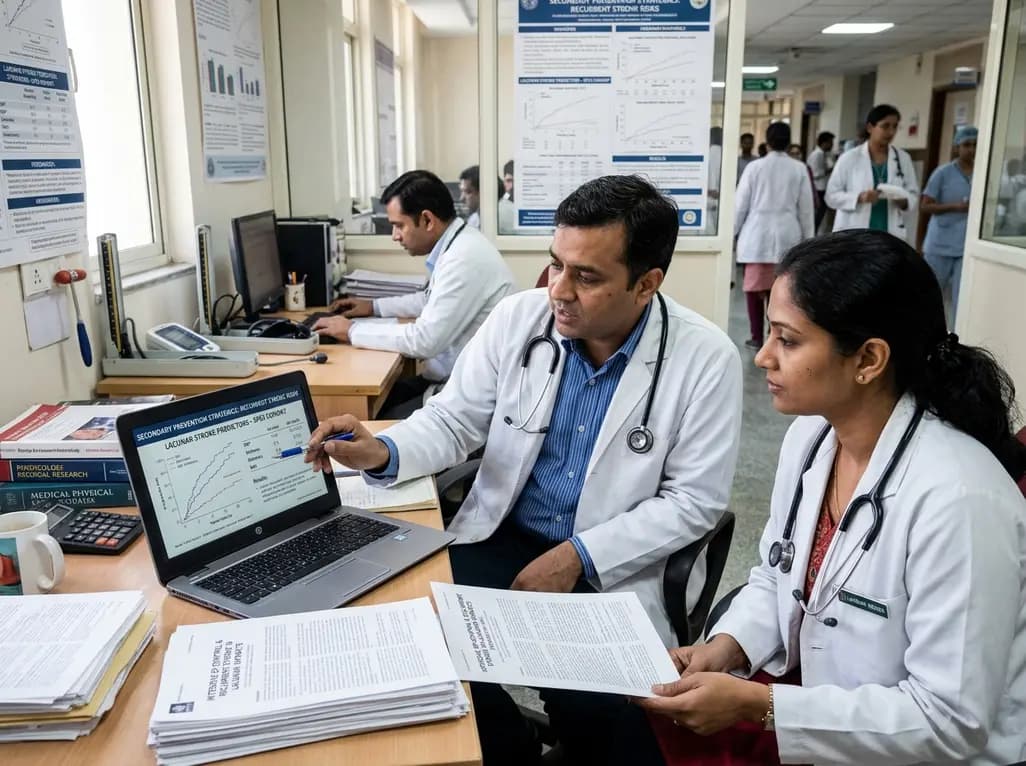
Explore vital recurrent stroke predictors in lacunar stroke patients managed with intensive blood pressure lowering. This analysis examines trial findings from SPS3 to uncover residual vascular risks, metabolic factors, and targeted secondary prevention strategies for high-risk neurological patients.
Today

A comprehensive scoping review synthesises evidence linking prenatal maternal mental health to long-term offspring neurodevelopment, evaluating neuroendocrine, inflammatory, and epigenetic pathways while highlighting clinical screening and future research priorities.
Today

The Directorate General of Health Services directs Indian states to halt the hazardous reuse and reprocessing of single-use medical devices. Discover regulatory implications under the Drugs and Cosmetics Act, critical infection risks, legal liabilities, and operational changes required across clinical specialties.
Today
Mitochondria-targeted nanoparticles self-assembled from EGCG and L-glutamic acid effectively restore mitochondrial homeostasis, suppress synovial inflammation, and attenuate chondrocyte senescence in osteoarthritis, offering a promising disease-modifying nanotherapy.
Today

India is advancing preventive healthcare by integrating genomics, artificial intelligence, and quantum technologies. With the SANGAM programme sequencing one million Indian genomes, clinicians can unlock personalized therapies, detect cardiometabolic risks early, and curb the burden of diabetes and heart disease.
Today
