.webp&w=384&q=75)

Loading, please wait...
Loading, please wait...

Neuroscientists have long sought to understand how the human brain integrates sensory perception with spatial memory. Traditional models highlight specialized posterior cortical areas that analyze visual environments. These perceptual regions work alongside anterior cortical partners that retrieve stored mnemonic representations. Recent neuroimaging investigations have expanded this organizational principle directly into the superior parietal cortex. Specifically, investigators identified a distinct functional zone termed the superior parietal memory area. This region sits immediately adjacent to the previously characterized superior parietal scene perception area. Consequently, this architectural pairing reveals that parietal regions actively unite online visual scenes with context-grounded memory networks. For clinicians and neuroscientists, these findings illuminate how dorsal visual streams coordinate complex navigation and real-time environmental orientation.
The cerebral cortex utilizes a repeated organizational motif to process environmental scenes and spatial contexts. Previously, researchers localized paired perception and memory systems across ventral and medial temporal pathways. For example, the parahippocampal place area pairs closely with anterior ventral place memory regions. Similarly, the occipital place area and medial place area exhibit corresponding mnemonic counterparts. Functional magnetic resonance imaging demonstrates that visual recall evokes robust activation within the superior parietal memory area. Furthermore, this paired zone lies directly anterior and dorsal to the superior parietal perceptual region. Therefore, this organizational symmetry shows that perception-memory pairing represents a fundamental principle across multiple cortical surfaces. This modular arrangement ensures efficient neural communication between sensory analysis and associative recall.
Resting-state functional connectivity reveals distinct network affiliations for these newly mapped parietal zones. The perceptual node preferentially couples with classic posterior scene-perception regions across the visual cortex. In contrast, the anterior memory node couples with distributed place memory networks throughout the default mode architecture. Moreover, whole-brain seed-based connectivity indicates that the superior parietal region occupies a critical structural confluence. It integrates four essential neurocognitive streams, including egocentric perception, allocentric map navigation, mental perspective taking, and motor execution. Consequently, the region translates raw sensory inputs into actionable spatial coordinates. Thus, this functional nexus enables human subjects to navigate dynamic surroundings while simultaneously retrieving relevant environmental knowledge.
Understanding functional specialization within the parietal lobe provides vital insights for clinical neurology and neurosurgery. Parietal lobe damage frequently produces profound spatial deficits, such as hemispatial neglect, constructional apraxia, and topographical disorientation. When focal lesions disrupt parietal memory-perception networks, patients lose the ability to align immediate visual surroundings with familiar mental maps. Additionally, neurodegenerative diseases like Alzheimer's disease frequently target parietal-temporal hubs early in the disease course. Therefore, identifying fine-grained functional boundaries helps clinicians interpret subtle navigational complaints in elderly patients. Furthermore, functional mapping aids neurosurgeons in preserving critical associative hubs during parietal tumor resections. Preserving these interconnected pathways maintains essential postoperative spatial independence and quality of life.
Advanced neuroimaging methodologies continue to refine our understanding of high-order associative networks. High-resolution functional magnetic resonance imaging allows investigators to delineate precise borders between sensory and cognitive modules. Future translational research will evaluate how focal cerebrovascular accidents selectively impair parietal memory areas versus perceptual areas. Moreover, targeted neuromodulation techniques could potentially enhance spatial rehabilitation protocols following traumatic brain injury or stroke. By stimulating specific dorsal parietal nodes, clinicians might improve navigational recovery in functionally impaired individuals. Ultimately, bridging basic cognitive neuroscience with clinical neurology enhances our capacity to diagnose, monitor, and treat complex spatial processing disorders.
The superior parietal cortex serves as a critical integration hub for spatial orientation and visually guided movement. It combines egocentric visual inputs with stored spatial memory, enabling individuals to determine their immediate physical orientation relative to environmental landmarks. Consequently, this region allows smooth coordination between sensory perception, goal-directed planning, and motor execution during everyday navigation.
The brain organizes scene analysis through paired cortical zones located across posterior and anterior cerebral surfaces. Posterior regions analyze immediate sensory details of a scene, whereas adjacent anterior regions retrieve contextual memories associated with that environment. This paired architecture facilitates rapid communication between incoming perceptual stimuli and previously learned cognitive maps.
Parietal scene processing networks are clinically essential because damage to these pathways causes debilitating cognitive and spatial impairments. Conditions such as stroke, traumatic brain injury, and Alzheimer's disease can disrupt these networks, leading to severe topographical disorientation and visual neglect. Detailed anatomical mapping helps neurosurgeons avoid eloquent spatial hubs during intracranial procedures.
Disclaimer: This content is for informational and educational purposes only and is not intended as medical advice. Healthcare professionals should exercise their independent clinical judgment. Refer to the latest local and national guidelines for clinical practice.
References
Tang RN et al. Scene perception-memory pairing extends to superior parietal cortex. eNeuro. 2026 Aug 20. doi: undefined. PMID: 42624782.
Epstein RA, Baker CI. Scene perception in the human brain. Annu Rev Vis Sci. 2019;5:373-397.
Steel A, Robertson CE, Taube JS. The role of the human parietal cortex in spatial navigation and memory. Neurosci Biobehav Rev. 2021;127:627-640.

Read summarized clinical updates, watch expert medical content, and earn CME certifications right from your smartphone.
Open your smartphone camera to scan and install.





Recent neuroimaging research identifies a novel functional pairing in the superior parietal cortex, linking visual scene perception with spatial memory to coordinate context-grounded navigation and cognitive integration.
last month

A recent case shows that exertional rhabdomyolysis can trigger marked transaminase spikes despite moderate creatine kinase elevation. Preserved hepatic synthetic function confirms muscle injury rather than liver failure, guiding conservative hydration and preventing unnecessary invasive diagnostics.
Today

A pharmacometric and machine learning study reveals that specific vaginal bacteria alter cervical antiretroviral exposure, highlighting the need for precision HIV PrEP strategies.
Today
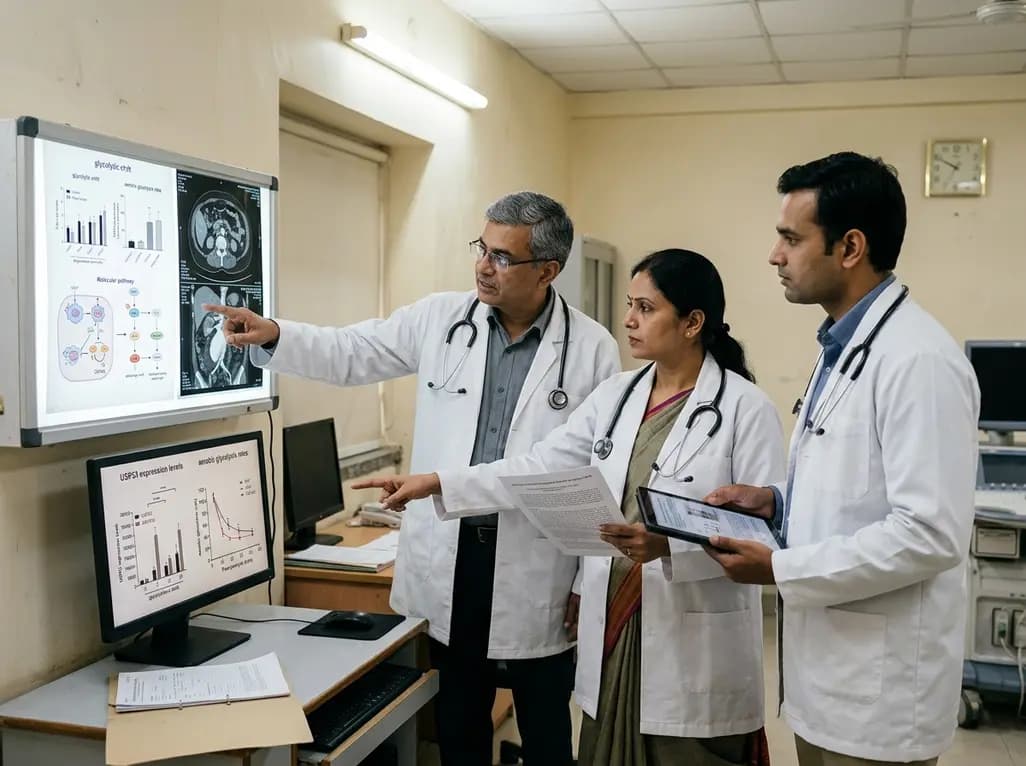
Abdominal aortic aneurysm rupture remains a catastrophic vascular emergency. Groundbreaking research reveals that USP53 accelerates aneurysm progression by reprogramming smooth muscle cell metabolism toward aerobic glycolysis, highlighting a promising target beyond conventional diameter-based surveillance.
Today
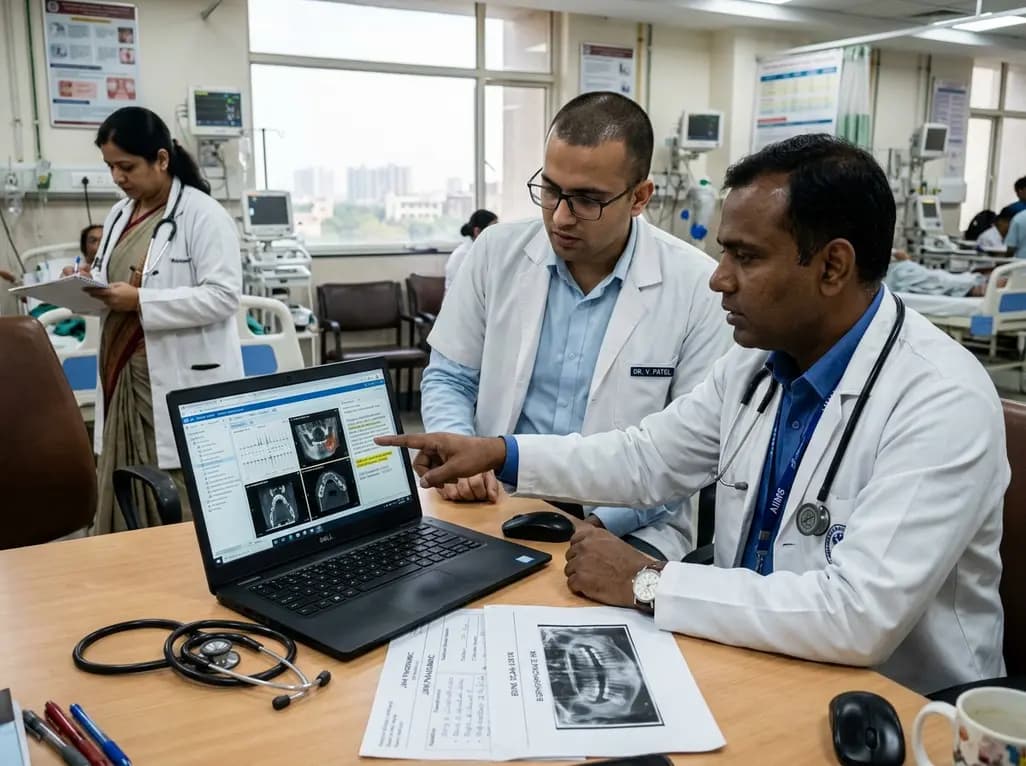
A breakthrough study leverages natural language processing to accurately identify incident medication-related osteonecrosis of the jaw and track antiresorptive drug holidays from clinical narratives in electronic health records, advancing osteoporosis pharmacovigilance and dental safety.
Today

Recent research defines ferro-aging as a conserved iron-lipid axis driving organ decline across primates. Age-related iron dyshomeostasis stimulates ACSL4-mediated lipid peroxidation, promoting cellular senescence. Notably, vitamin C directly inhibits ACSL4, suppressing phospholipid oxidation and multi-organ decay.
Today
