.webp&w=384&q=75)

Loading, please wait...
Loading, please wait...

Managing a complex chronic wound like a sacral pressure injury requires a clear understanding of systemic pathophysiology alongside local tissue mechanics. When an individual presents with advanced inflammatory bowel disease, clinical management becomes significantly more intricate. Fistulizing Crohn's disease creates a state of persistent systemic inflammation, catabolic stress, and profound micronutrient depletion. Consequently, tissue perfusion and regenerative capacity diminish dramatically. Furthermore, concurrent structural complications such as enterocutaneous or vesicocutaneous fistulas introduce excessive moisture and bacterial colonization to adjacent cutaneous structures. Treating a severe stage 3 skin breakdown in this setting demands more than standard topical dressings; clinicians must formulate an aggressive, multidisciplinary strategy that unifies medical, surgical, nutritional, and social interventions.
The pathophysiological intersection of severe inflammatory bowel disease and tissue breakdown is multifactorial. Persistent transmural bowel inflammation triggers an unremitting release of pro-inflammatory cytokines, including tumor necrosis factor-alpha and interleukin-6. These circulating mediators accelerate skeletal muscle wasting and degrade the extracellular matrix. As a result, subcutaneous tissue loses its protective cushioning over bony prominences. When prolonged mechanical pressure and shear forces compress the sacrum, microvascular occlusion occurs rapidly. Because systemic inflammation impairs normal capillary endothelial function, localized ischemia develops much faster than in healthy individuals. Moreover, chronic disease causes cellular senescence in fibroblasts and suppresses keratinocyte migration. Consequently, normal proliferative and remodeling phases of wound healing stall completely. When a patient also presents with an active fistula draining effluent near pelvic tissues, adjacent moisture-associated skin damage drastically lowers the threshold for mechanical ulceration.
Optimizing nutrition represents a foundational pillar in chronic wound restoration, yet fistulizing Crohn's disease presents formidable barriers to adequate nourishment. Severe transmural enteritis, prior bowel resections, and fistulous tracts frequently result in short bowel physiology, severe malabsorption, and rapid enteric protein loss. Therefore, patients suffer from persistent hypoalbuminemia, severe negative nitrogen balance, and depleted trace elements. Zinc, copper, vitamin C, and vitamin A are indispensable cofactors for collagen synthesis, fibroblast proliferation, and immune function. In addition, profound caloric deficits force the body into a catabolic state, breaking down endogenous structural proteins rather than building granulation tissue. To counteract these deficiencies, clinicians must initiate structured oral nutritional supplementation or enteral support early in the admission. Multidisciplinary dietetic assessments ensure high-protein, calorie-dense formulations tailored to offset continuous fistula output while promoting cellular regeneration at the wound bed.
Successful management of a deep stage 3 sacral wound requires diligent, protocolized bedside nursing and wound care expertise. Frequent repositioning protocols, conducted every two hours, remain essential to relieve relentless mechanical tissue loading. Clinicians should utilize dynamic air-loss or foam pressure-relieving support surfaces to redistribute pelvic interface pressures effectively. Furthermore, meticulous local wound care must maintain a moist physiological environment while aggressively protecting peri-wound skin from maceration. Debridement of non-viable slough prepares the tissue bed for healthy vascularized granulation. In cases where adjacent enterocutaneous or vesicocutaneous fistulas produce copious fluid, clinicians must establish strict diversion or barrier protection. Specialized ostomy appliances, protective hydrocolloid margins, and targeted negative pressure wound therapy can isolate caustic drainage. Regular reassessments ensure prompt identification of localized cellulitis, osteomyelitis, or abscess formation without subjecting fragile tissue to unnecessary surgical trauma.
A history of prior extensive bowel resection and stoma creation introduces significant clinical nuances to wound management. Although a diverting colostomy or ileostomy removes fecal contamination from the perineum, it can complicate abdominal wall biomechanics, core stability, and overall physical mobility. Limited mobility increases total daily bed-bound hours, thereby exponentially elevating the recurrence risk of pressure-induced necrosis. Additionally, underlying immunosuppressive therapies, such as corticosteroids or biologic agents required to control active Crohn's disease, present a double-edged sword. While these therapies suppress systemic inflammatory destruction, they also impair initial inflammatory phases critical for wound granulation and wound tensile strength. Thus, gastroenterologists, colorectal surgeons, and wound care specialists must collaboratively weigh the benefits of ongoing biologic therapy against the clinical necessity of active tissue healing and infection prevention.
Clinical success achieved during an acute inpatient hospital stay can rapidly unravel if post-discharge social vulnerabilities remain unaddressed. Housing instability, lack of primary caregiver support, and financial poverty directly impair patient adherence to complex dressing regimens. Without stable shelter, reliable sanitation, and clean resting surfaces, preventing tissue contamination and recurrent pressure necrosis becomes exceedingly difficult. Furthermore, food insecurity prevents patients from sustaining the high-protein dietary intake needed for long-term tissue repair. Healthcare teams must identify these non-biological risk factors during the initial inpatient admission. Integrating clinical social workers, case managers, and community wound-care nurses into discharge planning ensures patients transition to appropriate supportive housing, medical respite centers, or home health programs equipped with essential offloading equipment.
Preventing the recurrence of severe pelvic ulcerations demands rigorous, continuous outpatient surveillance. Regular objective measurements of wound margins, depth, and epithelialization provide vital benchmarks of durable recovery. Clinicians should educate patients, family members, and community caregivers on early visual signs of blanching erythema and dermal breakdown. Additionally, ongoing surveillance of baseline inflammatory bowel disease ensures prompt treatment of asymptomatic luminal flares or fistulous reactivation. Emerging technologies, including continuous pressure-sensing mattress overlays and community-based telehealth consultations, hold significant promise in enhancing remote wound monitoring for socially vulnerable populations. Ultimately, closed-loop multidisciplinary collaboration bridging hospital medicine, specialized gastroenterology, social support systems, and community health resources remains the most effective pathway to prevent recurrent tissue destruction and preserve long-term functional independence.
Fistulizing Crohn's disease drives systemic inflammation, severe catabolism, and malabsorption, which deplete protein stores and structural subcutaneous fat. This persistent tissue vulnerability compromises microvascular perfusion over bony prominences. Additionally, chronic fluid drainage from adjacent fistulas increases skin maceration, drastically lowering tissue tolerance to pressure and shear forces.
Clinicians recommend high-calorie, protein-dense nutritional supplementation tailored to offset active fistulous output and metabolic deficits. Essential micronutrients such as zinc, vitamin C, and copper must be replenished to facilitate collagen synthesis and cellular repair. Close collaboration with registered clinical dietitians ensures tailored oral or enteral regimens that optimize tissue regeneration.
Social determinants like housing instability, financial limitations, and lack of transportation severely obstruct access to clean dressings, offloading equipment, and nutritious food. Consequently, discharged patients face substantial hurdles maintaining complex repositioning and hygiene schedules, significantly increasing the probability of rapid wound recurrence and secondary bacterial infections.
Disclaimer: This content is for informational and educational purposes only and does not constitute medical advice, diagnosis, or treatment. Healthcare professionals should exercise their independent clinical judgment when evaluating and treating patients. Management strategies and clinical decisions must be individualized based on the patient's specific medical condition, clinical guidelines, and available resources. Refer to the latest local and national guidelines for clinical practice.
References

Read summarized clinical updates, watch expert medical content, and earn CME certifications right from your smartphone.
Open your smartphone camera to scan and install.





This article examines the complex clinical management of recurrent stage 3 sacral pressure injury in patients with fistulizing Crohn's disease, highlighting the critical interplay between systemic inflammation, nutritional depletion, wound biomechanics, and post-discharge social determinants of health.
last month

With post-monsoon dengue surges threatening South Asian health systems, physicians must refine triage and management. This guide covers vital warning signs, plasma leakage detection, crystalloid titration, and vector containment strategies to prevent mortality during seasonal arboviral epidemics.
Today

Findings from Project Viva indicate that sustained postpartum weight retention, rather than excessive gestational weight gain alone, directly worsens women's mid-life cardiovascular health, degrading blood pressure and glycemic parameters decades after delivery.
Today
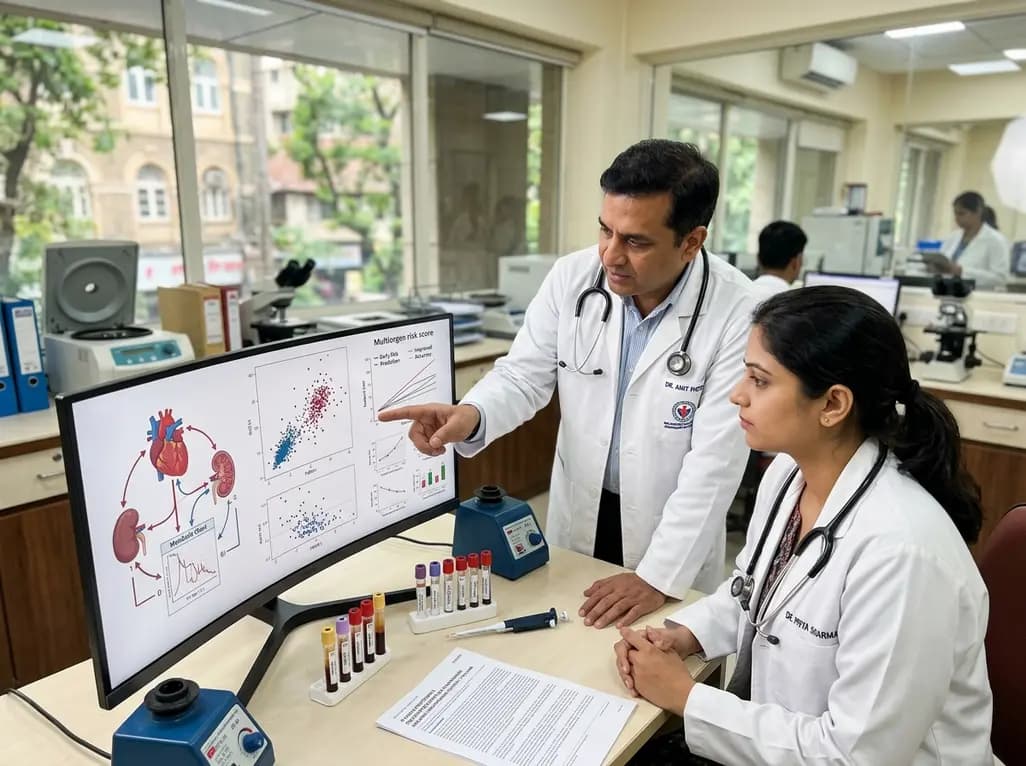
A large UK Biobank study reveals that plasma proteomic signatures capture preclinical organ damage and improve multiorgan risk prediction across early CKM syndrome stages 0 to 2 beyond traditional PREVENT clinical models.
Today

A retrospective CBCT study reveals that superior TMJ space asymmetry correlates moderately with occipital condyle-atlas-axis asymmetry in unilateral TMJ osteoarthritis, highlighting an imaging correlate between jaw biomechanics and upper cervical alignment rather than a standalone diagnostic marker.
Today

A Bayesian multilevel meta-analysis reveals that aerobic training combined with moderate carbohydrate restriction modestly lowers HbA1c in type 2 diabetes. However, sparse data and very low certainty leave incremental benefits over exercise or diet alone unproven, highlighting the need for individualized care.
Today
