.webp&w=384&q=75)

Loading, please wait...
Loading, please wait...

Managing RVO-related macular edema effectively is critical because it remains the leading cause of vision loss in patients with retinal vein occlusion. Recent scientific advancements in retinal imaging and pharmacotherapy have revolutionized how clinicians approach this condition. Specifically, the recognition of vascular endothelial growth factor (VEGF) as a primary pathogenic driver has moved anti-VEGF agents to the forefront of clinical practice. Today, these agents serve as the gold standard for treatment in India and globally.
Current management protocols prioritize intravitreal anti-VEGF therapy due to robust evidence from randomized controlled trials. These medications successfully reduce fluid accumulation and improve visual acuity in most patients. Furthermore, the introduction of Indian biosimilars like Razumab and Bevatas has significantly enhanced treatment accessibility. These affordable alternatives maintain similar efficacy and safety profiles compared to innovator molecules. Consequently, they help bridge the gap in resource-limited settings where the cost of repeated injections often leads to patient drop-outs.
Optical coherence tomography (OCT) continues to be the cornerstone of diagnosis and long-term monitoring. It provides precise measurements of central retinal thickness, allowing physicians to tailor treatment intervals. Additionally, clinicians utilize fluorescein angiography to assess retinal perfusion and identify ischemic zones. While anti-VEGF is the primary choice, intravitreal corticosteroids play a vital selective role. Specifically, doctors reserve steroids for patients with suboptimal responses to anti-VEGF agents or those with contraindications, such as recent cardiovascular events.
The future of RVO-related macular edema management aims to improve treatment durability and reduce the injection burden. New bispecific antibodies like Faricimab target both VEGF and Ang-2, potentially offering longer intervals between doses. Moreover, researchers are investigating long-acting delivery systems and gene therapies to provide sustained drug release. These innovations promise a paradigm shift from reactive treatment to more durable, proactive management strategies.
Intravitreal anti-VEGF agents are the primary first-line treatment. They effectively reduce macular thickness and improve vision with a favorable safety profile.
Biosimilars provide cost-effective alternatives to expensive innovator drugs, making long-term treatment more sustainable and accessible for many Indian patients.
The role of laser photocoagulation is now limited. It is generally reserved for neovascular complications rather than serving as a primary treatment for macular edema.
Disclaimer: This content is for informational and educational purposes only. It does not constitute medical advice or a professional relationship. Always consult a qualified healthcare provider for diagnosis and treatment. Refer to the latest local and national guidelines for clinical practice.
References
1. Temkar S et al. Retinal vein occlusion-related macular edema: An updated review of current evidence and future directions. Indian J Ophthalmol. 2026 May 01. doi: 10.4103/IJO.IJO_3361_25. PMID: 42054088.
2. Chakraborty D, Sheth JU. Efficacy and Safety of an Indian Bevacizumab BIOSimilar (BEVATAS) for Retinal Vein Occlusion (BIOS-RVO Study). Clin Ophthalmol. 2024;18:2865-2871.
3. Popovic MM, Ip MS. Novel advances and emerging therapies for RVO. Retina Specialist. 2024 Dec 23.
"
Read summarized clinical updates, watch expert medical content, and earn CME certifications right from your smartphone.
Open your smartphone camera to scan and install.





An updated review of current evidence and future directions in managing macular edema related to retinal vein occlusion (RVO), focusing on anti-VEGF and OCT...
5 months ago
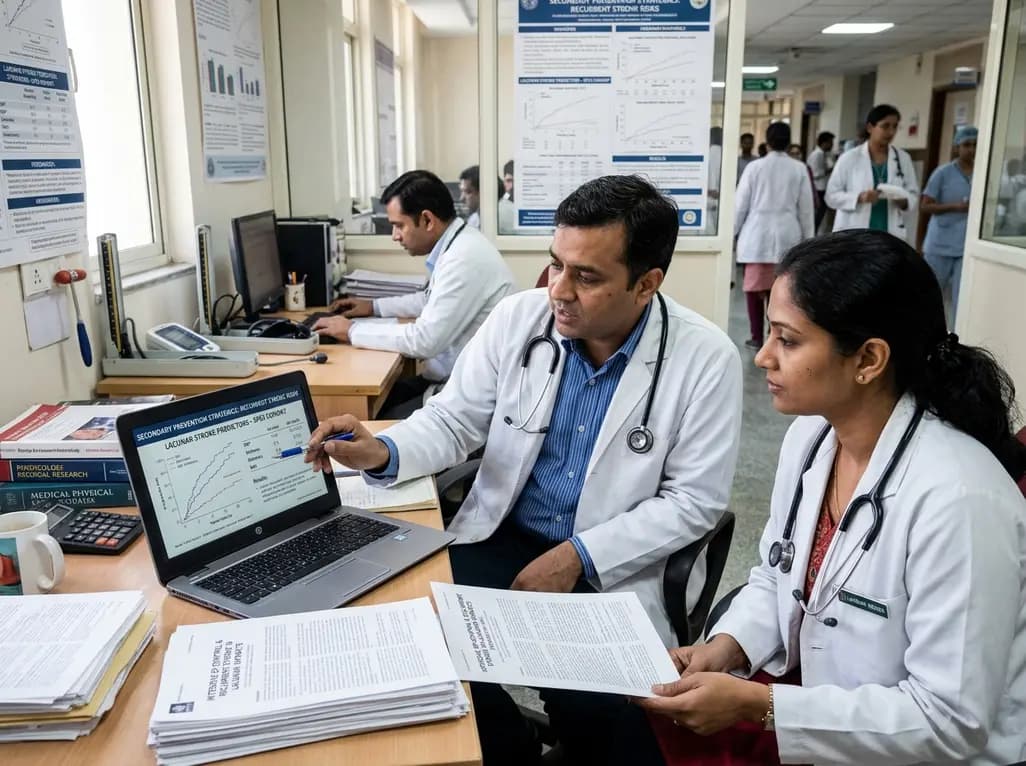
Explore vital recurrent stroke predictors in lacunar stroke patients managed with intensive blood pressure lowering. This analysis examines trial findings from SPS3 to uncover residual vascular risks, metabolic factors, and targeted secondary prevention strategies for high-risk neurological patients.
Today

Odisha has established India's first state-level clinical protocol specifically tailored for pregnant women with sickle cell disease. Developed with NHM and UNICEF, the framework provides structured antenatal screening, crisis mitigation, standardized referral pathways, and specialized interdisciplinary care.
Today

The Directorate General of Health Services directs Indian states to halt the hazardous reuse and reprocessing of single-use medical devices. Discover regulatory implications under the Drugs and Cosmetics Act, critical infection risks, legal liabilities, and operational changes required across clinical specialties.
Today

Mitochondria-targeted nanoparticles self-assembled from EGCG and L-glutamic acid effectively restore mitochondrial homeostasis, suppress synovial inflammation, and attenuate chondrocyte senescence in osteoarthritis, offering a promising disease-modifying nanotherapy.
Today

India is advancing preventive healthcare by integrating genomics, artificial intelligence, and quantum technologies. With the SANGAM programme sequencing one million Indian genomes, clinicians can unlock personalized therapies, detect cardiometabolic risks early, and curb the burden of diabetes and heart disease.
Today
