

Loading, please wait...
Loading, please wait...

Mild traumatic brain injury affects millions of patients worldwide each year. While most individuals recover quickly, up to thirty percent experience debilitating complications that endure beyond three months. Consequently, clinicians constantly seek effective interventions to relieve physical, emotional, and cognitive distress. Repetitive transcranial magnetic stimulation has emerged as an attractive, noninvasive therapeutic avenue for persistent neurotrauma symptoms. Researchers recently conducted a rigorous trial evaluating rTMS post-concussion symptoms to establish definitive therapeutic efficacy. This randomized study investigated whether targeted left dorsolateral prefrontal cortex stimulation improves patient-reported recovery.
Following head trauma, patients frequently report persistent headaches, mental fatigue, vestibular issues, and affective disorders. These clinical manifestations arise from complex disruptions in structural connectivity and cerebral blood flow. Furthermore, neuroinflammatory cascades and impaired neurotransmission prolong distress. Clinicians traditionally managed these complaints with supportive rest, targeted medications, and specialized vestibular rehabilitation. However, many individuals continue to experience functional disability despite multimodal medical therapies.
Because the left dorsolateral prefrontal cortex regulates executive function and emotional processing, it serves as an ideal stimulation target. Neuromodulation theoretically restores disrupted corticothalamic networks and improves neuroplasticity. Previous uncontrolled pilot studies indicated that repetitive magnetic pulses could reduce headache severity and alleviate depressive symptoms. Therefore, clinical investigators designed a comprehensive, double-blind study to distinguish genuine neurobiological changes from substantial placebo responses.
Investigators screened one hundred and forty adult patients suffering from symptoms lasting three months to five years after trauma. Ultimately, ninety-one eligible participants enrolled in the randomized trial. The average participant age was 41.3 years, and women constituted sixty-one percent of the cohort. Researchers randomized participants equally to receive twenty sessions of either active or sham stimulation over four weeks.
Specifically, the treatment protocol delivered ten-Hertz high-frequency stimulation over the left dorsolateral prefrontal cortex. Technicians applied ten trains of sixty pulses with forty-five-second inter-train intervals at 100 to 120 percent of resting motor threshold. Meanwhile, investigators utilized an identical sham coil configuration to ensure complete participant and assessor blinding. Consequently, this design minimized operational bias during treatment sessions and structured follow-up assessments.
The trial designated the Rivermead Postconcussion Symptoms Questionnaire total score change as its primary endpoint. Evaluators measured outcomes immediately post-treatment, at one month, and after three months of completion. Furthermore, the statistical analysis employed linear mixed models using a difference-in-differences approach. This method adjusted carefully for patient age, sex differences, and baseline life stress scores.
Surprisingly, the primary endpoint revealed no statistically significant differences in total symptom trajectories between active and sham cohorts. Both cohorts achieved marked improvements from baseline across all designated follow-up intervals. Specifically, symptom alleviation persisted through the three-month evaluation window in both study arms. Thus, while high-frequency stimulation proved entirely safe, active neuromodulation failed to outperform the robust sham intervention.
Investigators also scrutinized multiple secondary metrics, including post-traumatic headache impact, depression, anxiety, cognition, and overall quality of life. Similar to the primary outcome, these domains exhibited a statistically significant effect of time rather than group allocation. Consequently, patients in both cohorts experienced gradual reductions in anxiety, depressive symptoms, and functional headache interference.
Cognitive screening and quality-of-life scores improved steadily over the ninety-day observation timeline. Nevertheless, the lack of divergence between active and sham interventions indicates powerful contextual and placebo drivers. Regular clinical interactions, therapeutic expectations, and structured healthcare engagement likely contributed to these positive patient outcomes. Therefore, physicians must carefully interpret symptomatic gains when using open-label neuromodulatory techniques.
Interestingly, statistical modeling demonstrated that baseline life stress strongly influenced recovery trajectories. Investigators measured baseline stress using the validated Life Stress Questionnaire. Notably, individuals with high baseline stress scores exhibited significantly elevated symptom burden across almost all clinical metrics, regardless of group allocation.
In contrast, lower baseline stress significantly predicted better treatment response for post-traumatic stress symptoms in the active rTMS group immediately following intervention. This effect did not occur in the sham cohort. Hence, underlying psychophysiological resilience and psychosocial stressors directly alter neuromodulatory responsiveness. Clinicians should therefore screen for chronic psychological stress before prescribing resource-intensive neuromodulation protocols.
This landmark trial provides vital insights into neurotrauma management and clinical trial design. Because standard high-frequency prefrontal stimulation did not exceed sham benefits, alternative therapeutic strategies warrant investigation. For example, clinicians might explore individualized functional neuroimaging guidance, accelerated theta-burst protocols, or multifocal network targeting.
Moreover, combining brain stimulation with structured psychotherapy or active vestibular rehabilitation could optimize clinical outcomes. Future clinical studies should also integrate objective neurovascular biomarkers, such as functional near-infrared spectroscopy, to track physiological recovery accurately. In conclusion, multidisciplinary care remains the cornerstone of compassionate recovery for patients enduring debilitating post-concussion syndromes.
The trial found no statistically significant difference between active high-frequency rTMS and sham therapy in overall symptom scores. However, participants in both arms experienced substantial, sustained symptom reductions lasting up to three months. This outcome underscores the profound influence of therapeutic engagement and placebo responses during concussion care.
Higher baseline life stress was significantly associated with worse symptom burdens throughout the study. Interestingly, lower baseline stress significantly enhanced post-traumatic stress symptom improvement in the active rTMS cohort immediately post-treatment. Consequently, screening for psychological distress provides valuable prognostic insight before beginning neuromodulation therapy.
Researchers recommend evaluating personalized stimulation parameters rather than uniform left prefrontal targeting. Potential strategies include theta-burst stimulation, bilateral montage designs, functional connectivity guidance, and multimodal paradigms that integrate neuromodulation with cognitive rehabilitation. These personalized approaches may yield superior clinical outcomes for refractory post-concussion cases.
Disclaimer: This content is for informational and educational purposes only and should not be considered as medical advice. Healthcare professionals should make treatment decisions based on their clinical judgment and individualized patient assessments. Refer to the latest local and national guidelines for clinical practice.
References
Campbell C et al. Treatment of Persisting Symptoms after Concussion with Repetitive Transcranial Magnetic Stimulation: A Double-Blinded, Randomized, Controlled Trial. J Neurotrauma. 2026 Nov. doi: 10.1177/08977151261440773. PMID: 41968688.
du Plessis S, Oni IK, Lapointe AP, Campbell C, Dunn JF, Debert CT. Treatment of Persistent Postconcussion Syndrome With Repetitive Transcranial Magnetic Stimulation Using Functional Near-Infrared Spectroscopy as a Biomarker of Response: Protocol for a Randomized Controlled Clinical Trial. JMIR Res Protoc. 2022 Mar 22;11(3):e31308. doi: 10.2196/31308.
Leddy JJ, Haider MN, Ellis MJ, et al. Early targeted heart rate aerobic exercise versus placebo stretching for sport-related concussion in adolescents: a randomised controlled trial. Lancet Child Adolesc Health. 2019;3(3):169-177. doi: 10.1016/S2352-4642(18)30392-4.

Read summarized clinical updates, watch expert medical content, and earn CME certifications right from your smartphone.
Open your smartphone camera to scan and install.





A double-blind randomized controlled trial evaluated high-frequency rTMS for persisting post-concussion symptoms. Both active and sham protocols drove significant symptom reduction, highlighting strong placebo effects and the influence of baseline stress on recovery trajectories.
Today

The DOMINO study protocol presents a multidisciplinary implementation mapping approach to overcome provider, patient, and payer barriers to antiobesity medications, offering vital insights for Indian clinicians managing the growing diabesity burden.
Today
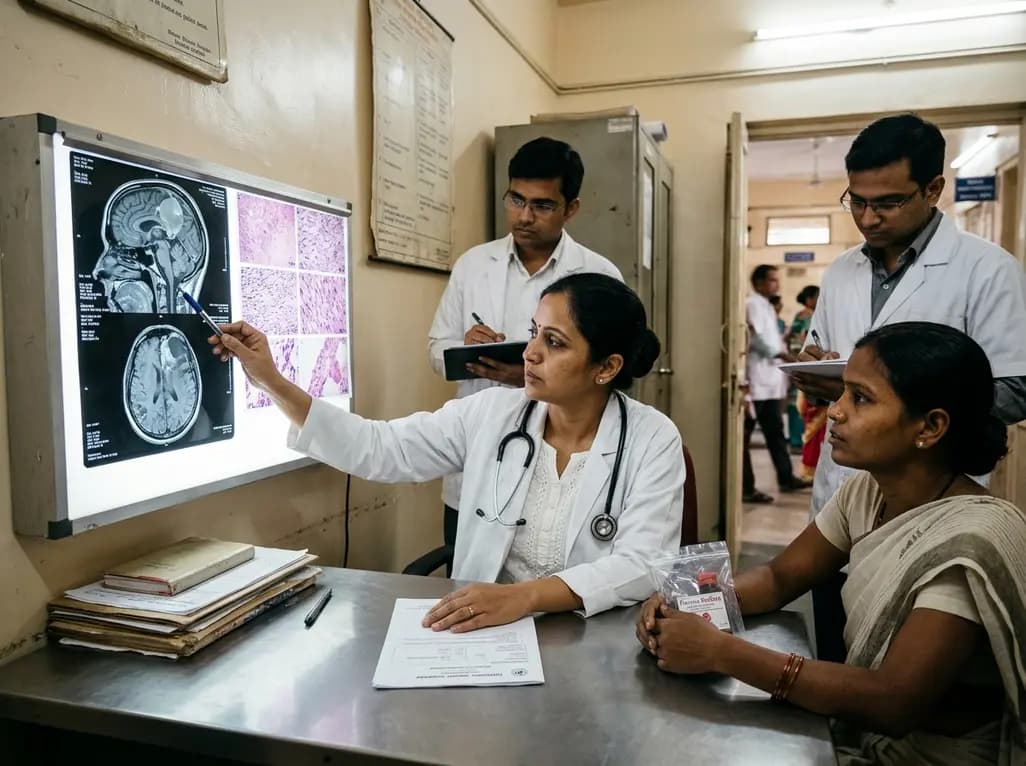
An intracranial EWSR1::CREM fusion sarcoma in a 31-year-old female manifested as a paraneoplastic inflammatory syndrome with anemia and secondary infertility. The dural mass mimicked meningioma, but gross-total resection resolved her systemic inflammation and restored natural fertility within one month.
Today

A real-world cohort study of 6,537 patients from the FOUNTAIN platform demonstrates that initiating finerenone significantly reduces albuminuria by 40.7% with minimal eGFR decline and manageable hyperkalemia risk, confirming its practical effectiveness and safety in diabetic kidney disease.
Yesterday
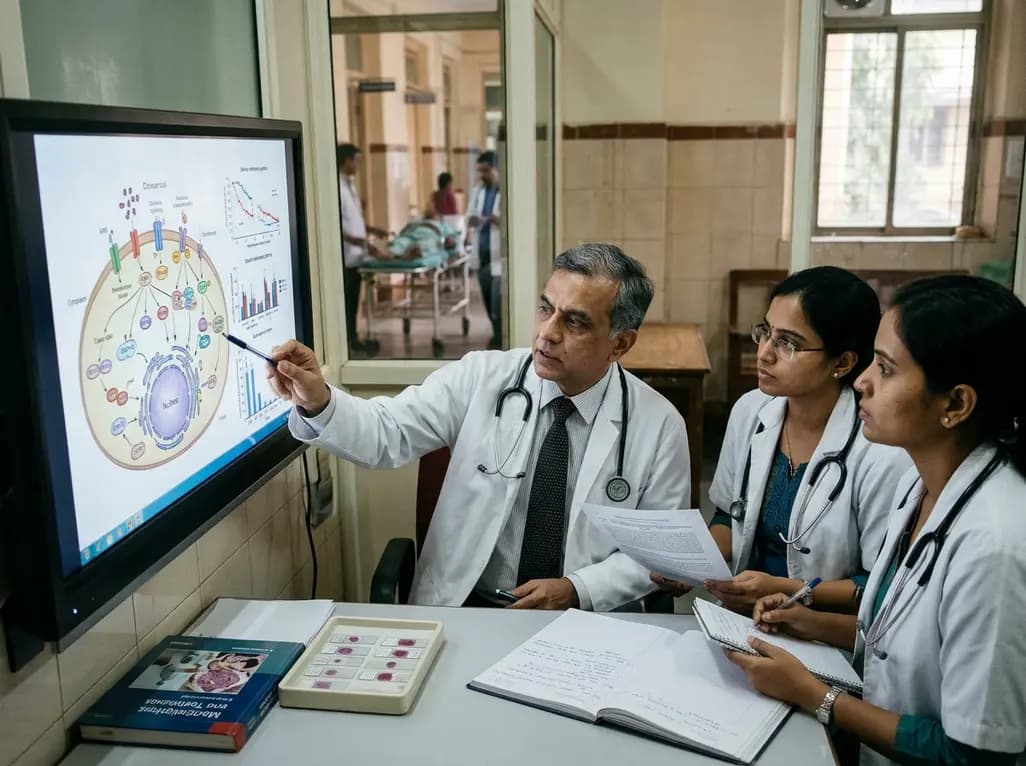
A comprehensive analysis of MAP therapy resistance in osteosarcoma, examining canonical and non-canonical mechanisms across damage avoidance, enhanced DNA repair, and replication stress tolerance to identify novel vulnerabilities.
Today
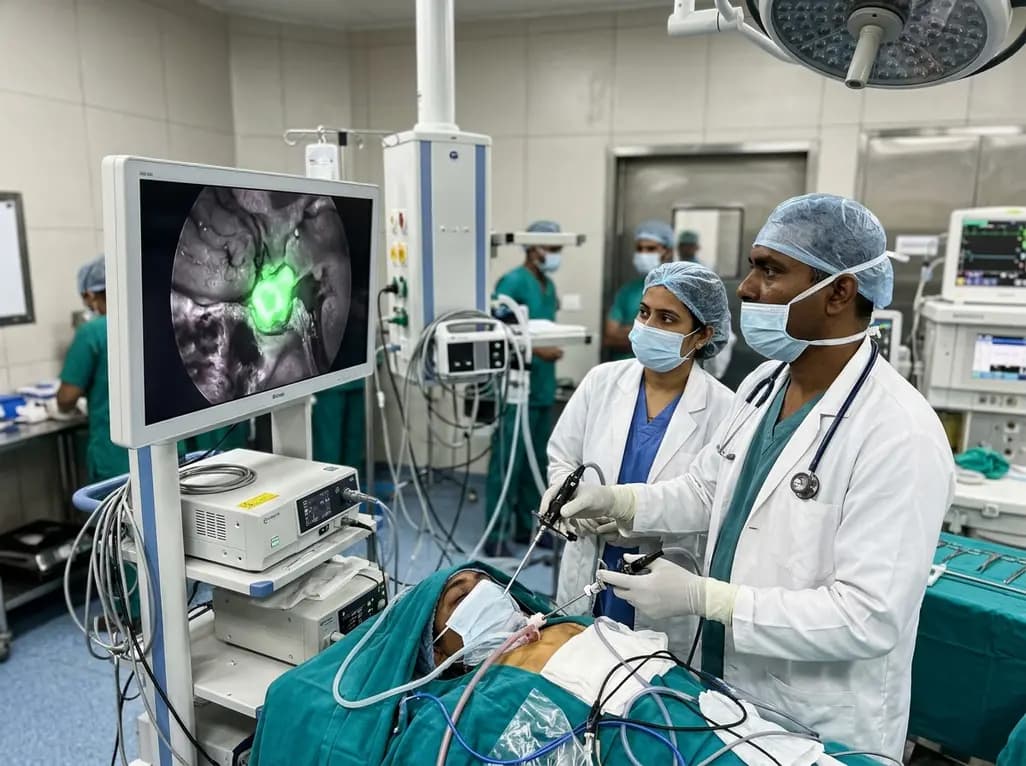
Near-infrared autofluorescence provides real-time label-free optical guidance during endoscopic transsphenoidal pituitary surgery. By highlighting stark signal contrasts between normal pituitary gland and adenomas, this technique aids gross-total tumor resection while safeguarding critical endocrine function.
Today
