

Loading, please wait...
Loading, please wait...

Traumatic spinal injuries severely disrupt descending motor pathways and leave patients with profound functional deficits. Spontaneous recovery after incomplete spinal cord injury remains distinctly limited because severed corticospinal pathways exhibit weak regenerative capacity. Recently, repetitive transcranial magnetic stimulation has emerged as an innovative neuromodulatory tool that drives neuroplasticity. By stimulating the bilateral primary motor cortex, clinicians can reactivate dormant descending networks and foster meaningful functional recovery.
Historically, neuroscientists viewed the adult central nervous system as largely incapable of meaningful axonal remodeling. However, contemporary investigations demonstrate that residual descending fibers preserve substantial regenerative potential. Repetitive transcranial magnetic stimulation delivers targeted magnetic pulses across the calvarium to depolarize cortical pyramidal neurons non-invasively. Consequently, these rhythmic trains evoke long-term potentiation-like neuroplasticity throughout residual corticospinal networks. Furthermore, bilateral cortical stimulation balances interhemispheric interactions and recruits undamaged collateral fibers across spinal lesion zones. In addition, cortical stimulation suppresses excessive local gamma-aminobutyric acid transmission and rebalances spinal cord excitability. Therefore, active cortical modulation supports the synthesis of functional synaptic relays within ventral spinal laminae. Clinicians observe that targeted motor cortex excitation preserves threatened spinal motoneurons and encourages downstream dendritic arborization. As a result, repetitive transcranial magnetic stimulation promotes corticospinal tract remodeling and restores voluntary motor control in paretic limbs. Moreover, continuous activation of spared projections enhances motor evoked potential transmission, allowing peripheral motor units to fire synchronously during voluntary movement.
To uncover the molecular mechanisms underlying stimulation-induced repair, investigators performed comprehensive transcriptomic profiling on injured spinal cord tissue. Specifically, integrated bioinformatic analyses revealed fifty-one shared differentially expressed genes linked directly to neuroplasticity, neurotrophic regulation, and structural remodeling. Researchers identified the marked upregulation of glial cell line-derived neurotrophic factor signaling networks. This neurotrophic pathway governs downstream intracellular cascades, notably modulating the PTEN/PI3K/AKT/mTOR signaling axis. Under baseline trauma conditions, elevated PTEN activity strongly represses intrinsic axonal regeneration. However, non-invasive cortical stimulation effectively counteracts this repression by promoting PI3K and AKT phosphorylation. Consequently, downstream mTOR activation accelerates ribosomal protein synthesis and cytoskeletal restructuring necessary for robust axonal elongation. Furthermore, molecular experiments confirmed that systemic anti-GDNF antibodies significantly blunt these intracellular regenerative responses. Therefore, these molecular findings establish GDNF-mediated mTOR signaling as a pivotal biological link connecting cortical stimulation to spinal tissue repair. In addition, spinal tissue sequencing demonstrated prominent enrichment in pathways regulating synaptic vesicle trafficking and structural neuroplasticity.
Preclinical studies employing a standardized thoracic T10 contusion model provide robust histological and functional evidence of neural repair. In these animal cohorts, researchers delivered bilateral motor cortex repetitive transcranial magnetic stimulation across consecutive weeks. Notably, stimulated animals achieved significantly higher locomotor rating scores and exhibited superior hindlimb coordination compared to sham-treated controls. Furthermore, serial electrophysiological assessments revealed marked increases in motor evoked potential amplitudes and faster central conduction velocities across the lesion epicenter. Histological tract-tracing demonstrated extensive collateral sprouting and elongation of biotinylated dextran amine-labeled corticospinal tract axons into perilesional gray matter. Importantly, these regrowing fibers established functional synaptophysin-positive contacts with spinal interneurons caudal to the injury site. In contrast, neutralizing neurotrophic factor activity substantially diminished these anatomical and electrophysiological gains. Therefore, preclinical data confirm that high-frequency bilateral stimulation drives authentic structural reinnervation rather than temporary behavioral compensation. Additionally, detailed kinematic gait analysis verified reduced foot dragging and improved weight-bearing capacity in stimulated cohorts.
Translating these laboratory discoveries into clinical neurorehabilitation represents an essential advancement for patients with spinal trauma. In an exploratory randomized controlled trial, clinicians evaluated individuals recovering from incomplete spinal cord injury. Participants received either active bilateral motor cortex stimulation or sham protocols alongside standardized physical therapy regimens. Notably, patients receiving true magnetic stimulation achieved superior American Spinal Injury Association motor scores and enhanced ambulation metrics. Furthermore, longitudinal electrophysiological testing demonstrated significantly increased motor evoked potential amplitudes in lower limb muscle groups. Importantly, the active intervention attenuated pathological spasticity without precipitating adverse events or unprovoked seizure activity. Simultaneously, biochemical analyses revealed significantly higher concentrations of circulating neuroplasticity biomarkers in actively treated patients compared to baseline. In contrast, sham controls demonstrated minimal functional or electrophysiological progress across the study period. Consequently, these clinical results indicate that bilateral non-invasive stimulation effectively engages spared human corticospinal tracts. Therefore, cortical neuromodulation offers an efficacious adjunctive therapy to amplify recovery during multidisciplinary rehabilitation.
In India, traumatic spinal injuries represent a major public health burden, predominantly affecting young adults following road traffic accidents and falls. Consequently, neurorehabilitation centers across India require innovative, accessible interventions to accelerate functional independence. Neurologists and physiatrists can incorporate bilateral repetitive transcranial magnetic stimulation into specialized inpatient and day-care rehabilitation protocols. However, clinical teams must institute rigorous pre-screening to exclude individuals with metallic implants, active intracranial pathology, or uncontrolled epilepsy. Furthermore, clinicians must apply standardized stimulation parameters, typically delivering ten to twenty Hertz bursts adjusted to resting motor thresholds. In addition, therapists should immediately couple magnetic cortical stimulation with task-specific gait retraining and occupational therapy. This structured pairing exploits transient post-stimulation windows of heightened synaptic plasticity to consolidate functional movement patterns. Moreover, healthcare institutions should invest in dedicated clinician training to ensure precise coil navigation and standardized functional documentation. Ultimately, adopting structured cortical stimulation protocols will reduce chronic disability and improve community reintegration for Indian patients.
Repetitive cortical stimulation triggers local neuronal depolarization, releasing neurotrophic mediators such as glial cell line-derived neurotrophic factor. Consequently, these signaling molecules activate the intracellular PTEN/PI3K/AKT/mTOR pathway within descending motor neurons. This signaling cascade suppresses axonal growth inhibitors and stimulates cellular protein synthesis. Furthermore, the molecular shift accelerates cytoskeletal assembly, collateral axon sprouting, and synaptogenesis across injured spinal pathways, thereby restoring voluntary muscular transmission and functional locomotion.
Bilateral stimulation targets both cerebral hemispheres simultaneously, addressing the extensive interhemispheric reorganization that occurs following spinal cord trauma. In contrast, unilateral protocols only excite a single cortical hemisphere, which may reinforce maladaptive interhemispheric inhibition. Furthermore, bilateral magnetic pulses activate crossing and uncrossed descending corticospinal fibers from both motor cortices. Consequently, this balanced approach maximizes bilateral synaptic recruitment, improves trunk stability, and accelerates reciprocal lower extremity coordination during gait retraining.
Yes, combining non-invasive cortical stimulation with physical therapy produces synergistic functional gains. Repetitive magnetic stimulation creates a temporary window of heightened neuroplasticity by lowering cortical motor thresholds. When therapists immediately follow stimulation sessions with active task-oriented motor training, this paired activity reinforces newly activated neural circuits. Therefore, integrating high-frequency cortical stimulation with conventional kinesiotherapy significantly accelerates voluntary motor recovery, reduces lower extremity spasticity, and improves walking independence compared to exercise alone.
Disclaimer: This content is for informational and educational purposes only... Refer to the latest local and national guidelines for clinical practice.
References

Read summarized clinical updates, watch expert medical content, and earn CME certifications right from your smartphone.
Open your smartphone camera to scan and install.





A breakthrough translational study reveals that bilateral primary motor cortex repetitive transcranial magnetic stimulation promotes corticospinal remodeling and functional motor recovery after incomplete spinal cord injury through neurotrophic signaling cascades.
Today

India has achieved a dramatic reduction in malaria incidence and mortality, successfully exiting the WHO High Burden to High Impact group. However, escalating insecticide resistance, urban expansion, and climate shifts pose renewed transmission risks that demand robust clinical vigilance and integrated vector management.
Today

A landmark SEER-Medicare study clarifies the breast cancer screening benefit in women aged 70 and 75. Life-years gained vary significantly based on comorbidity, frailty, and race, highlighting why physicians must personalize screening decisions rather than relying solely on arbitrary chronological age cutoffs.
Today
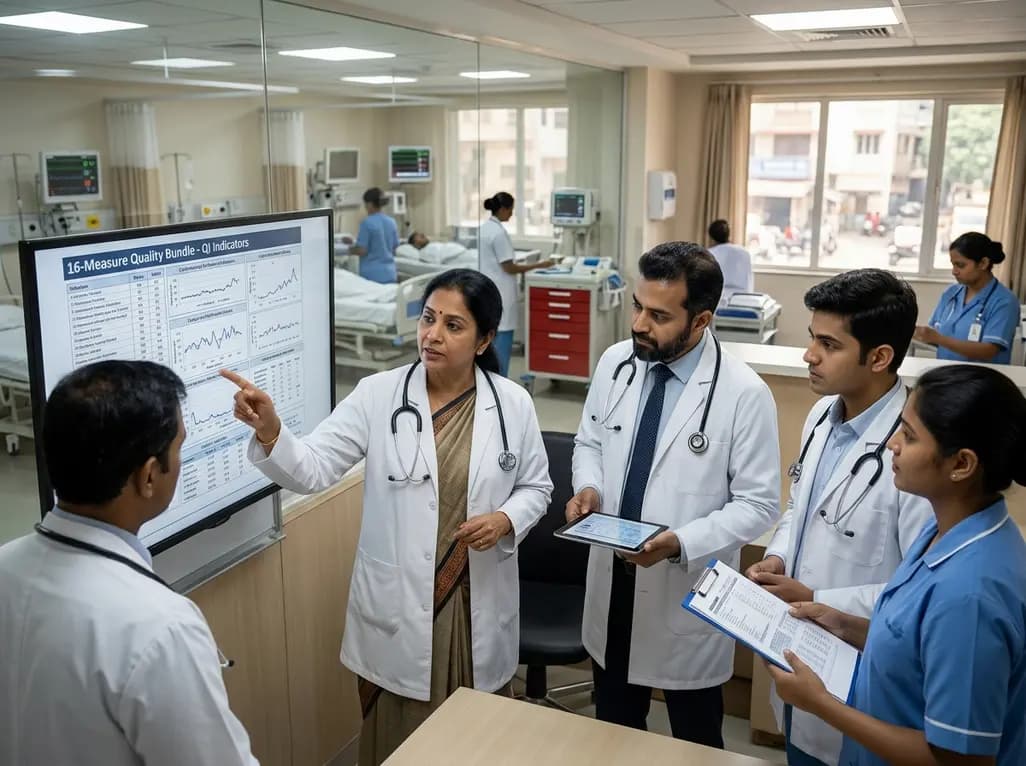
A new scoping review and expert consensus establish a concise 16-measure performance bundle for hospital cardiology services. Covering clinical processes, outcomes, patient-reported experiences, and structural factors, this framework advances value-based cardiovascular care under universal health coverage.
Today
A secondary analysis of the Living Healthier with Diabetes trial reveals that positive baseline technology attitudes significantly improve engagement with digital diabetes self-management apps, leading to enhanced self-care behaviors and better long-term glycemic control in adults with type 2 diabetes.
Today
