.webp&w=384&q=75)

Loading, please wait...
Loading, please wait...

Chronic sleep disruption damages psychological wellbeing and compromises central nervous system homeostasis. Emerging clinical research highlights low-frequency rTMS for chronic insomnia as an effective intervention targeting persistent neurological dysfunction. Historically, clinicians viewed non-restorative sleep merely as a subjective behavioral symptom. However, contemporary neuroimaging reveals profound metabolic consequences within the brain parenchyma. Specifically, chronic insomnia impairs the cerebral glymphatic clearance network, which facilitates waste removal via perivascular channels. During restorative slow-wave sleep, interstitial fluid exchange accelerates significantly. Consequently, the sleeping brain clears neurotoxic metabolites, including amyloid-beta and phosphorylated tau proteins. When nocturnal sleep cycles fragment, this physiological clearance pathway decelerates markedly. As a result, patients experience chronic neuroinflammation, microstructural damage, and neuronal stress. Furthermore, affected individuals frequently suffer from executive dysfunction, memory decline, and diminished attention. Understanding this pathophysiological link provides crucial context for medical practitioners. Therefore, modern management strategies must restore fluid dynamics alongside providing symptomatic relief.
A recent prospective clinical trial evaluated the efficacy of rTMS for chronic insomnia by comparing thirty-two patients against forty healthy controls. At baseline, investigators documented significant variations across clinical and cognitive scores between the two study cohorts. The insomnia cohort exhibited markedly elevated scores on the Pittsburgh Sleep Quality Index and the Insomnia Severity Index. In contrast, healthy individuals maintained completely normal baseline sleep profiles. Following baseline evaluations, twenty-two insomnia patients received ten sessions of low-frequency repetitive transcranial magnetic stimulation administered over two weeks. The clinical team targeted the right dorsolateral prefrontal cortex to mitigate cortical hyperarousal. Investigators systematically tracked therapeutic progress at week two and months one, two, and three. Notably, treated patients demonstrated rapid and enduring symptom relief. Pittsburgh Sleep Quality Index and Insomnia Severity Index scores dropped substantially starting at week two. Furthermore, these clinical gains persisted throughout the three-month follow-up evaluation. Therefore, noninvasive magnetic stimulation successfully provides sustained relief for patients struggling with chronic insomnia disorder.
To quantify glymphatic clearance objectively, the study employed diffusion tensor imaging analysis along the perivascular space, termed DTI-ALPS. This advanced magnetic resonance neuroimaging sequence evaluates water diffusivity parallel to medullary veins within projection and association fibers. Because perivascular channels accommodate convective bulk fluid movement, the resulting ALPS index provides a direct measure of glymphatic vitality. At baseline, patients with chronic insomnia exhibited significantly lower DTI-ALPS index values than healthy participants. Thus, neuroimaging objectively confirmed impaired interstitial fluid transport in individuals with persistent sleep fragmentation. Following the ten-session neuromodulation intervention, repeat magnetic resonance imaging revealed a significant increase in the DTI-ALPS index. Moreover, this clearance enhancement remained robustly elevated at the three-month post-treatment evaluation. Consequently, these imaging results verify that cortical neuromodulation can actively restore macroscopic fluid transport through deep brain tissues. In addition, changes in the ALPS index correlated directly with improvements on subjective sleep rating scales. Therefore, the DTI-ALPS metric offers an exceptional surrogate marker for measuring real-world neurobiological recovery.
Alongside sleep restoration, low-frequency repetitive transcranial magnetic stimulation yielded substantial improvements across diverse cognitive faculties. Chronic sleep fragmentation chronically disrupts frontoparietal networks, precipitating deficits in processing speed, executive control, and working memory. At baseline, insomnia patients scored significantly lower on the Montreal Cognitive Assessment than healthy controls. Furthermore, patients demonstrated impaired task performance on the Digit Symbol Substitution Test, Digit Span Test, Color Trail Test, and Stroop interference assessments. However, therapeutic neuromodulation stimulated impressive neurocognitive rehabilitation. Following the intervention, participants showed statistically significant improvements on the Montreal Cognitive Assessment. In addition, psychomotor processing and working memory scores on the Digit Symbol Substitution Test and Digit Span Test increased markedly. Patients also achieved significantly faster completion times on Color Trail Test Part B, reflecting enhanced mental flexibility. Importantly, these cognitive benefits remained preserved at the three-month evaluation mark. Thus, facilitating parenchymal clearance directly enhances functional neuronal performance. Clinicians can therefore utilize targeted neuromodulation to protect cognitive longevity in sleep-deprived individuals.
The neurobiological cascade linking transcranial magnetic stimulation to enhanced clearance involves complex vascular, glial, and electrical adaptations. Low-frequency repetitive stimulation at one Hertz inhibits cortical hyperarousal by restoring inhibitory gamma-aminobutyric acid neurotransmission. Chronic insomnia typically causes sustained sympathetic hyperactivity that restricts deep non-rapid eye movement sleep. By dampening prefrontal excitability, magnetic stimulation facilitates the emergence of synchronized delta oscillations. During deeper sleep stages, astroglial aquaporin-4 water channels re-localize to perivascular astrocytic end-feet. Consequently, convective cerebrospinal fluid inflow through Virchow-Robin spaces accelerates, washing out cellular toxins. Moreover, repetitive magnetic stimulation alters cerebral vascular hemodynamics and pulsatility. Because paravascular bulk flow depends strongly upon rhythmic arterial contractions, enhanced vasomotion propels interstitial fluid forward more effectively. In addition, the stimulation protocol modulates synaptic plasticity by attenuating pathological long-term potentiation within maladaptive circuits. Therefore, neurons regain an optimal biochemical environment that sustains cellular longevity. Ultimately, this intricate triad of restored sleep, amplified vascular pulsatility, and synaptic recalibration explains how neuromodulation achieves lasting neural repair.
These clinical findings provide valuable therapeutic insights for physicians caring for patients with refractory insomnia. Currently, conventional management heavily emphasizes pharmacological treatments such as benzodiazepine receptor agonists, orexin antagonists, and sedative antidepressants. However, pharmacotherapy frequently causes adverse side effects, including morning grogginess, tolerance, physical dependence, and cognitive blunting. While cognitive behavioral therapy for insomnia remains the premier behavioral intervention, limited specialist availability frequently impedes widespread implementation. In contrast, low-frequency repetitive transcranial magnetic stimulation provides an evidence-based, well-tolerated outpatient therapy. Delivering ten consecutive weekday sessions produces rapid symptom alleviation that persists for months without medication-induced side effects. Furthermore, the capacity to stimulate interstitial clearance offers crucial neuroprotective advantages for older patients vulnerable to neurodegeneration. Clinicians should evaluate patients with chronic sleep fragmentation for potential noninvasive neuromodulation when standard therapies fail. By integrating targeted cortical stimulation alongside sleep hygiene and behavioral guidance, healthcare teams can optimize both immediate rest and long-term cognitive health.
The glymphatic system is a glial-dependent perivascular waste clearance pathway in the brain. It clears toxic metabolic debris, including amyloid-beta, primarily during deep slow-wave sleep. Chronic insomnia disrupts restorative sleep architecture and impairs astrocytic channel alignment. Consequently, convective cerebrospinal fluid exchange declines, causing neurotoxic waste accumulation and cognitive dysfunction.
Low-frequency repetitive transcranial magnetic stimulation suppresses cortical hyperarousal and recalibrates prefrontal neural networks. By reducing cortical hyperexcitability, the therapy restores physiological slow-wave sleep patterns. This transition expands interstitial spaces and enhances paravascular convective flow. As a result, the brain efficiently clears accumulated metabolic waste while stabilizing restorative sleep cycles.
Diffusion tensor imaging analysis along the perivascular space, or DTI-ALPS, measures water diffusivity along medullary perivenous channels. It serves as an objective, noninvasive neuroimaging biomarker of cerebral glymphatic clearance function. Clinicians use the ALPS index to track interstitial fluid dynamics and confirm biological recovery following neuromodulatory interventions.
Disclaimer: This content is for informational and educational purposes only... Refer to the latest local and national guidelines for clinical practice.
References
Zhang C et al. Enhancement of glymphatic function and cognition in chronic insomnia using low-frequency rTMS. Sleep. 2025 Jun 13. doi: 10.1093/sleep/zsaf083. PMID: 40121525.
Taoka T, Masutani Y, Kawai H, et al. Evaluation of glymphatic system activity with the diffusion MR technique: diffusion tensor image analysis along the perivascular space (DTI-ALPS) in Alzheimer's disease cases. Japanese Journal of Radiology. 2017;35(4):172-178.
Nedergaard M, Goldman SA. Glymphatic failure as a final common pathway to dementia. Science. 2020;370(6512):50-56.

Read summarized clinical updates, watch expert medical content, and earn CME certifications right from your smartphone.
Open your smartphone camera to scan and install.





A prospective study shows that low-frequency rTMS targeting the right DLPFC enhances cerebral glymphatic clearance and improves cognitive performance in chronic insomnia patients, evidenced by DTI-ALPS neuroimaging and validated neuropsychological testing.
Today

Hantaviruses are emerging zoonotic pathogens causing hemorrhagic fever with renal syndrome and hantavirus pulmonary syndrome. Characterized by severe capillary leakage and thrombocytopenia, these infections require prompt diagnosis, vigilant hemodynamic monitoring, and specialized critical care support.
Today

The ClinGen Prenatal Gene Curation Expert Panel evaluated 63 disease relationships across 61 genes, establishing clinical validity for severe fetal phenotypes like hydrops and stillbirth to enhance prenatal genomic interpretation and clinical care.
Yesterday

Managing refractory hypoxemia after cardiothoracic surgery becomes perilous when prolonged air leak limits positive-pressure ventilation. This case-based review details how high-flow nasal cannula, paired with awake rehabilitation, enabled successful extubation and avoided invasive re-intubation.
Today

Idiopathic axillary web syndrome (IAWS) is a rare cause of shoulder pain and mobility restriction characterized by palpable axillary cording without prior surgery or trauma. Early diagnosis, nonsteroidal anti-inflammatory therapy, and physical rehabilitation lead to complete resolution of symptoms.
Today
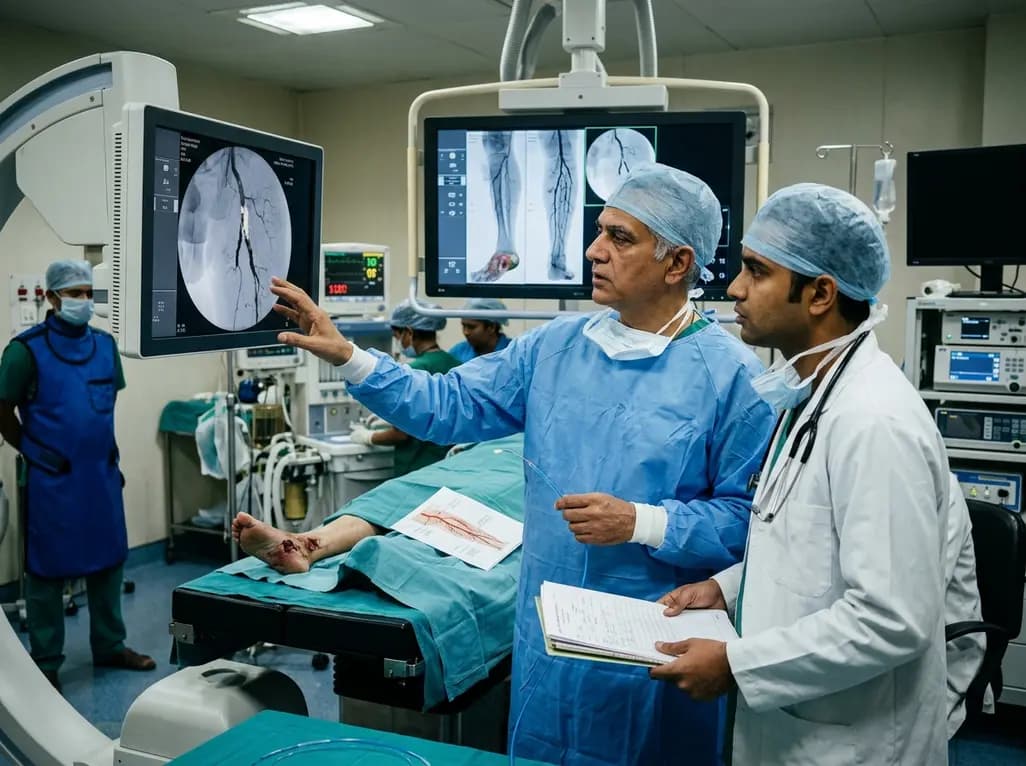
SWEDEPAD-1 trial insights show paclitaxel-coated devices do not improve long-term limb salvage in patients with chronic limb-threatening ischemia and tissue loss. While one-year reinterventions decreased, the devices were linked to a higher risk of major amputation at three months.
Today
