.webp&w=384&q=75)

Loading, please wait...
Loading, please wait...
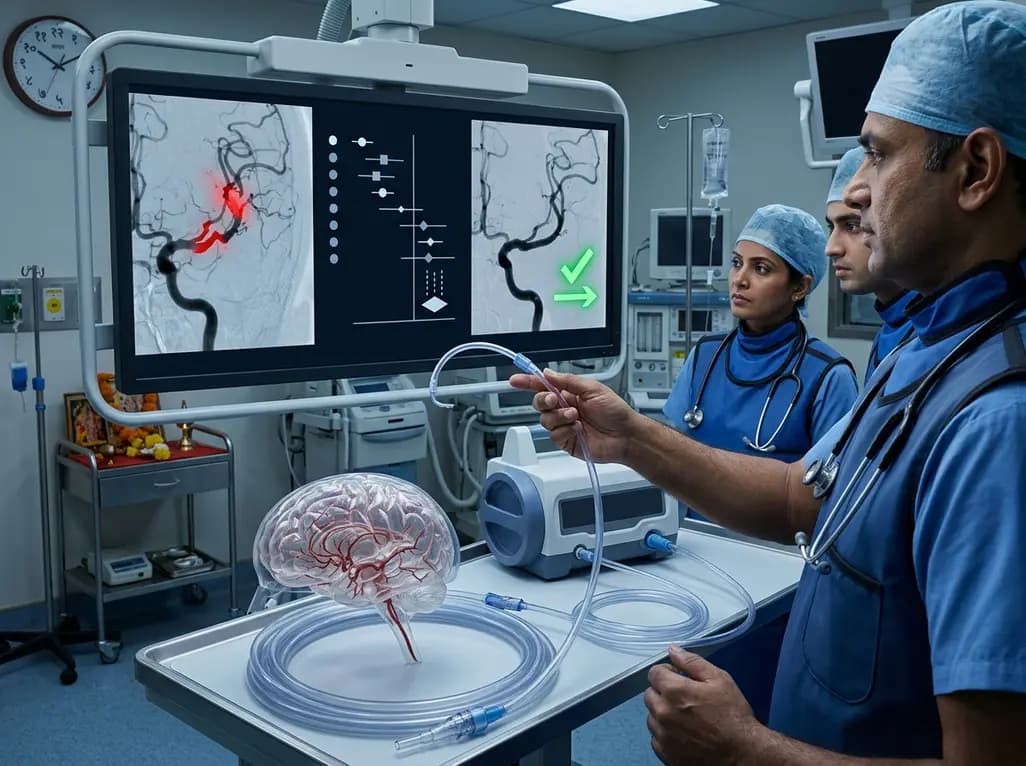
Acute ischemic stroke (AIS) caused by large vessel occlusion (LVO) remains a leading cause of disability and mortality globally. Consequently, the medical community has focused on optimizing endovascular thrombectomy (EVT) techniques to achieve rapid and complete recanalization. Recently, super large-bore aspiration catheters have emerged as essential tools for neurointerventionalists. These devices aim to maximize the removal of thrombi in a single attempt, a concept known as the first-pass effect. The Route 92 reperfusion system represents a significant advancement in this technological space. It integrates super large-bore catheters with specialized delivery mechanisms designed to enhance trackability and aspiration power. Furthermore, clinical evidence suggests that achieving complete reperfusion on the first pass significantly correlates with better functional outcomes. Therefore, researchers conducted a systematic review and meta-analysis to evaluate the safety and efficacy of this specific system in real-world clinical settings. This analysis provides critical insights for clinicians managing complex LVO cases in emergency and critical care environments.
The evolution of aspiration thrombectomy has been driven by the need for larger internal diameters and better catheter flexibility. Historically, smaller catheters struggled to provide sufficient suction force to ingest hard or large thrombi. However, super large-bore systems like those found in the Route 92 reperfusion system overcome these limitations by maximizing the cross-sectional area for aspiration. Specifically, these systems utilize a dedicated delivery catheter that supports the large-bore aspiration component through tortuous anatomy. This structural design reduces friction and allows the device to reach the occlusion site more efficiently. Moreover, the integration of specialized tubing and pump systems ensures consistent negative pressure during the procedure. As a result, interventionalists can apply higher suction forces directly to the face of the clot. Additionally, this approach minimizes the risk of clot fragmentation, which is a common cause of distal embolization in smaller-diameter systems. Consequently, the use of such advanced hardware is becoming a cornerstone of modern stroke protocols in high-volume centers.
The recent meta-analysis involving seven studies and 490 patients highlights the superior performance of the Route 92 reperfusion system. Data indicates that this system achieves a significantly higher first-pass effect (FPE) compared to other conventional techniques. Specifically, the risk difference for FPE was 0.18, suggesting a notable clinical advantage. Furthermore, the number needed to treat (NNT) to achieve one additional FPE was calculated at 6. This statistic emphasizes the efficiency of the system in achieving rapid recanalization. In single-arm analyses, 56% of patients achieved FPE, while an impressive 94% reached near-complete to complete reperfusion (mTICI 2b-3). Moreover, the study demonstrated that near-complete reperfusion rates were significantly higher with this system, with a risk difference of 0.23 and an NNT of 4. These findings are particularly relevant for neurosurgeons and neurologists who prioritize quick vessel reopening to salvage the ischemic penumbra. Consequently, the evidence supports the adoption of these super large-bore catheters as a primary strategy for LVO management.
The first-pass effect (FPE) has become a primary metric of success in endovascular stroke therapy. It refers to the achievement of complete reperfusion after a single pass of the thrombectomy device. Importantly, research consistently shows that FPE is associated with the highest rates of functional independence at 90 days. When clinicians achieve reperfusion on the first attempt, they reduce the total procedural time and minimize vessel wall trauma. In contrast, multiple passes increase the likelihood of symptomatic intracranial hemorrhage and distal emboli. The meta-analysis of the Route 92 reperfusion system suggests that its design specifically targets this metric. By providing a larger aspiration surface, the system is more likely to capture the entire thrombus initially. Subsequently, patients experience faster neurological recovery, as evidenced by the significant improvement in National Institutes of Health Stroke Scale (NIHSS) scores. The mean difference in NIHSS improvement was -9.55, indicating a substantial reduction in stroke severity post-procedure. Therefore, focusing on technology that enhances FPE is vital for improving overall patient survival and quality of life.
Safety remains a paramount concern when introducing larger hardware into the delicate cerebral vasculature. Fortunately, the meta-analysis found that the Route 92 reperfusion system maintains a favorable safety profile despite its increased size. The rate of symptomatic intracranial hemorrhage (sICH) was reported at only 3%, which is comparable to or lower than rates seen with traditional stent-retriever techniques. Furthermore, the overall mortality rate stood at 20%, aligning with expectations for this high-risk patient population. In addition to low hemorrhage rates, 43% of patients achieved functional independence, defined as a modified Rankin Scale (mRS) score of 0-2 at follow-up. This suggests that the technical success of the device translates effectively into clinical recovery. However, clinicians must still exercise caution and precision when navigating the neurovasculature to avoid mechanical injury. Consequently, the balance of high efficacy and low complication rates makes this system a compelling choice for acute stroke intervention. Continuous monitoring and registry data will further clarify the long-term safety of these super large-bore catheters in diverse patient cohorts.
As the evidence for super large-bore aspiration grows, healthcare systems must consider how to integrate these tools into existing stroke protocols. In India, where stroke burden is high and access to specialized centers is expanding, the adoption of efficient systems like the Route 92 reperfusion system could be transformative. Although the initial cost of advanced hardware may be higher, the reduction in procedural time and the improvement in functional outcomes often lead to lower long-term care costs. Moreover, training interventionalists in these specific aspiration techniques is crucial for maximizing benefits. Specifically, hospitals should focus on multidisciplinary coordination between emergency medicine, radiology, and neurology teams. This collaboration ensures that patients with LVO are identified rapidly and moved to the angiosuite without delay. Furthermore, standardized reporting of FPE and mTICI scores will help centers benchmark their performance against international standards. Ultimately, the goal is to provide the highest level of care by utilizing evidence-based technologies that offer the best chance for full neurological recovery. Therefore, the results of this meta-analysis should encourage further exploration of aspiration-first strategies in India.
The primary benefit of the Route 92 reperfusion system is its significantly higher first-pass effect (FPE) rate. By achieving complete vessel opening in a single pass, the system reduces procedural time and minimizes vessel trauma, which directly leads to better functional outcomes and faster neurological recovery for patients.
In comparative meta-analyses, the Route 92 system demonstrated a risk difference of 0.18 for FPE and 0.23 for near-complete reperfusion compared to other techniques. This suggests it is more efficient at clearing occlusions on the first attempt, with a lower number needed to treat for successful outcomes.
The system shows a favorable safety profile with a 3% symptomatic intracranial hemorrhage (sICH) rate and a 20% mortality rate. These figures are well within the standard safety benchmarks for endovascular thrombectomy, while 43% of treated patients successfully achieve functional independence at the 90-day follow-up period.
Disclaimer: This content is for informational and educational purposes only and does not constitute medical advice. The information provided is based on a specific systematic review and meta-analysis and should be interpreted within the context of overall clinical evidence. Refer to the latest local and national guidelines for clinical practice.
References
Elmashad A et al. Efficacy of the Route 92 reperfusion system in acute ischemic stroke due to large vessel occlusion: a systematic review and meta-analysis. Neurosurg Rev. 2026 Jul 08. doi: 10.1007/s10143-026-04376-w. PMID: 42418028.
Goyal M, et al. Endovascular thrombectomy after large-vessel ischaemic stroke: a meta-analysis of individual patient data from five randomised trials. Lancet. 2016;387(10029):1723-1731.
Zaidat OO, et al. First-Pass Effect: A New Measure for Stroke Thrombectomy Efficacy. Stroke. 2018;49(3):660-666.

Read summarized clinical updates, watch expert medical content, and earn CME certifications right from your smartphone.
Open your smartphone camera to scan and install.





A new meta-analysis highlights the efficacy of the Route 92 reperfusion system in treating acute ischemic stroke due to large vessel occlusion. The system demonstrates significantly higher first-pass effect rates and favorable safety profiles compared to conventional endovascular techniques.
Last week

Andhra Pradesh reported 10 new Covid-19 cases, taking the state tally to 49 while deaths remain at four. With 24 patients hospitalized and 16 under home isolation, the Health Department has intensified monitoring. Medical professionals should review regional distribution, diagnostic protocols, and management plans.
Today

An 11-year Swedish registry study of 618 uterine sarcoma patients found that minimally invasive surgery yielded survival comparable to open surgery in early stages. However, adjuvant chemotherapy conferred no survival benefit in localized or advanced disease, highlighting stage and histology as key outcomes.
3 days back

A cross-sectional study evaluates post-intensive care syndrome in cardiac patients 2-4 weeks post-ICU discharge, highlighting cognitive, psychological, and functional impairments and the need for structured multidisciplinary rehabilitation.
3 days back
Anterior cruciate ligament reconstruction failure lacks uniform definition. A narrative review proposes an integrative framework incorporating objective and subjective instability, persistent pain, restricted motion, graft rupture, and secondary meniscal injury to standardize clinical reporting.
3 days back

With World Obesity Atlas data warning that over 41 million Indian children are overweight or obese, ICMR and NIN have unveiled a 10-point policy roadmap. The initiative calls for mandatory front-of-pack labeling, HFSS taxes, strict marketing bans, and healthier school environments to curb non-communicable diseases.
Today
