.webp&w=384&q=75)

Loading, please wait...
Loading, please wait...

Traumatic brain injury (TBI) remains a significant challenge for healthcare providers globally, particularly in high-volume trauma centers like those found across India. When a patient arrives with a severe TBI, clinicians must rapidly determine the severity and potential prognosis to guide aggressive management strategies. Traditionally, the Glasgow Coma Scale (GCS) has served as the primary clinical tool; however, radiological assessment offers a more objective view of the underlying intracranial pathology. The Rotterdam Scoring System TBI has emerged as a vital tool in this context, providing a structured method to interpret non-contrast head computed tomography (CT) scans. While its initial development focused on predicting early mortality within six months, recent research has expanded its utility. Specifically, a study by Agarwal et al. has demonstrated that the Rotterdam Scoring System (RSS) correlates significantly with functional outcomes up to two years post-injury. This long-term predictive capability is crucial for counseling families and planning rehabilitation resources. By shifting the focus from immediate survival to long-term quality of life, the RSS provides a more holistic view of the patient’s recovery trajectory. Understanding these correlations allows neurosurgeons and critical care specialists to better categorize patients and refine their treatment protocols based on evidence-based neuroimaging metrics.
The Rotterdam Scoring System is an evolution of the earlier Marshall classification, designed to address some of its prognostic limitations. It specifically evaluates four key features on the initial CT scan: the state of the basal cisterns, the degree of midline shift, the presence of traumatic subarachnoid hemorrhage (tSAH) or intraventricular hemorrhage (IVH), and the presence of an epidural hematoma (EDH). Each of these factors is assigned a weight, resulting in a score ranging from 1 to 6. A score of 1 indicates the least severe findings, while 6 suggests a grave prognosis. One of the unique aspects of the RSS is its treatment of epidural hematomas; unlike other systems, the presence of an EDH is actually associated with a lower score compared to other lesion types. This occurs because EDHs are often surgically remediable and less frequently associated with diffuse axonal injury. Furthermore, the evaluation of the basal cisterns—whether they are normal, compressed, or absent—serves as a highly sensitive marker for raised intracranial pressure. Additionally, the inclusion of subarachnoid hemorrhage recognizes the secondary vascular risks and inflammatory responses associated with blood in the cerebrospinal fluid spaces. These nuances make the Rotterdam Scoring System TBI a more granular and clinically relevant tool for the modern neuro-trauma team.
The research conducted by Agarwal and colleagues utilized a prospective, observational approach, drawing from the Brain Trauma Research Center database. Between 2008 and 2011, the study enrolled consecutively treated patients with severe TBI, defined by a Glasgow Coma Scale score of 8 or less. The final analysis included 89 patients, with a demographic breakdown showing a majority of male participants and a mean age of approximately 42 years. This demographic profile mirrors many trauma cohorts seen in urban Indian hospitals, where road traffic accidents involving young and middle-aged men are prevalent. The primary objective was to see how the initial RSS score, calculated at the time of the first CT scan, correlated with the Glasgow Outcome Scale (GOS) at multiple intervals: three, six, 12, and 24 months. By extending the follow-up to two years, the researchers provided a much-needed long-term perspective that previous studies often lacked. The GOS was categorized into favorable outcomes, indicating moderate disability or good recovery, and unfavorable outcomes, which include death, vegetative state, or severe disability. This binary categorization simplifies clinical decision-making and provides clear benchmarks for measuring the success of neurosurgical interventions and subsequent intensive care management in complex neurological cases.
The results of the study provided compelling evidence for the prognostic value of the Rotterdam Scoring System TBI. Patients with an RSS score of 3 or lower were significantly more likely to achieve a favorable outcome and had higher survival rates compared to those with scores exceeding 3. This finding establishes a clear threshold that clinicians can use to identify patients at higher risk of long-term disability or death. For instance, a patient presenting with an RSS of 2 has a drastically different recovery path than one with an RSS of 5, even if their initial clinical presentation appears similar. The study found that this correlation remained robust across all follow-up intervals, including the 24-month mark. This suggests that the initial anatomical damage captured by the CT scan sets a primary trajectory for recovery that persists long after the acute phase of injury. Moreover, the predictive power of the RSS was not limited just to survival; it also accurately reflected the functional capacity of the survivors. Consequently, patients in the higher scoring groups required more intensive long-term support and showed slower rates of neurological improvement. These insights are invaluable for setting realistic expectations for family members and preparing the healthcare system for the long-term needs of severe TBI survivors.
Implementing the Rotterdam Scoring System in clinical practice requires minimal additional resources, as it relies on standard non-contrast CT scans already performed in the emergency department. In the Indian context, where trauma centers are often overwhelmed, having a rapid, standardized scoring system helps in the efficient triaging of surgical versus non-surgical cases. Furthermore, the RSS allows for a standardized language among radiologists, neurosurgeons, and intensive care specialists. Instead of vague descriptions of severe swelling, a numerical score provides a precise assessment of the radiological severity. This standardization is particularly useful during handovers between the emergency department and the neuro-ICU. Additionally, the ability of the RSS to predict outcomes up to two years post-injury supports the development of long-term rehabilitation plans. Patients identified as high-risk by their RSS score can be prioritized for early neuro-rehabilitation, which has been shown to improve functional independence. Therefore, integrating the RSS into routine trauma protocols can lead to more personalized patient care and better allocation of specialized medical services. It also serves as a benchmark for quality improvement initiatives within trauma centers, allowing for comparison of outcomes across different institutions and ensuring that clinical care meets international standards.
Beyond the specific findings of the Agarwal et al. study, the broader medical literature supports the use of the RSS as a superior tool compared to the older Marshall classification. While the Marshall system is descriptive, the RSS is truly a score that permits statistical modeling and more accurate individual risk assessment. Studies have consistently shown that the RSS has a higher area under the receiver operating characteristic curve for predicting mortality than other CT-based systems. Moreover, it addresses the issue of mixed lesions—where a patient has both an evacuated mass lesion and diffuse injury—more effectively than previous models. However, it is important to remember that while the Rotterdam Scoring System TBI is a powerful tool, it should not be used in isolation. Clinical factors such as age, pupillary reactivity, and the presence of hypotension or hypoxia also play critical roles in determining the final outcome. Nevertheless, the recent evidence confirming its long-term prognostic value adds a significant layer of utility to this neuroimaging tool. As our understanding of TBI pathophysiology evolves, the integration of anatomical scoring with clinical and perhaps molecular biomarkers will likely be the next step in neuro-prognostication. For now, the RSS remains a cornerstone of evidence-based trauma care, offering a reliable window into the future of patients who have suffered severe head injuries.
The Rotterdam Scoring System is a numerical scale (1-6) that evaluates specific CT features like basal cisterns and midline shift. Unlike the descriptive Marshall Score, the Rotterdam system includes traumatic subarachnoid hemorrhage and assigns a better prognosis to epidural hematomas, offering more granular and statistically robust prognostic data for TBI patients.
Research indicates that patients with a Rotterdam score of 3 or lower are significantly more likely to achieve favorable long-term outcomes. These patients demonstrate higher survival rates and better functional recovery up to two years post-injury, allowing clinicians to set more optimistic but realistic expectations for recovery and rehabilitation success.
The Rotterdam Scoring System provides a reliable prediction of functional status up to 24 months. This allows healthcare teams to prioritize high-risk patients for early intensive neuro-rehabilitation and helps families understand the likely recovery trajectory. It serves as an essential evidence-based tool for long-term resource allocation and patient management.
Disclaimer: This content is for informational and educational purposes only. It is not a substitute for professional medical advice, diagnosis, or treatment. Always seek the advice of your physician or other qualified health provider with any questions you may have regarding a medical condition. Refer to the latest local and national guidelines for clinical practice.
References
Agarwal N et al. Neuroimaging with Rotterdam Scoring System and long-term outcomes in severe traumatic brain injury patients. Br J Neurosurg. 2025 Dec. doi: 10.1080/02688697.2024.2349749. PMID: 38757813.
Lingsma HF et al. The Rotterdam Computed Tomography Score as a Predictor of Outcome in Traumatic Brain Injury: A Systematic Review and Meta-analysis. Neurosurgery. 2011;68(1):161-170.
Thelin EP et al. Comparison of Marshall and Rotterdam CT scanning scores for prediction of outcome after traumatic brain injury. J Neurotrauma. 2017;34(6):1345-1354.

Read summarized clinical updates, watch expert medical content, and earn CME certifications right from your smartphone.
Open your smartphone camera to scan and install.





A recent study demonstrates that the Rotterdam Scoring System (RSS) for TBI neuroimaging correlates with long-term survival and functional outcomes up to 24 months, providing clinicians with a robust tool for early prognosis and long-term care planning in severe traumatic brain injury cases.
3 months ago

A retrospective cohort study reveals that frailty quadruples the odds of pressure injuries in hospitalized older adults. Integrating the Clinical Frailty Scale with comprehensive geriatric care is crucial for identifying vulnerability early and implementing targeted multidisciplinary prevention.
Today
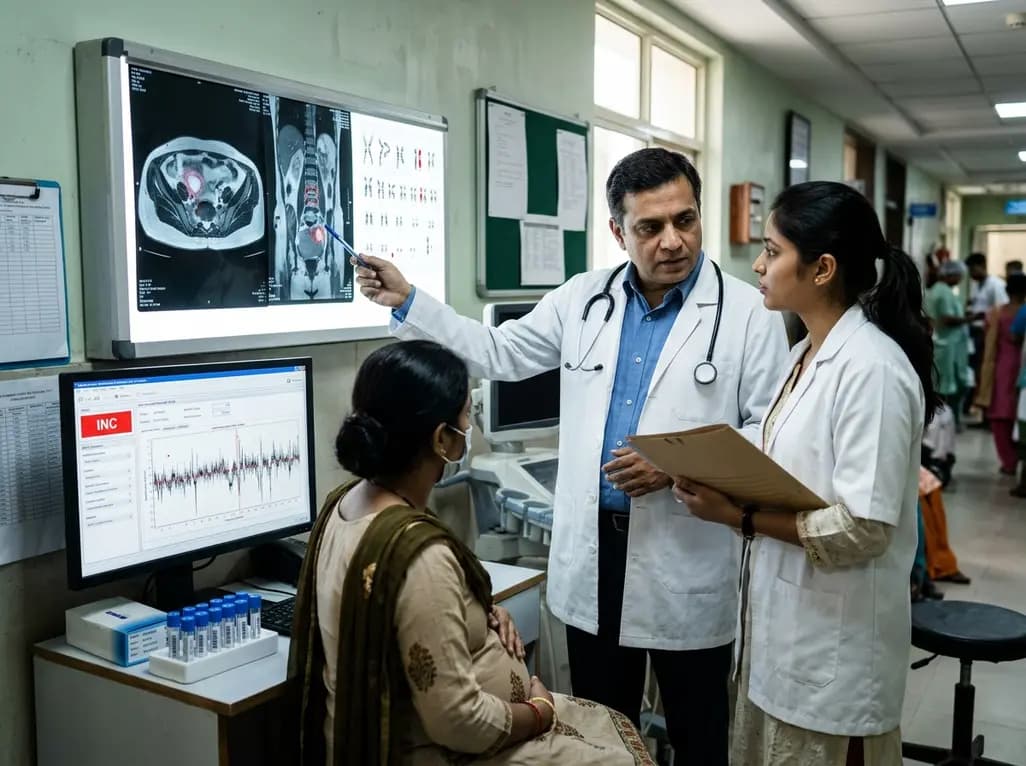
Occult maternal malignancy accounts for 3.82% of persistent unreportable NIPT results with genomic noise. Multiple chromosomal aberrations, notably on chromosome 18, warrant thorough oncological evaluation and whole-body MRI to ensure timely maternal diagnosis while preserving fetal care.
Today

This article reviews the forensic and clinical complexities of acute myocarditis arising on left ventricular hypertrophy in children, highlighting early diagnostic red flags and multidisciplinary postmortem autopsy protocols.
Today

A randomized controlled trial demonstrates that an eight-week dual-task training intervention significantly improves static and dynamic postural control over standard balance exercises in individuals with chronic ankle instability, addressing critical neurocognitive deficits during athletic and daily activities.
Today

A retrospective cohort study of 7,716 ICU patients from the MIMIC-IV database demonstrates that Gradient Boosting Decision Trees significantly outperform traditional SOFA scores in predicting in-hospital mortality among patients with sepsis and diabetes, with SHAP analysis providing clinical interpretability.
Today
