.webp&w=384&q=75)

Loading, please wait...
Loading, please wait...

Researchers have successfully mapped the Roseocin alpha component structure, a discovery that provides deep insights into how this lantibiotic combats resistant bacteria. Roseocin is a unique two-peptide antibiotic produced by Streptomyces roseosporus. It contains extensive lanthionine (Lan) and methyllanthionine (MeLan) thioether cross-links. Consequently, understanding these linkages is fundamental to advancing antimicrobial research in the face of rising resistance.
The alpha component (Rosα) consists of 33 residues. To determine the exact ring patterns, the research team utilized a systematic approach involving site-directed mutagenesis. Specifically, they substituted four dehydrated serine and threonine residues, along with two cyclizing cysteines, with alanine. This methodology revealed that Cys10 partners with Ser2 to form Lan ring A, while Cys11 pairs with Thr7 for MeLan ring B. Furthermore, the findings showed that Ser18 and Cys23 generate Lan ring C, and Thr21 pairs with Cys27 to form MeLan ring D.
Moreover, the study employed Marfey’s analysis to confirm the DL stereochemistry of these residues. Biological assays demonstrated that the installation of Lan rings is essential for the peptide's native conformation. Additionally, while the MeLan rings are somewhat expendable for basic structure, they remain crucial for bioactivity. Therefore, their disruption leads to a substantial increase in the minimum inhibitory concentration (MIC), making the antibiotic less potent.
The specific arrangement of thioether rings in Rosα is vital for its synergy with the beta component (Rosβ). This synergy facilitates potent antibacterial effects against Gram-positive pathogens. Therefore, these structural insights are decisive for the future engineering of more effective lantibiotics. Additionally, the discovery of such complex bridging in a non-firmicute source expands the known chemical diversity of peptide antibiotics. Scientists believe that mimicking these natural ring patterns could lead to the development of robust next-generation antimicrobials.
Roseocin is a two-peptide lantibiotic, meaning it requires two distinct peptides to work in tandem. Its unique thioether cross-linking pattern, recently identified in the alpha component, allows it to target resistant Gram-positive pathogens more effectively than single-peptide agents.
While the lanthionine (Lan) rings are essential for the molecule's core structure and function, the methyllanthionine (MeLan) rings are primarily important for potency. Disruption of these rings does not destroy the molecule, but it significantly increases the MIC, meaning much higher doses would be needed for the same effect.
Disclaimer: This content is for informational and educational purposes only. It does not constitute medical advice or substitute professional consultation. Refer to the latest local and national guidelines for clinical practice.
References
Kishen S et al. Structure of the Thioether Cross-Links in Roseocin's Alpha Component. J Nat Prod. 2026 Feb 16. doi: 10.1021/acs.jnatprod.5c01596. PMID: 41693626.
Singh M, Chaudhary S, Sareen D. Roseocin, a Novel Two-Component Lantibiotic from an Actinomycete. mBio. 2020;11(3):e01131-20. doi: 10.1128/mBio.01131-20.

Read summarized clinical updates, watch expert medical content, and earn CME certifications right from your smartphone.
Open your smartphone camera to scan and install.





Research defines the thioether ring pattern of Roseocin's alpha component, proving Lan rings are essential for its synergistic antibacterial potency....
8 months ago
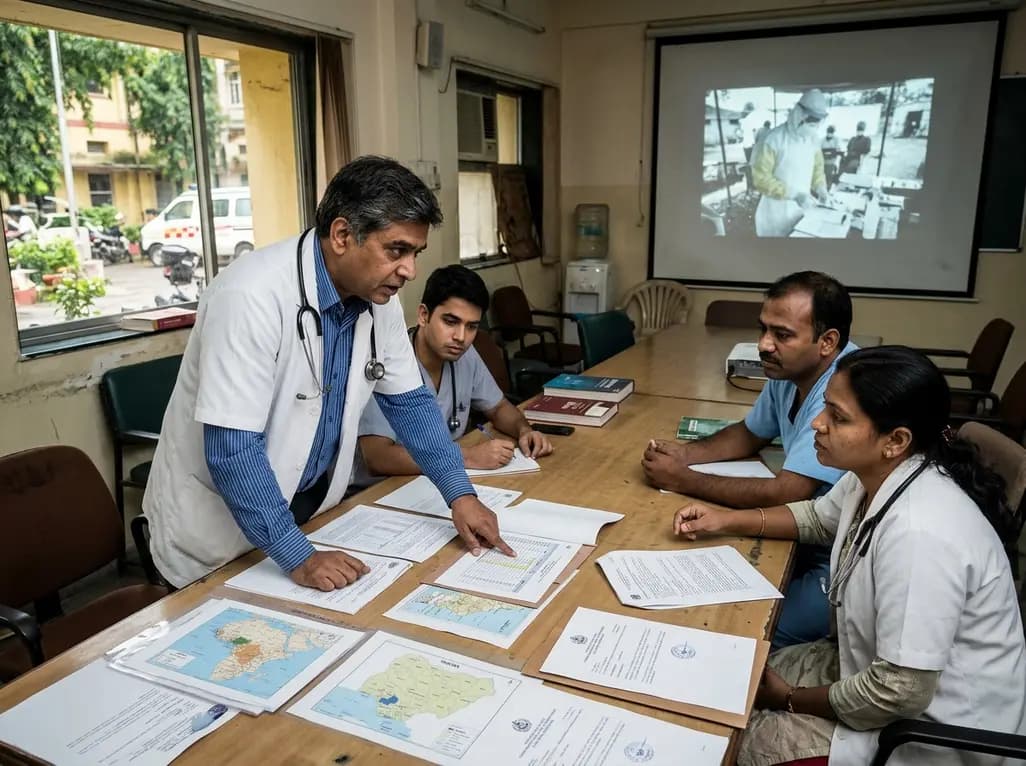
Following Nigeria's first recorded Ebola case linked to regional travel, the Africa CDC has convened an emergency ministerial summit. This alert underscores critical clinical priorities for healthcare professionals, including differentiating early viral infection from malaria, implementing barrier nursing, and triage.
Today

Leucine Rich Bio has introduced South Asia's first comprehensive vaginal microbiome test, BugSpeaks. By profiling microbial dysbiosis, pathogens, and antimicrobial resistance, this next-generation diagnostic platform provides clinicians with deeper insights into recurrent infections, fertility, and reproductive health.
Today

Review how tailored exercise programs benefit frail older patients with heart failure. Explore pathophysiological mechanisms, individualized training prescriptions, and strategies to overcome adherence barriers in clinical practice.
Today

This comparative study evaluates posterior labral tears with and without glenohumeral instability, highlighting distinct demographic patterns, MRI underestimation in stable shoulders, and successful arthroscopic repair outcomes.
Today

A clinical study demonstrates that early intervention with tocilizumab, either as monotherapy or bridged with corticosteroids, achieves significant proptosis reduction and resolves active inflammation in treatment-naive thyroid eye disease.
Today
