.webp&w=384&q=75)

Loading, please wait...
Loading, please wait...

Trauma care teams routinely encounter devastating multi-system injuries caused by high-energy vehicular collisions. Among these catastrophic events, rollover collisions present distinct biomechanical challenges that dramatically elevate occupant ejection risk and patient mortality. A comprehensive 11-year retrospective study of the Qatar National Trauma Registry offers vital epidemiological and clinical insights into these dynamic crashes. By evaluating 2,764 trauma admissions, researchers analyzed how vehicular dynamics, safety restraint compliance, and ejection patterns interact to dictate survivability. Consequently, understanding these trauma patterns enables emergency clinicians, critical care specialists, and trauma surgeons to optimize resuscitation protocols and advocate for stronger preventive measures.
The registry categorized 2,764 patients into three distinct cohorts to delineate the specific impact of vehicular rollover versus ejection mechanics. Group I included patients who suffered rollover crashes with occupant ejection, accounting for 32.9% of cases. Group II comprised patients experiencing rollover crashes without ejection, representing 58.8% of the cohort. Finally, Group III encompassed patients who sustained occupant ejection without vehicle rollover, making up 8.3% of admissions.
Notably, patients in the rollover with ejection group presented at a significantly younger age compared to the other two cohorts. This demographic observation reflects higher exposure to high-speed driving behaviors among younger motorists. Furthermore, seatbelt compliance varied drastically across the study population. Only 5.0% of individuals in Group I utilized seatbelts, compared to 32.0% in Group II and 8.6% in Group III. Airbag deployment also remained low overall, occurring in 5.7% of Group I, 6.6% of Group II, and 3.5% of Group III crashes. Therefore, the absence of passive and active vehicular safety restraints created ideal conditions for violent physical displacement during dynamic rollover sequences.
Ejection from a moving vehicle exposes the human body to violent secondary impacts against pavement, roadside infrastructure, or surrounding terrain. Consequently, the study documented a stark escalation in severe anatomical trauma among ejected occupants. Lethal injuries, defined by an Injury Severity Score of 25 or greater, occurred in 24.4% of Group I and 19.1% of Group III patients. In contrast, only 8.6% of non-ejected rollover victims in Group II sustained injuries of this extreme magnitude.
Moreover, clinical interventions reflected these anatomical injuries in the emergency resuscitation bay. Patients who experienced ejection required emergent endotracheal intubation and massive transfusion protocol activation at significantly elevated rates. In addition, these severely injured patients endured longer total hospital lengths of stay, demanding prolonged intensive care resources. Thus, the mechanical trajectory of ejection directly translates into profound physiological collapse, severe hemorrhagic shock, and rapid neurological deterioration.
The clinical data underscores a sobering escalation in fatal outcomes when crash dynamics involve physical ejection. In this registry cohort, the declared dead-on-arrival rate reached 11.7% in Group III and 8.1% in Group I, compared to just 2.3% in Group II. Furthermore, overall mortality demonstrated a parallel trend, reaching 20.9% for non-rollover ejections, 15.0% for rollover ejections, and 4.4% for contained rollovers.
Overall, occupant ejection produced a fourfold increase in overall patient mortality. Statistical modeling confirmed that failure to buckle a seatbelt escalated ejection probability tenfold. Even after multivariable adjustments for age, sex, seating position, and vehicular speed, unrestrained status remained an independent predictor of ejection, yielding an adjusted odds ratio of 6.80. When researchers removed questionable speed variables from secondary models, consistent seatbelt use provided an 85% relative reduction in ejection probability. In addition, independent predictors of mortality included female sex, massive transfusion protocol activation, scene Glasgow Coma Scale scores, and urgent endotracheal intubation.
Emergency physicians and trauma surgeons must approach ejected motor vehicle crash victims with heightened clinical suspicion for multi-cavitary hemorrhage and severe traumatic brain injury. Because ejection causes complex deceleration and blunt impact injuries, clinicians must prioritize rapid primary surveys adhering strictly to Advanced Trauma Life Support principles.
Specifically, early airway control is essential because compromised scene consciousness strongly predicts adverse survival outcomes. Furthermore, the high rate of massive transfusion activation highlights the necessity of early balanced blood product administration. Trauma teams should initiate pre-defined massive transfusion protocols immediately upon arrival when physiology indicates severe hemorrhagic shock. Similarly, clinicians must maintain vigilance for spinal column disruptions and pelvic ring instability, given the catastrophic kinetic forces absorbed during ground impact. Rapid diagnostic imaging, including focused assessment with sonography in trauma and whole-body computed tomography, remains crucial for identifying occult thoracic and intra-abdominal hemorrhage before irreversible physiological decompensation ensues.
Mitigating the burden of vehicular trauma requires systematic public health frameworks alongside advanced clinical resuscitation. The study applied the Haddon Phase-Factor Matrix to map intervention points across pre-event, event, and post-event phases. During the pre-event phase, educational campaigns must target younger drivers to curtail aggressive driving, excessive speeding, and reckless maneuvers that induce vehicular rollovers.
During the event phase, strict legal enforcement of universal seatbelt compliance represents the single most impactful life-saving measure. Because seatbelt utilization slashes occupant ejection risk by 85%, legislative mandates and primary enforcement checkpoints can prevent thousands of preventable fatalities. Additionally, automotive manufacturers must improve rollover stability controls, reinforce structural roof integrity, and expand side-curtain airbag coverage. Finally, the post-event phase demands optimized prehospital emergency medical services, rapid scene extrication, and direct triage to specialized Level 1 trauma centers equipped for complex neurotrauma and damage-control surgery.
Seatbelt nonuse dramatically escalates occupant ejection risk during a vehicular rollover collision. The analyzed registry data demonstrates that failing to wear a seatbelt increases ejection probability tenfold. Conversely, consistent seatbelt restraint provides an 85% relative reduction in ejection likelihood. Seatbelts securely tether vehicle occupants within the protective structural cabin, effectively preventing catastrophic secondary ground impacts and significantly mitigating the frequency of lethal anatomical trauma.
Multivariable analysis identified several critical clinical predictors of increased mortality among motor vehicle crash victims. Significant independent risk factors include female sex, early activation of the institutional massive transfusion protocol, lower Glasgow Coma Scale scores documented at the scene, and the urgent requirement for emergent endotracheal intubation. Recognizing these high-risk clinical indicators enables trauma teams to prioritize immediate damage-control surgery and allocate intensive care resources promptly.
Ejected occupants experience extreme kinetic energy transfer from violent secondary impacts after being expelled from the vehicle. When occupants strike hard road surfaces, roadside barriers, or the rolling vehicle itself, they sustain multi-system polytrauma. Consequently, ejected patients demonstrate significantly higher rates of severe injury severity scores exceeding 25, extensive neurotrauma, rapid exsanguinating hemorrhage, prolonged hospital stays, and drastically elevated dead-on-arrival rates.
Disclaimer: This content is for informational and educational purposes only and should not be considered medical advice. Always consult a qualified healthcare provider for diagnosis and treatment decisions. Refer to the latest local and national guidelines for clinical practice.
References
El-Menyar A et al. Rollover motor vehicle crashes and occupant ejection: comparative analysis from a Middle Eastern trauma center. Traffic Inj Prev. 2026 Aug 14. doi: 10.1080/15389588.2026.2711864. PMID: 42599246.
El-Hennawy HM, El-Menyar A, Al-Thani H, et al. Epidemiology, causes and prevention of car rollover crashes with ejection. Ann Med Health Sci Res. 2014;4(4):495-502.
National Highway Traffic Safety Administration. Occupant protection in passenger vehicles: Seat belt restraint and ejection mitigation analysis. Traffic Safety Facts. 2024;DOT HS 813 540.

Read summarized clinical updates, watch expert medical content, and earn CME certifications right from your smartphone.
Open your smartphone camera to scan and install.





A comprehensive analysis of 2,764 trauma registry patients reveals that occupant ejection during rollover crashes increases mortality fourfold. Nonuse of seatbelts escalates ejection risk tenfold, highlighting the urgent need for strict restraint compliance and targeted road-safety interventions.
last month

Evaluating concordance between patient-reported and clinician-assessed modified Rankin Scale scores reveals how nonmotor symptoms, caregiver reliance, and cultural factors affect functional disability ratings in chronic neurologic disorders.
Today

A scoping review evaluates 116 studies on AI in women's reproductive health, finding that 83.6% carry high risk of bias. While ensemble models show promise, disparities and lack of validation hinder LMIC deployment.
Today
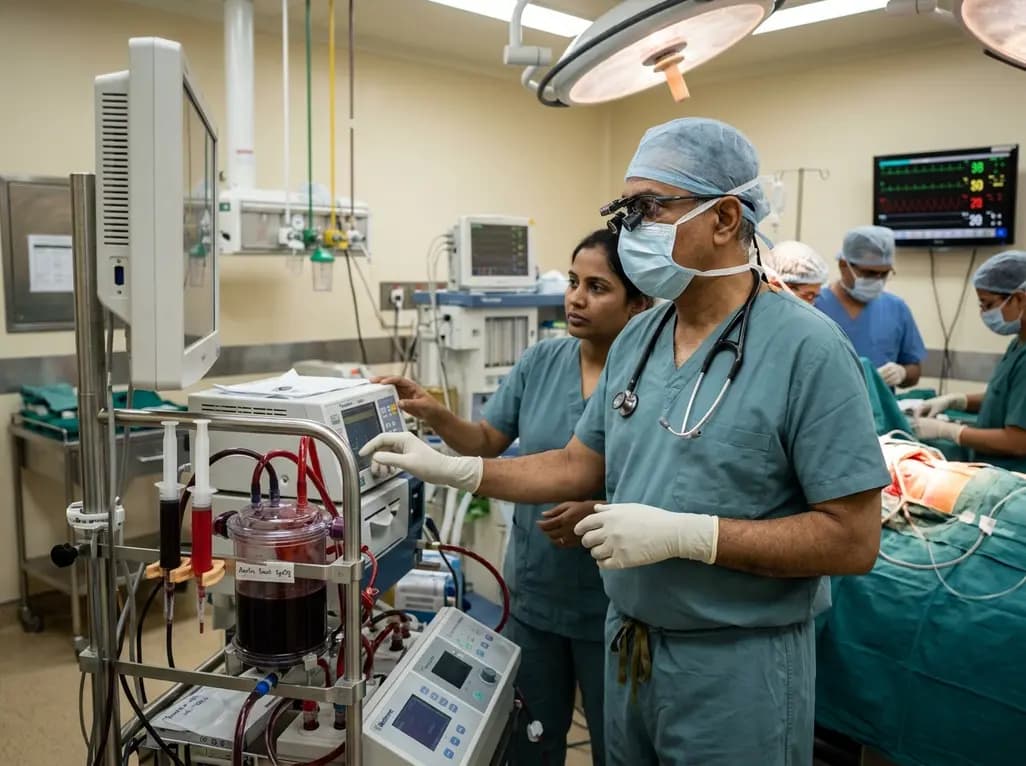
Differential oxygenation during peripheral TA-NRP can cause undetected coronary hypoxemia due to arch vessel clamping. A novel circuit with continuous aortic root monitoring detects desaturation early, facilitating left ventricular unloading and preventing allograft dysfunction and unnecessary heart discard.
Today
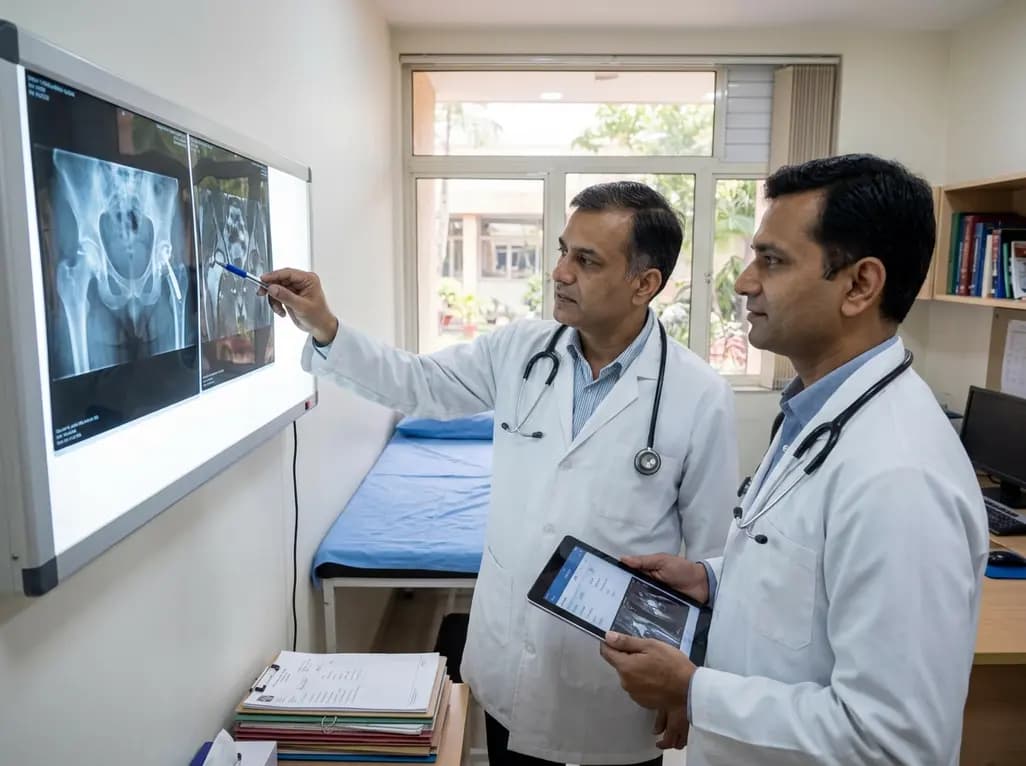
A longitudinal study reveals that patients undergoing staged bilateral hip arthroscopy experience progressive contralateral labral deterioration during surgical intervals. However, structural degradation does not compromise 2-year postoperative clinical outcomes or patient-reported satisfaction scores.
Today

A post hoc analysis of the PARM-T2D study shows pemafibrate exerts baseline-dependent effects on LDL-C and particle size in type 2 diabetes and hypertriglyceridemia. It lowers triglycerides and remnants while favorably remodeling atherogenic LDL particles based on initial lipid control status.
Today
