.webp&w=384&q=75)

Loading, please wait...
Loading, please wait...
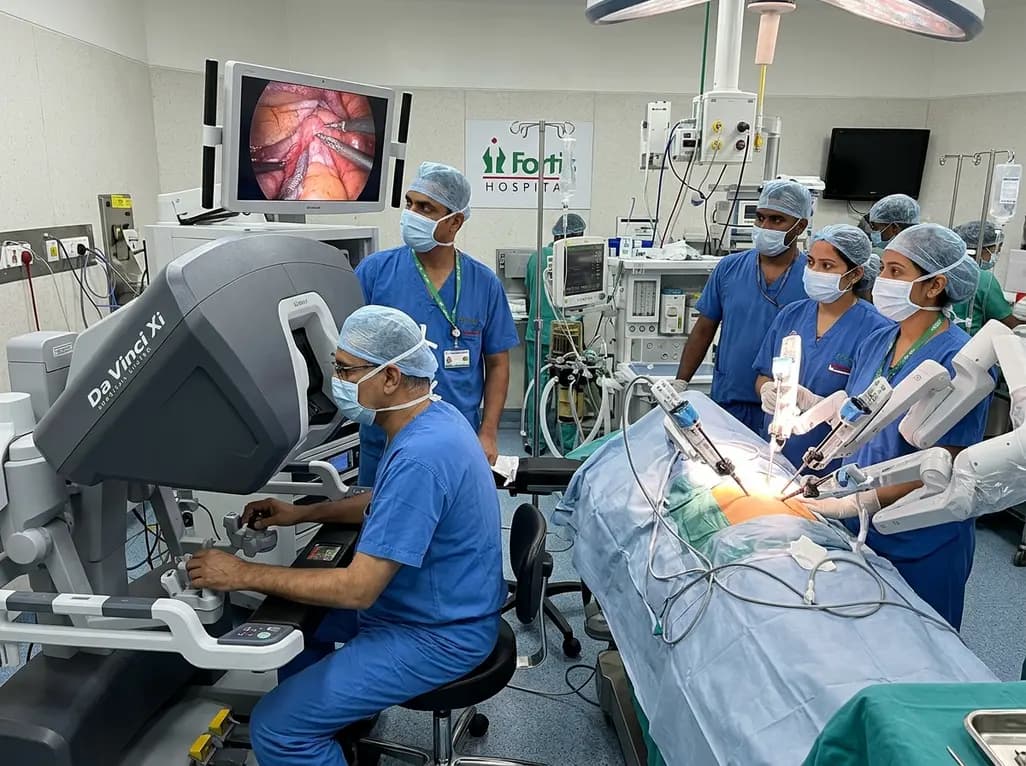
The rapid adoption of robotic surgery in india represents a major shift toward high-precision, minimally invasive healthcare. Recently, Fortis Hospital Bannerghatta Road in Bengaluru established a benchmark by completing 3,000 robot-assisted surgeries. The hospital accomplished this achievement eight years after initiating its robotic care program in 2018. State officials and medical leaders celebrated this accomplishment, emphasizing how technology improves clinical safety and patient outcomes. Modern surgical platforms offer unprecedented dexterity and clear visualization. Consequently, complex interventions are now safer and less traumatic for patients across the country.
Fortis Hospital Bannerghatta Road has emerged as the fastest medical center in the country to complete 3,000 procedures using advanced robotic platforms. This landmark reflects years of sustained institutional commitment to clinical excellence and surgical innovation. Furthermore, the hospital achieved this landmark within eight years of launching its dedicated program. Karnataka Health Minister U.T. Khader recognized this milestone during a commemorative event in Bengaluru. He noted that the state continues to strengthen its reputation as a hub for advanced healthcare. In addition, healthcare leaders emphasized that surgical technology must directly enhance patient safety and clinical access.
This achievement highlights the growing acceptance of robotic systems among clinicians and patients alike. Initially, surgical robotics faced challenges regarding equipment costs and steep learning curves. However, structured training programs and consistent clinical success have dramatically accelerated adoption rates. As a result, tertiary care centers are rapidly integrating these platforms into routine surgical workflows. The completion of 3,000 procedures demonstrates high operational efficiency and widespread patient acceptance. Consequently, Bengaluru reinforces its position as a leading destination for specialized robotic interventions in South Asia.
The robotic program at Fortis Bannerghatta spans twelve diverse surgical specialties, showcasing remarkable clinical versatility across departments. Specifically, the surgical team performs complex procedures in urology, kidney transplantation, surgical oncology, and gynecology. Additionally, surgeons utilize the platform for gastrointestinal interventions, bariatric procedures, cardiac operations, and advanced otolaryngology. This broad application allows multidisciplinary care teams to address complex medical conditions with tailored precision. Furthermore, the hospital operates two Da Vinci Xi surgical systems under a single roof. Having dual robotic platforms provides immense operational flexibility, ensures immediate equipment redundancy, and dramatically reduces scheduling delays for time-sensitive emergency procedures.
The Da Vinci Xi platform represents the gold standard in modern minimally invasive surgical technology. The advanced system features high-definition 3D visualization, magnified optical views, and wristed instrumentation with integrated tremor-filtering technology. Consequently, surgeons manipulate micro-instruments with enhanced dexterity inside highly narrow anatomical spaces. In addition, the ergonomic master console reduces physical fatigue during lengthy and delicate surgical procedures. By maintaining two active robotic consoles, the facility can simultaneously train rising surgeons while delivering uninterrupted clinical care. Overall, this robust technological infrastructure ensures consistent surgical quality across all participating medical specialties.
A major highlight of the institution's robotic initiative is the Total Robot Enabled and Assisted Transplant (TREAT) programme. This pioneering initiative marks India's first comprehensive clinical program integrating robotic assistance across both living donor and recipient procedures. Traditionally, renal transplantation required long abdominal incisions for the recipient, creating significant post-operative pain, extended recovery periods, and elevated wound healing risks. However, robotic-assisted kidney transplantation allows surgeons to perform vascular anastomoses and delicate ureteral re-implantation through small port incisions. As a result, surrounding tissue trauma is minimized, blood loss decreases, and post-operative surgical site infections drop significantly.
Moreover, the TREAT initiative provides exceptional clinical benefits for high-risk renal transplant patients, including obese candidates or individuals with prior abdominal surgeries. Deep pelvic vessel preparation becomes far more manageable due to magnified 3D visualization and precise instrument articulation. Subsequently, surgical teams achieve reliable vascular alignment with reduced warm ischemia times. Donors also experience faster recovery and minimal cosmetic scarring through laparoscopic or robotic donor nephrectomy. Therefore, the TREAT framework establishes a standardized protocol that elevates safety standards in solid organ transplantation nationwide.
Robotic-assisted surgery offers distinct physiological and clinical advantages compared to conventional open or standard laparoscopic techniques. Small port incisions significantly reduce intraoperative blood loss, minimizing the need for perioperative blood transfusions and associated complications. In addition, smaller incisions reduce tissue disruption, leading to markedly lower post-operative pain levels. Consequently, patients require fewer opioid analgesics during their inpatient stay. Faster functional recovery allows individuals to ambulate sooner, restore bowel function, and resume daily activities quickly. Furthermore, hospital stay durations are substantially reduced, decreasing overall healthcare expenditures and lowering nosocomial infection risks.
Clinical data from the hospital demonstrates superior long-term outcomes across various surgical specialties. For instance, radical prostatectomy performed robotically yields improved urinary continence and erectile function preservation due to meticulous nerve-sparing dissection. Similarly, complex oncological resections benefit from precise margin control and thorough lymph node dissection. Patients presenting with multiple medical comorbidities can now safely undergo complex procedures that were previously considered prohibitively high risk. Overall, these tangible clinical benefits drive growing patient preference for robotic-assisted interventions across major urban medical centers.
The expansion of advanced medical technology relies heavily on supportive state health policies and sustained institutional commitment. Karnataka Health Minister U.T. Khader emphasized that state healthcare priorities must focus on translating technological innovation into tangible clinical benefits for patients. Furthermore, policymakers are actively encouraging public-private partnerships and academic research collaborations to widen access to advanced surgical care. As robotic platforms become more prevalent in metropolitan hospitals, establishing robust quality standards and credentialing guidelines remains vital. Consequently, state healthcare authorities aim to make specialized robotic interventions more affordable and accessible to broader population segments.
Looking ahead, the future of robotic surgery in India involves artificial intelligence integration, haptic feedback expansion, and remote telesurgery capabilities. Next-generation surgical platforms will soon offer real-time anatomical image guidance and predictive analytics to assist intraoperative decision-making. In addition, localized manufacturing and domestic robotic surgical systems are emerging, which could significantly lower capital acquisition costs. Consequently, smaller community hospitals and tier-two cities will gradually adopt robotic technologies. The landmark milestone of 3,000 surgeries at Fortis Bannerghatta serves as an inspiring model for healthcare institutions nationwide.
Q1: What milestone did Fortis Hospital Bannerghatta Road achieve in robotic surgery?
Fortis Hospital, Bannerghatta Road in Bengaluru completed 3,000 robot-assisted surgeries using the Da Vinci Xi system within eight years of launching its program in 2018. Consequently, it became the fastest hospital in India to reach this milestone. The hospital performs robotic interventions across twelve clinical specialties, operating two Da Vinci Xi systems under one roof to maintain high surgical precision, minimize patient waiting times, and improve overall outcomes.
Q2: What is the TREAT programme launched by Fortis Hospital Bengaluru?
The Total Robot Enabled and Assisted Transplant (TREAT) programme is India's first dedicated initiative offering fully robotic-assisted kidney transplantation. It integrates robotic technology for both living donor nephrectomy and recipient transplantation procedures. Consequently, this innovative approach minimizes surgical incision size, reduces warm ischemia time, lowers post-operative wound infection risks, and significantly accelerates overall recovery for kidney transplant recipients across all risk categories.
Q3: What are the primary patient benefits of Da Vinci Xi robotic surgery?
The Da Vinci Xi robotic surgical system provides high-definition 3D visualization, magnified optics, and wristed instruments for extreme surgical precision. As a result, patients experience significantly smaller incisions, less intraoperative blood loss, and reduced post-operative pain. Furthermore, patients benefit from lower complication risks, shorter hospital stays, minimal scarring, and a much faster return to routine daily activities compared to open techniques.
Disclaimer: This content is for informational and educational purposes only. It does not constitute medical advice or replace professional judgment. Refer to the latest local and national guidelines for clinical practice.
References

Read summarized clinical updates, watch expert medical content, and earn CME certifications right from your smartphone.
Open your smartphone camera to scan and install.





Fortis Hospital Bannerghatta Road in Bengaluru has achieved a national record by completing 3,000 robotic surgeries using the Da Vinci Xi system. Spanning 12 specialties, this milestone underscores the rapid evolution of minimally invasive surgical technology and patient care across Indian healthcare.
last month

A 2026 meta-analysis evaluates PDE5 inhibitors in advanced ILD with severe gas exchange impairment. While overall mortality was not significantly reduced, a targeted subgroup with pulmonary hypertension showed a 49% risk reduction, underscoring the necessity of precise hemodynamic phenotyping.
Today

A multicentre RCT in China shows that the PAICS AI system significantly boosts sonographer sensitivity in detecting fetal intracranial malformations by 8.7% without compromising specificity, offering promising diagnostic support for prenatal neurosonography.
Today

The Supreme Court questioned FSSAI's phased warning approach, urging single-phase implementation for foods exceeding limits in any nutrient of concern. Backed by ICMR-NIN recommendations, the proposed red hexagonal warnings target added sugar, salt, and fat to combat India's escalating chronic disease epidemic.
Today
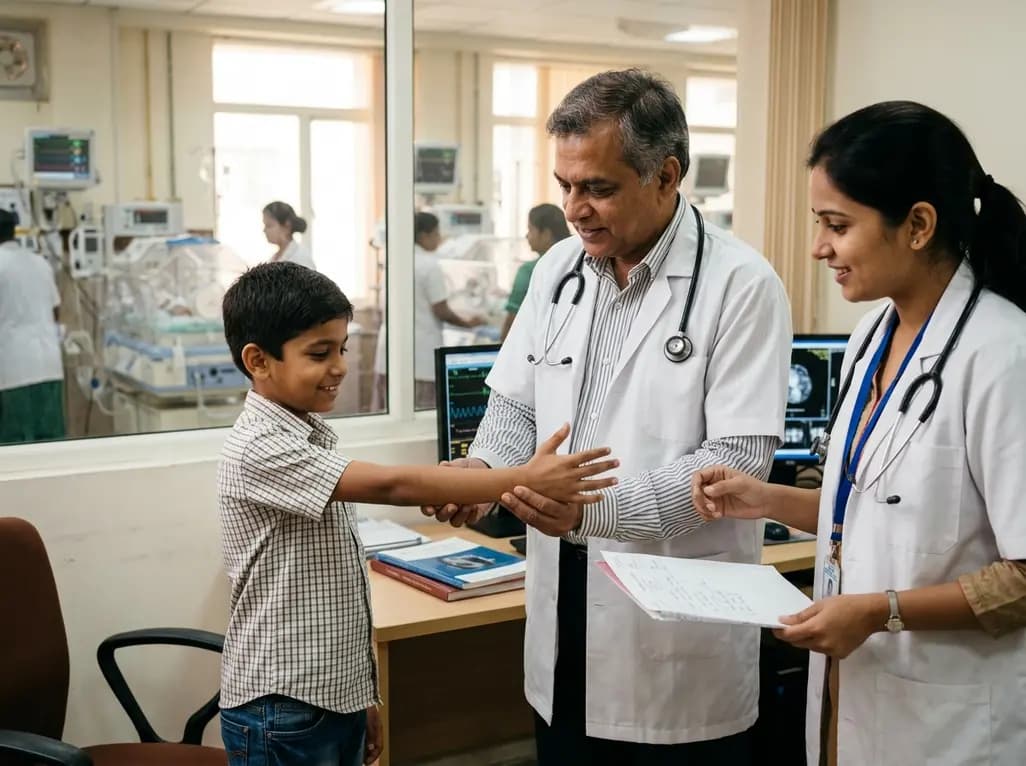
A premature neonate developed upper limb compartment syndrome after uterine rupture extruded the arm through a scar defect. Conservative management with continuous monitoring yielded complete functional recovery and normal limb growth at 10-year follow-up, highlighting non-operative safety in selected cases.
Today
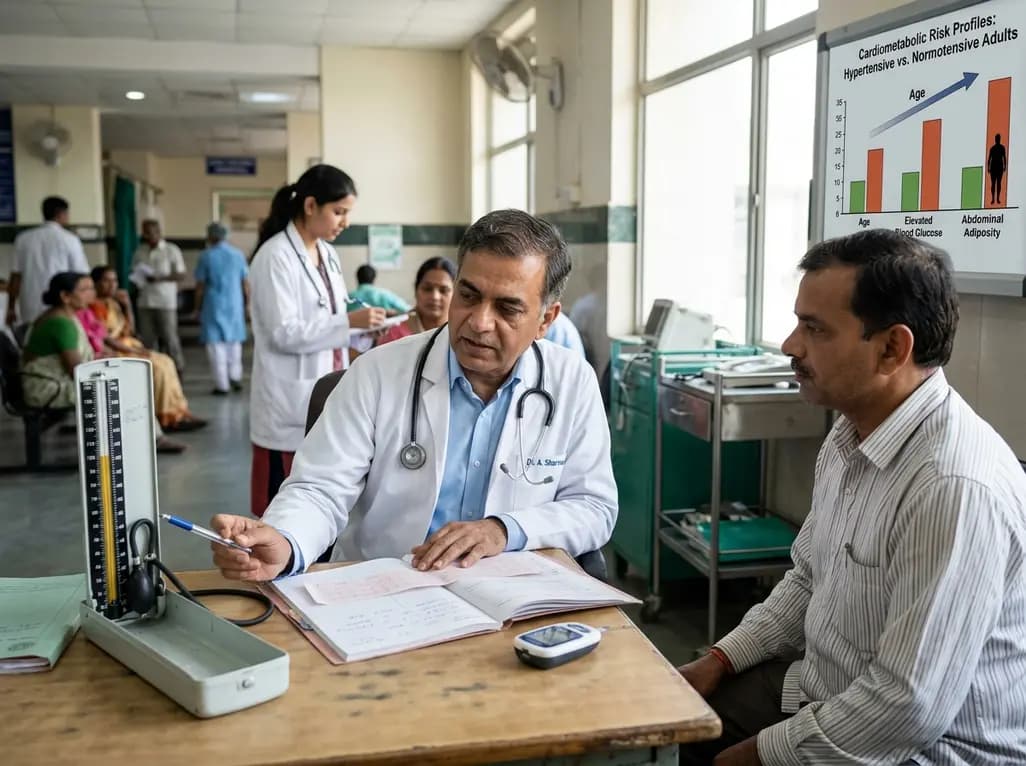
A comparative analysis shows that older age, elevated blood glucose, and abdominal adiposity are primary drivers of hypertension. Comprehensive evaluation of cardiometabolic risk profiles enables clinicians to detect overlapping metabolic dysfunctions early and optimize targeted prevention strategies.
Today
