.webp&w=384&q=75)

Loading, please wait...
Loading, please wait...
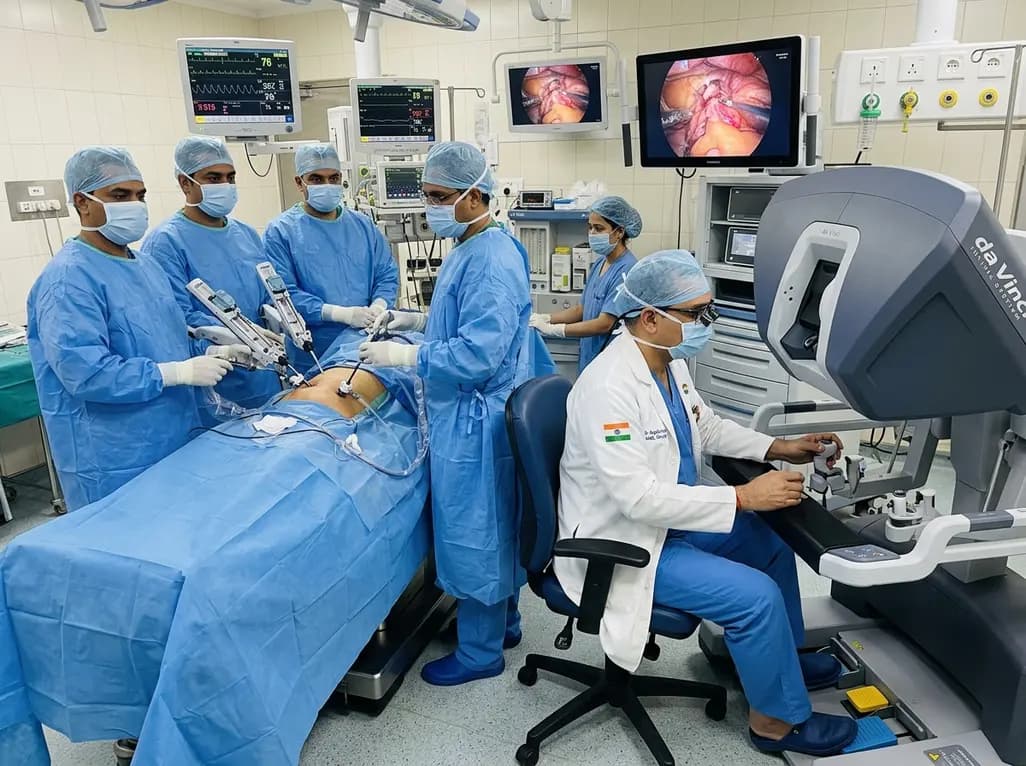
Robotic surgery in India is experiencing unprecedented momentum across modern healthcare ecosystems. Over recent years, premier healthcare centers have rapidly integrated robotic platforms into daily operative workflows. Consequently, surgical teams achieve superior visualization, finer dexterity, and enhanced precision during complex operations. Furthermore, patients benefit directly through smaller incisions, reduced postoperative pain, fewer complications, and faster recoveries. As healthcare infrastructure matures, robotic systems increasingly define modern standards of specialized surgical intervention.
Nationally, the adoption of robotic surgical platforms reflects a dramatic technological transformation. Official data presented at the Society of Robotic Surgery India 2026 conference confirms this expansion. In 2021, surgeons across India completed 8,912 robotic-assisted procedures. However, by 2025, annual procedural volumes surged to 44,857 cases nationwide. This swift growth represents a fivefold increase over four consecutive years. Importantly, robotic platforms no longer remain confined to a handful of elite metropolitan institutes. Instead, integrated delivery networks and regional private hospitals actively acquire these advanced systems. Governmental leaders also recognize that India occupies a decisive position in surgical technology. With strengths in artificial intelligence and biomedical software, the nation continues to expand clinical capabilities. Moreover, Indian surgeons are creating comprehensive registries to evaluate longitudinal clinical outcomes. As device competition increases, platform capital costs gradually rationalize across competitive domestic markets. Consequently, healthcare administrators can offer robotic interventions to broader patient cohorts. Ultimately, these collective dynamics establish surgical robotics as a cornerstone of Indian surgical care. Furthermore, prominent surgical societies actively standardize fellowship training to prepare early-career practitioners. This expanding educational framework ensures sustainable operative excellence across diverse clinical environments.
Within this national surge, Delhi NCR serves as the country's primary surgical robotics hub. Currently, 39 hospitals across Delhi NCR operate active robotic installations. Furthermore, 11 healthcare facilities in the region maintain multiple robotic systems to manage heavy volumes. Regional operative numbers reflect this substantial capital and institutional investment. Specifically, recorded robotic-assisted procedures rose from 2,257 in 2021 to 3,594 in 2022. Subsequently, procedure counts reached 5,024 cases in 2023, 7,595 in 2024, and 10,937 in 2025. This progression demonstrates an extraordinary fivefold increase within just four years. Integrated delivery networks account for 69 percent of installed robotic systems in Delhi NCR. Meanwhile, independent private hospitals operate 23 percent, and government hospitals house the remaining 8 percent. Dr. Vivek Bindal emphasized that this dense concentration reflects profound institutional commitment and clinical expertise. Additionally, regional centers provide vital dry-lab simulations and modular console training for visiting surgeons. As a result, surgical teams achieve procedural competence much earlier in their post-graduate careers. Therefore, Delhi NCR offers a replicable organizational blueprint for tertiary healthcare clusters across India. In fact, neighboring state institutions frequently benchmark their surgical acquisition models against Delhi NCR.
Robotic systems in India demonstrate exceptional versatility across an expanding range of surgical subspecialties. Historically, urological surgeons led early adoption by standardizing robotic radical prostatectomies and partial nephrectomies. However, current clinical data from Delhi NCR shows substantial procedural diversification into general surgery. In 2025, benign general surgical operations comprised 33 percent of all regional robotic procedures. These cases primarily included complex abdominal wall repairs, bariatric interventions, and difficult cholecystectomies. Meanwhile, urology represented 30.2 percent of regional procedures, maintaining robust demand for oncologic resections. In addition, gynecologic interventions accounted for 22.1 percent of cases, treating endometriosis and uterine fibroids. Malignant general surgery contributed another 10 percent, encompassing intricate colorectal and hepatobiliary resections. Furthermore, head and neck, thoracic, and cardiac surgeons increasingly utilize robotic assistance for precision dissection. Dr. Anup Kumar observed that this broad distribution proves the clinical maturity of multi-specialty robotics. Consequently, multidisciplinary surgical departments share console availability efficiently, maximizing expensive institutional assets. Ultimately, cross-departmental utilization ensures superior patient access while optimizing hospital return on investment. Notably, surgical oncologists report improved margins and enhanced lymph node yields during robotic oncologic dissections. Thus, diversified clinical applications continue to elevate care benchmarks across tertiary surgical centers.
Beyond regional procedure growth, Indian clinicians are actively pioneering the revolutionary domain of remote telesurgery. This cutting-edge approach allows experienced surgeons to operate consoles located hundreds of kilometers away. Recently, Dr. Anup Kumar executed a landmark telesurgery from Gurugram on a patient in Hyderabad. That clinical procedure traversed an impressive distance exceeding 1,600 kilometers with complete robotic precision. Similarly, Dr. Vivek Bindal led a historic cross-border telesurgical demonstration between India and China. Surgeons at Max Super Speciality Hospital in Vaishali remotely controlled robotic hardware located in Chengdu. Consequently, this live pre-clinical demonstration bridged nearly 5,000 kilometers over specialized digital networks. Union Health Minister J P Nadda highlighted these achievements as shining examples of technology-driven healthcare. Indeed, telesurgery offers profound opportunities to resolve specialist shortages in remote and Tier-2 regions. Patients in regional districts can receive elite surgical expertise without enduring arduous and expensive travel. Furthermore, experienced mentors can provide live intraoperative guidance to rural surgeons during complex cases. Therefore, robotic telesurgery holds immense promise for democratizing surgical healthcare delivery across geographic divides. In addition, simulated remote consoles facilitate real-time proctoring for fellows without requiring on-site faculty travel. This innovative capability accelerates specialized surgical education across decentralized academic institutions.
As robotic surgery and telesurgery expand, establishing standardized clinical and technical governance becomes vital. Remote operations demand ultra-low latency, redundant broadband lines, and comprehensive cybersecurity measures to safeguard data. Any unforeseen delay in signal transmission could compromise patient safety during delicate microscopic maneuvers. To address these issues, international consensus recommendations appeared recently in the World Journal of Surgery. These clinical guidelines delineate essential criteria for technical infrastructure, credentialing, and emergency conversion protocols. Furthermore, institutional leaders must mandate extensive simulator practice before surgeons perform unproctored clinical cases. Bedside surgical teams must also conduct regular crisis drills to manage sudden mechanical or power failures. Additionally, regulatory bodies must modernize medico-legal frameworks regarding interstate licensing and liability during remote procedures. Uninterrupted audio-video communication between console operators and bedside teams remains an absolute non-negotiable safeguard. Moreover, healthcare facilities must implement scheduled preventative maintenance and precision instrument calibration protocols. Consequently, adherence to structured credentialing pathways protects patient safety during rapid technological adoption. Ultimately, maintaining rigorous surgical standards ensures that robotic technology delivers consistent, high-quality patient outcomes. In summary, robust institutional governance underpins the safe transition into this next surgical frontier.
Q1: What accounts for the dramatic growth of robotic surgery in India?
Several complementary factors drive the surge of robotic surgery in India. Advanced robotic platforms provide 3D high-definition visualization, tremor filtration, and wristed instrumentation that exceed laparoscopic capabilities. Consequently, surgeons perform intricate dissections with minimal blood loss and tissue trauma. In addition, growing hospital investments, expanding insurance coverage, and increased patient awareness have boosted procedure volumes. These combined advantages have accelerated adoption across corporate networks and public academic institutions alike.
Q2: How does Delhi NCR compare with other Indian regions in robotic surgery adoption?
Delhi NCR stands as India's foremost robotic surgical hub, housing 39 hospitals equipped with cutting-edge platforms. Notably, 11 of these centers maintain multiple robotic installations to support extensive surgical caseloads. Regional procedure volumes increased from 2,257 cases in 2021 to 10,937 in 2025. Integrated delivery networks drive nearly 70 percent of this infrastructure. Furthermore, the region concentrates elite surgical expertise, structured training fellowships, and multi-specialty clinical programs that mentor surgeons nationwide.
Q3: What clinical and technical safeguards are necessary for safe robotic telesurgery?
Safe robotic telesurgery demands ultra-reliable network connectivity with minimal latency, dedicated backup connections, and robust data encryption. In addition, international consensus guidelines mandate that a fully credentialed bedside surgical team remains immediately available. This onsite team must possess the expertise to intervene or convert to open surgery during acute intraoperative emergencies. Furthermore, standard credentialing, simulated rehearsal protocols, and clear multi-channel audio-video communication channels remain essential for protecting patient welfare.
Disclaimer: This content is for informational and educational purposes only. It does not constitute medical advice or replace professional judgment. Refer to the latest local and national guidelines for clinical practice.
References

Read summarized clinical updates, watch expert medical content, and earn CME certifications right from your smartphone.
Open your smartphone camera to scan and install.





Robotic platforms are transforming operative care across India. Driven by swift adoption in Delhi NCR, procedure counts surged fivefold between 2021 and 2025. With expanding use in urology, oncology, and general surgery, Indian surgeons are now pioneering remote telesurgery under robust clinical guidelines.
Today

A qualitative study in Mzuzu highlights profound struggles faced by patients with NCD complications, including sanitation barriers, loss of dignity, and severe health access delays. Clinicians in resource-limited healthcare environments must address systemic hurdles through integrated, patient-centered chronic care.
Today
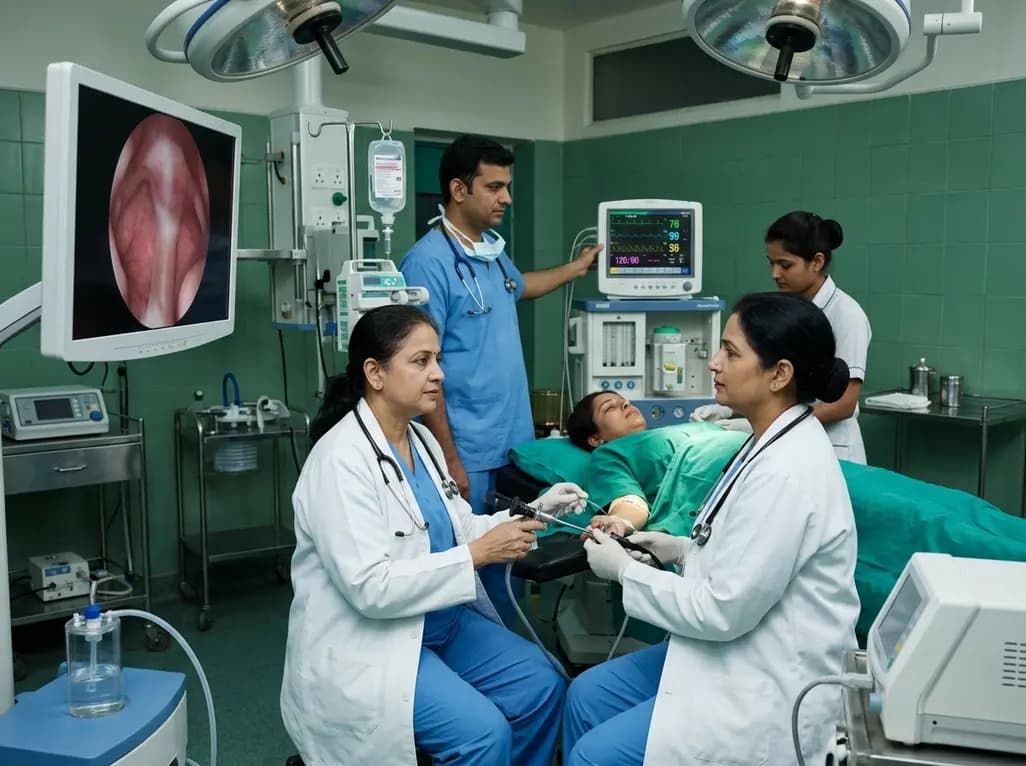
A meta-analysis of nine RCTs comparing remimazolam versus propofol in hysteroscopy reveals remimazolam significantly reduces injection pain, hypotension, and respiratory depression while maintaining comparable sedation success, recovery times, and procedural duration.
Today
Radiofrequency catheter ablation of the cavotricuspid isthmus successfully terminates typical atrial flutter. This article reviews the mechanisms driving coronary sinus electrogram changes, wavefront activation pathways, and clinical criteria to verify bidirectional block during electrophysiology studies.
Today
A 5-year study of lateral unicompartmental knee arthroplasty in patients ≤55 years demonstrated 100% component revision-free survival and high functional scores, though residual varus alignment increased the risk of medial osteoarthritis progression.
Today
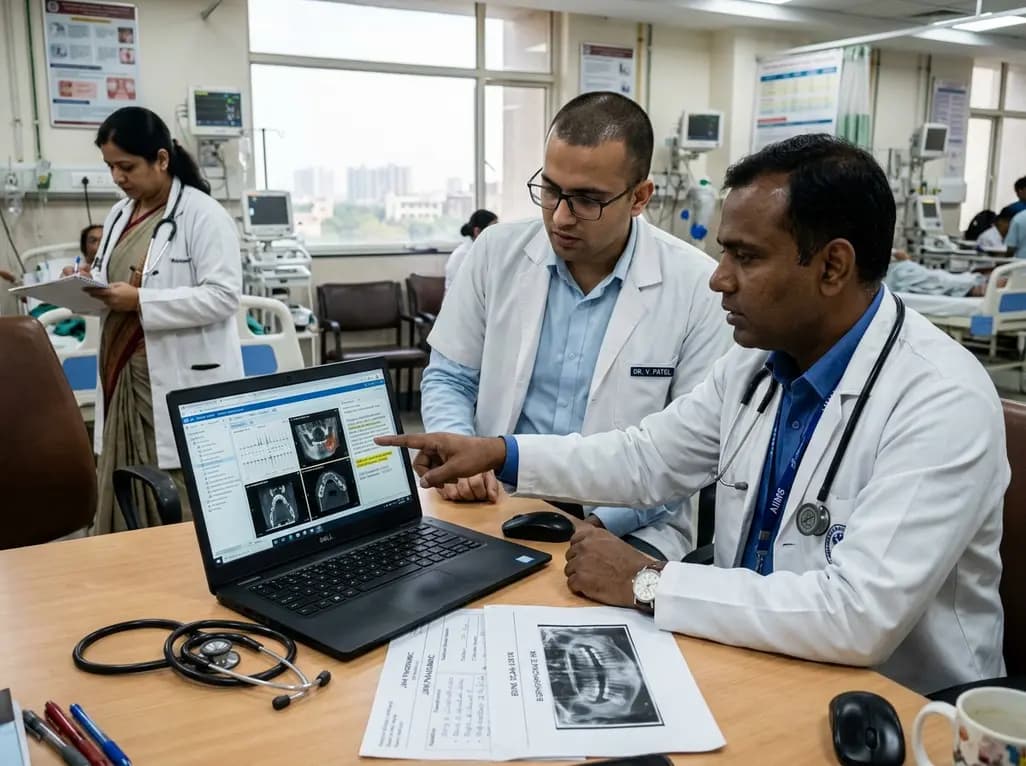
A breakthrough study leverages natural language processing to accurately identify incident medication-related osteonecrosis of the jaw and track antiresorptive drug holidays from clinical narratives in electronic health records, advancing osteoporosis pharmacovigilance and dental safety.
Today
